Further research and information on the English Reformation, English Catholic martyrs, and related topics by the author of SUPREMACY AND SURVIVAL: HOW CATHOLICS ENDURED THE ENGLISH REFORMATION
Tuesday, January 25, 2022
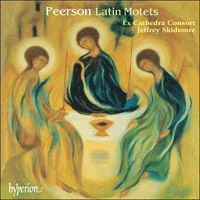
Martin Peerson, Lapsed Recusant Composer
Monday, January 24, 2022
Edward Short on R.W. Southern and Whig History
Edward Short, whose new edition of Newman's Certain Difficulties Felt by Anglicans in Catholic Teaching I reviewed last year here and here, writes about the English historian of the Middle Ages, R.W. Southern, for the Catholic World Report.
In reviewing how history was revisited from 1850 onwards in an attempt to fill the void left by the desuetude in which the scholastic tradition fell, Southern charted the failure of secular humanism. Initially, it was thought that the best means of studying history to establish general truths was through a study of institutions, particularly the development of Parliament and common law, and, by extension, the development of constitutional liberty, a development which could act as a useful guide not only to the conduct of life but to the challenges of empire, when the English still had an empire for which proconsuls had to be supplied.
Here, in embryo, was the Whig conception of history, according to which all history culminated in the triumph of Whig constitutionalism, and Southern vividly describes the welcome with which it was received two years after the Revolutions of 1848 rocked European institutions to their foundations. “It came as a huge liberation from a prison of despair to discover that here in our midst there was something like a divine instrument for the enlargement of human life,” Southern writes, “developing through the centuries from the earliest days.” Indeed, for those who had despaired of the general truths of Revelation, it offered nothing less than “a kind of secular embodiment of that force which had in the past been particularly associated with the now derelict pattern of Revelation.”
Consequently, History, not Theology, came to rule the academic roost. The claims made for the redemptive properties of historical study might now seem, as Southern says, “pure moonshine;” but it did not seem so in 1930, when Southern was an undergraduate. “Indeed, history had succeeded beyond all expectation in giving the university that central position in society which it had had in the thirteenth century and had gradually lost in the intervening centuries.” By 1900, one third of all undergraduates were studying history. Fifty years later, historical study had begun to lose and would never regain its fleeting centrality. . . .
Monday, January 17, 2022
EDI's 2022 Symposium: "Sex and Lies: Delusions of the Self in the 21st Century"
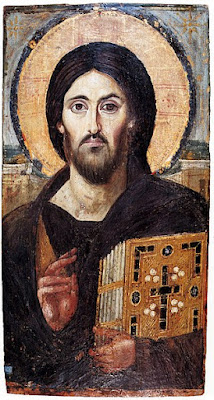
3. Perfection before our eyes: St Theodore the Studite on the humanity of Christ
4. I am called by two names, human and divine: dogma and deification in St Symeon the New Theologian
5. The energy of deification and the person of Jesus Christ in St Gregory Palamas
Saturday, January 1, 2022
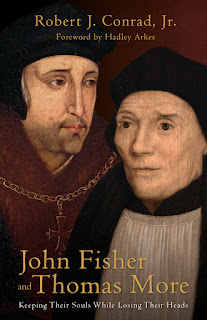
Happy New Year, 2022: Book Review in the NC Register
In keeping with his effort to highlight St. John Fisher as well St. Thomas More, Conrad begins his series of anecdotes in Chapter 1 on “Conscience” with Bishop John Fisher’s forthright refusal to be coerced into agreeing with the rest of the English bishops in support of Henry VIII’s actions. Conrad highlights the courage of Fisher, not taking the easy way out when the archbishop of Canterbury, William Warham, declared the unanimous agreement of the bishops with Henry VIII at the Legatine Court in 1529: Bishop Fisher denies he signed the document, he denies his signature on the document is authentic, and he denies that he agrees with the document. Neither Warham’s embarrassment nor Henry VIII’s impatience dissuade him. As Conrad concludes, Fisher “spoke with strength to power nonetheless” (p. 16). . . .
Friday, December 24, 2021
Book Review: Proust's Defense of Gothic Cathedrals
"Suppose for a moment that Catholicism had been dead for centuries, that the traditions of its worship had been lost. Only the unspeaking and forlorn cathedrals remain; they have become unintelligible yet remain admirable."
So begins Marcel Proust's Death Comes for the Cathedrals (La mort des cathédrales), originally published in Le Figaro (1904). Proust addresses the political and religious debate concerning the "the Briand bill," a parliamentary proposal which imperiled the fate of French Cathedrals-"the first and most perfect masterpieces" of Gothic architecture. The great author of In Search of Lost Time gives prophetic voice to his own fear that "France would be transformed into a shore where giant chiseled conches seemed to have run aground, emptied of the life that inhabited them and no longer bringing an attentive ear to the distant murmur of the past, simply museum objects, themselves frozen." As Proust makes plain, though the cathedrals of France and the traditional liturgy of the Roman rite are the spiritual inheritance of the Church, they are part of the patrimony of all humanity and, pending preservation, their loss would leave all the world impoverished.
This Wiseblood Books edition of Death Comes for the Cathedrals includes an introduction by its translator, Dr. John Pepino, and an afterword by Dr. Peter Kwasniewski, who wonders whether life may yet return to the cathedrals. Throughout, beautiful color images of Chartres and its architectural features grace the pages.
Advocates argue that the approved plan will make Notre-Dame “even more beautiful and welcoming” for the millions of people who visit the site each year, according to a diocese press release. Critics, however, say that the renovations will reduce the standing of the historical building into a theme park. . . .What about the people of Paris who attend Mass, Evening Prayer, the devotions to the Crown of Thorns, or other services? Or Catholics from around the world visiting Paris and attending Sunday Mass? How are they served by these renovations?
Visitors will now be able to enter the cathedral through its grand central doors rather than the side entrance as previously directed. The diocese also plans to rearrange altars and other items to free up space for people to move around, per the Times. . . .
The commission rejected some details of the diocese’s plan, including a proposal to remove statues from some chapels, per the Times. Experts have also asked to review a prototype of newly proposed benches, which would replace the traditional straw chairs. In theory, the benches might be designed to descend into the floor when not in use—freeing up more space for tourists, reports the AFP. . . .
Proust's argument is that these Gothic cathedrals, great monuments of French art, were built for the celebration of the great and Holy Sacrifice of the Catholic Mass. They were built to facilitate the celebration of what we now call the Traditional Latin Mass, the Mass of the Ages. Their art and architecture, their acoustics were meant to resound with Gregorian and Polyphonic prayers, antiphons, and sequences. He does not want them destroyed by taking away their reason for being built, maintained, and used through the centuries, in spite of war, revolution, desecration, and other fashionable changes (clear glass replacing stained glass in Notre Dame de Paris during the reign of Louis XIV, for example).
Friday, December 17, 2021
"Rorate Caeli Desuper" and "Ne irascaris, Domine"
Ecce, respice, populus tuus omnes nos.
Civitas sancti tui facta est deserta.
Sion deserta facta est,
Jerusalem desolata est.
(Be not angry, O Lord,nor remember our iniquity forever.
Behold, look upon us, we are all thy people.
Thy holy cities are deserted.
Zion has become a wasteland,
Jerusalem a desolation.) (Isaiah 64:9-10)
Monday, December 13, 2021
Blog Tour for "My Queen, My Love" by Elena Maria Vidal
"Dreams of princesses, fairy tale palaces, and living happily ever after collide with the realities of favorites, mistresses, courtiers, and intrigues in the lives of Marie de Medici and her daughter Henrietta Maria in this first volume of Elena Maria Vidal's Henrietta of France trilogy. Vidal depicts the religious conflicts of the seventeenth century vividly in this historical novel, as the marriage of King Charles I of England and Queen Henrietta Maria overcomes many obstacles of language, faith, and even different calendars. Even knowing how their story ends, the reader looks forward to Vidal's delicate and dramatic retelling."—Stephanie A. Mann, author of Supremacy and Survival: How Catholics Endured the English Reformation
This is the copy provided by the organizer of the blog tour:
Welcome to the mini tour for My Queen, My Love by Elena Maria Vidal. Read on for details and a chance to win a paperback copy of the book!
My Queen, My Love: A Novel of Henrietta Maria (The Henrietta of France Trilogy Book 1)
Publication Date: November 25th, 2021
Genre: Historical Fiction/ Henrietta Maria
Publisher: Mayapple Books
The youngest daughter of Henri IV, the first Bourbon King of France, Henriette-Marie always knew she would have to marry a prince. When the Prince of Wales, Charles Stuart, travels through Paris he sees her dancing at the Louvre and within two years a marriage is arranged. However, Henriette is Catholic and Catholicism is banned in England. In preparing to become Queen of England, Scotland and Ireland, Henriette has no idea of the obstacles that must be overcome before she can find happiness with Charles. The main hindrance, she soon realizes, is not the difference in religion but Charles’ best friend, George Villiers, the handsome Duke of Buckingham, who is determined to subdue Henriette to his will. Buckingham forgets that Henriette is also half Medici and underestimates her determination to succeed as well as the depth of her love for Charles. My Queen, My Love is the first novel in the Henrietta of France Trilogy by acclaimed author Elena Maria Vidal. It describes the early years of the tumultuous marriage of Charles I and Henrietta Maria which preceded the English Civil Wars of the Seventeenth Century.
Add to Goodreads
Excerpt
11 May, 1625 dawned dark and dreary, as the heavens opened and drenched Paris in a driving rain. Henriette had a quiet morning at the Louvre, with Madame Garnier and Mamangat insisting that she eat. Then she bathed, and around two o’clock in the afternoon was enveloped in a wrapper to be driven in a coach with an armed escort through the torrential downpour to the Archbishop’s palace. The streets of Paris were crowded in spite of the deluge, and she was cheered through the streets, which in the showers were like streams. When they reached the Archbishop’s palace next to Notre Dame she was bundled up to the room where her gown and jewels were awaiting her. Several of the highest ranking ladies in the kingdom were there to dress her. Her gown had been brushed and cleaned, having been spotted with wax from dripping candles and a few stains of red wine. It now sparkled more gloriously than ever. And this time, she was wearing a crown! Her mother Queen Marie supervised the adjusting of the diamond crown with a single large pearl in the front on Henriette’s curls, which the dampness of the air had made more tight and abundant. Around her shoulders was placed an ermine-lined blue velvet mantle, embroidered with gold fleur de lys. The Princesse de Condé, the Princesse de Conti and the Comtesse de Soissons, mother of Henriette’s rejected suitor, were to carry the mantle and the cloth of gold train but found them too heavy. It was feared that Henriette would be pulled backwards so it was decided that an officer would walk under it, supporting the mantle and train with his head and hands.
At five o’clock in the evening, she was finally ready, and her brothers Louis and Gaston arrived to escort her to the Cathedral. Louis XIII was crowned and arrayed in a tunic of scarlet velvet, covered with cloth of gold. He was to walk on her right and her brother Gaston on her left. Gaston was debonair in a suit of silver lamé. Anne had come with Louis; she was also crowned and completely resplendent in a gown and mantle of cloth of gold and silver. Maman wore black silk embroidered in gold with a pearl and ruby coronet.
In the hall of the Archbishop’s palace the procession was arranged. Henriette could see the doors open as they set forth. Remarkably, the rain had ceased and the sun was shining! Leading the way was an officer known as the Captain of the Gate, behind whom walked a hundred of the King's Swiss Guard, drums beating and banners flying. They were followed by a band of musicians, then the heralds with trumpets, whose blaring made Henriette’s heart leap with exultation. After them marched the Marshals of France, then the peers of the realm. They were followed by the proxy bridegroom the Duc de Chevreuse and the English ambassadors, the Earls of Carlisle and Holland, all three of whom were in cloth of gold like King Louis. Behind those three gentlemen, Henriette walked with her two brothers, trailed by the ladies and gentleman carrying the train. Finally there came Queen Marie and Queen Anne.
A long wooden gallery lined in colorful carpets and tapestries led from the Archbishop’s palace to the west portals of the Cathedral, where a platform under a canopy of cloth of gold had been erected. The vows would be exchanged at the doors of the church, according to the ancient tradition. Within and without the Cathedral wooden stands had been built for people to sit and see what they could see. Citizens were also gathered on roofs of houses, on balconies, and leaning out of windows. On the platform, under a canopy of cloth of gold, Cardinal de Rochefoucault awaited the bridal party. As Henriette and her brothers appeared, the crowds cheered deliriously. The entire bridal party ascended the platform. Henriette wished she had been able to practice climbing the steps in all her regalia; mercifully the steps had been carpeted or else she would surely have slipped off. Henriette and the Duc de Chevreuse knelt on prie-dieus before the Cardinal, who received their marital vows. After being married, Henriette arose and turned; she saw the English ambassadors kneeling before her.
“Your Majesty,” said the Earl of Carlisle in English, kissing the hem of her skirt.
“God save the Queen!” The Earl of Holland proclaimed, using English as well.
“I am Queen of England,” she thought, wishing Charles was with her. And she descended the platform and entered the great cathedral with her brothers, as the organ and chanting of the choir lifted her heart to heaven.
Available on Amazon
About the Author
Elena Maria Vidal grew up in the countryside outside of Frederick, Maryland, “fair as the garden of the Lord” as the poet Whittier said of it. As a child she read so many books that her mother had to put restrictions on her hours of reading. During her teenage years, she spent a great deal of her free time writing stories and short novels.
Elena graduated in 1984 from Hood College in Frederick with a BA in Psychology, and in 1985 from the State University of New York at Albany with an MA in Modern European History. In 1986, she joined the Secular Order of Our Lady of Mt. Carmel. Elena taught at the Frederick Visitation Academy and worked as a private tutor as well as teaching children’s etiquette classes. During a trip to Austria in 1995 she visited the tomb of Empress Maria Theresa in the Capuchin crypt in Vienna. Afterwards she decided to finish a novel about Marie-Antoinette she had started writing ten years before but had put aside. In 1997 her first historical novel TRIANON was published by St. Michaels Press. In 2000, the sequel MADAME ROYALE was published, as well as the second edition of TRIANON, by The Neumann Press. Both books quickly found an international following which continues to this day. In 2010, the third edition of TRIANON and the second edition of MADAME ROYALE were released.
In November 2009, THE NIGHT’S DARK SHADE: A NOVEL OF THE CATHARS was published by Mayapple Books. The new historical novel deals with the controversial Albigensian Crusade in thirteenth century France. She is a member of the Eastern Shore Writers Association. She currently lives in Maryland with her family. Her fourth novel, THE PARADISE TREE, about her Irish ancestors, was published in Fall 2014. Her first biography, MARIE-ANTOINETTE, DAUGHTER OF THE CAESARS, was published in Spring 2016.
In November 2021, My Queen, My Love: A Novel of Henrietta Maria, was published as the first installment of the Henrietta of France Trilogy.
Tea at Trianon | Twitter | Instagram | Facebook
Click the link below for a chance to win a copy of the book!
Mini Tour Organized By:
Friday, December 3, 2021
Father Kapaun Coming Home: Where is Home?
The Marion County Commission has hired a consultant to explore how to best prepare for the increase in tourists. That includes working with state officials and recruiting hotel developers, commissioner David Mueller says.
Because Pilsen Road is a county road, it is not the responsibility of the Kansas Department of Transportation, says agency spokesman Tom Hein. Mueller and others wonder if surging traffic volumes may prompt a change to state maintenance.
State officials say they’re monitoring the situation in Marion County, but Mueller acknowledges local authorities are frustrated by what feels like a lack of support.
“I wouldn’t say we’re in over our head” in Marion County, he says. “We’re doing everything we can to prepare. It’s just hard to know how much to do, and what route is best.”
“They’re not ready,” says Ray Kapaun, Emil’s nephew, who lives on Whidbey Island in the state of Washington. “They’re not even going to be ready for what’s going to hit them to start with, even with his remains not being out there.”
The decision to place the potential saint’s remains in Wichita, an hour away, rankles residents of Pilsen.
“They said security wasn’t so good out here,” says Kathy Svitak, whose farmstead carries traffic for those who depart Pilsen’s little cemetery via the rear exit. “Well, I guarantee there’s a lot more crime around the Wichita church than there is out here. And we can put the same safe codes they could do. We just have not been given the choice of the chance.”
Thursday, December 2, 2021
Father Nathaniel Bacon, Alias Southwell
Monday, November 29, 2021
Book Review: "Dog Songs", Poems by Mary Oliver
Mary Oliver's Dog Songs is a celebration of the special bond between human and dog, as understood through the poet's relationships to the canines that have accompanied her daily walks, warmed her home, and inspired her work. Oliver's poems begin in the small everyday moments familiar to all dog lovers, but through her extraordinary vision, these observations become higher meditations on the world and our place in it.
Dog Songs includes visits with old friends, like Oliver's beloved Percy, and introduces still others in poems of love and laughter, heartbreak and grief. Throughout, the many dogs of Oliver's life merge as fellow travelers and as guides, uniquely able to open our eyes to the lessons of the moment and the joys of nature and connection.