Showing posts with label The English Reformation Today. Show all posts

Sunday, August 4, 2013

The English Reformation Today's One Year Anniversary


On Saturday, August 4, 2012, I began my 12-week show, "The English Reformation Today" on Radio Maria US. Almost all of the episodes are available as podcasts on the network's website here. I posted regular summaries of each week's topic on this blog, and you can explore those posts here.

As a preview of upcoming events, I'm pleased to announce that the St. Austin Review (StAR) will publish my article on Pope Emeritus Benedict XVI's legacy for England's Catholics in the September/October issue--but you'll need to be a subscriber to read the article, unless they happen to choose it as the one sample article from the issue on the magazine's website.

Also, the September on-line issue of Homiletic & Pastoral Review will include my article on Church History and Apologetics, which is readily accessible for free!

And, finally, don't forget that I'll be presenting at the Kansas Authors Club annual convention here in Wichita, Kansas. I'm scheduled for 10:00 a.m. on Saturday, October 5 on “Marketing a Non-Fiction Book to a Niche Audience: It’s Quite a F.E.A.T.” Program description:

Stephanie will describe strategies she has developed and techniques she employs to promote her non-fiction, historical work to a niche audience of readers interesting in the history of religion in England. With humility and humor, Stephanie outlines her successes and failures, offering insights and lessons learned by using the acronym F.E.A.T.: F = Finding a Publisher and an Audience (research and success); E = Establishing a Platform (broadcast, print, and on-line social media); A = Addressing Challenges and Opportunities (current events and limitations); T = Tracking down Contacts and Customers (networking and working).

I'm so disappointed that the pilgrimage to England in honor of the English Martyrs of the Reformation did not work out this year. Corporate Travel Services is still on the lookout for a suitable parish to base the pilgrimage in so they may attract enough participation to make it successful.

Update: I'll also have an article in the September/October issue of OSV's The Catholic Answer Magazine! "The Cross Triumphant: What are the feasts of the Holy Cross and Our Lady of Sorrows?

I am so grateful to these publishers and editors who accept and often improve my submissions for publication!

Thursday, January 24, 2013

Meet the Author Today with Ken Huck


I'll be on the air with Ken Huck on his Radio Maria USA show, "Meet the Author" today at 3:00 p.m. Eastern/2:00 p.m. Central to discuss Supremacy and Survival: How Catholics Endured the English Reformation!


You may listen live here and remember that podcasts of my radio show on Radio Maria last year, "The English Reformation Today", are also available.

When I sent a copy of my book to Radio Maria last year, it was to Ken Huck's attention for an interview on this show--Father Robert Young saw it before Ken had a chance and contacted me about doing the radio show starting on August 4. I sent another copy to Ken and he scheduled this interview!

Friday, October 26, 2012

Podcasts from "The English Reformation Today"


I wrapped up my radio series, "The English Reformation Today" on Radio Maria last Saturday, October 20. Podcasts of almost all the episodes are here--one broadcast took place during the network's fall pledge drive, so I suppose they have not posted it since Father Young and I talked about the program and the pledge drive in the first few minutes.

This was an interesting venture--the time commitment was pretty intense with at least two hours of prep for the one hour of broadcast. It was a rather different kind of radio program because I was basically telling a story--the story of the English Reformation of the 16th century and the effects of its aftermath on Catholics until the 19th century, with some highlights of the 20th and even 2lst centuries. If you listened to the program or the podcasts and liked them, please contact Radio Maria at info@radiomaria.us and let the network know. I presume the programs will be repeated, but will try to find out more.


Saturday, October 20, 2012

The Final Episode of The English Reformation Today


Today's program is the last in the series and I plan to address some historical details about the 20th century and some very recent events:

1) More converts, following the Oxford Movement pattern: from Gerard Manley Hopkins to J.R.R. Tolkien;
2) Beatifications and Canonizations of the English Catholic Martyrs: 1935, 1970 and 1987
3) Papal Visits: Blessed John Paul II and Pope Benedict XVI
4) Newman's Beatification and the Personal Ordinariate of Our Lady of Walsingham

But, more importantly, I want to address the meaning and lessons of the English Reformation and what Catholics endured in its long aftermath--again, citing its relevance to us today. Why do we need to know about this story--how can we apply it to the situation of religious freedom and, even more generally, to living our Catholic lives today? In this new Year of Faith, the Catholic martyrs of the 16th and 17th centuries are great examples of giving all for the faith, but the people who lived and died in the Faith, struggling, paying fines, enduring imprisonment, etc, are great confessors of the Faith, too. That's just one example--I'll have more!
If you have comments about what the history of the English Reformation means to us today, please call in to the program at 1-866-333-6279 or submit them to me on my facebook page for Supremacy and Survival: How Catholics Endured the English Reformation. Thanks for listening!

Saturday, October 13, 2012

The Penultimate Episode of The English Reformation Today!

Today's topic is the Nineteenth Century and Emancipation at last! It's so appropriate that it comes in the same week as Blessed John Henry Newman's feast day, October 9.

I've divided this broadcast into four parts, one for each momentous date:

I. 1829--Emancipation for Catholics at last--meant the removal of all penal and recusancy laws, now really religious freedom as a human or even civil right, but a legal measure of toleration. I'll examine the reasons for this policy change and some reaction.

II. 1845--Anglican minister and Tractarian/Oxford Movement leader John Henry Newman becomes a Catholic on October 9, 1845. This date gives me the opportunity to make a few comments about the Oxford Movement and then about Newman's contributions to the Catholic community and Church in England as an Oratorian, teacher, and writer.

III. 1850--the Restoration of the Catholic Hierarchy by Pope Pio Nono; this provoked some violent reaction from Queen Victoria, the Prime Minister and some rioters! But it meant that the Catholic Church could start building again: cathedrals, churches, schools, convents, monasteries, etc. I'll highlight the great architect of the Catholic revival, A.W.G. Pugin.

IV. 1870--the First Vatican Council defines the dogma of Papal Infallibility. William Gladstone, former Prime Minister, takes offense and publishes a pamphlet warning that Catholics just cannot be loyal English citizens when the Pope is Infallible. Father John Henry Newman wrote his Letter to the Duke of Norfolk to prove that Gladstone was wrong--because he did not understand either the rights and duties of conscience or the reality of Papal Infallibility in faith and morals:

There are two more crucial points Blessed John Henry Newman makes about conscience: first, that we must follow our conscience but second, that we must take care to form our conscience: “Conscience has rights because it has duties”. Since conscience reflects not on individual judgment and consistency but on God’s Law, we have to work to understand God’s Law. This is where Newman again addresses the authority of the Church and Christ’s Vicar on Earth, the Pope, who are God’s representatives alluded to above.

Jesus left us the Church and He established the Papacy because “the sense of right and wrong, which is the first element in religion, is so delicate, so fitful, so easily puzzled, obscured, perverted, so subtle in its argumentative methods, so impressible by education, so biased by pride and passion, so unsteady in its course, that, in the struggle for existence amid the various exercises and triumphs of the human intellect, this sense is at once the highest of all teachers, yet the least luminous; and the Church, the Pope, the Hierarchy are, in the Divine purpose, the supply of an urgent demand.” Therefore, Newman notes that every Catholic owes the teaching authority of the Church at the very least the benefit of the doubt and further observes that the burden of proof is upon the individual, not the Church. Newman warns us that the individual “must have no willful determination to exercise a right of thinking, saying, doing just what he pleases”. . . .

Newman’s Letter to the Duke of Norfolk addressed contemporary concerns but his discussion of conscience has been timeless: it is quoted in the Catechism in paragraph 1778 and Pope Benedict XVI has reflected upon it. Speaking in December 2010 on the beatification of Newman during his visit to Scotland and England that September, Pope Benedict highlighted it as one of Newman’s great contributions. For Newman, he said, “conscience means man’s capacity for truth: the capacity to recognize precisely in the decision-making areas of his life – religion and morals – a truth, the truth. At the same time, conscience – man’s capacity to recognize truth – thereby imposes on him the obligation to set out along the path towards truth, to seek it and to submit to it wherever he finds it. Conscience is both capacity for truth and obedience to the truth which manifests itself to anyone who seeks it with an open heart.”

And I suppose I could add one more date if there is time (if not, at least you have some information about it here and can meditate upon it at your leisure):

V. 1879--Pope Leo XIII makes Newman a Cardinal and Newman warns against liberalism, the great danger to religion and truth:

“Liberalism in religion is the doctrine that there is no positive truth in religion, but that one creed is as good as another, and this is the teaching which is gaining substance and force daily. It is inconsistent with any recognition of any religion, as true. It teaches that all are to be tolerated, for all are matters of opinion. Revealed religion is not a truth, but a sentiment and a taste; not an objective fact, not miraculous; and it is the right of each individual to make it say just what strikes his fancy. Devotion is not necessarily founded on faith. Men may go to Protestant Churches and to Catholic, may get good from both and belong to neither. They may fraternise together in spiritual thoughts and feelings, without having any views at all of doctrine in common, or seeing the need of them. Since, then, religion is so personal a peculiarity and so private a possession, we must of necessity ignore it in the intercourse of man with man. If a man puts on a new religion every morning, what is that to you? It is as impertinent to think about a man’s religion as about his sources of income or his management of his family. Religion is in no sense the bond of society.”

 I welcome all listeners of Radio Maria US to my blog, whether you're listening on one of their radio stations or on line or through one of their apps. I invite you to call in with questions and comments toll-free at 866-333-MARY(6279). Just a reminder, too, that podcasts of previous episodes of The English Reformation Today are available on the Radio Maria US website. Next week: Catholic Revivial and Converts--Two Popes visit the British Isles and the Personal Ordinariate!

Wednesday, October 10, 2012

Happy Birthday to a Hagiographer!

Father Alban Butler was born on October 10, 1710. According to the Catholic Encyclopedia, "he shares with the venerable Bishop Challoner the reputation of being one of the two most prominent Catholic students during the first half of the dreary eighteenth century, when the prospects of English Catholics were at their lowest."

I just spoke of the "dreary" Long Eighteenth Century, and Father Butler's work during it, on my radio program last Saturday on Radio Maria US.

More about Father Butler, from the same source:

[He was born] at Appletree, Northamptonshire, England; [and died] at St-Omer, France, 15 May, 1773. . . . After the death of his father in 1712, he was sent to the celebrated "Dame Alice's School", at Fernyhalgh, in Lancashire. From thence while still young he was transferred to the English College at Douai, where he went through the full course, and was ordained priest in 1735. He had already gained a reputation for extraordinary diligence and regularity, and was asked to remain at the college as professor, first of philosophy, later on of theology. During his years at Douai, he devoted himself to what became the great work of his life, "The Lives of the Fathers, Martyrs and Other Principal Saints". His mastery of ancient and modern languages fitted him specially for a task which involved such wide reading, while his unremitting industry and steady perseverance enabled him to overcome all obstacles. He also assisted Dr. Challoner, by preparing matter for the latter's "Memoirs of Missionary Priests", the standard work on the martyrs of the reign of Elizabeth and later. Butler's notes are still preserved at Oscott College.

In 1745 Alban Butler was chosen to accompany the Earl of Shrewsbury and his two brothers, James and Thomas Talbot, both afterwards bishops, on a tour through Europe. On his return he acted as mission priest in various parts of the Midland District, to which he belonged by origin. Though ever seeking leisure for study, we are told that he was precise in the discharge of all his duties, and his time was always at the disposal of the poor or others who had a claim upon him. We next find him acting as chaplain to the Duke of Norfolk, whose nephew (and heir presumptive), the Hon. Edward Howard, he accompanied to Paris as tutor. During his residence there, Butler at length completed his work on the "Lives of the Saints", on which he had been engaged nearly thirty years. It contains biographies of more than 1,600 saints arranged in order of date; and is a monument of work and research. It was published anonymously, in London, in 1756-59, nominally in four, really in seven octavo volumes. This was the only edition which appeared during the author's lifetime; but there have been many others since, and the work has been translated into Italian and French.

Read the rest here. There are now many editions of "Butler's Lives of the Saints", updated and edited, and some might be far from his original work.

Saturday, October 6, 2012

The English Reformation Today: Episode Ten!

Today's topic is The Long Eighteenth Century for English Catholics after the "Glorious Revolution" of 1688 until the first Catholic Relief Acts of 1778 and 1791. During this period, Catholics were really at their lowest point since Henry VIII's Break from Rome in 1534. They were but a small minority, they had no national center at Court (as they had throughout the 17th century with the original Stuarts), and in Enlightenment England, with the Broad Church mentality of the Church of England, they weren't really even worth persecuting!

I'll start with the story of James II's reign, his attempts to bring about religious freedom through an Act of Indulgence, and the invasion of England by the Dutch, invited by Members of Parliament and the Church to keep Protestantism safe in England from James and his Catholic son and heir. Then the story has two narratives--the new Stuarts, William and Mary, then Anne, and the Parliamentary acts that prevented Catholics from even being near the throne: no Catholic monarch, no Catholic spouses allowed; while the old Stuarts, James II and his heirs in French exile, led invasions in Ireland and Scotland, attempting to regain the throne, especially when the Hanoverian dynasty came to England.

I'll describe how the Latitudinarians took over leadership of the Church of England when the High Church Anglicans lost power, especially after the Non-Juror movements meant the loss of some of the better bishops, including an Archbishop of Canterbury and two great spiritual writers, Thomas Ken and William Law. All of this history, of course, is laid out in the narrative of Chapter 9 of Supremacy and Survival: How Catholics Endured the English Reformation.

As for Catholics, as I mentioned, they were at the lowest point in their history, but there are a few high points:

Richard Challoner is one of the heroes of this era: as Vicar Apostolic, he worked to remind Catholics of their heritage in England. He completed the great work of gathering details about the martyrs of the 16th and 17th centuries which would be the basis on their causes for canonization in the 19th and 20th centuries.

Alban Butler wrote his great Lives of the Saints, still a basic work of hagiography.

Fathers George Leo Haydock and John Lingard were born near the end of the 18th century and in the next century, they would produce great intellectual works. Father Haydock would write and edit a great Biblical Commentary, while Father Lingard would produce a great history of England that would redress some historical errors of the Whig version of history, paving the way for full emancipation of Catholics in 1829.

The Catholic Relief Acts of 1778 and 1791 will wrap up this episode, including the horror of the Gordon Riots, provoked by the first easing of restrictions on Catholic worship. I welcome all listeners of Radio Maria US to my blog, whether you're listening on one of their radio stations or on line or through one of their apps. I invite you to call in with questions and comments toll-free at 866-333-MARY(6279). Just a reminder, too, that podcasts of previous episodes of The English Reformation Today are available on the Radio Maria US website. Next week: Emancipation at Last! and four important dates: 1829, 1845, 1850, and 1870.

Saturday, September 29, 2012

Episode Nine of the The English Reformation Today

Today on "The English Reformation Today" on Radio Maria US, I'll cover lots of history by focusing on the religious aspects of the English Civil War, the execution of King Charles I, Interregnum period (when Parliament and Oliver Cromwell ruled), and the Popish Plot during the reign of Charles II--we'll see how far I get in the hour! The plan I submitted to Radio Maria included this summary for today's episode:

Highlight the religious conflict in England leading to the English Civil War; describe the Puritan Experiment in government, including its attack on Christmas. Describe the great religious crisis of the Popish Plot during the reign of the restored Stuart monarch, Charles II--recount the injustice of the trials of the last great wave of Catholic martyrs from 1679 to 1681. Continue the story of Maryland, describing Calvert's heirs and their efforts to inculcate religious tolerance and freedom of religion in their colony--the changing fortunes of Catholics in the Maryland colony during the the Civil War and Restoration.

As I commented, the Stuart dynasty coming to England seemed more stable--unlike Elizabeth I, with no family heir (not even a cousin left, after she got rid of Mary, Queen of Scots and her Grey cousins, Nine-Day-Jane's sister Mary and Katherine)--James I of England had two sons in case the eldest died (and he did) and Charles I had more than two prepared to succeed him. But the Stuart monarchy endured two overthrows--the English Civil War toppled Charles I from the throne and his head from his neck, while the Glorious Revolution of 1688 deposed his son James II and left his son and grandsons to be Pretenders.

Why? I don't think we can ignore how religious division and dissent contributed to this dynasty's troubles, whatever the personal or regal failings of its monarchs--the Tudor model of asserting supremacy and uniformity had left the country divided: Anglican, Puritan, and Catholic. The Catholic opposition, as we know well from the past few episodes, had been driven underground, but a consistent, muted danger to the State. The Puritan opposition remained a force above ground with influence in both Church and State, and it would prove to be the real source of danger to the Stuarts--at least to Charles I and Charles II (in the latter case, when Scotland backed his succession to his father). As I explain in this article, Stuart devotion to the Protestant cause was always suspect until after the Glorious Revolution, as the first four Stuarts seem to "flirt" with Catholicism, with Catholic wives and catholic (lower case) sympathies:

From the beginning of the Stuart dynasty in England, there seemed to be uncertainty about how loyal the kings from James I to James II were to the Church of England and to Protestantism.

At the beginning of his reign, James I wanted to hold an ecumenical council with the Pope! He also negotiated a treaty with Spain for his son and heir Charles to marry the Infanta. That treaty, like the one eventually signed when Charles married Henrietta Maria of France, sister of King Louis XIII, allowed the foreign bride to remain a Catholic, to have priests at Court as her chaplains and confessors, and to have a chapel in which to worship-and even promised leniency to Catholics. On the other hand, Parliament did not think that James I did enough to support his own son-in-law, the Elector of the Palatinate in Bohemia, when he lost the Battle of the White Mountain, defeated by Catholic forces in 1620. The Catholicism of James' wife, Queen Anne, didn't help, although they became estranged soon after he succeeded to the throne of England. She did not receive Anglican communion at their coronation ceremony, however, and that was pointed.

Charles I indeed allowed his wife that freedom and members of his Court were often concerned that his uxoriousness might lead him to become Catholic. Henrietta Maria was a devout Catholic, processing to Tyburn Tree to honor the Elizabethan and Jamesian martyrs, refurbishing her chapel in the latest baroque style, and attracting converts. The presence of the Capuchin friars and the celebration of Catholic Mass shocked and disturbed Anglican courtiers. When Parliament was not in session, Charles indeed showed leniency to Catholic priests and Henrietta Maria often pled for clemency. Parliament indicted her for treason during the Civil War and she fled the country for exile in France. The religious conflict between Puritans in Parliament and Charles I's arminian High Church Anglicanism contributed to the causes of the Civil War and the execution of the the king in 1649 after he lost.

Charles II returned to England in 1660 in the security of the re-established Church of England, the Book of Common Prayer, the Authorized Version of the Bible, and the monarchy. He married a Catholic princess, however, Catherine of Braganza, and refused to divorce her even though she bore him no sons. He treated her as well as possible considering his rampant infidelity, maintaining both Protestant and Catholic mistresses-thus the occasion when Nell Gwynn called out to the crowds jostling her carriage, "Good people, I am the Protestant whore!" If Charles's cabinet had known what he had agreed on May 26 in 1670, they would have been stunned. Although they did not know about the secret contents in the Treaty of Dover (no one did until the 19th century), they knew that Charles attempted to extend freedom from the penal laws to Catholics in his Declaration of Indulgence in 1672. He had to back away from that move when Parliament rejected his proclamation, and for a time seemed to turn more toward Protestant interests on the Continent, allying with William of Orange against the French. Imagine the surprise when they discovered that he had converted on his deathbed, encouraged by his Catholic brother. . . . (You may read the rest here)

I welcome all listeners of Radio Maria US to my blog, whether you're listening on one of their radio stations or on line or through one of their apps. I invite you to call in with questions and comments toll-free at 866-333-MARY(6279). Just a reminder, too, that podcasts of previous episodes of The English Reformation Today are available on the Radio Maria US website. Next week: The Long Eighteenth Century for Catholics from the Glorious Revolution of 1688, the Jacobite Pretenders, to the first Catholic Relief Acts!

Saturday, September 22, 2012

The English Reformation Today: Episode Eight

The last five episodes of "The English Reformation" cover highlights from four centuries of English religious history, as the attention on the Tudors and all the religious changes have ben my focus thus far. With the new dynasty in power, I'll begin with the reign of James VI and I of Scotland and England and start telling the story of George Calvert, Lord Baltimore and Maryland:

The Stuarts of Scotland come to England: James VI of Scotland becomes James I of England--his religious background in Scotland and expectations in England. The Authorized Version of the Holy Bible: The King James Version and its impact. The Gunpowder Plot: Catholic reaction to James I's treatment of Catholics and the government's reaction to the Plot--the Fifth of November. Highlight the story of George Calvert, Lord Baltimore--his service to King James I; his reversion to Catholicism; his establishment of the Maryland Colony in New England and his great experiment in religious freedom and tolerance.

James I saw that the Elizabethan persecution of Catholics in England was not really a matter of punishing treason, but an attempt to enforce the orthodoxy of the Church of England: it was religious persecution. He thought that religious persecution was a sign of weakness of the Church of England and he wished to reduce the number of executions--while he was definitely ready to collect the fines and seize the property of those who refused to attend Church of England services. There are still martyrs during his reign, but the pattern of execution is more irregular. As I've discussed before:

James VI of Scotland and I of England and Ireland executed fewer priests and laity under his predecessor's treason and felony laws. Although terrified after the near miss, James was really rather restrained in his reaction to the Gunpowder Plot of 1605. At least, he was restrained if you compare the numbers of Catholics executed for their faith in the years after the November 5, 1605 discovery of the plot to the brutal reaction of Elizabeth I's government after the failed Spanish Armada in 1588. In 1606, there were three martyrs (including Nicholas Owen by torture); one in 1607; three in 1608 (including Thomas Garnet, SJ); none in 1609. Compare that to the executions of 1588 alone: eight on August 28; six on August 30; seven more on October 1 and three on October 5--and the martyrdoms continued through the end of Elizabeth I's reign.

In 1610, however, in reaction to the assassination of King Henry IV of France by Francois Ravillac in May, James' fears were revived. The Oath of Allegiance, which he thought perfectly reasonable and limited to temporal loyalties, had not been accepted by Catholics as well as he hoped, and thus there was a slight uptick in executions--still only four (the others were Roger Cadwallador and George Napper, the latter in Oxford).

In 1611, George Abbott became Archbishop of Canterbury--he was more zealous in his suppression of Catholicism, but still only two martyrs in 1612; none from 1613 to 1615 (one that year, Robert Edmonds); six in 1616 and one in 1618. So that's 21 martyrs from 1606 to 1618 compared to 24 martyrs from August 28 to October 5, 1588!

Then things settled down again until the reign of Charles I.

I welcome all listeners of Radio Maria US to my blog, whether you're listening on one of their radio stations or on line or through one of their apps. I invite you to call in with questions and comments toll-free at 866-333-MARY(6279). Just a reminder, too, that podcasts of previous episodes of The English Reformation Today are available on the Radio Maria US website. Next week: Charles I and Cromwell!

Saturday, September 15, 2012

Episode Seven of The English Reformation Today

In this episode, I'll discuss two major crises in the reign of Elizabeth I and their impact on Catholics in England: First: Mary, Queen of Scots' presence on the island and as Elizabeth's prisoner and Second: the Spanish Armada.

The English response to the failure of the Spanish Armada is fascinating and horrifying, as a series of executions in London and southeast England demonstrated how dangerous Catholic priests and laity were to the country--while Catholic nobles had offered their help to defeat the Armada. The sad story of Mary, Queen Scots meant that some Catholics did form conspiracies to dethrone Elizabeth and replace her with Mary--but Elizabeth's own spymaster, Sir Francis Walsingham encouraged the plots so much that it's not always clear how much entrapment led the conspirators on.

As fascinating as these historical events are, I really want to dedicate as much time as possible to the martyrs who died during this last half of Elizabeth's long reign: St. Margaret Ward. St. Robert Southwell, St. Philip Howard, St. Henry Walpole, and St. Anne Line.

Then I'll make the transition from Elizabeth I to James VI of Scotland as her heir, with some final remarks on the Tudor dynasty and a review of the status of Catholics in 1603, as James (Mary, Queen of Scots' son) headed south to London to be crowned King James I of England and start a new dynasty: the Stuarts.

I welcome all listeners of Radio Maria US to my blog, whether you're listening on one of their radio stations or on line or through one of their apps. I invite you to call in with questions and comments toll-free at 866-333-MARY(6279). Just a reminder, too, that podcasts of previous episodes of The English Reformation Today are available on the Radio Maria US website.

Thursday, September 13, 2012

"The English Reformation Today" Podcasts


After the live Saturday broadcast of "The English Reformation Today", Radio Maria US repeats the show on Wednesday morning, and then the most recent podcast is uploaded to this page on their website.

Saturday, September 8's episode was the first part of a two part discussion of the reign of Elizabeth I and what it meant for Catholics in the 16th century:

Describe the legislation that established the Church of England as a via media compromise between Calvinism and Catholicism (The Book of Common Prayer and the Thirty-Nine Articles). Catholic Reaction: The Northern Rebellion.The controversial excommunication of Elizabeth I by Pope St. Pius V--casting suspicion on all Catholics in England and leading to recusancy and martyrdom. Stories of early martyrs like St. Edmund Campion and St. Margaret Clitherow.

The most relevant issue today of the episode is the issue of divided loyalty and obedience to authority. To whom did English Catholics owe their homage? Their queen or the pope? For some reason--and this would be an interesting research project--the sixteenth century political order could not apply Jesus's Gospel admonition to render unto Caesar what was Caesar's and to God what is God's to the vision of a united polity. In the sixteenth century there was little or no notion of diversity or certainly plurality. Throughout Europe the motto cuius regno, eius religio (the religion of the ruler was the religion of the ruled) prevailed. The pope's position as a temporal ruler of the Papal States also confused the issue: were Catholics being loyal to their own nation or to a foreign power? The English government was convinced that Catholics could not be loyal to England even temporally if they were loyal to Rome even spiritually.

Now, our situation in the United States has parallels but some important distinctions too: The United States Conference of Catholic Bishops has been pointing out since January this year, through the Fortnight for Freedom and even into the current political season, that religous liberty has been endangered by the U. S. Government through the HHS Contraceptive, Abortafacient, and Sterilization Mandate--especially because of the limited definition of a religious organization AND the lack of an opt-out conscience clause. Like the English Catholics of the sixteenth century, Catholic business owners, for example, have to choose between two loyalties, between their Church doctrine and the US Government law--if they wish to be faithful to God and His Church's teachings, they cannot comply with the state's new demands for loyalty. They will not suffer blood martyrdom, but they will be fined; they can fight the law in the Courts, but their risk is great. The most important distinction is that Catholics in the U.S.A. as citizens have opportunities/rights to campaign for change through legislation, the justice system, and the electoral system: Elizabeth I's Catholic subjects did not have these opportunities.

English Catholics pressed for a view that they were temporally loyal to Elizabeth I but spiritually loyal to Pope Pius V, and their respective successors. Elizabeth I, because of her instability on the throne, could not accept that view, although it was expressed by many of the Catholic martyrs even as they faced death--they could accept her as monarch but not as governor of the church in England. And then there came the "bloody question": when it came to armed conflict or invasion, with whom would they side, England or attacking Catholic power. That's the crucial question coming up in the next episode when we look at the Spanish Armada or the plots against Elizabeth I to replace her on the throne with Mary, the former Queen of Scots.

This Saturday, Sepember 15's episode will conclude the discussion of Elizabeth and introduce the new dynasty, the Stuarts of Scotland. By focusing on the two dangers to Elizabeth's throne, we'll also see the result of this divided loyality--even when Catholics DID support their country when facing invasion, they were punished by the state and when Catholics despaired of receiving any tolerance for their Faith in their own country, they turned to desparate measures, hoping for a change in leadership as the only means of relief:

Explain the two great dangers to Elizabeth and how they affected Catholics: her rivalry with Mary, Queen of Scots and the Spanish Armada (plots led by Catholics to depose Elizabeth and replace her with Mary on England's throne and the Catholic position on the Spanish Armada). Describe the wave of martyrdoms of Catholic priests and laity after the Armada: why are they martyrs?  Describe the end of the Tudor dynasty and the transition to the Stuart dynasty--the status of Catholics in 1603.

Once the Elizabethan government designated all Catholic priests as traitors and most Catholic laymen as potential traitors, a long-lived anti-Catholicism developed in England: a prejudice that certainly emigrated from England to New England in the 17th century.

Saturday, September 8, 2012

Episode Six of "The English Reformation Today"!

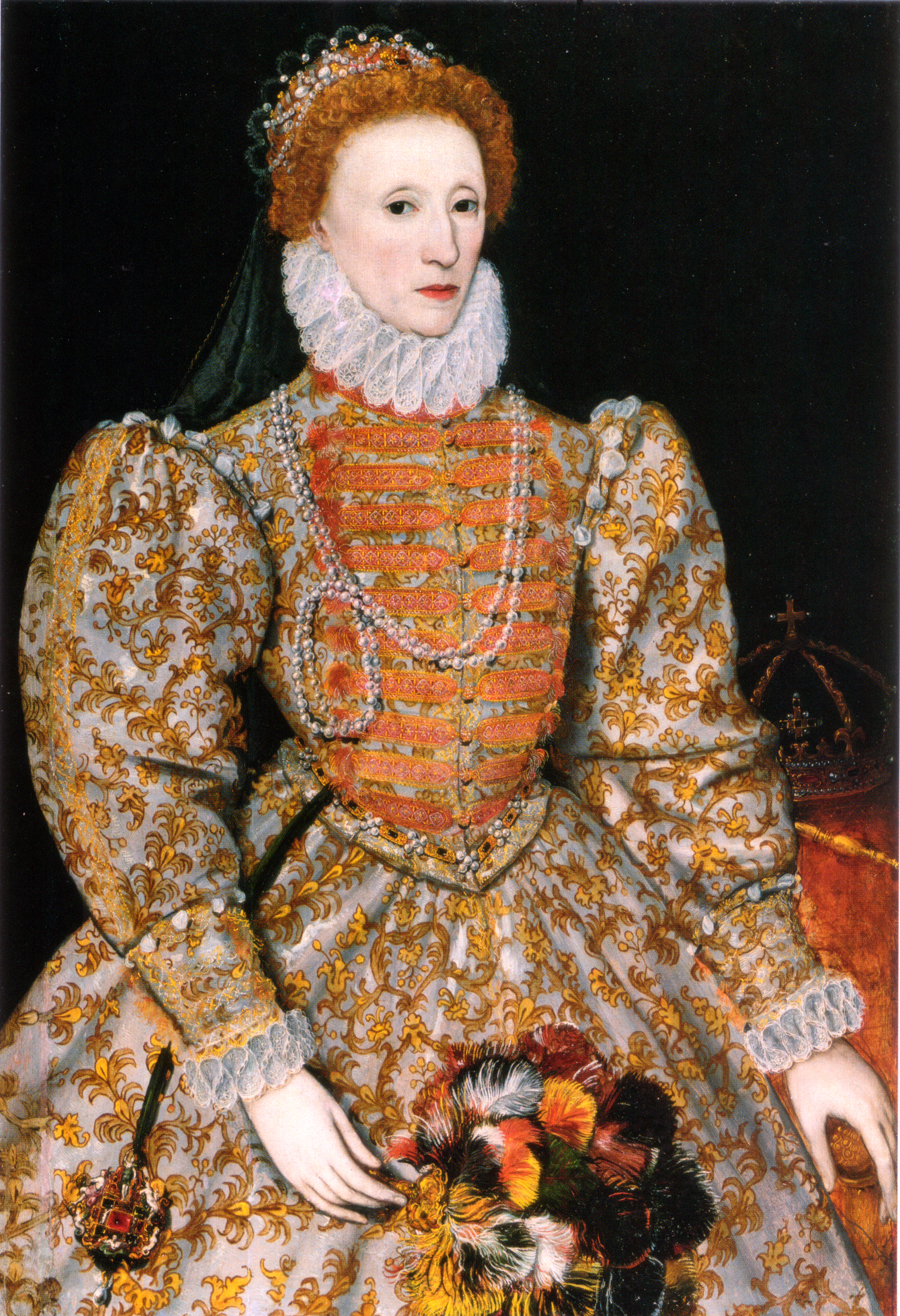
File:Darnley stage 3.jpgSince today is the Feast of the Nativity of the Blessed Virgin Mary, I'll begin this broadcast with the Collect for the Feast--and with the note that Elizabethan England celebrated the birth of the last Tudor monarch with more festivity than that of the Mother of God!

Starting with some biographical notes about Elizabeth Tudor (pictured at left: Wikipedia commons source), I'll then discuss her Reformation Parliament--Catholic resistance--the Via Media of the Church of England (39 Articles and the Book of Common Prayer. I'll also discuss how the compromise of the established church, between Calvinism and Catholicism, pleased no one, as "Puritans" were disappointed in the incomplete Reform and latent "Popishness" of the Church of England.

Then recusancy and resistance, rebellion and martyrdom will occupy much of the broadcast, as I discuss The Northern Rebellion, Pope St. Pius V's Papal Bull "Regnans in Excelsis", and the choice Catholics faced: loyalty to country; loyality to Church. The efforts of missionary priests; their dangerous missions; the laity's way of dealing with recusancy and conformity--those issues are very important and highlight the struggles and sacrifices of Catholics during Elizabeth's 45 year reign.

Next week, I'll wrap up the discussion of Elizabeth by looking at the diplomatic struggles she faced with Mary, Queen of Scots and Philip II of Spain--in the religious context of the 16th century, including war in the Spanish Netherlands, the Spanish Armada, reaction to its failure, war in Ireland, and the succession. This Virgin Queen left no offspring to follow her on the throne, so James VI of Scotland, Mary of Scotland's son, comes south in 1603 when Elizabeth dies.

Supremacy and Survival: How Catholics Endured the English Reformation is an excellent resource for understanding this reign, although I do say so myself.  welcome all listeners of Radio Maria US to my blog, whether you're listening on one of their radio stations or on line or through one of their apps.  I invite you to call in with questions and comments toll-free at 866-333-MARY(6279). Just a reminder, too, that podcasts of previous episodes of The English Reformation Today are available on the Radio Maria US website.

Saturday, September 1, 2012

The English Reformation Today, Episode Five

I begin month two of this three month commitment to a weekly radio show--The Engish Reformation Today! Today we'll discuss--and I hope you'll call in so we do have a discussion--the reign of Mary I, Henry VIII and Catherine of Aragon's daughter, who was the first Queen Regnant of England. She was the first queen to be crowned and anointed in almost the same ceremony as all the previous kings of England (with slight adaptations due her sex) and she restored Catholicism in England--and she also had Protestants and heretics burned alive at the stake. That's why she's often called "Bloody Mary" of course.

For the opening prayer, we'll begin with this prayer to Our Lady of Walsingham:

O blessed Virgin Mary, Our Lady of Walsingham, Mother of God and our most gentle Queen and Mother, look down in mercy upon us, our parish, our country, our homes, and our families, and upon all who greatly hope and trust in your prayers, (especially the intentions of the Radio Maria community). By you it was that Jesus, our Savior and hope, was given to the world; and he has given you to us that we may hope still more. Plead for us your children, whom you did receive and accept at the foot of the Cross, O sorrowful Mother. Intercede for our separated brethren that with us in the one true fold they may be united to the Chief Shepherd, the Vicar of your Son. Pray for us all, dear Mother, that by faith fruitful in good works we all may be made worthy to see and praise God, together with you in our heavenly home. Amen.

Our Lady of Walsingham, Pray for us.

Today's topic is certainly not without controversy. Mary I came to the throne intending to restore Catholicism and the ties of the Church in England with the Pope and the universal Church--and I'll certainly describe the constructive program developed by Reginald Cardinal Pole the last Catholic Archbishop of Canterbury--a program that even anticipated many of the reforms of the Council of Trent. In addition to all those positive efforts, however, her government revived and enforced the Heresy Laws that had been repealed during the reign of Edward VI--and we have to evaluate the repercussions of the heresy campaigns that led to the executions of almost three hundred men and women, burned alive at the stake.

As background, I offer this review article I wrote for First Things magazine in 2009 that summarizes the state of Marian studies at that point. Here's an exceprt:

Why so much attention now on this queen, whom many historians and common opinion have written off as an anomaly the history of English monacrchy—bigoted, cruel, and foreign? Part of it must be the overall fascination with the Tudor dynasty. Elizabeth, Anne Boleyn, and Henry’s other spouses have been studied enough: It’s just Mary’s turn—and a new interpretation of her old story will provoke interest

I propose that the attention is more securely founded upon the revisionist history of the English Reformation. The work of Eamon Duffy, Christopher Haigh, John Bossy, Alison Shell, and others have demonstrated, at least, that the English Reformation was not the break with the past the Whig historical myth of progress in English history proclaimed. Some English people wanted to remain Catholic; they wanted the Mass, devotion to Mary and the saints, prayer for the dead, and the monasteries to stay open, and they did not like the religious changes Henry VIII, Edward VI, and Elizabeth I legislated and forced on them. The history of rebellion, resistance, and recusancy throughout those reigns represents a clear pattern.

Then what was the role of Mary I’s reign in this history of religious change? Was it just another religious swing back and forth during the Tudor dynasty? Was her re-establishment of Catholicism simply a revival of the Middle Ages without consideration of the efforts of the Council of Trent and the counter-reformation movement?

Eamon Duffy answers that last question with a well documented, cogently argued, “not hardly.” Reginald Cardinal Pole, who came within a few votes of being elected pope in 1549, led the Catholic revival in terms Thomas More, John Fisher, John Colet, and Erasmus would have understood: centered on the sacraments, Sacred Scripture and tradition, homilies and catechesis, humanist learning. Duffy’s book focuses on Pole’s program for reform and renewal that anticipated the Council of Trent: diocesan seminaries, resident bishops, a comprehensive catechism—even tabernacles on altars and an English translation of the Holy Bible. . . .

These five reevaluations [the books I reviewed] of Mary I and her reign offer not apologies or whitewash but argue for a more dispassionate awareness of her circumstances, efforts, and achievements. Whether or not this new view of Mary I is accepted may depend on open-mindedness and a willingness, for instance, to understand the propaganda of John Foxe and the Black Legend of Catholicism in English History.

The crucial issue for the success or failure of her reign was whether she had a Catholic heir to succeed her. Since she did not, Elizabeth succeeded to the throne and dismissed all of Pole’s bishops save one. As Elizabeth ignored her last will and testament, historians ignored Mary’s circumstances, forgot her efforts and achievements and she gained a nickname she might not deserve. But she and Cardinal Pole left a legacy beyond the fires of Smithfield: an underground counter-reformation Catholicism in England, supporting the faithful and ready for revival again—even if it had to wait almost 300 years.

And I would say this trend in studying the reign of Mary I has continued--her reign is NOT just an anomaly in the progression of England as a Protestant country--but that the legacy of her reign is decidedly mixed. On the one hand, her Archbishop of Canterbury had certainly turned around the Catholic hierarchy and many of the priests, recalling them to the "one, holy, catholic, and apostolic" Church: only one bishop from her reign submitted to Elizabeth I's Acts of Supremacy and Uniformity when all BUT one submitted during the reign of Henry VIII. But on the other hand, the fires of Smithfield and the propaganda opportunity seized by John Foxe and others, created a cultural memory about the perils of a Catholic ruler or even Catholic influence on society that endured throughout the centuries, revived during the reign of James II, and contributes to a certain anti-Catholicism even today.

I welcome all listeners of Radio Maria US to my blog, whether you're listening on one of their radio stations or on line or through one of their apps. Next week on The English Reformation Today we'll discuss the establishment of the via media Church of England in Elizabeth I's first Parliament and the beginning of recusancy in England. I invite you to call in with questions and comments toll-free at 866-333-MARY(6279). Just a reminder, too, that podcasts of previous episodes of The English Reformation Today are available on the Radio Maria US website.

Saturday, August 25, 2012

The English Reformation Today, Episode Four

In this episode, I'll take up where we left off last week, with the Pilgrimage of Grace and the Dissolution of the Monasteries. I'll highlight the martyrs of the Dissolution and discuss one of the Forty Martyrs of England and Wales canonized by Pope Paul VI in 1970, St. John Stone. I'll wrap up our discussion of Henry VIII with some notes on the confusion of his "reformation" and his legacy, with comments from Winston Churchill and from W.G. Hoskins.

Then, I'll move on to the reign of Edward VI and the coming of a true, Reformed/Calvinist religious reformation to England, mostly through the efforts of Thomas Cranmer, Archbishop of Canterbury and his The Book of Common Prayer and the Forty-Two/Thirty-Nine Articles. Furthermore, I'll describe the influence of Continental Reformers and the popular reaction to these new, more radical changes: rebellion. I'll examine Edward VI and his position as a young king trying to control his older half-sister Mary (conflict over her devotion to Mass) and the attempt to prevent a Catholic Queen from succeeding him (the story of Lady Jane Grey).

I'll also highlight the change of mind of at least two of the bishops who had sworn the Oath to Henry but during his son's reign, protested against the changes taking place: Stephen Gardiner, Bishop of Winchester and Edward Bonner, Bishop of London--they ended up in the Tower of London. Stephen Gardiner had even assisted Henry VIII in arguing for the annulment of his first marriage. Gardiner and Bonner had gone along with the will of their monarch so far, but when the government destroyed the Holy Sacrifice of the Mass and forbade its celebration, they had to protest.

I welcome all listeners of Radio Maria US to my blog, whether you're listening on one of their radio stations or on line or through one of their apps. Next week on The English Reformation Today we'll discuss the restoration of Catholicism with the reign of Mary I, the first Queen Regnant of England and her legacy. I invite you to call in with questions and comments toll-free at 866-333-MARY(6279). Just a reminder, too, that podcasts of previous episodes of The English Reformation Today are available on the Radio Maria US website.

Thursday, August 23, 2012

Podcasts of The English Reformation Today

Podcasts of the first three episodes of my Radio Maria US show are now available and here is a link to the Program page:

“The English Reformation Today” tells the story of the English Reformation and its aftermath, focusing on how it affected Catholics in England after their Church was driven underground and their Faith and its practice outlawed. The series also highlights the on-going significance of the English Reformation today in many ways: issues of religious freedom; ecumenical issues between the Catholic Church and the Church of England, etc.

Episode One: August 4, 2012:  The English Reformation Today: Why is it relevant?

Relevance of the English Reformation for religious freedom issues in the United States (and around the world) today, including the HHS Mandate; context for the Personal Ordinariate established by Pope Benedict XVI for groups of Anglicans wishing to become Catholics; background for the U.S. Constitution’s First Amendment. Distinction of the English Reformation from the Protestant Reformation on the Continent in the 16th century.

Episode Two: August 11, 2012: Before the Reformation:

Brief notes on changing interpretations of the English Reformation in historical studies. Description of the Catholic Church in England before the Reformation/Break from Rome: based on landmark study by Eamon Duffy, note the vitality and integration of Catholicism with everyday life in England: introduce some main characters of the story: Thomas More, Thomas Wolsey, John Fisher, Henry VIII.

Episode Three: August 18, 2012: Henry VIII and the Break from Rome:

Tell the story of why Henry VIII broke away from the Holy Father in Rome and established the Church of England with himself as the Supreme Head and Governor; describe the first martyrs (the Carthusians, Thomas More, John Fisher, etc); the Dissolution of the Monasteries; the death of Henry VIII and his legacy.

This Saturday, August 25, we will pick up where we left off last week with the Pilgrimage of Grace and the Dissolution of the Monasteries. Then I'll describe the legacy of Henry VIII and the coming of a true Protestant--Calvinist--Reformation in England during the reign of his son, Edward VI.

Friday, August 17, 2012

I Confess

That I am a Catholic (and I hope there's enough evidence to find me guilty of the same!) writing, blogging, and talking about the English Reformation and its effects on Catholics in England in its long aftermath. Since I'm writing popular history, speaking often to Catholic audiences through Catholic media, and I think I've been upfront about it, it might not be that much of an issue. But in the exalted halls of academia, the religious background and practice of some historians of the English Reformation has become an issue--because they are Catholic (or to English academia, ROMAN Catholic--RC).

Peter Marshall, whose article on "(Re)defining the English Reformation" I linked yesterday, discussed that issue, referring to some confusion and even supposition that anyone who writes at all sympathetically about Catholics before and after the English Reformation, just must be a Catholic (and its effects on the acceptance of the revisionist view of that event):

There is, I think, little doubt about where much of this apparent nervousness in the academy has come from. The extraordinary success and influence of Eamon Duffy’s The Stripping of the Altars in the field of English Reformation studies has from the outset been coupled with widespread awareness of, and comment on, the circumstance that its author is a deeply committed Roman Catholic layman. This coupled with the fact that a significant historiographical precursor to Duffy, Scarisbrick’s The Reformation and the English People, was also authored by a politically prominent British Catholic, has encouraged some critics to identify a confessionally grounded school of historical interpretation at work: Catholic revisionism. This is a phenomenon perhaps more substantial in the eye of some beholders than in reality, for it would appear that not all Catholic revisionists are actually Roman Catholics. The fact that Christopher Haigh, a self-styled Anglican agnostic, is regularly accused of belonging to this tendency has for some time been a source of wry amusement to himself and to others. More incongruously still, a new biography of Luther identifies the late Richard Marius, along with Haigh, as another of the Catholic apologists of whom readers ought to be wary. Marius was in fact a religious skeptic and a sometime Southern Baptist.

(Derek Wilson was the author who made that error. I cite A.G. Dickens' frustration with Christopher Haigh in Supremacy and Survival: How Catholics Endured the English Reformation--if Haigh wasn't a Catholic, Dickens wondered, how could he write such things!)

Marshall goes on to note how Eamon Duffy has responded to these issues, which was included in Duffy's recent Saints, Sacrilege and Sedition:

Duffy himself has now explicitly addressed the issue in print, and it is fair to say that he has not entirely sought to douse the fire that some clearly suspect to be smoldering beneath the smoke of so-called Catholic revisionism. He freely acknowledges that there is a “notable Catholic presence” in Reformation-related studies, naming John Bossy, Peter Burke, and Bob Scribner in this connection, as well as, in the younger generation, myself and Richard Rex. In part, Duffy adduces a sociodemographic explanation for this phenomenon: the greater numbers of Catholics entering higher education in Britain in the years after the 1944 Education Act. But he also detects a kind of elective affinity between Catholic academics, practicing or lapsed, and the study of late medieval and early modern religion, a greater openness on the part of those formed in the Catholic tradition to the internal logic and symbolic coherence of a generally alien cultural world. Insofar as Catholic revisionism exists at all, suggests Duffy, it may simply represent “the absence of a Protestant historiographical agenda at least as much as the presence of a Catholic one.” Not unreasonably, Duffy points to the fact that critics have seldom or never commented on the Protestant faith, or the Protestant cultural background, of very significant numbers of historians of the English Reformation over many decades.

Then Marshall goes on to show that not only Catholic historians have noted the issue of confessional influences on historians; Anglicans and Puritans wondered about it too:

Yet this too has started to change, and sensitivity to the issue of confessional perspective in English Reformation studies is no longer simply a game of “spot the Catholic.” In a recent historiographical essay, the young (and Anglican) historian Alec Ryrie is quite prepared to name and shame, or at least to name, right across the ecclesiastical spectrum. So he writes about the “Protestant historian” Patrick Collinson and draws attention to a “confessionally colored” Anglican view of Reformation developments, exemplified by the writings of an Oxford-based scholar who is also a priest of the Church of England, Judith Maltby. The idea that an identifiably “Anglican agenda” can be detected in much recent Reformation scholarship has been taken further by a leading historian of Puritanism, Peter Lake, who warns that “many modern historians of the period retain a stake—rarely owned or explicated—in the very disputes they are seeking to explain.”In a succession of books and articles, Lake, sometimes writing in collaboration with Michael Questier, has accused an entire cohort of leading Reformation historians—Maltby, Alexandra Walsham, Norman Jones, Ian Green, Christopher Marsh—of manufacturing an overly consensual Anglican religious culture for the immediate post-Reformation period, and of doing so largely by choosing to take at something close to face value highly polemical constructions of both Puritanism and Laudianism, positions from which the majority of the people can be presented as sensibly dissenting.

Marshall's article bears much close reading: he also addresses the (more common than I had realized) view of the Long English Reformation (via Nicholas Tyacke), the Second Reformation (via Patrick Collinson), the contentious issue of Lollardy and its influence (Duffy and Rex vs. McCulloch), and the whole field of Mary I's reign and how it should be judged and evaluated--he packs a great deal into 22 pages.

Thursday, August 16, 2012

Of the Making of Books about the English Reformation

There seems to be no end: here is another new title about the English Reformation in the 16th century, by Derek Wilson: The English Reformation: Religion, Politics and Fear: How England was Transformed by the Tudors, from Running Press. It's part of their BHO series--A "Brief History Of". It's 288 pages and seems to have a different view of the Reformation:

Religion, politics and fear: how England was transformed by the Tudors. The English Reformation was a unique turning point in English history. Derek Wilson retells the story of how the Tudor monarchs transformed English religion and why it still matters today. Recent scholarly research has undermined the traditional view of the Reformation as an event that occurred solely amongst the elite. Wilson now shows that, although the transformation was political and had a huge impact on English identity, on England's relationships with its European neighbours and on the foundations of its empire, it was essentially a revolution from the ground up. By 1600, in just eighty years, England had become a radically different nation in which family, work and politics, as well as religion, were dramatically altered.

Looks like Wilson is going back to A.G. Dickens and G.R. Elton's views. I'll be on the look-out for reviews of this BHO. In the meantime, here is a BE (brief essay) on the state of the history of the history of the English Reformation or English Reformations, by Peter Marshall, author of Religious Identities in Henry VIII's England, Reformation England 1480-1642, Beliefs and the Dead in Reformation England, and The Reformation: A Very Short Introduction (only 168 pages!).

It's interesting to note that Peter Milward, SJ (the historian who has written a couple of the better books on Shakespeare and Catholicism) had a book published with the same illustration on the cover: The English Reformation: From Tragic Reality to Dramatic Representation which was published by Family Publications, based near Oxford, which sadly went out of business a couple of years ago.

Tuesday, August 14, 2012

The 2012 Southwell Lecture

Earlier this year, Professor Peter Marshall of the University of Warwick, presented the annual Southwell lecture at Fordham University:

The St. Robert Southwell, S.J., Lecture Series is devoted to exploring the history and theology of the Christian Church in the early modern period. The series targets the scholarship of the Reformation and the Counter-Reformation in Europe and the Americas from 1500 to 1750.

Fordham provides a summary of the lecture, given on March 28, 2012:

Historians who study the Protestant Reformation tend to focus on what factors led to the creation of the Protestant Church. However, a slightly different question is often overlooked: What factors caused devoted Catholics to abandon their faith and become reformers?

Peter Marshall, D.Phil., professor of history at the University of Warwick, presented the English Reformation from this alternative standpoint at the latest installment of the St. Robert Southwell, S.J., Lecture Series, held March 28 at Fordham.

Taking a “forward” look at the Reformation, Marshall told the audience to keep in mind that the first generations of reformers were not “early Protestants,” as scholars retrospectively call them, but, rather, late medieval Catholic Christians.

“There were no ‘Protestants’ in early Tudor England,” said Marshall, author of The Catholic Priesthood and the English Reformation (Oxford University Press, 1994). “The word was not used at all to refer to English people before the 1550s, and it was not widely adopted by adherents of the Reformation themselves until well into the reign of Elizabeth.”


According to Marshall, the subtle difference between these angles is important when considering the origins of the Reformation.

Read the rest of this summary here.

On my radio show, The English Reformation Today, last Saturday, I mentioned this mystery of how the majority of Catholics in England eventually left the Church and conformed to the established Church of England. I would like to see more of Professor Marshall's article and his proposed solution of that mystery.

Saturday, August 11, 2012

The English Reformation Today, Episode Two

Today we are going to look at the history of the history of the English Reformation briefly on my radio show, just to set up the context for examining the status of the Catholic Church in England before Henry VIII broke away from Rome. The great guide to this era for me has been Eamon Duffy, whose books The Stripping of the Altars, The Voices of Morebath, Marking the Hours, and his latest, Saints, Sacrilege and Sedition: Religion and Conflict in the Tudor Reformations, offer great insights into the religious changes that occurred during the Tudor Dynasty. His work is always based on research from primary sources.

Here's a couple of articles I wrote for PraytheMass.org summarizing his descriptions of Holy Week and the Triduum.

The other study that informs my understanding of how historians have written about the history of the English Reformation is English Catholic Historians and the English Reformation by John Vidmar, OP. Unfortunately, it is very expensive, as is Aidan Nichols' The Panther and the Hind: A Theological History of Anglicanism, which covers some very good ground of how historians/theologians in the Church of England viewed its history, especially Richard Hooker:

At a time if division and crisis in the Church of England, its identity and mission have come into question as never before. Its own members, but also the wider community of Christians in both East and West, need to understand its history and the reasons for its present crisis, as well as the distinctive contribution it can make to the Great Church of the future. Aidan Nichols provides a clear summary and analysis of the history of the Church of England by way of a sensitive appraisal of its rich theological tradition. This also gives the reader a firm grasp of the context of the issues currently being discussed by the Anglican-Roman Catholic International Commission. Aidan Nichols, O.P. is a member of the Dominican community at Blackfriars, Cambridge. He is the author of Rome and the Eastern Churches, The Shape of Catholic Theology and many other books.

I welcome all listeners of Radio Maria US to my blog, whether you're listening on one of their radio stations or on line or through one of their apps. Next week on The English Reformation Today we'll discuss Henry VIII, the Break from Rome, and its consequences during his reign. I invite you to call in with questions and comments toll-free at 866-333-MARY(6279).

And here's the mystery to consider this week and the next couple of weeks: if, as the evidence Eamon Duffy and others have offered demonstrates, the Catholic faithful in England were so devoted to the services and Sacraments of the Church, why did they ultimately go along with the changes that Henry VIII, Edward VI, and Elizabeth I introduced through Parliamentary laws and enforcement?

Friday, August 10, 2012

Erasmus and More Meet Prince Henry

From Tea at Trianon comes this link to a painting by Frank Cadogan Cowper:

The painting shows the interior of the medieval palace of Greenwich: a man in black kneels before three small children in gorgeous apparel. Behind him and to the right, a tall manstands in profile, leaning on a stick. The story is a charming one, and it is true. Erasmus of Rotterdam was the most famous scholar of his day. In 1499 he was visiting England. He was in Greenwich one day with his young friend Thomas More, who made him an intriguing invitation.

"I prithee, bear me company to a certain great house nigh to here. There thou shalt find friends, who have a great desire to see thee." - More.

The house turned out to be the royal palace, and the 'friends' were the royal children. One of them was the future Henry VIII, who was eight years of age at the time. The infant prince promptly demanded that the great scholar should write them a poem - which he did.

Cowper was a pre-Raphaelite painter who specialized in historical scenes.

Tomorrow, when I talk about the Catholic Church in England before the Reformation on my Radio Maria program on "The English Reformation Today", I will be discussing the reforming efforts of St. Thomas More and St. John Fisher, the latter of whom invited Erasmus to come to England during a subsequent visit to teach Greek at Cambridge. The meeting depicted above took place during Erasmus' first visit:

Erasmus visited England for the first time in the summer of 1499. He came in the company of young William Blount, lord Mountjoy, who had been one of his pupils in Paris. He seems to have resided, for a while, in London with Sir William Say, his pupil’s father-in-law; then, at a country-house belonging to lord Mountjoy at Greenwich. He spent about two months at Oxford in the college of St. Mary, an establishment for students of the Augustinian order presided over by prior Richard Charnock. He was back in London in the beginning of December; and, after a round-about journey by Dover, Calais and Tournehem, he arrived in Paris sometime about the end of January, 1500. His visit had been short, lasting about six months, just long enough to make him acquainted with the most prominent scholars in England; and his correspondence enables us to judge of the progress which the classical renascence had made there.

In a letter to Robert Fisher, “the kyng’s solicitor at Rome,” he instances four scholars whom he cannot praise too highly—John Colet, William Grocyn, Thomas Linacre and Thomas More. These men had learning neither hackneyed nor trivial, but deep, accurate, ancient Latin and Greek.

"When I hear my Colet, I seem to be listening to Plato himself. In Grocyn, who does not marvel at such a perfect round of learning? What can be more acute, profound and delicate than the judgment of Linacre? What has nature ever created more gentle, more sweet, more happy than the genius of Thomas More? I need not go through the list. It is marvellous how general and abundant is the harvest of ancient learning in this country."

Author Michael Davies describes the relationship between Erasmus and St. John Fisher thus:

Erasmus admired the holiness of John Fisher's life, and there can have been few men that he respected more. In a letter to a priest in Rome in 1512 he wrote: "Unless I am sadly mistaken, he is the one man at this time who is incomparable for uprightness of life, for learning, and for greatness of soul." In 1516 Erasmus published his Novum lnstrumentum. This was the Greek text of the New Testament with Erasmus's own translation into Latin. This work was the cause of Fisher deciding to learn Greek at the age of forty-eight, and he had the good fortune to receive his first instruction from Erasmus himself; who stayed with the bishop in Rochester for ten days in the same year. Fisher then went on to learn Hebrew. The fact that he was able to gain a good working knowledge of these languages despite his time-consuming duties as bishop, chancellor, and counsellor to the king provides a striking indication of his tenacity of purpose.