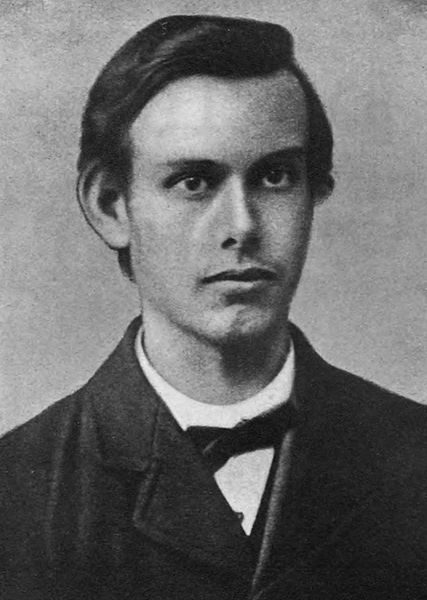
Now retired from his former position as Headmaster of St. Edward’s School, Cheltenham, he spoke recently with CWR about the film Gerald Manley Hopkins: Priest-Poet, which will debut in the United Kingdom and Ireland on December 9th (12:00 pm London Time) and in the United States and Canada on December 18th (8:00 pm EST) on EWTN. . . .
Further research and information on the English Reformation, English Catholic martyrs, and related topics by the author of SUPREMACY AND SURVIVAL: HOW CATHOLICS ENDURED THE ENGLISH REFORMATION
Tuesday, December 15, 2020
This Friday: December 18: Andrew Nash on Gerard Manley Hopkins, SJ
Now retired from his former position as Headmaster of St. Edward’s School, Cheltenham, he spoke recently with CWR about the film Gerald Manley Hopkins: Priest-Poet, which will debut in the United Kingdom and Ireland on December 9th (12:00 pm London Time) and in the United States and Canada on December 18th (8:00 pm EST) on EWTN. . . .
Saturday, October 31, 2020
St. John Henry Newman's "Re-Imagining" of Purgatory
On Monday, October 26, I watched Professor Kenneth Parker's Journey Home episode on EWTN. He is currently the Ryan Endowed Chair for Newman Studies, Professor of Historical Theology and soon will be the Chairman of the newly formed Department of Catholic Studies both at Duquesne University.
He grew up in a Christian community I'd never heard of before, the Pilgrim Holiness Church. He studied Historical Theology at the University of Cambridge, became a Catholic in 1982 and discerned a vocation as a Benedictine monk in California before returning to the academic world. As he says on his page at Duquesne:
My original area of scholarship focused on early modern English theology, and I have published on English sabbatarianism, Richard Greenham, and Elizabethan pastoral care. In the late 1980s my research interests expanded to include John Henry Newman and Christian historiographical traditions. In the early 2000s, I began exploring the papal infallibility debates of the 1860s and how history was employed by key theologians. This research has drawn me into studies of two Irish American archepiscopal brothers, Francis and Peter Kenrick, who profoundly influenced the discourse on papal authority in the 19th-century North Atlantic Catholic world. Their Irish background has led to research on the Irish gallican tradition and its impact on Catholicism in the United States.It is the voice of friends around thy bed,
Who say the "Subvenite" with the priest.
Hither the echoes come; before the Throne
Stands the great Angel of the Agony,
The same who strengthen'd Him, what time He knelt
Lone in that garden shade, bedew'd with blood.
That Angel best can plead with Him for all
Tormented souls, the dying and the dead.
R. Come to his assistance, all you Saints of God: meet him, all you Angels of God: receiving his soul, offering it in the sight of the Most High. May Christ receive you, who hath called you, and may the Angels conduct you to Abraham's bosom. Receiving his (her) soul and offering it in the sight of the Most High.
V. Eternal rest give to him (her), Lord: and let perpetual light shine upon him (her). Offering it in the sight of the Most High.
There let me be,
And there in hope the lone night-watches keep,
Told out for me.
There, motionless, and happy in my pain,
Lone, not forlorn –
There will I sing my sad perpetual strain,
Until the morn,
There will I sing, and soothe my stricken breast,
Which ne’er can cease
To throb, and pine, and languish, till possest
Of its Sole Peace.
There will I sing my absent Lord and Love: –
Take me away,
That sooner I may rise, and go above,
And see Him in the truth of everlasting day.
The sight of Him will kindle in thy heart,
All tender, gracious, reverential thoughts.
Thou wilt be sick with love, and yearn for Him,
And feel as though thou couldst but pity Him,
That one so sweet should e’er have placed Himself
At disadvantage such, as to be used
So vilely by a being so vile as thee.
There is a pleading in His pensive eyes
Will pierce thee to the quick, and trouble thee.
And thou wilt hate and loathe thyself; for, though
Now sinless, thou wilt feel that thou hast sinned,
As never thou didst feel; and wilt desire
To slink away, and hide thee from His sight;
And yet wilt have a longing aye to dwell
Within the beauty of His countenance.
And these two pains, so counter and so keen,—
The longing for Him, when thou seest Him not;
The shame of self at thought of seeing Him,—
Will be thy veriest, sharpest purgatory.]
I read the Dream with awe and admiration. However utterly I may differ from the entourage in which Dr. Newman’s present creed surrounds the central idea, I must feel that the central idea is as true, as it is noble, and it, as I suppose, is this: The longing of the soul to behold the Deity … that the soul is ready, even glad, to be hurled back to any depth, to endure any pain, from the moment it becomes aware of God’s actual perfection and its own impurity and meanness.
Making sweet music, as each fold revolves
Upon its ready hinge. And ye great powers,
Angels of Purgatory, receive from me
My charge, a precious soul, until the day,
When, from all bond and forfeiture released,
I shall reclaim it for the courts of light.
In my most loving arms I now enfold thee,
And o’er the penal waters, as they roll,
I poise thee, and I lower thee, and hold thee.
And carefully I dip thee in the lake,
And thou, without a sob or a resistance,
Dost through the flood thy rapid passage take,
Sinking deep, deeper, into the dim distance.
Angels, to whom the willing task is given,
Shall tend, and nurse, and lull thee, as thou liest;
And Masses on the earth, and prayers in heaven,
Shall aid thee at the Throne of the Most Highest.
Farewell, but not for ever brother dear,
Be brave and patient on thy bed of sorrow;
Swiftly shall pass thy night of trial here,
And I will come and wake thee on the morrow.
Monday, July 8, 2019
Significance of Newman's Canonization
If it's Matt--and it just might be since I've been talking to Anna the past three weeks--it would be appropriate since he works for the Coming Home Network, helping pastors and family members on their journeys to the Catholic Church. Newman's example as a convert and then as one aiding those who wanted to become Catholics will be essential to his role as a canonized saint. I quoted that passage from the 1865 edition of the Apologia pro Vita Sua a couple of weeks ago in which he noted some difficulties he had with certain Catholic teachings but then stated: "I had no difficulty in believing [them], as soon as I believed that the Catholic Roman Church was the oracle of God, and that she had declared this doctrine to be part of the original revelation.
That's a statement so clear that "cradle" Catholics, baptized and initiated throughout their childhoods should meditate upon it. Do I believe that the "Catholic Roman Church" is the oracle of God, teaching His revelation? As a late great friend of mine commented in another context, if I believe that I receive the Body, Blood, Soul, and Divinity of Jesus Christ at Mass in the Catholic Church, how can I dissent from other Church teaching, like against abortion, contraception, and euthanasia? Once I believe she is the sure guide and teacher of God's revelation, I believe her and accept her authority, based upon the Word God, the Holy Bible and the Apostolic Tradition. Newman's faith is a great model to follow in a skeptical and unbelieving world for those who came to the Catholic Church from other faith communities, those who converted, and those who grew up Catholic.
Newman studied and read himself into the Catholic Roman Church mainly through reading the Fathers of the Church and then seeing their teaching handed on through the ages until his own day. As Father Ian Ker says in his Newman on Vatican II, he was a historical theologian. Newman is one of the great guides to Church History. He acknowledges all the failures and failings of the members of the Church at the same time he has great faith and confidence of the guidance of the Holy Spirit in the Church, keeping her from error in teaching on morals and doctrine.
Another great significance to Newman's canonization is the role of Mother Mary Angelica's EWTN: both miracles obtained by his intercession were requested by Catholics in the United States of America who had come to know Newman because of programming on EWTN!
For those who haven't studied Newman for years or who have barely heard of him, I'd recommend starting with the edition of his sermons from Paulist Press in their Classics of Western Spirituality. Father Ian Ker selected the sermons and provides an excellent introduction. I'd also recommend the Paulist Press edition of his Meditations and Devotions, which are quite eloquent and simple, also edited by Father Ian Ker. It includes Nmost famous meditation, "Hope in God--Creator":
1. God was all-complete, all-blessed in Himself; but it was His will to create a world for His glory. He is Almighty, and might have done all things Himself, but it has been His will to bring about His purposes by the beings He has created. We are all created to His glory—we are created to do His will. I am created to do something or to be something for which no one else is created; I have a place in God's counsels, in God's world, which no one else has; whether I be rich or poor, despised or esteemed by man, God knows me and calls me by my name.
2. God has created me to do Him some definite service; He has committed some work to me which He has not committed to another. I have my mission—I never may know it in this life, but I shall be told it in the next. Somehow I am necessary for His purposes, as necessary in my place as an Archangel in his—if, indeed, I fail, He can raise another, as He could make the stones children of Abraham. Yet I have a part in this great work; I am a link in a chain, a bond of connexion between persons. He has not created me for naught. I shall do good, I shall do His work; I shall be an angel of peace, a preacher of truth in my own place, while not intending it, if I do but keep His commandments and serve Him in my calling.
3. Therefore I will trust Him. Whatever, wherever I am, I can never be thrown away. If I am in sickness, my sickness may serve Him; in perplexity, my perplexity may serve Him; if I am in sorrow, my sorrow may serve Him. My sickness, or perplexity, or sorrow may be necessary causes of some great end, which is quite beyond us. He does nothing in vain; He may prolong my life, He may shorten it; He knows what He is about. He may take away my friends, He may throw me among strangers, He may make me feel desolate, make my spirits sink, hide the future from me—still He knows what He is about.
O Adonai, O Ruler of Israel, Thou that guidest Joseph like a flock, O Emmanuel, O Sapientia, I give myself to Thee. I trust Thee wholly. Thou art wiser than I—more loving to me than I myself. Deign to fulfil Thy high purposes in me whatever they be—work in and through me. I am born to serve Thee, to be Thine, to be Thy instrument. Let me be Thy blind instrument. I ask not to see—I ask not to know—I ask simply to be used. Amen.
Friday, September 7, 2018
Brad S. Gregory at Franciscan University
There's one more broadcast today at 2:00 p.m. Eastern (1:00 p.m. Central) and then eventually the program will be loaded to EWTN's YouTube channel:
What were the consequences of the Protestant Reformation, both intended and unintended? And what good fruit has come from the Reformation?
Dr. Brad Gregory, author of Rebel in the Ranks: Martin Luther, the Reformation, and the Conflicts That Continue to Shape Our World, addressed these and other questions with Franciscan University Presents host Dr. Bob Rice, theology and catechetics professor at Franciscan University of Steubenville, and panelists Dr. Regis Martin and Dr. Scott Hahn of Franciscan University’s Theology Department.
Saturday, June 16, 2018
Catholicism in the Thirteen Colonies
EWTN, the late Mother Angelica's Catholic media empire, has now conquered book publishing--along with social media outreach, a tremendous website, a cable television station in the US and around the world, broadcast radio, and newspaper publishing--and in this case, EWTN has published a book by one of the priests who has presented many programs on EWTN on Church History. I presume this book could be adapted for a series of programs for EWTN television. Father Charles Connor celebrated his silver jubilee of ordination in the Diocese of Scranton in 2015.
Sophia Institute Press publishes and distributes the book, which I purchased at Eighth Day Books here in Wichita, Kansas. The publisher's book description:
In this comprehensive history, Fr. Charles Connor details the life of Catholics in the American Colonies. It’s a tale that begins with the flight of English Catholics to religious freedom in Maryland in 1634, and continues through the post-Revolutionary period, by which time the constitutions of all but four of the first 13 states contained harsh anti-Catholic provisions.
Catholic readers will be proud to learn from that despite almost two centuries of ever-more-intense religious persecutions and even harsher legal prohibitions, American Catholics in the colonies simply refused to abandon the Catholic Faith.
This is an indispensable reading for souls interested in the deep roots of Catholicism in America, and in the holy courage of scores of Catholics who kept remorseless forces from driving Catholicism out of America. Among other things, you’ll learn:
- The tale of The Ark and The Dove that carried the first settlers to Maryland
- The surprisingly harsh anti-Catholic sentiments of most of the Founding Fathers
- The Quaker/Catholic alliance that promoted both religions
- The role of persecuted Catholics in the Revolutionary War
- Why, in that War, many Catholics favored the anti-Catholic British
- The French Jesuits who evangelized New York and its frontier areas, and the saints who were martyred there
- The years in which, throughout the colonies, Catholics became an endangered species
Sunday, September 24, 2017
Happy Feast of Our Lady of Walsingham
In 2015 Pope Francis designated the Shrine as a Minor Basilica. As the old Catholic Encyclopedia explains, a Basilica is
a title assigned by formal concession or immemorial custom to certain more important churches, in virtue of which they enjoy privileges of an honorific character which are not always very clearly defined. Basilicas in this sense are divided into two classes, the greater or patriarchal, and the lesser, basilicas.
England's royalty often went on pilgrimage to Walsingham, as this website notes:
In the year 1226 news of the miraculous happenings at Walsingham reached royal ears in London, Henry III visited the shrine and granted the Canons the right to hold a weekly market and an annual fair. This Henry visited Walsingham thirteen times, and became a patron, giving many valuable gifts over the years including a gold crown for the image of Our Lady in the Chapel. The village of Walsingham grew around the success of the shrine as hostelries, eating houses and other business establishments catering to visitors sprang up. Indeed, the population of the village was at its height during the heyday of the medieval pilgrimages. A second religious order, the Franciscans, was given permission by Pope and King to erect a friary nearby in 1347, adding to the religious atmosphere of the little town.
Several English kings were devotees of the Shrine of Our Lady of Walsingham. Henry III’s son, Edward I, credited Our Lady with saving his life as a youth. He was playing chess in a vaulted room, when for no apparent reason, he felt the urge to get up from his seat. Seconds later a large stone fell from the roof and landed on the very spot where he had been sitting. Henry VII was a patron and credited Our Lady with his victory in the Battle of Stoke in 1487. We may be astounded to learn that Henry VIII made a pilgrimage to the shrine in 1511 to give thanks for the birth of a son, Prince Henry. He gave several valuable gifts and when he noticed that the windows of Our Lady’s Chapel were unglazed, he gave the money needed to complete that work. There was no hint at this happy time of the impending disaster. . . .
The next step in Henry’s evil plan was the supression of religious houses. Walsingham, being of secondary importance escaped the first round, but the time for its dissolution came in July of 1538. The shrine was closed and the beloved statue was taken away to London to suffer the fate of thousands of other statues and images in Reformation England: She was burned at Chelsea in the presence of Cromwell in September of 1538. In August of that same year, the priory was handed over to the King’s Commissioners, and after looting it of all its wealth, the Holy House of Richeldis was burned to the ground. At its dissolution, the Priory was sold to Sir Thomas Sidney.
Our Lady of Walsingham, pray for us!
O gracious Lady, glory of Jerusalem, Cypress of Sion and Joy of Israel, Rose of Jericho and Star of Bethlehem, O gracious Lady, our asking do not repel, in mercy all women ever thou dost excel. Therefore, Blessed Lady, grant then thy great grace, to all that thee devoutly visit in this place. Amen.
Monday, July 31, 2017
Looking Forward to the Weekend
Inspired by Raymond Arroyo's Facebook announcement of a good deal on the eBook, I purchased the final installment of his biography his former boss: Mother Angelica: Her Grand Silence: The Last Years and Living Legacy. (Available for a limited time only at the special price.)
As he notes, EWTN fades to the background as Mother Angelica resigns as CEO of her broadcast empire and then after she suffers a stroke that leaves her speechless. She also has to retire as the Abbess of her community after a trip to Japan during which she is severely injured and ends up bedridden. There is a struggle for leadership and control within her community, the Poor Clares of Perpetual Adoration, between two sisters. Eventually, both of them leave the community, other sisters left Hanceville, Alabama to found new houses of Poor Clares, the number of postulants decreases, and the community merges with another house of Poor Clares from Charlotte, North Carolina, whose Abbess becomes the leader of the combined house in Hanceville.
Some reviewers (as you may see on Amazon.com) don't like Arroyo airing this "dirty laundry". They think it reflects poorly on Mother Angelica. Canonized saints like St. Alphonsus Liquouri and St. Francis of Assisi have endured struggles in their community, maintaining their vision, and even their influence in the orders they've founded. When her cause for canonization opens in a few years, her faithfulness and suffering will be the foundation of the declaration that she is a Servant of God.
In the course of this book, Arroyo details Mother Angelica's physical sufferings and the dutiful care her sisters give her inside the cloistered convent. He also provides details of reports of spiritual manifestations, visions, and attacks of the devil. Arroyo includes excerpts from the many letters received attesting to her influence on the lives of viewers and listeners to EWTN, where her old series are still rerun. He dedicates a chapter to how he worked for Mother Angelica and how she influenced him. The last chapter describes her very last days of agony during the Holy Week of 2016. The book exhibits great transparency and honesty about her love of God, her faithfulness to His inspirations, and her personality.
I have to admit that her story and her written works have appealed to me much more than her broadcast appearances, her old shows that EWTN airs on television and radio. Arroyo explains her importance for Catholics in the United States and around the world faithfully and loyally.
Sunday, July 3, 2016
Catholic Maryland on EWTN
How did Catholicism come to the United States of America? EWTN sets out to answer this question in a new eight-part mini-series “Catholic Beginnings: Maryland” that begins at 6:30 p.m. ET, Sunday, July 3 and runs through Sunday, July 10. The series, hosted by Father Charles Connor of St. Mary’s Seminary in Emmitsburg, Md., begins on St. Clements Island in Southern Maryland. Throughout the week, you will explore other famous Catholic sites such as the historic “Dove” ship, colonial St. Mary’s City and St. Inigoes, Maryland; Newtown Manor and St. Francis Xavier cemetery; St. Francis Xavier and St. Ignatius Churches; as well as the Carmel monastery at Port Tobacco.
As Fr. Connor notes, in this series, “we are not speaking of the Spanish settlement of Florida, which is earlier. We are not speaking of the French settlement of New England and Canada, which is earlier. We are speaking rather about the 13 colonies which became the nucleus of the United States of America.”
How many people who visit St. Clements Island today realize they are standing on the ground where the first Catholic Mass in what would become the United States was celebrated? How many realize that the first cross in what would be the U.S. was erected on this island by Jesuits, who were fleeing religious persecution in England? How many realize that the settlers, who were seeking religious freedom in the New World and granting it to others, would later be denied this freedom themselves?
Then Calvert set out to found a colony in the New World where Catholics could prove their loyalty to the monarch without renouncing their faith. Obtaining charters from James I and then his heir, Charles I, Calvert planned colonies at Avalon in Canada and then in Maryland — named for Charles’ Catholic queen, Henrietta Maria — bordering Virginia.
Although he died before the Maryland colony started, he left his son Cecilius Calvert a project for Catholics and Anglicans to live and work together in peace and prosperity. . . .
Tuesday, May 3, 2016
May the Fourth Be With You, on the Third
I've often wondered why we don't celebrate this Feast, even as a Memorial or optional memorial in the USA. After all, we remember the great groups of martyrs in Mexico, in Japan, in China, in Korea, etc. Why don't we celebrate St. John Houghton and Companions on May 4 as we celebrate St. Charles Lwanga and Companions on June 3?
I wonder to whom I would suggest this addition to the Calendar in the USA?
I will post more about this feast tomorrow: May the Fourth be with you!
Monday, March 28, 2016
Mother Mary Angelica, RIP
Our debt to her is great.
One more thing: it was being on EWTN, both the television network and the radio programming, that gave real support to my work on the English Reformation. The day EWTN broadcast the Bookmark I had taped with Doug Keck in January of 2010 was Sunday, September 19, 2010. Pope Benedict XVI had just beatified John Henry Newman. The first printing of Supremacy and Survival sold out in November.
Thank you, Mother Angelica! I am certain that there are dozens and dozens of Catholic writers who would, could, and should express the same gratitude--some on a much greater scale!
Eternal rest grant unto her O Lord and let light perpetual shine upon her. May the souls of the faithful departed, through the mercy of God, rest in peace. Amen.
Santo Subito!
Tuesday, October 27, 2015
The Hound of Heaven
G.K. Chesterton describes “The Hound of Heaven” as “the greatest religious poem of modern times and one of the greatest of all times.” Now hear the incredible story behind the poem that has captured the hearts of minds of people around the world for more than 100 years.
“I fled Him, down the nights and down the days; I fled Him, down the arches of the years;”
This lively 30-minute documentary, filmed on location in England, airs 3 a.m. ET and 6:30 p.m. ET, Wednesday, Oct. 28 on EWTN. Hear the intriguing back story on the origins of the famous poem from many of the world’s leading experts, including Dr. Devin Brown and Joseph Pearce, host of EWTN’s “The Quest for Shakespeare” and author of “Bilbo's Journey: Discovering the Hidden Meaning in The Hobbit.”
“I fled Him, down the labyrinthine ways of my own mind;”
We learn from the documentary that, in February 1887, Wilfred Maynell, editor of the literary magazine “Merrie England,” received a strange package. In it was a small collection of poems written on tattered paper and covered with dirt and grime. There was no return address.
“And in the midst of tears I hid from Him, and under running laughter.”
Fortunately, Wilfred and his wife Alice recognized the literary worth of the poems and began to publish them. They hoped to meet the author one day and learn more about his life. What they found astonished them.
“Up vistaed hopes I sped; And shot, precipitated, Adown Titanic glooms of chasmed fears, From those strong Feet that followed, followed after.”
Find out more about this great poet’s life and work when EWTN airs this fascinating documentary about the author of a poem that J.R.R. Tolkien described as “one of the most profound expressions of mature spiritual experience” and one that influenced his own work!
Tuesday, April 15, 2014
The Extraordinary Form on EWTN
Although not at a convenient hour for me at least, EWTN is broadcasting a series called "Extraordinary Faith", which started Monday, April 14:
Extraordinary Faith is a monthly 30 minute television program on EWTN that celebrates the beauty of classical Catholic sacred art, architecture, music, and liturgy. We’ll take you to some of the world’s most awe-inspiring churches. We’ll introduce you to dynamic young Catholics whose faith has survived the demands of a secular world and who are becoming key players in the New Evangelization by sharing their enthusiasm for the traditions of Catholicism. We’ll show you the rich vocations harvest that is synonymous with the movement to restore the Extraordinary Form of Mass to mainstream parish life. We’ll give you the resources to find churches that offer traditional worship experiences, and we’ll even assist you to organize your own Latin Masses.
EWTN airs the program at 4:30 a.m. Eastern and 2:00 a.m. Eastern (Monday and Friday) this week, but the Extraordinary Faith website will post the 30 minute programs on the website a month after. The first episode centers on the Masses in the Extraordinary Form of the Latin Liturgy of the Roman Rite in the chapel at San Juan Capistrano:
We visit one of California’s oldest Catholic Missions, located one hour south of Los Angeles. Mission San Juan Capistrano is home to one of the first Extraordinary Form Mass sites established in North America after Vatican II. Pastor Msgr. Art Holquin explains the Mission’s history and current membership. We chat with George Sarah, a Hollywood composer and organizer of Latin Masses in Los Angeles, and with Joy Lanfranchi, organizer of the annual Lenten Pilgrimage in Orange County.
The second episode, I presume to be broadcast the week of May 12, centers on Harvard and Cambridge:
We visit one of America’s most famed Catholic musical institutions, the Boys’ Choir School at St. Paul Church in Harvard Square, Cambridge, Massachusetts. Music Director John Robinson and Pastor Fr. Michael Drea explain the history of the parish and school. The ladies who help organize Harvard’s Latin Masses discuss the challenges and opportunities they face, from dating to promoting the Extraordinary Form. We meet a prodigal young organist and composer, and we attend the first Tridentine Mass sung by the choir school in over 40 years.
Since we've visited both San Juan Capistrano--and witnessed the moving live Stations of the Cross in the modern Mission parish church--and St. Paul's in Cambridge, I do look forward to these programs, even if I have to wait for the on-line showings in May and June (etc).
Image Credit: from Wikipedia Commons, by the Priestly Fraternity of Saint Peter, available from http://fssp.org.
Friday, October 4, 2013
More on the Christian Heritage Centre
The Christian Heritage Centre segment was highlighted by close ups of a small crucifix owned by St. Thomas More and also a book from the library at St. Omers, where Stonyhurst College began, with doodles by John Carroll and Charles Carroll. John Carroll was of course the first Catholic bishop in the United States--in Baltimore Maryland--and Charles Carroll of Carrollton was the only Catholic signer of the Declaration of Independence.
The Christian Heritage Centre does have a website and they are accepting donations to build the exhibition space needed to have these objects from English Catholic history from the Middle Ages to the present day.
The Catholic Herald writes about the visit of the three to Washington here:
Lord Nicholas Windsor is this week leading a group from Stonyhurst College, in Lancashire, on a trip to the USA to promote the Stonyhurst Christian Heritage Centre Project.
He is accompanied by Lord Alton of Liverpool, a life peer of the House of Lords, and Stonyhurst’s curator, Jan Graffius, who has with her a number of sacred artefacts from the Stonyhurst collection, including St Thomas More’s crucifix.
Lord Nicholas Windsor and Lord Alton are visiting Washington DC, Baltimore and Boston to promote their joint project and to considerably widen access to the extensive historic collection.
Earlier in the week the group attended morning Mass celebrated by the Archbishop Emeritus, Cardinal Theodore McCarrick, at St Matthew’s Cathedral in Washington DC yesterday. Cardinal McCarrick expressed his support for the Christian Heritage Centre project and said that by properly appreciating and understanding our past “we will be equipped to face the considerable challenges which confront us today and which will continue to face us in the future”.
But while we are remembering the Jesuits who collected these relics of the English martyrs and other artefacts, including relics of their own martyrs like St. Edmund Campion, since today is the feast of St. Francis of Assisi, let us not forget the Franciscan martyrs of the English Reformation. From Blessed John Forest to St. John Wall, they suffered and died for the Catholic faith England.
Wednesday, June 12, 2013
The Catholic Martyrs of Wales (English Reformation Era)
Tonight EWTN presents the third episode of its special series on Wales, "The Golden Thread of Faith," which promises to cover the effects of the English Reformation on Wales:
Part 3 From the Reformation to the Present Day Pilgrims King Henry VIII’s unwelcomed “Reformation”, the dissolution of the monasteries, Welsh recusants, Civil wars, the Titus Oates plot and the Welsh martyrs. Today Welsh Catholics can once again practice their faith and go on pilgrimages.
There are six Welsh martyrs among the 40 Martyrs of England and Wales--two from the Tudor era, one from the reign of James I, and three from the Popish Plot:
St Richard Gwyn - a layman and school-teacher, hung, drawn and quartered on October 17, 1584
St John Jones - hung, drawn, and quartered after two year's imprisonment and torture on July 12, 1589
St John Roberts - executed at Tyburn on December 10, 1610
St Philip Evans - and St John Lloyd - both executed in connection with the fake Popish Plot on July 22, 2012
St David Lewis - The Last Welsh Martyr. Executed on August 27, 1679
There are a few Welsh martyrs among the 85 Martyrs of England and Wales beatified by Blessed John Paul II in 1987:
Blessed Roger Cadwallador certainly has a Welsh name;
Blessed William Davies;
And the Irishman, Blessed Charles Mahoney, who was executed in Wales--his last words were: "Now Almighty God is pleased I should suffer this martyrdom. His Holy Name be praised since I die for my religion."
Here is a link to a nice set of devotions to all the Welsh martyrs, including Sts. Julius and Aaron from the era of Roman occupation (episode I). It is the source of the hymn quoted above.
This series is a co-production of EWTN and the Latin Mass Society of England and Wales. The DVD for the program should be available soon.
Monday, March 18, 2013
The Hound of Heaven
EWTN Radio broadcasts the old Family Theatre Classic Radio shows produced under the guidance of Father Patrick Peyton and last night as I drifted off to sleep I heard the "Hound of Heaven" featuring Mel Ferrer:Family Theater was one of the most successful shows on radio, running for 22 years over the Mutual Broadcasting System and featuring half hour dramatizations with religious themes sandwiched between Christian messages about God and prayer. Their shows seem dated today with blatantly zealous religious content and overblown music, but they were immensely popular during the 1940s and 50s and not only their radio plays but the accompanying messages featured major actors of the day.
In the years from 1889 to 1896 Thompson wrote the poems contained in the three volumes, "Poems", "Sister Songs", and "New Poems". In "Sister Songs" he celebrated his affection for the two elder of the little daughters of his host and more than brother; "Love in Dian's Lap" was written in honour of Mrs. Meynell, and expressed the great attachment of his life; and in the same book "The Making of Viola" was composed for a younger child. At Mr. Meynell's house Thompson met Mr. Garvin and Coventry Patmore, who soon became his friends, and whose great poetic and spiritual influence was thenceforth pre-eminent in all his writings, and Mrs. Meynell introduced him at Box Hill to George Meredith. Besides these his friendships were few. In the last weeks of his life he received great kindness from Mr. Wilfrid Blunt, in Sussex. During all these years Mr. Meynell encouraged him to practise journalism and to write essays, chiefly as a remedy for occasional melancholy. The essay on Shelley, published twenty years later and immediately famous, was amongst the earliest of these writings; "The Life of St. Ignatius" and "Health and Holiness" were produced subsequently.Saturday, February 16, 2013
Two Former "Anglicans" on EWTN
On Monday, February 18, Marcus Grodi welcomes Fr. John Saward, a former Anglican, to discuss his conversion.
On Monday, February 25, Msgr. Jeffrey Steenson [ ]the Ordinary of the Personal Ordinariate of the Chair of Saint Peter, established for Anglicans who want to be Catholic. As a former Episcopal bishop, he discusses with Marcus what convinced him to become a Catholic.
Father John Saward is the Pastor at SS Gregory and Augustine Catholic Church in Oxford and posts this biography:
Fr John Saward was born in 1947, and first trained for the Anglican ministry, receiving Anglican orders in 1972. He was received into the Catholic Church in 1979.
After many years teaching theology in Catholic institutions, he was ordained priest in 2003 and made Priest in Charge of SS Gregory & Augustine in 2005.
Fr Saward is also a Fellow of Blackfriars, the house of studies of the Dominicans, which is a Permanent Private Hall of Oxford University.
He is the author of numerous works of theology, and the official English translator of Pope Benedict XVI's work, 'The Spirit of the Liturgy.'
Here is a link to his C.V. He is one of the editors of Firmly I Believe and Truly: The Spiritual Tradition of Catholic England 1483-1999, a lovely big book I dip into all the time. He is also the author of The Beauty of Holiness and the Holiness of Beauty; The Mysteries of March: Hans Urs Von Balthasar on the Incarnation and Easter, and Redeemer in the Womb, three books I have read and learned much from. Perhaps I'll re-read The Mysteries of March for Lent.
From the website of the Personal Ordinariate of the Chair of St. Peter comes this biography of Monsignor Jeffrey Steenson:
Pope Benedict XVI appointed Rev. Jeffrey N. Steenson as the first Ordinary of the Personal Ordinariate of the Chair of Saint Peter on January 1, 2012.
Fr. Steenson teaches patristics (the study of the early church fathers) at the University of St. Thomas and St. Mary’s Seminary in Houston, TX.
He and his wife Debra were received into the Catholic Church in 2007, after 28 years of ministry in the Church of England and the Episcopal Church. Fr. Steenson was ordained for the Catholic priesthood in the Archdiocese of Santa Fe in 2009, and was instrumental in establishing the formation program for Anglican priests applying for the Catholic priesthood as part of the ordinariate.
Ordained an Anglican priest in 1980, he served Episcopal parishes in suburban Philadelphia, Pa. (from 1983), and Fort Worth, Texas (from 1989), before becoming canon to the ordinary in the Episcopal Diocese of the Rio Grande (New Mexico and far west Texas) (in 2000). In 2004, he was elected bishop of that diocese. Fr. Steenson was educated at Trinity College, Trinity Evangelical Divinity School, Harvard Divinity School and the University of Oxford, where he received a doctor of philosophy degree in 1983.
Fr. Steenson has been keenly interested in the question of Catholic unity for many years, drawn to this path, as so many Anglicans and others have, through the writings of the church fathers. Patristic study is one of the glories of the Anglican theological tradition, and perhaps no text better illustrates this trajectory as well as these words from St. Irenaeus of Lyon in the later 2nd century: “It is necessary that all churches be in accord with this church [Rome] on account of her more excellent apostolic foundations” (Against Heresies 3.3.2).
These should be two fascinating episodes.
UPDATE: EWTN is pre-empting the Monday, February 18 episode for the PRAYER VIGIL AND ROSARY FOR DEACON WILLIAM STELTEMEIERFr. Miguel, Celebrant and Fr. Wade Menezes, Homilist. for the repose of the soul of the Founding President and long time Chairman of EWTN, Deacon William Steltemeier. The "repeat" schedule is:
Tue. Feb. 19 at 1:00 AM ET
Fri. Feb. 22 at 1:00 PM ET
Mon. Mar. 18 at 8:00 PM ET
Tue. Mar. 19 at 1:00 AM ET
Fri. Mar. 22 at 1:00 PM ET
and I believe EWTN will post the interview on their youtube channel.
May Deacon Bill rest in the Peace of Christ. I met him and his wife when I travelled to Irondale, Alabama for EWTN Live and EWTN Bookmark broadcasts.
Wednesday, January 16, 2013
Echoes of Oxford
A native of England, Lipscombe received his Bachelor of Science degree in physics from Queen Mary College of the University of London in 1983, and he earned his doctorate in 1986 from Oxford University.
He did his post-doctoral work at the Benjamin Levich Institute for Physico-Chemical Hydrodynamics at the City University of New York. He then made a commitment to a year of volunteer work at the Institute for Youth Advocacy at Covenant House in New York City. He met his future wife, a fellow volunteer, there and decided to make his permanent home in the United States. Lipscombe and his wife now have five children ages 7 to 19.
After a year at Covenant House, Lipscombe took a position as the senior editorial assistant for the American Physical Society’s Physical Review. With that first position in scholarly publishing, Lipscombe says he was “hooked.”
“Academic publishing is a wonderful profession. It is immensely rewarding to work with the leading professors in their academic fields and to help them publish the finest works of scholarship possible,” says Lipscombe.
Lipscombe continues to publish occasionally in his own academic field of theoretical fluid mechanics. A former high school and college rugby player, Lipscombe’s book The Physics of Rugby (Nottingham University Press) was named one of the top 10 physics books of 2009 by Physical World magazine.
His continued interest in physics is a hobby, he says. “While some people like to spend free time doing crossword puzzles, I like to play with equations as they relate to everyday life.”
Not shy about his commitment to his Catholic faith, Lipscombe (a lector at his local parish) says CUA had a unique draw for him. “I look forward to helping to support the mission of The Catholic University of America and to raising the visibility and prestige of the CUA Press,” says Lipscombe.
Mr. Lipscombe is also the editor of the Ignatius Press Critical Edition of Blessed John Henry Newman's novel, Loss and Gain:
This novel about a young man's intellectual and spiritual development was the first work John Henry Newman wrote after entering the Roman Catholic Church in 1845. The story describes the perplexing questions and doubts Charles Reding experiences while attending Oxford.
Though intending to avoid the religious controversies that are being heatedly debated at the university, Reding ends up leaving the Church of England and becoming a Catholic. A former Anglican clergyman who was later named a Catholic cardinal, Newman wrote this autobiographical novel to illustrate his own reasons for embracing Catholicism.
That last sentence is surprising, because during the Journey Home program, Mr. Lipscombe expressed doubt about the autobiographical nature of the novel, citing Newman's own declaration that it was not.
Saturday, August 27, 2011
Don't Forget about "The Good Fight" Today!
Remember that I will be on the air later today with Barbara McGuigan on her "The Good Fight" radio interview/call-in show. We will be discussing two great Catholic martyrs of the English Reformation, St. Margaret Ward and St. Anne Line (and St. Margaret Clitherow, although we discussed her before). Barbara McGuigan has prepared a great list of questions and comments. These three women share the same memorial on the liturgical calendar of England and Wales: August 30, the date of St. Margaret Ward's execution in 1588--more about that next week. You can call in and ask me a question: toll free: 1-877-573-7825. The show airs live from 1:00 to 3:00 p.m. Central Time!
(Illustration: DVD cover for Mary's Dowry Production about St. Anne Line.)
Thursday, August 4, 2011
My CWG Conference Schedule Today
Today is the big day! I am going to attend four sessions, deliver my presentation, and talk to Al Kresta on Kresta in the Afternoon, broadcasting live from the EWTN booth at the Catholic Marketing Network Trade Show. Here's the plan:9:00 A.M. "BEING A GOOD MEDIA GUEST" (LISA HENDEY, NICK THOMM--Nick is the producer of Kresta in the Afternoon, BTW)
10:00 A.M. "EVERYTHING YOU SHOULD KNOW ABOUT PUBLISHING BEFORE YOU SUBMIT" (PATTI ARMSTRONG)
1:00 P.M. "BEYOND THE BLOG: YOU HAVE A BLOG, NOW WHAT?" (LISA HENDEY, SARAH REINHARD, JOE WETTERLING)
3:00 P.M. "MARKETING THE GOOD CATHOLIC WAY" (DONNA-MARIE COOPER O’BOYLE AND CLAUDIA VOLKMAN)
4:00 P.M. "HOW TO MARKET A NON-FICTION BOOK TO CATHOLIC AUDIENCES" (STEPHANIE A. MANN)
5:20-5:45 P.M. INTERVIEW: AL KRESTA BROADCASTING KRESTA IN THE AFTERNOON AT EWTN BOOTH
6:00 P.M. COLLAPSE
In the evening, there is a cocktail reception and a couple of presentations. I'll let you know later how it all goes!