Showing posts with label Recusant Catholics. Show all posts

Friday, January 19, 2024

Preview: "Mass Under Penal Laws" on the SRMS

Since in the USA we are still in the midst of the nationwide Eucharistic Revival, I've chosen the entry for January 27 in Father Henry Sebastian Bowden's Mementoes of the English Martyrs and Confessors for Every Day in the Year for our next segment on the Son Rise Morning Show on Monday, January 22. I'll be on the air at my usual time, about 7:50 a.m. Eastern/6:50 a.m. Central with either Matt Swaim or Anna Mitchell. Please listen live here or catch the podcast later here.


From a Letter of a Missionary Priest:

When a priest comes to their houses, they first salute him as a stranger unknown to them, and then they take him to an inner chamber where an oratory is set up, when all fall on their knees and beg his blessing.

Once the priest reminds them that he will have to leave in morning because of the danger of staying longer, the letter continues:

they all prepare for Confession that evening. The next morning, they hear Mass and receive Holy Communion; then after preaching and giving his blessing the second time, the priest departs, conducted by one of the young gentlemen (that is, of the Catholic Association).

Mention of the Catholic Association helps us date this letter (for which I have not found Father Bowden's source) because this group was established by George Gilbert in the early 1580's when the Jesuit mission to England had begun. That group of young Catholic gentleman, according to Father Bowden's entry for George Gilbert, "was solemnly blessed by Pope Gregory XIII, on April 14, 1580. The members promised to imitate the lives of the Apostles, and to devote themselves wholly to the salvation of souls and the conversion of heretics. They were to be content with the necessaries of their state, and to bestow all the rest for the good of the Catholic cause. They supplied the priests with altar requisites, with horses, and various changes of apparel, and disguised themselves as grooms or servants and escorted the priests through the country from house to house."

The letter goes on:

No one is to be found to complain of the length of the services. If the Mass does not last nearly an hour many are discontented.

The Catholic recusant laity were hungry for the Mass, wanting more and more:

If six, eight, or more Masses are said [Mass was not concelebrated; each priest said Mass separately] in the same place, in the same day (as often happens when when there is a meeting priests), the same congregation will assist at all.

Obviously, the members of the congregation would receive Holy Communion at only one of the Masses, but they wanted to participate in the Sacrifice of the Mass as often as they could when they could.

When they can get priests, they confess every week.

These Catholic communities had to work together for their access to the Sacraments and to assure their mutual safety, so

Quarrels are scarcely known amongst them. Disputes are almost always left to the arbitration of the priests.

And they had to be careful with whom they interacted outside of their communities:

They do not willingly intermarry with heretics [that could mean they wouldn't be able to practice their Catholic faith], not will they pray with them [they were Recusants, not attending Anglican services], nor do they like to have any dealings with them [they probably had to, but that could be dangerous because their recusancy was already known].

The letter does not mention it, but the missionary priests also probably baptized babies and officiated at marriages during these visits too. The recusant laity had to take advantage of these rare and dangerous visits.

Thinking of the first audience for Father Bowden's book in 1910, some of the English Catholics--and many of the Irish Catholics in England--had heard tales of their ancestors during the Penal times. This letter would have revived those shared memories and made them grateful for their greater access to the Sacraments. 

In a much milder way, post-COVID lock downs, many of us can appreciate some of that recusant fervor (and some whose TLM opportunities have been repressed can too; I have attended a TLM "house Mass" at least once so far).

Father Bowden selected this verse from Psalm 22 (5): 

Thou hast prepared a table before me against them that afflict me. Thou hast anointed my head with oil; and my chalice which inebreatheth me, how goodly is it.

Image Source (Public Domain): Mass in a Connemara Cabin by Aloysius O'Kelly, 1883 (in Ireland)

Friday, May 12, 2023

Preview: A Martyr and a Confessor in York

Again I'm matching up a martyr and a confessor for our series recollecting the stories of the English Martyrs and Confessors on Monday, May 15 on the Son Rise Morning Show. Blessed Richard Thirkeld or Thirkell and Mary Hutton were contemporaries of Saint Margaret Clitherow--in fact, he had been one of her confessors! She was one of the female Catholic recusants who, like Clitherow, caused the Church of England and secular authorities in York so much trouble, sheltering priests and teaching their children the Catholic Faith.

So please listen live here about about 6:51 a.m. Central/7:51 a.m. Eastern. You may also find the podcast later that day here.

According to the old Catholic Encyclopedia, Thirkeld was:

Educated at Queen's College, Oxford, 1564-1565. Studied at Douai and Rheims, France. Ordained on 18 April 1579 at an age somewhat older than his confreres. Returned to England on 23 May 1579 as a home missioner around York. Confessor to Saint Margaret Clitherow. Arrested on Annunciation Eve in 1583 for the crime of priesthood; the authorities became suspicious when he visited a Catholic prisoner. Lodged in Ousebridge Kidcote prison, York, for two months. He wore a cassock and biretta to trial, was convicted on 27 May 1583 of hearing confessions and bringing the lapsed back to the Church, and was sentenced on 28 May 1583 to death. He used his time in jail to minister to other prisoners, working especially with others sentenced to death. Martyred in secret on May 29 for fear his covert parishioners would cause a civil disturbance. Six of his letters have survived. [This site excerpts two of those letters.]

In this entry for Blessed Richard Thirkeld in Mementoes of the English Martyrs and Confessors (and there are several, including some of those letters he wrote from prison), Father Bowden emphasizes how the martyr engaged in debate with the Dean of York (Matthew Hutton, later Archbishop of York). The dean attacked the practice of asking the intercession of the saints, and when Thirkeld offered to give him some explanation from St. Augustine, changed the subject. He declared the pope to be the anti-christ and when Thirkeld proclaimed that the pope was the Vicar of Christ and the Supreme Head of the Church, the dean "in a fury of passion leaped from his chair, declaring he would not suffer such language." The title for this entry is "Points in Controversy" and the verse is "Carefully study to present thyself approved unto God, a workman that needeth not to be ashamed, rightly handling the worth of truth." (2 Timothy 2:15)

After Thirkeld's execution, his head and the head of another martyred priest, Blessed William Hart, was displayed in front the Ousebridge Kidcote prison. Mary Hutton, a recusant Catholic, was accused of removing those heads as relics--and her children were threatened with beating with birches, and so they admitted their mother had done it.

As this site explains, female Catholic recusants were particularly troublesome for the authorities:

. . . After priests the second most feared rebel group were female recusants. There was strict surveillance within the city, monitoring movements and keeping track of church attendance.

Once a month, commissioners conducted a survey of all Catholic prisoners within the prison which outlined females to be manipulators and religious converters as well as the largest group to miss church services. Their imprisonments were often stricter than men, excluding the treatment of priests. . . .

Records show that Catholic women harboured the most priests. In 1593, Ann Thwing was imprisoned for harbouring a priest and was sentenced along with another woman, a Mrs Stapleton. Both women were in York Castle until 1600. Mrs Stapleton was pardoned, Ann’s fate is unknown. In 1599, Eleanore Hunt received a death sentence for harbouring Christopher Wharton, a priest who was also sentenced to death at York Castle.

In 1575, a group of York women – ‘Mrs Dorothy Vavasour’, Frances Hall, Janet Geldad and Isabel Porter – became the first women to stand in front of the High Commission and be charged with ’causes ecclesiastical’. This was the refusal to attend church service.

The following year, the Lord President of Huntingdon, Henry Hastings, was instructed by the council to provide further details into church attendance. His list had 33 names, 23 being women, and included Vavasour, Geldad, Hall and Porter. Also on the list was Margaret Clitherow.

When Mary Hutton was arrested, her husband William Hutton was already in prison for recusancy. Mary was not executed, but she was put in "the low place" in prison and left to die there of fever sometime after Blessed Richard Thirkeld's execution. The title for her Confessor's entry is "Devotion to Relics" and the verse is from Psalm 33/34, verse 20 (cited in John 19:36): "The Lord keepeth all their bones; not one of them shall be broken."

The juxtaposition of these two memories certainly demonstrates the cooperation between the Catholic recusant laity and the missionary priests, both risking their lives. The missionary priests knew what tortures and executions they could/would face. The Catholic laity also knew the monetary and mortal dangers they faced. They were prepared to suffer so the Sacraments could be celebrated, especially the Holy Mass, and the Catholic Faith would survive the Penal times in England.

Blessed Richard Thirkeld, pray for us!
Saint Margaret Clitherow, pray for us!

Tuesday, December 27, 2022

Just Another Catholic Recusant Poet: Edmund Bolton

Because I discovered Mrs. Dorothy Lawson's father, Henry Constable, the poet, I learned about one of Constable's contemporaries and friends, Edmund Bolton. Bolton was a poet and historian, born in 1575. According to Father Herbert Thurston, SJ in the Catholic Encyclopedia, he died circa 1633 and 

He seems to have been born of Catholic parents in Leicestershire, and must have been of good family and position, for he claims to have continued "many years on his own charge a free commoner at Trinity Hall, Cambridge", and after going to London to study law to have lived there "in the, best and choicest company of gentlemen". There can be no doubt that there was a strong Catholic element among the lawyers of the Inner Temple (Richard Southwell, the father of the martyr, might be named as one example among many), and the tone of the drama and much of the lighter literature of the late Elizabethan and early Jacobean period shows that the Bohemian society into which Bolton and his fellows were thrown was often pronouncedly papist. But while many who for a while were Romanizers, like his friend Ben Jonson, ultimately fell away, Bolton, much to his credit, remained stanch to his principles. Of his ability and zeal in the pursuit of knowledge there can be no question. He was the friend of Cotton and Camden; whose antiquarian researches he shared, and as a writer of verses he was associated with Sidney, Spenser, Raleigh, and others in the publication of "England's Helicon". Many influential friends, including for example the Duke, then Marquess, of Buckingham, tried to help him in his pecuniary embarrassments, but there seems no doubt that his Catholicism stood in the way of his making a living by literature.

Thurston cites as an example of this issue the rejection of his biography of King Henry II because it was too favorable to Saint Thomas a Becket! He did have friends at Court, however, including James I's favorite, George Villiers, the First Duke of Buckingham: 

It seems, however, that through Buckingham's influence he obtained some small post about the court of James I, and in 1617 he proposed to the king some scheme for a royal academy or college of letters which was to be associated with the Order of the Garter, and which was destined in the mind of its designer to convert Windsor Castle into a sort of English Olympus. James I gave some encouragement to the scheme, but died before it was carried into execution. With the accession of Charles I, Bolton seems to have fallen on evil days. The last years of his life were mostly spent either in the Fleet or in the Marshalsea as a prisoner for debt, to which no doubt the fines he incurred as a "recusant convict" largely contributed. The exact date of his death is unknown. Besides his contributions in English verse to "England's Helicon" Bolton wrote a certain amount of Latin poetry.

Here's an example of his verse from England's Helicon. Bolton also wrote Nero Caesar, or Monarchie Depraved (1624), and other works.

The 1885-1900 Dictionary of National Biography has these details about his family and later life:

All his schemes failed. He was now becoming advanced in years. He had a wife [Margaret Porter, the sister of Endymion Porter?] and three sons, and very slender means of support, none indeed at last, for there can he no doubt that he is the ‘Edmund Bolton of St. James, Clerkenwell,' who being assessed as a recusant convict at 6l. in goods, is returned by a collector of the subsidy of 1628 as having to his knowledge no lands or tenements, goods or chattels on which the tax could be levied, ‘but hath been a prisoner in the Fleet’ ever since the assessment was made. The same return was made in 1629, the only difference being that his place of detention was then not the Fleet but the Marshalsea. It was after this that he made his appeal to the city authorities [for a detailed history of London], and he appears to have made some progress with the work; but here he found himself anticipated by his friend Ben Jonson, who had promised to prepare for them ‘Chronological Annals;’ and when he talked of the history and the map costing 3,000l. or 4,000l., Sir Hugh Hammersley told him plainly that in prosecuting the application he would but berating the air. The latest letter of his at present known is addressed to Henry, Lord Falkland, on 20 August 1633. Probably he died soon afterwards, but the exact date of his death is not known.

So he made some progress in his intellectual pursuits, seemed to have some great ideas, the ability and energy to pursue them. Bolton's Catholicism held him back financially, assuredly, but he remained a recusant. The Dictionary of National Biography notes that he thought he was allowed to practice his faith freely [Writing to the secretary Conway on behalf of a catholic priest, he says that King James, whose servant he had been, allowed 'him with his wife and family to live in peace to that conscience in which he was bred' (Calendar of State Papers, Dom. 1625)], but clearly there were costs and consequences. 

I would like to know if his widow and his sons continued to be true to the Catholicism of Bolton, and I hope he was able to receive the Sacrament of Extreme Unction before he died.

Image Credit (Public Domain): Portrait of George Villiers by Peter Paul Rubens.

Sunday, December 25, 2022

A Recusant Household Christmas: Dorothy Lawson (1580-1632)


William Palmes or Palmer wrote The Life of Mrs. Dorothy Lawson, which Father Philip Caraman excerpted in his collection of primary sources The Years of Siege: Catholic Life from James I to Cromwell, describing her rigorous devotional life in contrast to her celebration of Christmas:

In this time of mirth and joy for his birth who is the sole engine and spring of true comfort, she unbent the stiffness of her brow a little, and dispensed with her accustomed rigour in so small a relaxation that I want a diminutive to explain it, unless I deem it that in quantity which philosophers call atoms or indivisibles in quality. . .

She had in a room near the chapel a crib with music to honour that joyful mystery, and, all Christmas, musicians in her hall and dining chamber to recreate her friends and servants. She loved to see them dance, and said that if she were present, greater care would be taken of modesty in their songs and dances.

Perhaps Mrs. Lawson's musicians performed William Byrd's Carroll for Christmas Day, "This Day Christ Was Born" or played this galliard for dancing?

Dorothy's father was Henry Constable, the Recusant poet of Diana (one of the first sonnet cycles in English literature) fame:

Henry was born in 1662 and matriculated at the age of sixteen as a fellow-commoner of St. Joan's College, Cambridge. On 15 Jan. 1579-80 he proceeded B.A. by a special grace of the senate. Wood appears to be in error in asserting that Constable 'spent some time among the Oxonian muses' (Athenæ Oxon, ed. Bliss, i. 14). There is much obscurity about Constable's later life. At an early age he became a Roman catholic, and took up his residence in Paris. Verse by him was meanwhile circulated, apparently in manuscript, among his English friends and gave him a literary reputation. Letters of his addressed to Sir Francis Walsingham from Paris in July 1584 and April 1585 point to his employment for a short time in the spy-service of the English government. In 1595 and the following year he was in communication with Anthony Bacon, Essex's secretary, and his correspondent admitted that his religion was the only thing to his discredit. He was clearly anxious at this period to stand well with Essex, probably with a view to returning home. In a letter addressed to the earl (6 Oct. 1595) he denied that he wished the restitution of Roman Catholicism in England at the risk of submitting his country to foreign tyranny, and begged for an introduction from Essex to the king of France, or for some employment in Essex's service.

Although from 1598 to 1603 he supported James VI's claim to the throne of England, Constable's Catholicism and various efforts to encourage James VI and I to go easy on English Recusant Catholics got him into trouble--and into the Tower--although he was released:

In 1598 Constable was agitating for the formation of a new English catholic college in Paris, and was maturing a scheme by which the catholic powers were to assure King James of Scotland his succession to the English throne, on the understanding that he would relieve the English catholics of their existing disabilities. In March 1598-9 Constable arrived in Edinburgh armed with a commission from the pope; but his request for an interview with James I was refused. He entered into negotiations, however, with the Scottish government in behalf of the papacy, and remained in Scotland till September. After his return to Paris Constable declared that James preferred to rely on the English puritans, and that he had no further interest in the king's cause. He made James a present of a book, apparently his poems, in July 1600. Meanwhile Constable became a pensioner of the king of France, but on James I's accession in England he resolved to risk returning to his own country. He wrote without result (11 June 1603) for the necessary permission to Sir Robert Cecil; came to London nevertheless, and in June of the following year was lodged in the Tower. He petitioned Cecil to procure his release; protested his loyalty, and before December 1604 was set free (Winwood, Memoriall, ii. 36). Nothing is known of his later history except that he died at Liège on 9 Oct. 1613.

Constable was a friend of Sir Philip Sidney (see a post here about that poet and Saint Edmund Campion), and another Catholic poet, Edmund Bolton.

Clearly, Dorothy was dedicated to maintaining the Catholic faith and religion her father had followed. Her biographer, who may have been a Jesuit priest she protected, speaks of her devotion to the Holy Mass and to Holy Communion. Here is a poem attributed to her father, "To the Blessed Sacrament":

WHEN thee (O holy sacrificed Lambe) 
In severed sygnes I whyte and liquide see, 
As on thy body slayne I thynke on thee, 
Which pale by sheddyng of thy bloode became. 
 
And when agayne I doe behold the same         
Vayled in whyte to be receav’d of mee, 
Thou seemest in thy syndon wrapt to bee 
Lyke to a corse, whose monument I am. 
 
Buryed in me, vnto my sowle appeare, 
Pryson’d in earth, and bannisht from thy syght,       
Lyke our forefathers who in lymbo were, 
Cleere thou my thoughtes, as thou did’st gyve them light, 
And as thou others freed from purgyng fyre 
Quenche in my hart the flames of badd desyre.

I hope you are having a festive, merry, happy, and Holy Christmas!! When this post goes live, I'll be at Midnight Mass!

Image Credit (Public Domain): Adoration of the Shepherds by Dutch painter Matthias Stomer, 1632 (the year of Dorothy's death)

Tuesday, March 15, 2022

From Insult to Praise: "Hot, Holy Ladies" at Stonyhurst College

From the Jesuits in England:

Jesuit Collections is proud to present an exciting new exhibition that reveals the hidden histories of Britain’s ‘Hot, Holy Ladies’ – the Catholic women who kept their faith alive during the religious turmoil in England and Scotland. The phrase ‘Hot, Holy Ladies’ was first used as a sarcastic insult in 1602, aimed at an impressive and effective group of strong-minded female supporters of the Jesuit Catholic mission. . . .

Related to some of the failed Gunpowder Plotters, Helena defied expectations about the role of women to become a leading figure among those who had to practise their beliefs in secret. In particular, she created several extraordinarily beautiful vestments, to be worn by priests who carried out their ministry in secret. These vestments will be the subject of six short films, released online on 4th April. . . .

The exhibition will also feature high profile relics such as the Mary Queen of Scots’ Thorn. Artistic commissions associated with royal women from the 15th to the 17th centuries including the sumptuous Henry VII Cope, and Elizabeth of York’s Prayer Book will also be on display, alongside a gold, enamelled and pearl crucifix belonging to Thomas More’s wife, Lady Alice, and a series of silver gilt reliquaries commissioned by Anne Vaux, who was instrumental in rescuing the Jesuit missionary, John Gerard, in the aftermath of the Gunpowder Plot.

Helena's father was Robert Wintour, and her uncle was Thomas Wintour, and both were executed for their involvement in the Gunpowder Plot when she was five years old. Robert was hanged, drawn, and quartered on January 30, 1606; Thomas on the next day. The documentary, linked in the website above, is narrated by Jan Graffius of the Stonyhurst Collection. You may also enter your email address to receive updates, including the short films describing her works and their symbols.

Image Credit: White "Alleluia" Chasuble. A white vestment containing symbolic flowers, and birds, as well as 'IHS' on the back, made in the latter part of Helena's life. By Harriet Magill - Own work, CC BY-SA 4.0, https://commons.wikimedia.org/w/index.php?curid=51098828

Friday, July 2, 2021

A Church Papist's Hidden Catholic Chapel? and Drops of Blood and Water


Author Francis Young posts on his blog a link to an article he co-authored with Brigitte Webster in The Catholic Herald (and the link seems to work now/not behind a pay-wall):

This month’s Catholic Herald contains an article by me and Brigitte Webster, the owner of Old Hall in Barnham Broom, Norfolk, about a 16th-century domestic chapel discovered inside the house earlier this century, but whose significance has only recently been realised. The chapel (which may date from the 1570s) features a distinctive pattern of black and white drops representing the blood and water that flowed from Christ’s side, as well as an aumbry and the probable remains of a piscina. The decorative scheme quite closely resembles a well-known chapel at Harvington Hall in Worcestershire. Since the Chamberlain family who lived at Barnham Broom were never recorded as recusants, it is likely this is some of the first evidence of a domestic oratory used for Catholic worship by a family of church papists. If true, this is confirmation of the case advanced by Alexandra Walsham and other historians that church papists were every bit as committed to Catholicism and to their Catholic identity as recusants; church papists simply chose to express their Catholicism in a different way.

Church Papists outwardly conformed to avoid the fines for not attending Church of England services and the harassment and other penalties of being Catholic in Protestant England. Young is suggesting that this hidden chapel is evidence of their efforts to remain faithfully Catholic. The connection of the decoration of the chapel with the "distinctive pattern of black and white drops representing the blood and water that flowed from Christ’s side" and that same decoration in the secret chapel at Harvington Hall is important, since the latter was the home of known recusants, who paid the fines and suffered the inconveniences of their faith.

In the article, Young and Webster make it clear that even being a Church Papist during Elizabeth I's reign was dangerous:

Because we usually have no evidence of legal proceedings against church papists (for the obvious reason that they stayed under the radar of the authorities), we have very little evidence for who these people were. However, in the 1560s and ’70s the gentry of East Anglia were notoriously sympathetic to Catholicism and both recusancy and church papistry were rife – so much so that, in 1578, Elizabeth came on progress to Norfolk and Suffolk as part of a crackdown on Catholics. The Queen deliberately visited Catholics, singled them out, humiliated them and arranged their trial and imprisonment.

Catholicism in East Anglia was never quite the same after the royal progress of 1578, which stamped out the widespread and semi-public crypto-Catholicism of earlier years and confined Catholicism to a core of the most committed families, such as the Bedingfields of Oxburgh. We cannot know whether the celebration of Mass in the secret chapel at Barnham Broom Old Hall survived this crackdown or not, but the chapel transports us back to a murky world where it was eminently possible for those who remained Catholic at heart to attend Protestant services in the parish church while also hearing Mass in private – sometimes celebrated by the same parish priest.

Here's a perfect example of how Elizabeth I "deliberately visited Catholics, singled them out, humiliated them and arranged their trial and imprisonment": Edward Rookwood of Euston Hall.


But since this is July, the month of devotion to the Precious Blood of Christ, shed during His Passion, in the Agony in the Garden, in the Scourging and Crowning with thorns, and on the Cross, it's appropriate to highlight those symbolic drops of blood and water representing the Blood and Water that flowed from His pierced Heart on the cross as described in St. John's Gospel ("But one of the soldiers with a spear opened His side, and immediately there came out blood and water. And he that saw it hath given testimony, and his testimony is true"). From the early days of the Church, Christians have meditated on the meaning of that Blood and Water, usually identifying the Blood with the Eucharist and the Water with Baptism. It's also appropriate to recall the great devotion to the Five Wounds of Christ in England before the Reformation. 

They may have been hiding it, but the Chamberlain family maintained their traditional devotion, and for a time at least, may have had a priest to celebrate Mass, consecrating bread and wine into the Body, Blood, Soul, and Divinity of Jesus Christ.

Yesterday evening I was able to attend Mass in the Extraordinary Form of the Latin Rite for the Feast of the Most Precious Blood at Blessed Sacrament Catholic Church! A good start to the month, as will be the First Friday Mass at our Cathedral today! 

From the Litany of the Precious Blood of Jesus:

Blood of Christ, falling upon the earth in Agony, save us.
Blood of Christ, shed profusely in the Scourging, save us.
Blood of Christ, flowing forth in the Crowning with Thorns, save us.
Blood of Christ, poured out on the Cross, save us.
Blood of Christ, price of our salvation, save us.

Monday, July 13, 2020

This Morning: Saints Payne and Kirby


Just a reminder that I'll be on the Son Rise Morning Show at about 7:50 a.m. Eastern/6:50 a.m. Central to continue our series on the 40 Martyrs of England and Wales. Matt Swaim and I will discuss Saint John Payne and Saint Luke Kirby.

Please listen live here; the podcast will be archived here.

As I noted before, Saints Payne and Kirby are the last two saints from the group beatified by Pope Leo XIII in 1886. All of the saints canonized from the Elizabethan era in that group, except for Saint Cuthbert Mayne, were found guilty and condemned to the death of traitors in connection with the Rome and Reims Plot, which was an invention of the government. That's why it was so important that these five priests, Campion, Briant, Sherwin, Payne, and Kirby proclaimed their innocence of involvement in any plot against Queen Elizabeth I on the scaffold, and insisted that they were dying because they were Catholic priests. According to the expectations of the period, they were supposed to declare their guilt and the justice of their punishment. These priests refused to do that. They did fulfill the custom of the era by assuring the queen of their prayers and loyalty to her as a secular--not religious--head of state.

The rest of the Elizabethan era martyrs--and half of the 40 Martyrs of England and Wales suffered during that reign--were in the 1929 group beatified by Pope Pius XI and they comprise a much more diverse group of priests, laymen, and laywomen. Anna Mitchell and I will begin to discuss those martyrs next Monday.


Saint John Payne, pray for us!
Saint Luke Kirby, pray for us!

Friday, July 10, 2020

Preview: Saints John Payne and Luke Kirby


The two saints I'll discuss with Matt Swaim on Monday, July 13 on the Son Rise Morning Show both have connections to martyrs we've previously covered: St. John Payne came to England on the mission with St. Cuthbert Mayne; St. Luke Kirby was in the group of priests accused in the Rome and Reims plot that included Sts. Edmund Campion, Alexander Briant, and Ralph Sherwin. Also, Father Payne was accused of a plot against Elizabeth I by Father Campion's betrayer, George Eliott.

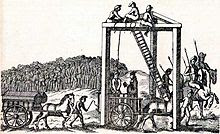
St. John Payne was executed on April 2, 1582 at Chelmsford, Colchester, Essex; St. Luke Kirby at Tyburn Tree in London on May 30, 1582 with Blessed William Filby, Blessed Lawrence Johnson, and Blessed Thomas Cottam SJ.

St. John Payne was born in 1532 and went to the English College in Douai in 1574, ordained in 1576, and returned to England with Cuthbert Mayne the same year. Once they arrived in England, Mayne and Payne separated and went to different areas of England, both residing with noble recusant Catholics (Mayne with Sir Francis Tregian; Payne with Lady Anne Petre, widow of Sir William Petre at Ingatestone Hall:

Mayne headed for his native South West England, and Payne headed for Essex. In early July 1851, he and another who had come to England were arrested in Warwickshire while staying at the estate of Lady Petre. It was through the efforts of George “Judas” Eliot, a known criminal, murderer, rapist and thief, who made a career out of denouncing Catholics and Priests for bounty. After being examined at Greenwich, they were committed to the Tower of London on July 14th. Eliot was a Catholic, and had been employed in positions of trust in the Petre household where he had embezzled sums of money. He enticed a young woman to marry him, and then approached Fr. Payne. When he refused, Elliot was determined to make his revenge, and a profit as well, by turning him in.

Fr. John Payne was indicted at Chelmsford on March 22, on a charge of treason for conspiring to murder the Queen and her leading officers. John denied the charges, and affirmed his loyalty to the Queen in all that was lawful; contesting the reliability of the murderer Eliot how had turned him in. No attempt was made to corroborate Eliot’s story, which had been well rehearsed. The guilty verdict was a foregone conclusion. 


The "another" who was arrested with Father Payne was Father George Godsalve or Godsalf, whom Payne had called back to the Catholic Church and who had been ordained at Douai in 1577 (Godsalve had previously been ordained a Catholic deacon during Mary I's reign). He was not executed by the Elizabethan regime, but held in prison for several years, finally released from Marshalsea in 1585 and died in Paris in 1592. Father Payne was racked in August and October and then taken to Chelmsford, the county seat of Essex, in March of 1582 for his trial, in which Eliot was the main witness, and the well rehearsed story was again, the Rome and Reims Plot.

Payne's execution was a wild scene, as he had one more opportunity to defend himself:

At his execution, he was dragged from prison on a hurdle to the place of execution and first prayed on his knees for almost thirty minutes. He then kissed the scaffold, made a profession of faith, and publicly declared his innocence. He was called upon to repent of his treason, and again, Payne denied it. A Protestant minister shouted out that he knew of Payne’s treason, from his brother, years prior. Fr. Payne admitted that his brother was an earnest Protestant, but that he would never had said such a lie. Fr. Payne asked that his brother who was in the same vicinity, be brought in and asked. The execution proceeded and John Payne was at their mercy. What was supposed to be a smooth, quiet execution was anything but that. The crowd had become so sympathetic to John Payne that they hung on his feet to speed up his death and prevented the infliction of the quartering until he was dead.

Robert Rich, 3rd Baron Rich, 1st Earl of Warwick, grandson of Richard "but for Wales" Rich who testified against Saint Thomas More, was the one who urged Payne to repent of the treason he had not committed. Anne Browne, Lady Petre died in April 1582 but her son, John Petre later 1st Baron Petre (a title purchased from James I) remained a Catholic recusant, as did his successors. Ingatestone Hall is partially open to the public with two priest's holes on display.

With Father Luke Kirby, we reach the last of the 40 Martyrs of England and Wales who had been beatified by Pope Leo XIII in 1889. Please see this blog, authored by a Benedictine Monk in Ireland with the same last name. Some excerpts:

Saint Luke Kirby, priest and martyr. Born in 1549 in England under Edward VI -- an England severed from its Catholic roots -- Saint Luke was educated at Cambridge. He abjured Protestantism and was reconciled to the Catholic Church at Louvain. He studied for the priesthood at Douai College, then in Rome, and was ordained at Cambrai in 1577 for the English mission. . . .

Travelling with Fathers Edmund Campion, Ralph Sherwin and others, he was was arrested almost immediately after he'd landed at Dover.

Imprisoned and Tortured

Five days after his transfer to the Tower of London, Saint Luke was subjected to "the Scavenger's Daughter." This was a hinged hoop of iron; the prisoner was required to kneel and draw himself into a ball, the hoop was placed under his legs and across his back, and then drawn tight, the torturer helping the fit by kneeling on the prisoner's shoulders. Among other things, it caused a flow of blood from the nostrils and sometimes from the tips of the fingers and toes. Father Kirby was tried and found guilty, together with Father Campion and other priests on November 16, 1581. Saint Luke was kept in prison until the end of May, the last four weeks in chains.

His execution was also like another trial--the authorities wanted the priests to admit their treason publicly probably because they knew the trial and guilt verdict would not stand close attention:

Tyburn

When Saint Luke was brought to Tyburn to be executed on May 30th, 1582, Blessed William Filby's body was still hanging from the dreaded 'triple tree'. Standing in the cart beneath the gallows, he declared himself innocent of the treason alleged against him and said that he was, in fact, about to die for the Catholic faith. A number of officials began wearisome discussions with him, arguing points of law and doctrine. They tried in several ways to induce him at first to denounce the Pope and finally to yield in any slight point of doctrine or practice. Father Kirby held fast to the Catholic faith.

Pater Noster

Finally, the Queen’s preachers bid him pray with them, in English, in his last moments: they would pronounce the prayer and asked Luke, if he found nothing objectionable, to repeat their words after them. “Oh,” he said, “you and I are not of one faith, therefore I think I should offend God if I should pray with you.” At this the people began to cry, “Away with him!” So, Saint Luke Kirby, an Englishman saying his Pater Noster in Latin, the language of the Church of Rome, ended his life. After the hanging, his body was gutted and quartered.

Saint John Payne, pray for us!
Saint Luke Kirby, pray for us!

Image Credit: Published under a Attribution-ShareAlike 4.0 International (CC BY-SA 4.0) license: the Scavenger's Daughter (or Skevington's Daughter) invented by Sir Leonard Skevington, one of Henry VIII's Lieutenants of the Tower of London.

Monday, June 29, 2020

This Morning: Saint Cuthbert Mayne of Cornwall

Just a reminder that I'll be on the Son Rise Morning Show at about 7:50 a.m. Eastern/6:50 a.m. Central to continue our series on the 40 Martyrs of England and Wales. Matt Swaim and I will discuss Saint Cuthbert Mayne, the protomartyr among missionary priests.

Please listen live here; the podcast will be archived here.

I mentioned in my preview post Friday that one point of interest in St. Cuthbert Mayne's story is that he was born and raised near Cornwall, a county on the western peninsula in England. He was born in Devon, but grew up influenced by the Cornish culture and mindset.

Cornwall was distant from London and the center of Elizabeth I's administrative state in more than miles. There was a language barrier--the people of Cornwall were protective of their language, Cornish, a Celtic tongue and had even arisen against the imposition of the ENGLISH Book of Common Prayer during the reign of Edward VI (1549). They'd had rather had Latin as the language of the liturgy rather than learn a "foreign" language for the celebration of Holy Mass and the Sacraments. During Mary I's reign, Catholic authorities recognized this, and Bishop Edmund Bonner's book of sermons to be read while the Catholic Church was being revived was translated into Cornish by John Tregear in 1555. The fact that the Church of England never undertook a translation of the Holy Bible into Cornish, the regional vernacular, led to the decline of the Cornish language.

It was also distant because of transportation barriers: there were few good roads. At the time of his execution, Launceston, near the border of Devonshire, was about as far as English authorities felt safe to go, and this situation lasted into the reign of William and Mary in the 17th century.

The Arundell and Tregian families in Cornwall had remained loyal to the Catholic Church and thus Saint Cuthbert Mayne had resided with Sir Francis Tregian. Tregian ended up in prison, lost his property and was finally pardoned by King James I, left England and died in Spain in 1608. Sir John Arundell of the Lanherne Arundells also suffered imprisonment and loss of property. According to the History of Parliament online:

In 1569 he refused to subscribe to the Act of Uniformity and in the following year he was obliged to enter a recognizance for his ‘good behaviour’, but it was not until 1577 that his Catholicism came to be looked upon as a source of danger to the realm. On 29 Nov. in that year Cuthbert Maine (sic), the seminary priest, was hanged at Launceston; in his speech from the scaffold he described Arundell as a ‘good and godly’ gentleman with the result that two weeks later Arundell, whose refusal to attend church had been noted, was placed under arrest. On his release he was required to live near London and took up residence in Clerkenwell. During his absence from Cornwall his house was searched and subsequently charges against him were laid before the Council in September 1579. In 1585 Arundell was lodged in the Tower, allegedly because of his association with his wife’s cousin, Philip Howard, Earl of Arundel. At the same time he was fined 1,000 marks in the Star Chamber for contempt of the proclamation regarding recusants. Released from the Tower in 1586, he went to live at Muswell Hill and remained there until the early months of 1590, when he was imprisoned at Ely. He was set free in the summer and settled in Isleworth, where he died on the following 17 Nov. His body was carried with great pomp to Cornwall and buried beside those of his ancestors at St. Columb Major, where a monument was later erected to his memory.6

Sir John's widow, the former 
Lady Ann Stanley remained a staunch Recusant Catholic, sheltering Blessed John Cornelius, SJ who was hanged, drawn, and quartered on July 4, 1594!

Yet another widow of a Sir John Arundell, Lady Elizabeth  sheltered Blessed Hugh Green, who suffered an excruciating martyrdom on August 19, 1642 at the hands of an inept executioner.

We probably won't be able to address these matters during our brief discussion this morning, but it's fascinating background, demonstrating the loyalty of Catholic families in distant Cornwall when their faith was proscribed and they were definitely in the minority.

Image Credit (public domain): The memorial to John Payne, Portreeve of St. Ives, Cornwall, who was hanged by the Provost Marshall for being a participant in the Prayer Book Rebellion in 1549 (not to be confused with the St. John Payne who came back to England with St. Cuthbert Mayne as a missionary priest--but a wonderful coincidence!)

Friday, June 26, 2020

Preview: The First Elizabethan Martyr Among the 40: St. Cuthbert Mayne

St. John Stone, whom we discussed on Monday, June 22 on the Son Rise Morning Show was executed in 1539; the next martyr among the 40 canonized in 1970, Saint Cuthbert Mayne, was executed in 1577. There is gap of 38 years between those martyrs.

Part of what I'd like to explore with on Monday, June 29 in our Son Rise Morning Show series on the 40 Martyrs of England and Wales is why there is such an interval between the last canonized martyr of Henry VIII's reign and the first canonized martyr of Elizabeth I's reign.

We also need to describe what makes Saint Cuthbert Mayne special: he is the protomartyr of the missionary priests, those men who studied for the priesthood on the Continent to return to England and bring the Sacraments back to recusant English Catholics. And he was born--and died--in Cornwall!

First of all, the chronological gap. There were additional martyrdoms during the reign of Henry VIII, but those martyrs, like the other Carthusians and the three abbots of the great monasteries (Colchester, Reading, and Glastonbury), have not been canonized.

During the reign of young Edward VI, some Catholics were arrested and imprisoned, but there are no Catholic martyrs, venerable or blessed from that brief reign.

During the reign of Mary I, who restored the practice of the Catholic faith in England, previous heresy laws were also restored by Parliament and Queen Mary, and thus nearly 300 men and women were burned alive at the stake for heresy (whether or not they were Protestant).

Catholics were also executed for their faith earlier in Elizabeth I's reign after the Acts of Supremacy and Uniformity were passed in 1559, like Blessed John Storey,  Blessed Thomas Woodhouse, Blessed John Felton, and others beatified in 1886 and 1895, but obviously, they weren't included among the 40 canonized in 1970.

St. Cuthbert Mayne and 10 other martyrs canonized in 1970 had been included among the first large group of martyrs beatified by Pope Leo XIII on December 29 in 1886. Father Paolo Molinari, S.J.,the postulator of the cause explained how those 11 were included among the 40:

Eleven of these forty martyrs had been included among the blessed solely by a decree confirming their cult. It was now necessary, in view of the hoped-for canonization, to make a thorough historical re-examination of their martyrdom, which had not been done ex professo when the Positio super introductione causue was prepared last century. As is customary, this task was entrusted to the Historical Section of the Sacred Congregation of Rites. Availing itself essentially of the studies carried out under its direction by the General Postulation of the Society of Jesus and by the office of the English Vice-Postulation, it made a very favourable pronouncement on the material and formal martyrdom of the eleven Blessed in question. The other studies prescribed by law having been completed, His Holiness Paul VI signed the special Decree of the Declaratio Martyrii of these eleven Blessed Martyrs, on May 4th 1970. In preparing for this Decree, two volumes were published in English and in Italian respectively of the Positio super Martyrii et cultu ex officio concinnata (Official Presentation of Documents on Martyrdom and Cult) (Typis Polyglottis Vaticanis, 1968, pp. XLIV, 375 in folio) which in the judgment of international critics is a real model of scientific editing of old texts.

And we do have a great deal of detail about Saint Cuthbert Mayne: his career at Oxford, his conversion to Catholicism, his studies on the Continent, and his service in the house of Francis Tregian.

He was executed--hanged, drawn, and quartered--on November 29, 1577 on rather flimsy evidence, there being no laws yet against Catholic priests entering the country (that is that they weren't automatically traitors by being present in the country having been ordained abroad). According to the Catholic Encyclopedia entry, written before he was canonized among the 40 Martyrs of England and Wales by Pope Paul VI:

Martyr, b. at Yorkston, near Barnstaple, Devonshire (baptized 20 March, 1543-4); d. at Launceston, Cornwall, 29 Nov., 1577. He was the son of William Mayne; his uncle was a schismatical priest, who had him educated at Barnstaple Grammar School, and he was ordained a Protestant minister at the age of eighteen or nineteen. He then went to Oxford, first to St. Alban's Hall, then to St. John's College, where he took the degree of M.A. in 1570. He there made the acquaintance of Blessed Edmund Campion, Gregory Martin, the controversialist, Humphrey Ely, Henry Shaw, Thomas Bramston, O.S.B., Henry Holland, Jonas Meredith, Roland Russell, and William Wiggs. The above list shows how strong a Catholic leaven was still working at Oxford. Late in 1570 a letter from Gregory Martin to Blessed Cuthbert fell into the Bishop of London's hands. He at once sent a pursuivant to arrest Blessed Cuthbert and others mentioned in the letter. Blessed Cuthbert was in the country, and being warned by Blessed Thomas Ford, he evaded arrest by going to Cornwall, whence he arrived at Douai in 1573.

He was ordained in 1575 and came to England with St. John Payne (Payne and Mayne!) in 1576. When Father Cuthbert Mayne was arrested in June, 1577, authorities had some trouble in gathering evidence that corresponded with charges punishable by death:

He was brought to trial in September; meanwhile his imprisonment was of the harshest order. His indictment under statutes of 1 and 13 Elizabeth was under five counts: first, that he had obtained from the Roman See a "faculty", containing absolution of the queen's subjects; second, that he had published the same at Golden; third, that he had taught the ecclesiastical authority of the pope in Launceston Gaol; fourth, that he had brought into the kingdom an Agnus Dei and had delivered the same to Mr. Tregian; fifth, that he had said Mass.

As to the first and second counts, the martyr showed that the supposed "faculty" was merely a copy printed at Douai of an announcement of the Jubilee of 1575, and that its application having expired with the end of the jubilee, he certainly had not published it either at Golden or elsewhere. As to the third count, he maintained that he had said nothing definite on the subject to the three illiterate witnesses who asserted the contrary. As to the fourth count, he urged that the fact that he was wearing an Agnus Dei at the time of his arrest was no evidence that he had brought it into the kingdom or delivered it to Mr. Tregian. As to the fifth count, he contended that the finding of a Missal, a chalice, and vestments in his room did not prove that he had said Mass.

Nevertheless the jury found him guilty of high treason on all counts, and he was sentenced accordingly. His execution was delayed because one of the judges, Jeffries, altered his mind after sentence and sent a report to the Privy Council. They submitted the case to the whole Bench of Judges, which was inclined to Jeffries's view. Nevertheless, for motives of policy, the Council ordered the execution to proceed. On the night of 27 November his cell was seen by the other prisoners to be full of a strange bright light. 


There is even more information at this website, including these details about his execution:

Then the rope was put around his neck and the martyr glancing upwards and striking his breast cried out: “In manus tuas, Domine… He did not have time to finish “commendo spiritum meum” because immediately the executioner swung away the ladder. He then slashed at the rope with such violence, that St. Cuthbert fell from the high gibbet, striking his head on the platform so hard that his eyes were forced from their sockets. Lying on the ground, choking and barely alive, St. Cuthbert’s garments were torn away from his body by the executioner who with sharp knives began the work of dismembering and disembowelling the body and cutting in into four parts. The heart was torn out and held up for all to see and then thrown onto a fire. Tar and pitch were used to preserve the four parts of the body, which were distributed over the county, only one quarter being sent out of Cornwall to the native town of St. Cuthbert, Barnstaple, where it was spiked on to the bridge crossing the river Taw.

Saint Cuthbert Mayne, pray for us!

Tuesday, June 2, 2020

Book Review: Lisa McClain's "Lest We Be Damned"

Clearly, I did not buy this book based on its cover!

From Routledge, Lest We Be Damned: Practical Innovation & Lived Experience Among Catholics in Protestant England, 1559–1642 was written by Lisa McClain. She is an "Assistant Professor of History and Director of Women's Studies at Boise State University. She studies popular religion during the Reformation era, and has authored articles in journals such as the Sixteenth Century Journal and the Journal of Religious History", according to Routledge. As the publisher blurbs the book:

Through compelling personal stories and in rich detail, McClain reveals the give-and-take interaction between the institutional church in Rome and the needs of believers and the hands-on clergy who provided their pastoral care within England. In doing so, she illuminates larger issues of how believers and low-level clergy push[ed] the limits of official orthodoxy in order to meet devotional needs.

Table of Contents (from my notes and including the subheads in the chapters):

Introduction
Chapter 1. "Knitting the Remnants": Catholic Challenges and Priorities in Protestant England
--A Changing Religious Environment: Penal Laws against the Practice of Catholicism
--How Many Catholics Were There?
--Who Was a Catholic?
--Catholic Priorities
   --Immanence
   --Saints, Priests, and Sacraments
   --Salvation
--Meeting Catholic Priorities
   --Evolving Goals
--Book Trade

Chapter 2. A "Church" Without a Church: English Catholics' Search for Religious Space
--Three Degrees of Separation
--Prisons
--Examinations, Trials, and Executions

Chapter 3. Using What's at Hand: English Catholic Reinterpretations of the Rosary
--Praying the Beads
--Sacraments Versus Sacramentals
--Obtaining the Beads
--Society of the Rosary
--Changing Role of the Rosary and Mary
--One of Many Emerging Views of Mary
   --Pre-Reform Use and Interpretation of the Rosary in England
   --In Contrast to Post-Tridentine Continental Portrayals of Mary

Chapter 4. Reclaiming the Body: Receiving the Benefits of the Mass in the Absence of Priests
--Functions of Catholic Sacraments
--Filling the Need
--Spiritual Reception of the Body of Christ
--Finding the Body
--Reclaiming the Body: Christ's and One's Own

Chapter 5. Lawyers, Jailbirds, Grocers, and Diplomats: Catholic Options for Piety and Community in London
--Inns of Court
--Prisons
--Catholic Geography of London
--Executions
--Relic Takers
--Merchants and Tradespeople
--Foreign Aid

Chapter 6. Katholic Kernow: Catholics of Cornwall
--Cornish Independence
--Cornwall's Celtic Past: "An Ancient Song, Lilting Before You Came"
--Lives of the Celtic Saints
--Celtic-Cornish Immanence: Places, People, and Things
   --Places
   --People
   --Things
--Cornish Catholic Participation in a Larger Catholic Community

Chapter 7. "Border of Wickedness?": Catholics in the Northern Shires
--A Convenient Partnership
--New Experiences in the North
--Protecting What was Theirs: Distinctive Attempts to Thwart Protestant Authority
--The Importance of the Borders
   --Border Instability
--Why and How Catholics Flowed Back and Forth Across the Border
   --Why Was This Possible?
   --How Was This Possible?
--Northern Catholic Identity and Community
--Conclusion

Chapter 8. From the Old Comes the New: Catholic Identities and Alternative Forms of Community
--English Catholic Identity: How English Catholics Perceived Themselves
--Identifying with Persecution and Martyrdom
--Building New Catholic Communities
--Communities of Prayer
--Communities of the Book
--Communities of the Living and the Dead
--Conjunctions of Identity and Community: How English Catholics Perceived their Relationship to Rome
--Increasing Frustration with Rome
--Oath of Allegiance Controversy

Conclusion

Notes
Select Bibliography
Index

McClain does present many compelling stories and much rich detail--sometimes repetitiously--in delineating the response of English Catholics to the loss of their churches, their parishes, their public devotional life, their communities, and most crucially, their Church's Sacraments. She carefully traces the changing circumstances of Catholics in England from the beginning of Elizabeth I's reign until the end of Charles I's reign, not strictly chronologically, but topically. For example, McClain notes that during the first years of Elizabeth's reign enforcement of the Acts of Uniformity (worship) and Supremacy (authority) was rather lax. She continues her examination of the development and variations in that enforcement during Elizabeth's reign by looking at the prisons in London, the distance and independence in Cornwall, and the distinctive issues of distance, the border with Scotland, and nobles' authority in the northern counties.

In another example of this topical treatment of changing circumstances during the period (1559 to 1642), she examines the controversy over the Oath of Allegiance during James I's reign but does not continue that theme into the reign of Charles I. So a reader should not expect a strictly chronological description of Catholic issues in England during this recusant period.

Because of my great devotion and interest in St. Robert Southwell, I was fascinated by her citation of his advice to Catholics during his time as a missionary priest to use their imaginations in their homes and in their environments. He encouraged them to dedicate rooms or areas in their houses to Jesus, to the Blessed Virgin Mary, to angels and saints; to use walking in fields or forests as pilgrimages to holy sites, to consecrate time and space to God in prayer and unity. These passages, cited from his Short Rule to a Good Life, accorded very well with what Anne R. Sweeney had written of St. Robert Southwell in Snow in Arcadia as images and imagination--inspired in him by the art and architecture of Counter-Reformation Rome--were so essential to his Ignatian poetic.

On the other hand, I was confused by her final statement about Blessed John Hambley, whose life and career she traces in two chapters (5 and 6): offering Mass at the Inns of Court in London and being born in Cornwall and leaving to become a missionary priest. She indicates that he died in prison in 1587 (p. 198) but he was hanged, drawn, and quartered on March 29 that year, according to martyrology.

McClain also alludes often to the trial and questioning of St. Margaret Clitherow, especially on the question, "What is the Church?" to which Clitherow had a good answer:
"It is that wherein the true word of god (sic) is preached which Christ langhs [launched] and left to his Apostles and they to their successors: ministering the seven sacraments which the same church has always observed, doctors preached, and martyrs and confessors witnessed. This is the church which I believe to be true."
McClain emphasizes the continuity recusant Catholics sought while they had to adapt to a great disruption: they could not practice their faith as they had done before (or as their parents and grandparents had done before Henry VIII's break from Rome) and yet they wanted to maintain the connection with the past because it was still alive and well in the world, just over the English Channel. At the same time that she emphasizes how they sought continuity, McClain explores how they had to change: praying the Rosary privately; reading their breviaries or Little Offices of the Blessed Virgin Mary in secret; if they did attend Anglican services to avoid paying the financially crippling fines, praying Catholic prayers; holding their rosaries in their pockets, etc.

Sometimes she stresses how far English Catholics were deviating from standard Catholic practice, but they were only doing so because it was the only thing they could do to maintain some continuity with the faith. When they couldn't attend Mass, confess their sins, receive Holy Communion, or even join their fellow citizens in the parish church their ancestors may have built and contributed to, they had to make Spiritual Communions, confess their sins to God and make a perfect act of contrition (declaring they never wanted to sin again!), join their intentions to Masses said on the Continent, etc. McClain notes that many of these devotions were based on late-medieval mystical piety, once considered rather dangerous because it bypassed the mediation of the ordained priesthood--but it was all that Catholics had, absent the regular ministrations of a priest, unless they were able to shelter their own chaplain, afford the fines, or benefit from friendly laxity in the enforcement of recusant laws. I think she might press this view of deviation too far, especially since it was Catholic priests recommending these practices to devout Catholics. They were not dissenting from Catholic teaching.

She does adopt what could be considered a controversial view of who was Catholic, accepting that Church Papists, those who outwardly conformed to the Church of England by attending services (not receiving Communion) but inwardly remained semi-faithful (?) to the Catholic Church were indeed still Catholic. In this, she could be following William Cardinal Allen's advice to the missionary priests he sent to England: if the laity confess attending an Anglican service as a sin, grant them absolution mercifully and gently, even if it's a sin they confess again and again (as most penitents do confess the same sins again and again).

Again, this study provides a great deal of detail: stories of arrests, imprisonments, conversations; data about books, martyrs, executions, prisons, embassy chapels; individual examples, etc, to develop a view of English Catholics' experience and life as a persecuted/prosecuted religious minority in a country that had once believed, prayed, and worshipped exactly as they did.

In her Conclusion, however, McClain tries to make more global claims of this history's significance in current situations of dissent within churches on doctrinal matters--something that never really occurs during this period among these Catholics--and the struggle to live in pluralistic societies, accommodating one another's beliefs and religious practices, bringing up book burnings, religiously inspired terrorism, all in the passive voice! ("Books are burned, martyrs are made, holy wars are declared, acts of religiously motivated terrorism proliferate"). Who burns the books, who executes the martyrs, who declares holy wars, who proliferates acts of religiously motivated terrorism? The passive voice avoids naming the actors. That's a lot of significance to cram into four paragraphs at the end of the book, especially when the purpose of the book was to help us understand the past, not necessarily help us understand the present, and especially when the situation, at least in the democratic West, is not that comparable.

I wish the book could have more illustrations and especially maps. And have a pretty cover!--but it's print on demand like so many scholarly books are now. It's an excellent resource, based on analysis of both primary and secondary sources, as McClain demonstrates familiarity with current scholarship.

Wednesday, May 27, 2020

"Spanish Elizabethans" in Exile and Their Books

Since I'm reading a book right now about how Catholics in England adapted to their changed lives of worship and community (Lest We be Damned: Practical Innovation & Lived Experience Among Catholics in Protestant England, 1559-1642. Routledge: 2005, by Lisa McClain) seeing this book, Radicals in Exile: English Catholic Books During the Reign of Philip II by Freddy Cristobal Dominguez from Penn State University Press, among some new releases intrigues me.

In discussing the devotional literature written by English Catholics in exile for the recusant Catholics who remained home, McClain makes the point that the exiles often urged the recusants to observe Catholic worship just as they had before the Elizabethan Acts of Settlement and Uniformity. They should still go to Confession frequently, attend Mass on Sunday, etc., even though it was really impossible for them to do so: without priests, churches, parishes, etc. She comments that many of these exiles writing these guides were under the patronage of Tridentine communities and rulers: they were benefiting from the great Counter-Reformation revival in Rome and throughout Catholic Europe: they didn't know or acknowledge that what they were telling the "folks back home" was impossible. She further notes that, beholden to their mentors in exile, it behooved them to support papal or royal opinion on how English Recusant Catholics should be behave. Later Catholic writers, especially Jesuit missionary priests like St. Robert Southwell in A Short Rule to a Good Life, would provide more reasonable and feasible alternatives to the Catholic devotional and Sacramental life that the recusants of England had lost through personal, private, and imaginative means when no priest was available for the Sacraments.

Radicals in Exile explores another aspect of the lives and work of exiled English Catholics, particularly in Spain:

Facing persecution in early modern England, some Catholics chose exile over conformity. Some even cast their lot with foreign monarchs rather than wait for their own rulers to have a change of heart. This book studies the relationship forged by English exiles and Philip II of Spain. It shows how these expatriates, known as the “Spanish Elizabethans,” used the most powerful tools at their disposal—paper, pens, and presses—to incite war against England during the “messianic” phase of Philip’s reign, from the years leading up to the Grand Armada until the king’s death in 1598.

Freddy CristĂ³bal DomĂ­nguez looks at English Catholic propaganda within its international and transnational contexts. He examines a range of long-neglected polemical texts, demonstrating their prominence during an important moment of early modern politico-religious strife and exploring the transnational dynamic of early modern polemics and the flexible rhetorical approaches required by exile. He concludes that while these exiles may have lived on the margins, their books were central to early modern Spanish politics and are key to understanding the broader narrative of the Counter-Reformation.

Deeply researched and highly original, Radicals in Exile makes an important contribution to the study of religious exile in early modern Europe. It will be welcomed by historians of early modern Iberian and English politics and religion as well as scholars of book history.

"Book History" is a still-developing historical research discipline, according to this article in Perspectives on History, the newsmagazine of the American Historical Association:

"Book history" is a long-contested and ever-developing concept. It emerged from two schools of thought, both of which focused on the book in Western culture: 19th-century Anglo-American analytical bibliography, which examined the physical features of books to draw conclusions about their production, and the French scholars of histoire du livre, who in the 1960s began using a socioeconomic lens to study broad trends in publishing, writing, and reading. In 1982, Robert Darnton argued in his influential essay "What Is the History of Books?" that book history is research having to do with any of the stages of a work's life, from author to publisher to printer to bookseller to reader. Since then, scholars have debated how much to focus on the physical characteristics of books versus trends in book markets, authorship, and reading. How large a role content should play in book history has also been contested.

Johns Hopkins University Press publishes a journal titled Book History:

Book History is devoted to every aspect of the history of the book, broadly defined as the history of the creation, dissemination, and reception of script and print. It publishes research on the social, economic, and cultural history of authorship, editing, printing, the book arts, publishing, the book trade, periodicals, newspapers, ephemera, copyright, censorship, literary agents, libraries, literary criticism, canon formation, literacy, literary education, reading habits, and reader response. Book History is the official publication of the Society for the History of Authorship, Reading and Publishing, Inc. (SHARP).

Mary C. Ehrer of Fordham University, for example, has written a couple of books about reading and writing in pre-Reformation England and has inspired other historians to use "bibliography in the service of biography" or of history, political and religious, as demonstrated by a festschrift published by Boydell & Brewer:

Reading, writing, sharing texts, and book ownership in the fifteenth and sixteenth centuries, and how they fostered social and intellectual links and networks between individuals, particularly among women: these are subjects which the pioneering work of Mary C. Erler has done so much to illuminate. The essays here, in this volume in her honour, build on her scholarship, engaging with Professor Erler's characteristic use of bibliography in the service of biography by investigating how the physical object of the book can enlighten our understanding of medieval readers and writers. They analyze, for example, what "reading" means in terms of the act itself (and the accessories, such as bookmarks, that helped to set the stage for reading), whether done aloud or silently, in such different venues as an aristocratic court, bourgeois household, village community, and monastic cloister. They also consider the culture of medieval reading practices, especially those of women, across social classes, and in terms of the transition between the pre- and post-Reformation periods; the fluidity of genre boundaries; and changes in devotional reading and writing in this liminal period. A wide variety of genres are covered, including secular romance, devotional texts, schoolbooks, and the illustrated Old Testament preface to the famous Queen Mary Psalter, which recasts the story and image of ancient Israelites to suit elite readerly taste.

Image Credit (public domain): King Philip II in old age, by Juan Pantoja de la Cruz1590–98