Showing posts with label Matt Swaim. Show all posts

Friday, December 16, 2022

Preview: Newman and Loneliness at Christmas Time

We all know someone who is celebrating a first Christmas after the death of a loved one--or the second, or the third, or even the 12th or the 31st--and the special pang of that absence. 

We may be experiencing that pang ourselves. That's one reason I selected this sermon by Saint John Henry Newman just based on the title for our last Advent reflection, Monday, December 19 on the Son Rise Morning Show: "The Church a Home for the Lonely".

So I'll be on the air at my usual time, about 6:50 a.m. Central/7:50 a.m. Eastern. Please listen live here and remember that you may find the recording of the show later that day on the Son Rise Morning Show website!

As the late Father Ian Ker noted in his biography of Saint John Henry Newman, as a priest and cardinal Newman remembered many of his departed loved ones in Masses on the anniversaries of their deaths. His private chapel in the Birmingham Oratory was filled with pictures of his favorite saints and of his living and departed friends, for whom he prayed and offered Mass. There's a video about that chapel in this post on the New Liturgical Movement website. As his eyesight began to fail, Newman prepared by memorizing the propers for two Masses: "a Mass of the Blessed Virgin and a Mass of the Dead" so he could continue to pray for his beloved dead.

In this sermon from October 22, 1837, Newman takes a more existential point of view and sees the Church on earth as the place the Christian may find peace and consolation when rebuffed by the World*. But as I read the sermon, I thought of my parish church, and the other parishes or chapels at which I attend Mass, visit the Blessed Sacrament, or got to Confession, etc., as the local site through which the universal, Catholic Church is a home for me and I hope it is for you.

We have to remember that Newman's ideas about the Church on Earth and the Communion of Saints took some time to develop; influenced by Calvinist doctrines of Salvation after his major conversion at age 15, he for a time thought the true true communion of the Church was invisible. Yes, professed Christians gathered for services and registered in parishes, but unless they were predestined for salvation, they weren't really in the Church. I commented on Newman's developing ecclesiology here.

He takes as his verse Ephesians 2:6: "And [He] hath raised us up together, and hath made us sit together in the heavenly places, through Christ Jesus." 

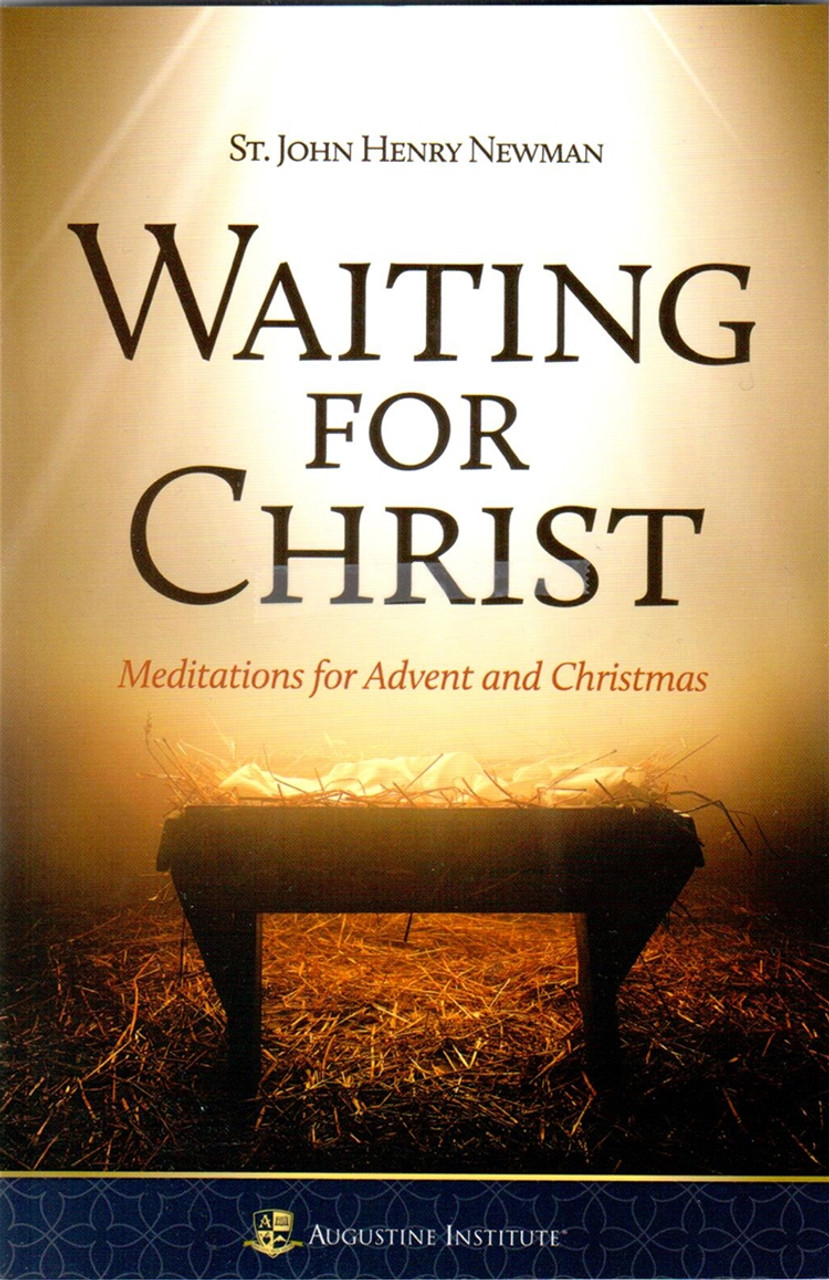
In the excerpts Christopher Blum has provided in Waiting for Christ: Meditations for Advent and Christmas for December 21, Newman offers examples of different kinds of Christians:

Those who have always understood that "heaven is an object claiming our highest love and most persevering exertions. Such doubtless is the blessedness of some persons: such in a degree is perchance the blessedness of many. There are those who, like Samuel, dwell in the Temple of God holy and undefiled from infancy, and, after the instance of John the Baptist, are sanctified by the Holy Ghost, if not as he, from their mother's womb, yet from their second birth in Holy Baptism."

Those who may have had this understanding "even though it has been latent; not quenched or overborne by open sin, even though it has not been from the first duly prized and cherished." . . .  They "have never been wedded to this world; they have never given their hearts to it, or vowed obedience or done folly in things of time and sense. And therefore they are able, from the very power of God's grace, as conveyed to them the ordinances of the Gospel, to understand that the promise of heaven is the greatest, most blessed promise which could be given."

And those who have wandered away and have returned: 

They are recovered by finding disappointment and suffering from that which they had hoped would bring them good; they learn to love God and prize heaven, not by baptismal grace, but by trial of the world; they seek the world, and they are driven by the world back again to God. The world is blessed to them, in God's good providence, as an instrument of His grace transmuted from evil to good, as if a second sacrament, doing over again what was done in infancy, and then undone. They are led to say, with St. Peter, "Lord, to whom shall we go?" for they have tried the world, and it fails them; they have trusted it, and it deceives them; they have leant upon it, and it pierces them through; they have sought it for indulgence, and it has scourged them for their penance. O blessed lot of those, whose wanderings though they wander, are thus overruled; that what they lose of the free gift of God, they regain by his compulsory remedies!
Long before Pierce Brosnan as James Bond realized it (just for you, Matt Swaim), most of us, Newman says, recognize that "the world is not enough for [our] happiness".

[*If you go to the NewmanReader.org source for this entire sermon, you would find Newman's description of "the World" in the sense he means it. For example:

By the world, I mean all that meets a man in intercourse with his fellow men, whether in public or in private, all that is new, strange, and without natural connexion with him. This outward world is at first sight most attractive and exciting to the generality of men. The young commonly wish to enter into it as if it would fulfil all their wants and hopes. They wish to enter into life, as it is called. Their hearts beat, as they anticipate the time when they shall, in one sense or other, be their own masters. At home, or at school, they are under restraint, and thus they come to look forward to the liberty of the world, and the independence of being in it, as a great good. According to their rank {188} in life, they wish to get into service, or they wish to go into business, or they wish to be principals in trade, or they wish to enter into the world's amusements and gaieties, or they look forward with interest to some profession or employment which stirs their ambition and promises distinction.

Hint: Look for the page number (in bold type above)]


As Newman says, by whatever grace we discover this fact, that "the world is not enough", it demonstrates to us that  we need "some shelter, refuge, rest, home or sanctuary from the outward world" and that God [the Father] has provided us "the shelter or secret place . . . in Christ". He has provided us a home because we "need something which the world cannot give: this is what we need, and this it is which the Gospel has supplied."

Jesus has supplied with this home, establishing His Church and leaving a "blessing behind Him", after His Passion, Death, Resurrection, and Ascension: 

He left in the world what before was not in it,—a secret home, for faith and love to enjoy, wherever found, in spite of the world around us. Do you ask what it is? the chapter from which the text is taken describes it. It speaks of "the foundation of the apostles and prophets, Jesus Christ himself being the chief corner stone: In whom all the building, being framed together, groweth up into an holy temple in the Lord. In whom you also are built together into an habitation of God in the Spirit." (Ephesians 2:20-22) This is the Church of God, which is our true home of God's providing, His own heavenly court, where He dwells with Saints and Angels, into which He introduces us by a new birth, and in which we forget the outward world and its many troubles.

Newman notes that the Temple in Jerusalem served as the great home for the Jews, citing Psalm 27:4-5: "One thing I have asked of the Lord, this will I seek after; that I may dwell in the house of the Lord all the days of my life. That I may see the delight of the Lord, and may visit his temple. For he hath hidden me in his tabernacle; in the day of evils, he hath protected me in the secret place of his tabernacle." 


He says that the Church Jesus founded provides not just one place of refuge, in the Temple in Jerusalem, but "admits of being every where". In 1837, Newman may be speaking according to a less visible and established version of the Church (he uses the words "spiritual" and "invisible") but as Catholics we know that when we enter any Catholic church in union with the local bishop and the pope, we have entered The Catholic Church, "the one, holy, catholic, and apostolic Church" with the Blessed Sacrament really and truly present in Tabernacle, and even sometimes with the hint of incense still lingering in air (if we make a Visit after a Funeral Mass has been celebrated, for example). The Church Militant throughout the world, the Church Triumphant in Heaven, and the Church Suffering, the Holy Souls in Purgatory, is all represented there. And I use the word "is" because it is all One.

As Newman concludes in Blum's selection, 

There is a great privilege which we may enjoy, if we seek it, of dwelling in a heavenly home in the midst of this turbulent world. . . .

We may be full of sorrows; there may be fightings without and fears within; we may be exposed to the frowns, censure, or contempt of men; we may be shunned by them; or, to take the lightest case, we may be (as we certainly shall be) wearied out by the unprofitableness of this world, by its coldness, unfriendliness, distance, and dreariness; we shall need something nearer to us. What is our resource? . . . it is that holy home which God has given us in His Church; it is that everlasting City in which He has fixed His abode. It is that Mount invisible where Angels are looking at us with their piercing eyes, and the voices of the dead call us. "Greater is He that is in us than he that is in the world;" (1 John 4:4) "If God be for us, who can be against us?" (Romans 8:31)

Newman's complete sermon ends with this exhortation:

. . . Let not your past sins keep you from Him. Whatever they be, they cannot interfere with His grace stored up for all who come to Him for it. If you have in past years neglected Him, perchance you will have to suffer for it; but fear not; He will give you grace and strength to bear such punishment as He may be pleased to inflict. Let not the thought of His just severity keep you at a distance. He can make even pain pleasant to you. Keeping from Him is not to escape from His power, only from His love. Surrender yourselves to him in faith and holy fear. He is All-merciful, though All-righteous; and though He is awful in His judgments, He is nevertheless more wonderfully pitiful, and of tender compassion above our largest expectations; and in the case of all who humbly seek him, He will in "wrath remember mercy."

Saint John Henry Newman, pray for us!

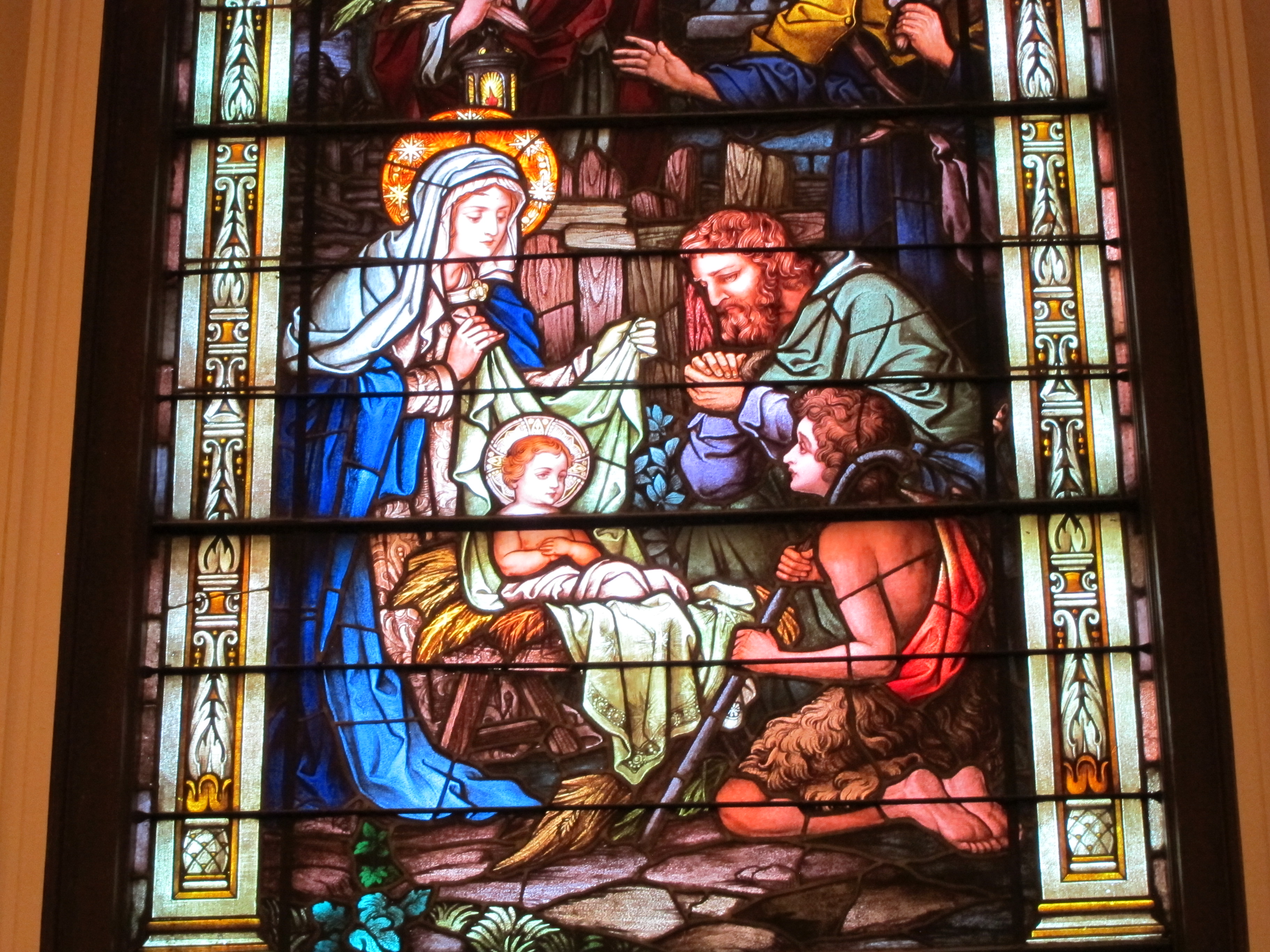
All photos (C) Stephanie A. Mann (2013-2022) and All Rights Reserved. Top photo: Crucifix carved by the deceased father of Jeanne Gordon, taken at her Rosary in Blessed Sacrament Catholic Church, Wichita, Kansas on January 3, 2017; Second photo: pulpit in the University Church of St. Mary's the Virgin in Oxford, England; Third photo: Stained glass  of the Third Joyful Mystery (detail) in the Cathedral of the Immaculate Conception, Wichita, Kansas; Fourth photo: Christmas Day Mass in 2013 at Saint Anthony of Padua Catholic Church, Wichita, Kansas.

Friday, December 9, 2022

Preview: The Light of Conscience and The Way of Obedience

As Christopher O. Blum selected, excerpted, and arranged these sermons by Saint John Henry Newman in Waiting for Christ, he has placed "Dispositions for Faith", (for December 14) about the role of Conscience in our lives as we begin to believe in God and His authority, and "Obedience to God the Way to Faith in Christ", (for December 15) about the role of Obedience in our lives as we continue to follow and imitate Him, one before the other. 

The excerpts from the first sermon take us only so far: the excerpts from the second present a plan for life that we should follow. So in our second Advent reflection on the Son Rise Morning Show, on Monday, December 12, we'll look at some brief highlights from both sermons. 

The first sermon is a Catholic sermon for the Fourth Sunday of Advent in 1856 preached at the University Church in Dublin, included in Sermons on Various Occasions; the second is from Parochial and Plain Sermons Volume 8, Sermon 14, offered in October 1830, just a couple of years after Newman had been named the Vicar of the University Church of St Mary the Virgin.

So I'll be on the air at my usual time, about 6:50 a.m. Central/7:50 a.m. Eastern. Please listen live here and remember that you may find the recording of the show later that day on the Son Rise Morning Show website!

In the complete sermon from 1856, Newman has taken as his verse "Prepare ye the way of the Lord, make straight His path. Every valley shall be filled, and every mountain and hill shall be brought low; and the crooked shall be made straight, and the rough ways plain: and all flesh shall see the salvation of God." Luke 3:4-6, and he wishes to explore how these images from nature apply to the preparation of the individual human soul to be disposed to Faith in God and the Good News. What prepares a man or woman to have Faith in God?

Newman suggests one great means: the Light and the Voice of Conscience, which each of us sees and hears:

What is the main guide of the soul, given to the whole race of Adam, outside the true fold of Christ as well as within it, given from the first dawn of reason, given to it in spite of that grievous penalty of ignorance, which is one of the chief miseries of our fallen state? It is the light of conscience, "the true Light," which enlightens every man." (John 1:9) 

Whether a man be born in pagan darkness, or in some corruption of revealed religion,—whether he has heard the name of the Saviour of the world or not,— whether he be the slave of some superstition, or is in possession of some portions of Scripture, and treats the inspired word as a sort of philosophical book, which he interprets for himself, and comes to certain conclusions about its teaching,—in any case, he has within his breast a certain commanding dictate, not a mere sentiment, not a mere opinion, or impression, or view of things, but a law, an authoritative voice, bidding him do certain things and avoid others. 

I do not say that its particular injunctions are always clear, or that they are always consistent with each other; but what I am insisting on here is this, that it commands,—that it praises, it blames, it promises, it threatens, it implies a future, and it witnesses the unseen. It is more than a man's own self. The man himself has not power over it, or only with extreme difficulty; he did not make it, he cannot destroy it. 

He may silence it in particular cases or directions, he may distort its enunciations, but he cannot, or it is quite the exception if he can, he cannot emancipate himself from it. He can disobey it, he may refuse to use it; but it remains.

Newman asserts that because we perceive that this voice comes from outside of us and calls us to an authority above us, it is preparation for Faith in God:

As the sunshine implies that the sun is in the heavens, though we may see it not, as a knocking at our doors at night implies the presence of one outside in the dark who asks for admittance, so this Word within us, not only instructs us up to a certain point, but necessarily raises our minds to the idea of a Teacher, an unseen Teacher: and in proportion as we listen to that Word, and use it, not only do we learn more from it, not only do its dictates become clearer, and at its lessons broader, and its principles more consistent, but its very tone is louder and more authoritative and constraining. And thus it is, that to those who use what they have, more is given; for, beginning with obedience, they go on to the intimate perception and belief of one God. His voice within them witnesses to Him, and they believe His own witness about Himself. They believe in His existence, not because others say it, not in the word of man merely, but with a personal apprehension of its truth.


Newman further points out--still before we have encountered Jesus and the Gospel--that as we learn and respond to the Light and Voice of Conscience we become frustrated with our own inability to obey it, and we may become fearful of the consequences of our failures, not knowing what to do. Thus, Newman says, we cry out, "Unhappy man that I am, who shall deliver me from the body of this death!" (Romans 7:24)

Nevertheless, this experience of our efforts to follow the Natural Law of Conscience is a preparation for Faith in Christ and the Gospel.

Indeed, in 1830--in a passage Blum does not quote--Newman told his Anglican congregation that 
"obedience to conscience leads to obedience to the Gospel, which, instead of being something different altogether, is but the completion and perfection of that religion which natural conscience teaches". It almost seems that Newman delivered  "Obedience to God the Way to Faith in Christ" the week after "Dispositions for Faith", not some 25 or 26 years earlier!

Blum's excerpt begins with another sign of continuity:

It would have been strange if the God of nature had said one thing, and the God of grace another; if the truths which our conscience taught us without the information of Scripture, were contradicted by that information when obtained. But it is not so; there are not two ways of pleasing God; what conscience suggests, Christ has sanctioned and explained; to love God and our neighbor are the great duties of the Gospel as well as of the Law; he who endeavors to fulfil them by the light of nature is in the way towards, is, as our Lord said, "not far from the kingdom;" (Mark 12:34) for to him that hath more shall be given.

It is not in one or two places merely that this same doctrine is declared to us; indeed, all revelation is grounded on those simple truths which our own consciences teach us in a measure, though a poor measure, even without it. It is One God, and none other but He, who speaks first in our consciences, then in His Holy Word; and, lest we should be in any difficulty about the matter, He has most mercifully told us so in Scripture, wherein He refers again and again (as in the passage connected with the text) to the great Moral Law, as the foundation of the truth, which His Apostles and Prophets, and last of all His Son, have taught us: "Fear God, and keep His commandments; for this is the whole duty of man." (Eccles 12:13.)

The Anglican Newman warns his congregation against Christian views that offer different paths to salvation, 

. . . because, it being very hard to keep God's commandments, men would willingly persuade themselves, if they could, that strict obedience is not necessary under the Gospel, and that something else will be taken, for Christ's sake, in the stead of it. Instead of laboring, under God's grace, to change their wills, to purify their hearts, and so prepare themselves for the kingdom of God, they imagine that in that kingdom they may be saved by something short of this . . .

substituting their own methods or measures of being disciples. But Newman presents many passages from the New Testament to demonstrate that these other methods are not what God has taught us. 

These texts, and a multitude of others, show that the Gospel leaves us just where it found us, as regards the necessity of our obedience to God; that Christ has not obeyed instead of us, but that obedience is quite as imperative as if Christ had never come; nay, is pressed upon us with additional sanctions; the difference being, not that He relaxes the strict rule of keeping His commandments, but that He gives us spiritual aids, which we have not except through Him, to enable us to keep them. Accordingly Christ's service is represented in Scripture, not as different from that religious obedience which conscience teaches us naturally, but as the perfection of it, as I have already said. We are told again and again, that obedience to God leads on to faith in Christ; that it is the only recognized way to Christ; and that, therefore, to believe in Him, ordinarily implies that we are living in obedience to God.

Blum does not include the end of Newman's Anglican sermon on "Obedience to God the Way to Faith in Christ", but in that exhortation, he reminds us of the reward those who obey will receive:

These, be they many or few, will then receive their prize from Him who died for them, who has made them what they are, and completes in heaven what first by conscience, then by His Spirit, He began here. Surely they were despised on the earth by the world; both by the open sinners, who thought their scrupulousness to be foolishness, and by such pretenders to God's favour as thought it ignorance. But, in reality, they had received from their Lord the treasures both of wisdom and of knowledge, though men knew it not; and they then will be acknowledged by Him before all creatures, as heirs of the glory prepared for them before the beginning of the world. 

Saint John Henry Newman, pray for us!

Image Credit (Permission Details): Conscience by Andrei Mironov (CC BY-SA 4.0)
Image Credit (Public Domain): James Tissot, Jesus Sits by the Seashore and Preaches

Friday, December 2, 2022

Preview: "The Weapons of Saints" in Advent

For our first Newman sermon reflection/meditation for Advent on the Son Rise Morning Show Monday, December 5, I've chosen "The Weapons of Saints", a Parochial and Plain Sermon. It seems appropriate to reflect on saints during the Second Week of Advent since we'll celebrate several holy memorials and one Solemnity during the week:

Saint Nicholas of Myra on December 6

Saint Ambrose of Milan on December 7

The Immaculate Conception on December 8 (a Holy Day of Obligation!)

Saint Juan Diego on December 9

Our Lady of Loreto on December 10

So I'll be on the Son Rise Morning Show at my usual time, about 6:50 a.m. Central/7:50 a.m. Eastern. Please listen live here.

In this sermon, originally delivered in October 29, 1837, Newman reflects on a verse from the Gospel of Saint Matthew, "Many that are first shall be last, and the last shall be first" (Matt. 19:30), exploring how the Kingdom of God has turned the world upside down:

Strength, numbers, wealth, philosophy, eloquence, craft, experience of life, knowledge of human nature, these are the means by which worldly men have ever gained the world. But in that kingdom which Christ has set up, all is contrariwise. "The weapons of our warfare are not carnal, but mighty through God to the pulling down of strongholds." (2 Cor 10:4)  What was before in honour, has been dishonoured; what before was in dishonour, has come to honour; what before was successful, fails; what before failed, succeeds. What before was great, has become little; what before was little, has become great. Weakness has conquered strength, for the hidden strength of God "is made perfect in weakness." (2 Cor 12:9) Death has conquered life, for in that death is a more glorious resurrection. Spirit has conquered flesh; for that spirit is an inspiration from above. A new kingdom has been established, not merely different from all kingdoms before it, but contrary to them; a paradox in the eyes of man,—the visible rule of the invisible Saviour. . . .

Yes, so it is; since Christ sent down gifts from on high, the Saints are ever taking possession of the kingdom, and with the weapons of Saints. The invisible powers of the heavens, truth, meekness, and righteousness, are ever coming in upon the earth, ever pouring in, gathering, thronging, warring, triumphing, under the guidance of Him “who died and came to life” (Revelation 2:8)

Newman then asks his congregation and his readers to apply this "great truth" to themselves because they and we "are the sons of God" . . . "soldiers of Christ." Crucially, he advises, "the kingdom is within us" and

really we are a part of it, or ought to be; and, as we wish to be a living portion of it, which is our only hope of salvation, we must learn what its characters are in order to imitate them. It is the characteristic of Christ's Church, that the first should be last, and the last first; are we realizing in ourselves and taking part in this wonderful appointment of God?

Newman, speaking to a university congregation, explores the hopes and dreams of youth to achieve great things, "something greater than the world can give". . . "having desires after things about this world":

While their hearts are thus unsettled, Christ comes to them, if they will receive Him, and promises to satisfy their great need, this hunger and thirst which wearies them. He does not wait till they have learned to ridicule high feelings as mere romantic dreams: He comes to the young; He has them baptized betimes, and then promises them, and in a higher way, those unknown blessings which they yearn after. . . .

But he applies the same rule to all of us, young or old:

The way to mount up is to go down. Every step we take downward, makes us higher in the kingdom of heaven. Do you desire to be great? make yourselves little.
There is a mysterious connexion between real advancement and self-abasement. If you minister to the humble and despised, if you feed the hungry, tend the sick, succour the distressed; if you bear with the ill-tempered, submit to insult, endure ingratitude, render good for evil, you are, as by a divine charm, getting power over the world and rising among the creatures. God has established this law. Thus He does His wonderful works. . . .

They rise by falling. Plainly so, for no condescension can be so great as that of our Lord Himself. The more they abase themselves the more like they are to Him; and the more like they are to Him, the greater must be their power with Him.

Finally, Newman offers a warning about the true power of the saints, which the world cannot understand:

Our warfare is not with carnal weapons, but with heavenly. The world does not understand what our real power is, and where it lies. And until we put ourselves into its hands of our own act, it can do nothing against us. Till we leave off patience, meekness, purity, resignation, and peace, it can do nothing against that Truth which is our birthright, that Cause which is ours, as it has been the cause of all saints before us.

And I'd propose that we could look at the lives of each of these saints to find examples of this rule: both Saint Nicholas of Myra and Saint Ambrose of Milan were known for their great works of charity and their battles against the Arian heresy, defending the true Catholic doctrine of the Incarnation, despite the conflict and danger. 

Saint Ambrose had the office of bishop forced upon him by popular demand, giving up his secular power. He had to receive the Sacraments of Initiation before he could be ordained! Saint Juan Diego obeyed Our Lady of Guadalupe with great patience and humility--like any visionary, his path was difficult.

In the midst of her Magnificat, the Mother of God demonstrated that she knew this rule of life from God's actions; as the handmaid of the Lord, she had submitted to His will:

From this day all generations will call me blessed:
the Almighty has done great things for me,
and holy is his Name.


He has mercy on those who fear him
in every generation.

He has shown the strength of his arm,
he has scattered the proud in their conceit.

He has cast down the mighty from their thrones,
and has lifted up the lowly.
 
He has filled the hungry with good things,
and the rich he has sent away empty.

And, as Newman himself reminds us, no One abased Himself like Our Lord (". . . no condescension can be so great as that of our Lord Himself. The more they abase themselves the more like they are to Him; and the more like they are to Him, the greater must be their power with Him."):

For let this mind be in you, which was also in Christ Jesus:
Who being in the form of God, thought it not robbery to be equal with God:
But emptied himself, taking the form of a servant, being made in the likeness of men, and in habit found as a man.
He humbled himself, becoming obedient unto death, even to the death of the cross.
For which cause God also hath exalted him, and hath given him a name which is above all names:
That in the name of Jesus every knee should bow, of those that are in heaven, on earth, and under the earth:
And that every tongue should confess that the Lord Jesus Christ is in the glory of God the Father.
(Philippians 2:5-10)

Saint Nicholas, pray for us!
Saint Ambrose, pray for us!
Immaculate Heart of Mary, pray for us!
Saint Juan Diego, pray for us!
Saint John Henry Newman, pray for us!

Image Credit (Public Domain): Saint Nicholas by Jaroslav Čermák (1831-1878)
Image Credit (Public Domain): Saint Ambrose by Claude Vignon
Image Credit (Public Domain): Saint Juan Diego by Miguel Cabrera

Monday, November 28, 2022

Preview of a Preview: "Waiting for Christ" on the Son Rise Morning Show!

While we're all waking up from our Thanksgiving Day long weekend with friends and family, we've also begun a new Liturgical Season: Happy Church New Year! It's Advent! 

So, next Monday, December 5, Anna Mitchell, Matt Swaim, and I will begin a new Newman series on the Son Rise Morning Show.

Each Advent Monday in December, we'll discuss a sermon featured in Waiting for Christ: Meditations for Advent and Christmas. On January 2, 2023, we'll wrap up this series with a Christmas Season sermon from the book. The show's hosts and Paul Lachmann (who calls me before my interviews) have the week of December 26-30 off!!

By the way, I reviewed this book for the National Catholic Register in 2018, when it was published with the words "Blessed John Henry Newman" at the top of the cover! Christopher Blum of the Augustine Institute selected, excerpted, and revised Newman's punctuation, spelling, and use of Bible translation (from King James to Douai-Rheims or Revised Standard Version, Second Catholic Edition) from the original Parochial and Plain Sermons.

So please watch this space on December 2, 9, and 16 for previews for those Monday discussions!

Blessed Advent to you all, as we wait for Christ to come at Christmas and at His glorious Second Coming!

Friday, October 28, 2022

Preview: St. Thomas More on Zacchaeus's House and Holy Communion

On Monday, October 31 (All Hallow's Eve), we'll conclude our discussion of Saint Thomas More's Treatise to Receive the Blessed Body of Our Lord on the Son Rise Morning Show. 

So I'll be on about 6:50 a.m. Central/7:50 a.m. Eastern in the last segment of the second EWTN hour (there's a local hour after that just on Sacred Heart Radio). You may listen live here.

After the string of examples from the Gospels of Luke and Matthew of those who either begged Jesus for some healing (the father with the mute son and the Centurion) or whom Jesus used as an example of contrition and humility (the Publican in the Temple in contrast to the self-righteous Pharisee), More concludes this brief treatise with the reminder of our own need for contrition and humility, especially as we remind ourselves of all that Jesus suffered in His Passion for our redemption:

 . . . And yet with all this remembrance of our own unworthiness, and therefore with great reverence, fear and dread for our own part, let us not forget on the other side to consider His inestimable goodness, which disdaineth not for all our unworthiness to come unto us, and to be received of us, but likewise as at the sight or receiving of this excellent memorial of His death (for in the remembrance thereof doth He thus consecrate and give His own Blessed Flesh and Blood unto us) we must with tender compassion remember and call to mind the bitter pains of His most painful Passion. And yet there-with-all rejoice and be glad in the consideration of His incomparable kindness, which in His so suffering for us, to our inestimable benefit, He showed and declared toward us. So must we be sore afraid of our own unworthiness, and yet therewith be right glad and in great hope at the consideration of His immeasurable goodness…

The last two paragraphs are an extended application of the story of Zacchaeus from the Gospel of Luke (19:1-10) to how we should receive Holy Communion:


And entering in, he walked through Jericho. And behold, there was a man named Zacheus, who was the chief of the publicans, and he was rich. And he sought to see Jesus who he was, and he could not for the crowd, because he was low of stature. And running before, he climbed up into a sycamore tree, that he might see him; for he was to pass that way. And when Jesus was come to the place, looking up, he saw him, and said to him: Zacheus, make haste and come down; for this day I must abide in thy house. And he made haste and came down; and received him with joy. And when all saw it, they murmured, saying, that he was gone to be a guest with a man that was a sinner. But Zacheus standing, said to the Lord: Behold, Lord, the half of my goods I give to the poor; and if I have wronged any man of any thing, I restore him fourfold. Jesus said to him: This day is salvation come to this house, because he also is a son of Abraham. For the Son of man is come to seek and to save that which was lost. (Douai-Rheims translation)

Very appropriate timing, since the story of Zaccheus is the Gospel reading for the 31st Sunday in Ordinary Time October 30th!

More uses the story not only to encourage us to imitate Zacchaeus's repentance and penance, but to demonstrate the rewards we will receive from bringing Jesus into our bodies and souls (our own houses):

Let us (good Christian readers) receive Him in such wise, as did the good publican, Zacchaeus, which when he longed to see Christ, and because he was but low of stature, did climb up into a tree, our Lord seeing his devotion called unto him, and said: "Zacchaeus, come off and come down: for this day must I dwell with thee." (19:5) And he made haste and came down, and very gladly received Him into his house. But not only received Him with a joy of a light and fond feeling affection, but that it might well appear that he received Him with a sure, earnest, virtuous mind, he proved it by his virtuous works. For he forthwith was contented to make recompense to all men that he had wronged, and that in a large manner; for every penny a groat; and yet offered to give out also forthwith the one half of all his substance unto poor men, and that forthwith also; by and by, without any longer delay. And therefore he said not: Thou shalt hear, that I shall give it: but he said: "Ecce dimidium bonorum meorum de pauperibus. Lo, look, good Lord, the one half of my goods I do give unto poor men." (19:8)

More is emphasizing that Zacchaeus didn't just promise that he would do it: he did do it!


With such alacrity, with such quickness of spirit, with such gladness and such spiritual rejoicing, as this man received our Lord into his house, our Lord give us the Grace to receive His Blessed Body and Blood, His Holy Soul and His Almighty Godhead both, into our bodies and into our souls, that the fruit of our good works may bear witness unto our conscience, that we receive Him worthily and in such a full Faith, and such a stable purpose of good living, as we be bounden to owe. And then shall God give a gracious sentence, and say upon our soul as He said upon Zacheus: "Hodie salus facta est huic domui,:This day is health and salvation come unto this house" (19:9): which that Holy Blessed Person of Christ which we verily in the Blessed Sacrament receive, through the merit of His Bitter Passion (whereof He hath ordained His own Blessed Body in that Blessed Sacrament to be the memorial) vouchsafe, good Christian readers, to grant unto us all.

That's where More ended his Treatise to Receive the Blessed Body of Our Lord, but he did not stop wanting to receive Holy Communion worthily himself. After his trial and condemnation on July 1, he wrote a long prayer in preparation for his execution, which as far as he knew at that time, was going to be the brutal torture of hanging, drawing, and quartering. In that prayer, he demonstrates that he was of the same mind as he urged his readers to be:

. . . And pardon me, good Lord, that I am so bold to ask so high petitions, being so vile a sinful wretch, and so unworthy to attain the lowest. But yet, good Lord, such they be as I am bounden to wish, and should be nearer the effectual desire of them if my manifold sins were not the let. From which, O glorious Trinity, vouchsafe, of Thy goodness to wash me with that blessed blood that issued out of Thy tender body, O sweet Saviour Christ, in the divers torments of Thy most bitter passion.

Take from me, good Lord, this lukewarm fashion, or rather key-cold manner of meditation, and this dulness in praying unto Thee. And give me warmth, delight, and quickness in thinking upon Thee. And give me Thy grace to long for Thine holy sacraments, and specially to rejoice in the presence of Thy very blessed body, sweet Saviour Christ, in the holy sacrament of the altar, and duly to thank Thee for Thy gracious visitation therewith, and at that high memorial with tender compassion to remember and consider Thy most bitter passion.

Make us all, good Lord, virtually participant of that holy sacrament this day, and every day. Make us all lively members, sweet Saviour Christ, of Thine holy mystical body, Thy Catholic Church. . . .

I don't know if Saint Thomas More was allowed to prepare spiritually for his execution with a visit by a priest to hear his last Confession or receive Holy Communion. I've never read that detail in any biography.

Saint Thomas More, pray for us.

Image credit: (Public Domain) James Tissot's Zacchaeus in the Sycamore Awaiting the Passage of Jesus
Image credit: (Public Domain) Zacchaeus by Niels Larsen Stevns. Jesus calls Zacchaeus down from his height in the tree.

Friday, October 21, 2022

Preview: St. Thomas More on "Every good gift" and Grace

As promised, we'll continue our discussion of Saint Thomas More's Treatise to Receive the Blessed Body of Our Lord on Monday, October 24 on the Son Rise Morning Show. 

So I'll be on about 6:50 a.m. Central/7:50 a.m. Eastern in the last segment of the second EWTN hour (there's a local hour after that just on Sacred Heart Radio). You may listen live here.

Saint Thomas More read and knew the Holy Bible very well. In his introduction to the Yale University volume of More's complete works that includes this treatise, Garry E. Haupt believes that More quoted Bible verses from memory (in Latin). Haupt also suggests that in 1534 More had two books with him in the Tower: the Catena Aurea of Saint Thomas Aquinas and the Monotesseron of Jean Gerson, which provided him with passages from the Fathers of the Church and a harmony of the Gospels.

Furthermore, Haupt notes that More, like the other Christian Humanists of his time (John Colet, Erasmus, St. John Fisher, and others), while being most concerned about the literal meaning of Sacred Scripture, did not ignore the spiritual and moral applications of that meaning to the reader. In the three paragraphs we'll examine Monday on the Son Rise Morning Show, these concerns of More are readily displayed.

For example, More applies this verse from the Letter of St. James (1:17) to how Catholics should consider the gift of Holy Communion as one of the Father's good and perfect gifts, and how we should respond to that good and perfect gift with prayer and intention:

But for-as-much (good Christian readers) as we neither can attain this great point of Faith, nor any other virtue, but by the Special Grace of God of whose high goodness every good thing cometh, (for as St. James saith: "Omne datum optimum et omne donum perfectum, desursum est descendens a Patre luminum: Every good gift and every perfect gift is from above descending from the Father of Lights"), let us therefore pray for His gracious help in the attaining of His Faith, and for His help in the cleansing of our soul against His coming, that He may make us worthy to receive Him worthily. 

Saint Thomas More balances God's Grace and our response to it in the best Catholic tradition:

And ever let us of our own part, fear our unworthiness, and on His part, trust boldly upon His goodness, if we are slow not to work with him for our own part. For if we willingly upon the trust and comfort of His goodness leave our own endeavour undone, then is our hope, no hope, but a very foul presumption.

More stated before that we cannot achieve any worthiness to receive Holy Communion on our own, but here he reminds us that we must cooperate with God's goodness, and that there is merit in doing so.

He further gives some instruction on what to do even as we go to receive the Eucharist with thoughts that certainly echo St. Thomas Aquinas' Adore Te Devote:

Then, when we come unto His Holy Board, into the Presence of His Blessed Body, let us consider His high glorious Majesty) which His high goodness there hideth from us, and the proper form of His holy Flesh covereth under the form of bread, both to keep us from abashment, such as we could not peradventure abide if we (such as we yet be) should see and receive Him in His own Form, such as He is, and also for the increase of the merit of our Faith in the obedient belief of that thing at His commandment, whereof our eyes and our reason seem to show us the contrary.

As Gerard Manley Hopkins, SJ translated two verses of Aquinas's hymn:

Godhead here in hiding
Whom I do adore
Masked by these bare shadows,
Shape and nothing more,
See, Lord, at Thy service
Low lies here a heart
Lost, all lost in wonder
At the God Thou art.

Seeing, touching, tasting
Are in Thee deceived;
How says trusty hearing?
That shall be believed;
What God’s Son has told me,
Take for truth I do;
Truth Himself speaks truly
Or there’s nothing true.

Remember that Pope Urban IV had added the feast of Corpus Christi to the universal Church’s liturgical calendar in 1264 and that this feast was celebrated with great devotion in England before the Reformation, with processions comparable to those on Holy Thursday and the performance of the Mystery Plays, which enacted salvation history from Creation to the Second Coming.


Finally, More strings together passages from the Gospels, like pearls of prayer for an increase of faith:

And yet, for-as-much as although we believe it, yet is there therein many of us) that believe very faint, and far from the point of such vigour and strength, as would God it had, let us say unto Him with the father that had the dumb son: "Credo, Domine, adjuva incredulitatem meam--I believe, Lord, but help thou my lack of belief" (Mark 9:24), and with His blessed Apostles, "Domine, adauge nobis fidem: Lord increase Faith in us" (Luke 17:5). Let us also with the poor publican in knowledge of our own unworthiness say with all meekness of heart, "Deus propitius esto mihi peccatori: Lord God be merciful to me, sinner that I am." (Luke 18:13) And with the Centurion, "Domine non sum dignus ut intres sub tectum meum (Matt. 8), Lord I am not worthy, that thou shouldst come into my house." (Matt. 8:8)

We'll conclude this series next week, on All Hallows' Eve (Halloween) on October 31, with the end of St. Thomas More's brief treatise on how to receive the Holy Eucharist as worthily as possible.

Saint Thomas Aquinas, pray for us!
Saint Thomas More, pray for us!

Top Image Credit (Public Domain): Lord, I Am Not Worthy (Domine Non Sum Dignus) - James Tissot
Lower Image Credit (Public Domain): The parable of the Pharisee and the tax collector, presented in three scenes. Middle: the Pharisee kneels before the altar; Left: the proud Pharisee leaves with a devil; Right: the tax collector leaves with an angel. (Barent Fabritius, 1661)

Friday, October 14, 2022

Preview: Saint Thomas More on Devotion to the Body of Christ

As promised, we'll continue our discussion of Saint Thomas More's Treatise to Receive the Blessed Body of Our Lord on Monday, October 17 on the Son Rise Morning Show. 

We'll pick up where we left off last Monday after St. Thomas More urges his readers not to be discouraged: And verily it is hard but, that, this point deeply rooted in our breasts, should set all our hearts in a fervour of devotion toward the worthy receiving of that Blessed Body.

So I'll be on about 6:50 a.m. Central/7:50 a.m. Eastern in the last segment of the second EWTN hour (there's a local hour after that just on Sacred Heart Radio). You may listen live here.

Thomas More, who'd been serving a monarch for several years and knew about Court etiquette, etc., uses an example from life in Tudor England as a comparison to receiving Holy Communion:

But now having the full faith of this point fastly grounded in our heart, that the thing which we receive is the very Blessed Body of Christ, I trust there shall not greatly need any great information further to teach us, or any great exhortation further to stir and excite us, with all humble manner and reverent behaviour to receive Him. For if we will but consider, if there were a great worldly prince, which for special favour that he bare us, would come visit us in our own house, what a business we would then make, and what a work it would be for us to see that our house were trimmed up in every point to the best of our possible power, and everything so provided and ordered, that he should by his honourable receiving perceive what affection we bear him, and in what high estimation we have him. We should soon see by the comparing of that worldly prince and this Heavenly Prince together (between which twain is far less comparison than is between a man and a mouse), inform and teach ourself with how lowly, how tender loving heart, how reverent humble manner we should endeavour ourself to receive this glorious, heavenly King, the King of Kings, Almighty God Himself, that so lovingly doth vouchsafe to enter, not only into our house (to which the noble man Centurion [ac]knowledged himself unworthy), but His Precious Body into our vile wretched carcass, and His Holy Spirit into our poor simple soul.

Part of the ground of More's comparison is that if you know how to prepare and are ready, willing, and able to welcome a human prince to your house, you should know how to prepare and be ready, willing, and able to welcome the High Prince of Heaven to your body and soul. (It's interesting to note that More compares behavior when entering the presence of a prince or monarch or other authority to how we pray when entering God's Presence in The Sadness of Christ, noting that we wouldn't be distracted or inattentive in the first situation--so why are we in the second?)

We would use the same metaphor now--would you go meet the President of the United States of America wearing the same clothing you wear to mow the lawn? would you be distracted and inattentive when he spoke to you? Probably not. Then, if you do so such things when you go to Mass, why?

His Gospel--and Liturgical reference--also drives his message home: The Centurion's words from Matthew 8:8 ("Lord, I am not worthy that thou shouldst enter under my roof: but only say the word, and my servant shall be healed.") have become our prayer before receiving Holy Communion: "Lord, I am not worthy that you should come under my roof, but only say the word and my soul shall be healed."

Once we admit our unworthiness, we rely upon God to make us worthy, as only He can.

More continues, comparing all that God has done for us to the little we can do in return:

What diligence can here suffice us? What solicitude can we think here enough against the coming of this Almighty King, coming for so special gracious favour not to put us to cost, not to spend of ours, but to enrich us of His, and, that after so manifold deadly displeasure done Him so unkindly by us, against so many of His incomparable benefits before done unto us? How would we now labour, that the house of our soul (which God were coming to rest in) should neither have any poisoned spider, or cobweb of deadly sin hanging in the roof, nor so much as a straw or a feather of any light lewd thought, that we might spy on the floor, but that we would sweep it away.

" . . .coming for so special gracious favour not to put us to cost, not to spend of ours, but to enrich us of His"--I wonder if More is thinking of line from the Roman Canon that "we, your servants and your holy people, offer to your glorious majesty, from the gifts you have given us, this pure victim, the holy victim, this spotless victim" (our current approved translation). Or as More would have read it when attending Mass: "offerimus præclaræ maiestati tuæ de tuis donis ac datis hostiam puram, hostiam sanctam, hostiam immaculatam".

All we can offer to God is what God has given us.

His metaphor of our sins as spiders, cobwebs, straws, and feathers is not to be taken lightly except that as More reminded us earlier in the Treatise, "we can (with the help of His special Grace diligently prayed for before) purge and cleanse our souls by Confession, Contrition, and Penance"!

Next Monday (October 17): More from More on the Graces we receive at Holy Communion.

Soul of Christ, be my sanctification;
Body of Christ, be my salvation;
Blood of Christ, fill all my veins;
Water of Christ’s side, wash out my stains;
Passion of Christ, my comfort be;
O good Jesu, listen to me;
In thy wounds I fain would hide,
Ne’er to be parted from Thy side;
Guard me, should the foe assail me;
Call me when my life shall fail me;
Bid me come to Thee above,
With Thy saints to sing Thy love,
World without end. Amen. (Newman's translation of the
Anima Christi)

Saint Thomas More, pray for us!

Friday, October 7, 2022

Preview: St. Thomas More on Unworthy Reception of Holy Communion


We'll continue our discussion of Saint Thomas More's Treatise to Receive the Blessed Body of Our Lord on Monday, October 10 on the Son Rise Morning Show. 

By the way, check out their new website, with show notes, an archive, and other information about the program; you can even sign up to receive an email notification of who is going to discuss what every morning! And, you'll see a picture of me and my bio when I'm scheduled to be on the air (as I was yesterday, Thursday, October 6, during the repeat of my segment from Monday, October 3)!

So I'll be on about 6:50 a.m. Central/7:50 a.m. Eastern in the last segment of the second EWTN hour (there's a local hour after that just on Sacred Heart Radio). You may listen live here.

Last week I mentioned that St. Thomas More was allowed greater freedom during his first months of captivity in the Tower of London; he was permitted to leave his cell to go outside and might have attended Mass in the Chapel in the White Tower, named for St. John the Evangelist. (License for the photo above of the Romanesque St. John's Chapel may be found here with permission granted under the Creative Commons Attribution-Share Alike license.)

We certainly know that he is buried in the crypt of the other Royal Chapel on the grounds of the Tower of London, St. Peter ad Vincula.

We also know that in 1535, after his interrogations by Thomas Cromwell and others, the books and writing materials he had with him were taken away (although he still had his Book of Hours). This is when Sir Richard Rich famously came to his cell with two other gentlemen to collect these books and materials--and Rich supposedly led More into the trap of denying the title of Supreme Head and Governor of the Church of England to Henry VIII--an event More vehemently, adamantly denied ever occurred at his trial on July 1, 1535: "In good faith, Master Rich, I am sorrier for your perjury than for mine own peril, and you shall understand that neither I nor any man else to my knowledge ever took you to be a man of such credit in any matter of importance I or any other would at any time vouchsafe to communicate with you. . . . Can it therefore seem likely to your honorable lordships, that I would, in so weighty a cause, so unadvisedly overshoot myself as to trust Master Rich, a man of me always reputed for one of little truth, as your lordships have heard, so far above my sovereign lord the king, or any of his noble counselors, that I would unto him utter the secrets of my conscience touching the king's supremacy, the special point and only mark at my hands so long sought for?"

Anachronistically speaking, that's a "mic drop". More has at once impugned Rich's integrity and the Court's integrity for presenting his perjured testimony as evidence of the crime More is accused of committing.

But in 1534, as More was writing about the Blessed Sacrament and had his books, and pens and ink and paper, we might be surprised that he starts with the dangers of receiving Holy Communion unworthily rather than the benefits of receiving it as worthily as possible:

In remembrance and memorial whereof, He [Almighty God] disdaineth not to take for worthy such men, as wilfully make not themselves unworthy, to receive the self-same Blessed Body into their bodies, to the inestimable wealth of their Souls, and yet of His High Sovereign patience, He refuseth not to enter bodily into the vile bodies of those whose filthy minds refuse to receive Him graciously into their Souls. 

Jesus does not stop us from receiving Him Sacramentally in Holy Communion when we should not: we have the free will to ignore what our Conscience tells us. But there are consequences:

But then do such folk receive Him only Sacramentally, and not Virtually, that is to wit, they receive His very Blessed Body into theirs under the Sacramental Sign, but they receive not the thing of the Sacrament, that is to wit, the Virtue and the Effects thereof, that is to say, the Grace by which they should be lively members incorporate in Christ's Holy Mystical Body: but instead of that live Grace, they receive their Judgment and their Damnation.

Further, More warns that without repentance and Confession, the dangers increase: 

till he [the devil] finally drive him to all mischief, as he did the false traitor, Judas, that sinfully received that Holy Body, whom the devil did therefore first carry out about the traitorous death of the self-same Blessed Body of his most loving Master; which he so late so sinfully received, and within a few hours after, unto the desperate destruction of himself.

So More advises anyone who desires to receive Holy Communion to 

consider well the state of our own soul when we shall go to the Board of God, and as near as we can (with the help of His special Grace diligently prayed for before) purge and cleanse our souls by Confession, Contrition, and Penance, with full purpose of forsaking from thenceforth the proud desires of the devil, the greedy covetousness of wretched worldly wealth, and the foul affection of the filthy flesh, and being in full mind to persevere, and continue in the ways of God, and holy cleanness of Spirit . . .

We should remember that in the sixteenth century most of the laity received Holy Communion only a few times each liturgical year. Even today, the precepts of the Church require us to receive Holy Communion only once a year, during the Easter Season. In More's time, that Easter Duty may have been the only time some Catholics received Holy Communion; they attended Mass on Sundays and Holy Days, but communed infrequently, so needed to be well prepared.

When they did receive Holy Communion, More reminded his readers, as Catholics, contrary to those who were introducing Zwinglian ideas about the Eucharist in England,

. . . we firmly believe that this Blessed Sacrament is not a bare sign, or a figure, or a token of that Holy Body of Christ: but that It is in perpetual remembrance of His bitter Passion, that He suffered for us, the self-same precious Body of Christ that suffered it, by His own Almighty power and unspeakable goodness consecrated and given unto us.

Supporting this deep concern of Saint Thomas More with the state of the soul of one receiving Holy Communion is this passage from St. Paul's First Letter to the Corinthians:

“And therefore, if anyone eats this bread or drinks this cup of the Lord unworthily, he will be held to account for the Lord's body and blood. A man must examine himself first, then eat of that bread and drink of that cup; he is eating and drinking damnation to himself if he eats and drinks unworthily, not recognizing the Lord's body for what it is. That is why many of your number want strength and health, and not a few have died. If we recognized our own fault, we should not incur these judgements; as it is, the Lord judges us and chastises us, so that we may not incur, as this world incurs, damnation.” (I Cor. 11:27-32) Ronald Knox translation.

When More reads St. Paul's words, he notes that this strong warning shouldn't discourage us, but increase our devotion:

Lo, here, this Blessed Apostle well declareth that he, which in any wise unworthily receiveth this most excellent Sacrament, receiveth It unto his own damnation in that he well declareth by his evil demeanour toward It, in his unworthy receiving of It, that he discerneth It not, nor judgeth It, nor taketh It, for the very Body of our Lord, as indeed It is. And verily it is hard but, that, this point deeply rooted in our breasts, should set all our hearts in a fervour of devotion toward the worthy receiving of that Blessed Body.

Next Monday, on October 17, we'll look at why Saint Thomas More thinks this is true.

Blessed be Jesus in the most holy Sacrament of the altar!
Saint Thomas More, pray for us!

Image Credit (Public Domain): Rembrandt van Rijn (and Workshop?) (Dutch, 1606 - 1669 ), The Apostle Paul, c. 1657, oil on canvas, Widener Collection

Friday, September 30, 2022

Preview: St. Thomas More's Eucharistic Revival on the Son Rise Morning Show

On Monday, October 3, we'll start a new series on the Son Rise Morning Show in keeping with the USCCB's Eucharistic Revival program. Anna Mitchell or Matt Swaim and I will discuss Saint Thomas More's Treatise to Receive the Blessed Body of Our Lord each Monday during the month of October.

I'll be on the Son Rise Morning Show at my usual time: about 6:50 a.m. Central/7:50 a.m. Eastern time. Please listen live on EWTN Radio.
 
In a 1999 article for Catholic Answer's magazine (which I think was titled This Rock at that time), James Monti wrote about St. Thomas More's works defending the unity and the teachings of the Catholic Church. 

For example, More defended prayer for the holy souls in Purgatory in the Supplication of Souls; in his Dialogue Concerning Heresy, More defended the consistent Catholic view that the Church preceded the Bible, teaching according to the oral tradition of Jesus Christ and the Apostles, and that the Church was therefore most qualified to interpret the Bible; after all, she wrote it (the New Testament), she canonized its contents, she read it and taught it; in the same work, he defended prayer and devotion to the saints, the veneration of images and relics, the practice of pilgrimages (while acknowledging errors and superstition), and other matters--all with some good humor and patience for his interlocutor, "The Messenger". He responded directly to Luther's response to Henry VIII's Assertio Septem Sacramentorum and Tyndale's attacks on Church teaching in his own works (as the Supplication of Souls was a response to Simon Fish's Supplication of Beggars).

More wrote these apologetic works while serving King Henry VIII--foregoing sleep to study and write them at the request of the bishops, having permission from them to read the dissenters' works--and continued to write and publish them after he resigned as Henry's Lord Chancellor. 

Monti, the author of The King's Good Servant but God's First : The Life and Writings of Saint Thomas More from Ignatius Press (1997), writes in this article about More's defense of the Catholic doctrine of Holy Communion as the Real Presence of Jesus Christ, Body, Blood, Soul, and Divinity in several works:

It is in defense of the Church’s teachings regarding the Eucharist that Thomas More writes most effusively. He would devote three whole works to the subject: Answer to a Poisoned Book, in which he develops at length St. John Chrysostom’s assertions of the Real Presence of Christ in this sacrament; Letter against Frith, a shorter treatise published at the same time as the Answer (December 1533); and A Treatise to Receive the Blessed Body of Our Lord, a devotional work regarding the worthy and fruitful reception of Holy Communion. More’s scriptural commentary A Treatise upon the Passion includes an extended apologetic exposition on the Mass and the doctrine of transubstantiation.

The first two works might have found approval by Henry VIII, who upheld orthodox Catholic teaching about the Real Presence. Henry was present at the questioning of John Lambert, burnt at the stake for heresy in 1538 (three years after More's execution) and he attainted Robert Barnes for the same denial of the Real Presence, sending him to Smithfield along with William Jerome and Thomas Gerrard to be burnt at the stake on July 30, 1540. On that same day, Blesseds Thomas Abell, Edward Powell and Richard Fetherston, who all supported Queen Catherine of Aragon and refused to swear the oaths Henry VIII demanded, were hanged, drawn, and quartered at Smithfield.

The last two works, like The Sadness of Christ and A Dialogue of Comfort, were written while More was in the Tower of London, most scholars agree. From his letters to his daughter Meg we know that More had decided to spend his time in the Tower, where he presumed he would die, meditating on the Passion of Our Lord. The order of the Tower Works written in 1534, after he'd been arrested on April 17, likely is:
  1. A Treatise upon the Passion
  2. A Treatise to Receive the Blessed Body of Our Lord
  3. A Dialogue of Comfort
  4. De Tristitia (The Sadness of Christ)
But even as he was preparing for his death by such meditations, he was still dedicated to defending the teachings of the Catholic Church against the false teachings of the sacramentarians like Frith and Lambert, etc., who denied not only the Real Presence of Jesus in the Eucharist and Transubstantiation but the Lutheran idea of a sacramental union and Consubstantiation, and held that the Blessed Sacrament was just a symbol. Garry Haupt, who edited the Yale University Press edition of A Treatise to Receive the Blessed Body of Our Lord and A Treatise upon the Passion, notes that More may have meditating on the Passion in his own preparation for death but he wrote these works to help others increase their knowledge and devotion.

In this short treatise on Holy Communion, More connects true belief in the Real Presence (doctrine) with the devotionally and spiritually effective reception of Holy Communion, as he states at the very beginning:

They receive the Blessed Body of our Lord both Sacramentally and Virtually which in due manner and worthily receive the Blessed Sacrament. When I say worthily, I mean not that any man is so good, or can be so good, that his goodness could make him of very right and reason worthy to receive into his vile, earthly body, that Holy, Blessed, Glorious Flesh and Blood of Almighty God Himself, with His Celestial Soul therein, and with the Majesty of His Eternal Godhead: but that he may prepare himself, working with the Grace of God, to stand in such a state as the incomparable goodness of God will of His liberal bounty, vouchsafe to take and accept for worthy, to receive His own inestimable, Precious Body into the body of so simple a servant.

Immediately, More's concern is that a Catholic who plans to receive Holy Communion when attending Mass has done what she can to be sure she's as well prepared as she can be. She knows that she can't be worthy by her own efforts to receive the Sacrament--as More says no one "can be so good that his goodness could make him" worthy to receive the Body, Blood, Soul, and Divinity of Jesus Christ. He has to cooperate with the "Grace of God". 

We can't do it alone, just as we can't save ourselves just by being morally good (Pelagianism!) This is a humbling thought, but remember that St. Thomas More was a Christian humanist: he believed in the innate dignity of the human person, made in the Image and Likeness of God. He believed that men and women could be educated in knowledge and wisdom, developing and practicing the virtues. He just didn't believe that we could do it all on our own.

Such is the wonderful bounty of Almighty God that, He not only doth vouchsafe, but also doth delight, to be with men, if they prepare to receive Him with honest and clean souls, whereof He saith, "Deliciae meae esse cum filiis hominum." [My delight and pleasures are to be with the sons of men.]

More quotes Proverbs 8:31 and then goes on to demonstrate how true that statement is:

And how can we doubt, that God delighteth to be with the sons of men, when the Son of God, and very Almighty God Himself, liked not only to become the Son of Man, that is to wit, the son of Adam, the first man, but over that, in His innocent manhood, to suffer His painful Passion for the Redemption and Restitution of man.

In this brief paragraph, More aligns the Incarnation, the Paschal Mystery, and Holy Communion! No wonder he was so concerned that Catholics understand as fully as they can, the immense gift of Holy Communion, and prepared themselves, as well as they can, to receive it with forethought and preparation.

Blessed be Jesus in the most holy Sacrament of the altar!
Saint Thomas More, pray for us!