Further research and information on the English Reformation, English Catholic martyrs, and related topics by the author of SUPREMACY AND SURVIVAL: HOW CATHOLICS ENDURED THE ENGLISH REFORMATION
Showing posts with label Tudor Torture. Show all posts
Monday, August 31, 2020
This Morning: Saints Jones and Wall
Just a reminder that I'll be on the Son Rise Morning Show at about 7:50 a.m. Eastern/6:50 a.m. Central to continue our series on the 40 Martyrs of England and Wales. Anna Mitchell and I will discuss Saints John Jones and John Wall.
Please listen live here on the Sacred Heart Radio website; the podcast will be archived here; the segment will be repeated on Friday next week during the EWTN hour of the Son Rise Morning Show (from 6:00 to 7:00 a.m. Eastern/5:00 to 6:00 a.m. Central).
And please note that next Monday we'll be taking a day off for Labor Day! We'll continue the series on September 14.
Although Saints Jones and Wall are the only Franciscans among the 40 Martyrs of England and Wales, there are several Blessed Franciscan martyrs: Blessed John Forest during the reign of Henry VIII, Blessed Thomas Palaser during Elizabeth I's reign, and Blesseds Thomas Bullaker, Henry Heath, Francis Bell and John Woodcock in the Commonwealth Interregnum of 1642 to 1646. As the Order of Friars Minor in Great Britain website reminds us: "Several other Friars died in prison and many more suffered periods of imprisonment in serving the Catholic population of England during the penal years."
Friday, August 28, 2020
Preview: Two Franciscan Martyrs of the Forty
We've been going through the 40 Martyrs of England and Wales chronologically in our series on the Son Rise Morning Show but on Monday, August 31, we'll deviate a little from that order because these two Franciscan martyrs are honored together on their order's sanctoral calendar each July 12 (with several blessed martyrs and other confessors of the order in England). In the list of the 40 Martyrs of England and Wales, they are known by their aliases as missionaries in England: Saints John Jones and John Wall. Among Franciscans, they are also known as Saint Godfrey or Geoffrey Maurice Jones and Saint Joachim of St Anna. (Anna Mitchell ought to appreciate that!)
You'll have to remember that the religious orders in England were suppressed by Henry VIII, some briefly restored during Mary I's reign, and those suppressed again by Elizabeth I.
The first of these two saints, Godfrey Maurice Jones (alias John Jones) began his religious life as a Franciscan during Mary I's reign and was martyred during Elizabeth I's. Born in Wales (thus one of the six Welsh martyrs among the 40), he joined the Franciscans in England during the reign of Mary I, then went into exile, completed his novitiate, was ordained and returned to England as a missionary priest:
Towards 1590 John was sent to the friary of Ara Coeli in Rome, the general headquarters of the Order. From there he wished to return to England to take part in the mission to care for faithful Catholics, who risked their livelihoods and often their lives to sustain their missionary priests. The priests themselves were subject to the gruesome death of hanging, drawing and quartering as traitors for the simple fact of exercising their priesthood. John begged an audience with the Pope and Clement VIII embraced him, gave him a solemn blessing and told him: “Go, because I believe you to be a true son of Saint Francis. Pray to God for me and for his holy Church."
In England John Jones exercised an heroic hidden ministry, animating the Catholic faith among recusants and prudently seeking to reconcile those who had submitted to Elizabeth's Church of England. The existence of a missionary priest in England was one of frequent moves, constant vigilance and continued flight from Elizabeth's vigilant secret services, supervised by William Cecil and Francis Walsingham.
And here's that man again, Richard Topcliffe:
Despite his care, John Jones was caught in late 1595 or early 1596 by Richard Topcliffe, who nurtured a cruel hatred for the Catholic faith and was sanctioned by the Queen to maintain a private torture chamber in his house for the Catholic priests he apprehended. John Jones was accused of being a spy and sent to the notorious Clink prison, from which we derive the expression “being in clink”. There he languished for nigh on two years awaiting trial. In prison Jones continued his ministry and converted many, including Saint John Rigby, who was himself martyred two years after John Jones (on 21st June 1600).
On 3rd July 1598 John Jones was finally brought to trial for having exercised his ministry as a Catholic priest in England. He was sentenced to hanging, drawing and quartering at Saint Thomas Watering, but was meanwhile imprisoned at Marshalsea prison. The Jesuit Henry Garnet recounts in a letter that on 12th July 1598 John was tied to a trellis and dragged to the place of his torment. He was held there for an hour before execution during which time Topcliffe harangued the crowd with his supposed crimes. Garnet recounts that the crowd was touched more by John's prayers than by the calumnies of his torturer and executioner. His remains were hung up on the road between Newington and Lambeth.
He shares his feast with a Popish Plot Martyr, St. John Wall. This website (Roman Catholic Saints) uses his name in religion (and St. John Jones's) to tell his story:
In 1656 Father Joachim of St Anna joined the English mission, and for 12 years he labored on Worcestershire under the names of Francis Johnson or Webb, winning souls even more by his example than by his words. At Harvington to this day the memory of Blessed Father Johnson is cherished, and stories of his heroic zeal are recounted by the descendants of those who were privileged to know and love the glorious martyr.
Some of the charges raised against Father Wall when he was captured, were that he had said Mass, heard confessions, and received converts into the Church. He was accidentally found, in December 1678, at the house of a friend, Mr Finch of Rushock, and carried off by the sheriff's officer. He was committed to Worchester (sic) jail, and lay captive for five months, enduring patiently all the loneliness, suffering, and horrors of prison life, which at that time were scarcely less dreadful than death itself.
The Franciscan website makes his entanglement with the Popish Plot clear:
He remained there for 22 years ministering to the Catholics of the area. In 1678 he went to London to meet the Jesuit Claude de la Colombière, and the two spoke together of their desire for martyrdom. The context of this meeting was the renewed persecution that was unleashed in the wake of the incriminating lies of Titus Oates and his invented Catholic plot against King Charles II.
Returning from this encounter, John was staying with a friend in Rushock Court. There he was mistaken for one of the so-called plotters, Francis Johnson, and arrested. . . . .
Back to the Roman Catholic Saints website:
One of Father Wall's brethren in religion, Father William Levison, has the privilege of seeing the martyr for the space of four or five hours on the day before his execution. Father William tells us:
"I heard his confession and communicated him, to his great joy and satisfaction. While in prison he carried himself like a true servant of his crucified Master, thirsting after nothing more than the shedding of his blood for the love of his God, which he performed with a courage and cheerfulness becoming a valiant soldier of Christ, to the great edification of all the Catholics, and admiration of all the Protestants."Father Wall's martyrdom took place on Red Hill, overlooking the city of Worcester, on August 22, 1679. His head was kept in the convent at Douai until the French Revolution broke out and the community fled to England. What became of it, then, is not known.
Saint John Jones, pray for us!
Saint John Wall, pray for us!
Top image credit: Used by permission of the webmaster: A stained glass depiction of Franciscan Saints above the high altar [at the former Chilworth Friary of the Holy Ghost]: at the extreme left is Blessed John Jones, at the extreme right Blessed John Wall (also known as Joachim of St Anne), both of whom are now canonised Saints.
Monday, August 24, 2020
This Morning: The Martyrs of 1595
Just a reminder that I'll be on the Son Rise Morning Show at about 7:50 a.m. Eastern/6:50 a.m. Central to continue our series on the 40 Martyrs of England and Wales. Matt Swaim and I will discuss the Providential connections among Saints Robert Southwell, Henry Walpole, and Philip Howard!
Those connections make me think of a sentence from Saint John Henry Newman's famous meditation: "I am a link in a chain, a bond of connection between persons." These saints forged a strong chain of faithfulness and fortitude.
Please listen live here on the Sacred Heart Radio website; the podcast will be archived here; the segment will be repeated on Friday next week during the EWTN hour of the Son Rise Morning Show (from 6:00 to 7:00 a.m. Eastern/5:00 to 6:00 a.m. Central).
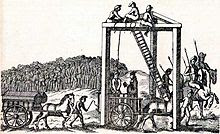
According to this website, St. Robert Southwell comported himself so bravely at his execution at Tyburn Tree that he was hanged until dead before being butchered:
Like many martyrs before him, Southwell drew the admiration of the crowds because he walked as though he whole being were filled with happiness at the prospect of being executed the next day. On the morrow, the tall, slight man of light brown hair and beard was taken to the Tyburn Tree, a gallows, where the custom was for the condemned to be drive underneath the gallows in a cart, a rope secured around his neck, and the cart driven from under him. According to the sentence, the culprit would hang until he was dead or cut down before reaching that point. [Southwell was to be hanged, eviscerated, and quartered.]
Standing in the cart, Father Southwell began preaching on Romans 14: "Whether we live, we live unto the Lord: or whether we die, we die unto the Lord. Therefore, whether we live or whether we die, we are the Lord's... I am brought hither to perform the last act of this miserable life, and... I do most humbly desire at the hands of Almighty God for our Savior Jesus' sake, that He would vouchsafe to pardon and forgive all my sins...". He acknowledged that he was a Catholic priest and declared that he never intended harm or evil against the Queen, but always prayed for her. He end with "In manus tuas, Domine (into Your hands, Lord), I commend my spirit". Contrary to the sentence, he was dead before he was cut down and quartered (Benedictines, Delaney, Undset).
Those connections make me think of a sentence from Saint John Henry Newman's famous meditation: "I am a link in a chain, a bond of connection between persons." These saints forged a strong chain of faithfulness and fortitude.
Please listen live here on the Sacred Heart Radio website; the podcast will be archived here; the segment will be repeated on Friday next week during the EWTN hour of the Son Rise Morning Show (from 6:00 to 7:00 a.m. Eastern/5:00 to 6:00 a.m. Central).
According to this website, St. Robert Southwell comported himself so bravely at his execution at Tyburn Tree that he was hanged until dead before being butchered:
Like many martyrs before him, Southwell drew the admiration of the crowds because he walked as though he whole being were filled with happiness at the prospect of being executed the next day. On the morrow, the tall, slight man of light brown hair and beard was taken to the Tyburn Tree, a gallows, where the custom was for the condemned to be drive underneath the gallows in a cart, a rope secured around his neck, and the cart driven from under him. According to the sentence, the culprit would hang until he was dead or cut down before reaching that point. [Southwell was to be hanged, eviscerated, and quartered.]
Standing in the cart, Father Southwell began preaching on Romans 14: "Whether we live, we live unto the Lord: or whether we die, we die unto the Lord. Therefore, whether we live or whether we die, we are the Lord's... I am brought hither to perform the last act of this miserable life, and... I do most humbly desire at the hands of Almighty God for our Savior Jesus' sake, that He would vouchsafe to pardon and forgive all my sins...". He acknowledged that he was a Catholic priest and declared that he never intended harm or evil against the Queen, but always prayed for her. He end with "In manus tuas, Domine (into Your hands, Lord), I commend my spirit". Contrary to the sentence, he was dead before he was cut down and quartered (Benedictines, Delaney, Undset).
Other reports indicated that no one cheered when his severed head was displayed to the crowd. Indeed, Elizabeth's government recognized that Southwell's execution had had the opposite effect from what they desired--there was lull in executions of Catholic priests in London.
After enduring a year of torture administered by Richard Topcliffe in the Tower of London Saint Henry Walpole was taken back to York to stand trial under the law that made it high treason for an Englishman simply to return home after receiving Holy Orders abroad. The man who had once aspired to be a lawyer defended himself ably, pointing out that the law only applied to priests who had not given themselves up to officials within three days of arrival. He himself had been arrested less than a day after landing in England, so he had not violated that law. The judges responded by demanding that he take the Oath of Supremacy, acknowledging the queen's complete authority in religion. He refused to do so and was convicted of high treason.
On April 7, Walpole was dragged out of York to be executed along with another priest who was killed first (Blessed Alexander Rawlins). Then the Jesuit climbed the ladder to the gallows and asked the onlookers to pray with him. After he finished the Our Father but before he could say the Hail Mary, the executioner pushed him away from the ladder; then he was taken down and dismembered. The Jesuits in England lost a promising young priest whom they had hoped would take the place of Father Southwell; they received another example of fidelity and courage.
As this blog describes Saint Philip Howard's death, it came "by degrees" under the threat of execution and while suffering long imprisonment in the Tower of London:
By the time Robert Southwell was executed at Tyburn, Philip was dying by degrees, from the privations of his imprisonment. He appealed again to the Queen to allow him to see his wife and son. The Queen replied: if Philip would go but once to their church, not only would she grant his request, but he would be restored to his estates and honours with as much favour as she could show. Philip once more sadly declined the offer. Nothing could show more clearly that, as Robert Southwell had written, “your cause, by whatever name it may be disfigured, by whatever colour deformed in the eyes of men, is religion.”
The last night of his life was spent mainly in prayer; he died on Sunday 19th October 1595 at noon. He was thirty eight. The immediate cause of death was most probably dysentery, though rumours of poison were current at the time. They buried him in his father’s grave in the chapel of St Peter ad Vincula in the Tower. It was nearly thirty years before his widow could get his body removed to her home at West Horsley, and then to Arundel, to be laid in the family vault, the Fitzalan Chapel.
Saint Robert Southwell, pray for us!
Saint Henry Walpole, pray for us!
Saint Philip Howard, pray for us!
After enduring a year of torture administered by Richard Topcliffe in the Tower of London Saint Henry Walpole was taken back to York to stand trial under the law that made it high treason for an Englishman simply to return home after receiving Holy Orders abroad. The man who had once aspired to be a lawyer defended himself ably, pointing out that the law only applied to priests who had not given themselves up to officials within three days of arrival. He himself had been arrested less than a day after landing in England, so he had not violated that law. The judges responded by demanding that he take the Oath of Supremacy, acknowledging the queen's complete authority in religion. He refused to do so and was convicted of high treason.
On April 7, Walpole was dragged out of York to be executed along with another priest who was killed first (Blessed Alexander Rawlins). Then the Jesuit climbed the ladder to the gallows and asked the onlookers to pray with him. After he finished the Our Father but before he could say the Hail Mary, the executioner pushed him away from the ladder; then he was taken down and dismembered. The Jesuits in England lost a promising young priest whom they had hoped would take the place of Father Southwell; they received another example of fidelity and courage.
As this blog describes Saint Philip Howard's death, it came "by degrees" under the threat of execution and while suffering long imprisonment in the Tower of London:
By the time Robert Southwell was executed at Tyburn, Philip was dying by degrees, from the privations of his imprisonment. He appealed again to the Queen to allow him to see his wife and son. The Queen replied: if Philip would go but once to their church, not only would she grant his request, but he would be restored to his estates and honours with as much favour as she could show. Philip once more sadly declined the offer. Nothing could show more clearly that, as Robert Southwell had written, “your cause, by whatever name it may be disfigured, by whatever colour deformed in the eyes of men, is religion.”
The last night of his life was spent mainly in prayer; he died on Sunday 19th October 1595 at noon. He was thirty eight. The immediate cause of death was most probably dysentery, though rumours of poison were current at the time. They buried him in his father’s grave in the chapel of St Peter ad Vincula in the Tower. It was nearly thirty years before his widow could get his body removed to her home at West Horsley, and then to Arundel, to be laid in the family vault, the Fitzalan Chapel.
Saint Robert Southwell, pray for us!
Saint Henry Walpole, pray for us!
Saint Philip Howard, pray for us!
Friday, August 21, 2020
Preview: Three Martyred Saints in 1595
It's really kind of crazy of me to prepare to talk about three great martyrs in the time Matt Swaim and I will have on the Son Rise Morning Show this coming Monday, August 24. But it's also difficult to tell their stories and the connections among them in three separate segments. Saint Robert Southwell, SJ; Saint Henry Walpole, SJ; Saint Philip Howard--they all suffered martyrdom in 1595:
Saint Robert Southwell was hanged, drawn and quartered on February 15, 1595.
Saint Henry Walpole was hanged, drawn and quartered on April 7, 1595.
Saint Philip Howard died in the Tower of London ("martyr in chains") on October 19, 1595.
Southwell and Howard were connected because Southwell served Howard's wife, Anne (Dacre), as confessor and chaplain even after Howard was arrested and imprisoned in the Tower of London. They shared incarceration in the Tower for a time, with Saint Philip Howard's dog as a go-between, carrying messages.
Walpole and Southwell were connected because the Jesuits hoped that Walpole could take Southwell's place in the Mission to England after Southwell was arrested, imprisoned and tortured. Both Walpole and Southwell endured torture at Richard Topcliffe's hands.Walpole was imprisoned in the Tower of London while Southwell and Howard were imprisoned there too in 1594 and 1595, but I've never read of any contact with him, even through a dog, by either Southwell or Howard.
Howard and Walpole also share the inspiration for their conversions and Walpole's vocation: Saint Edmund Campion.
Sir Philip Howard converted to Catholicism in 1584, influenced by the example of St. Edmund Campion in 1581; he was received by another Jesuit priest, Father William Weston. Howard was arrested while trying to leave England in 1585 and held in the Tower of London until his death, tried in 1588 for treason because of supposed prayers for the success of the Spanish Armada, and found guilty. No date for execution was ever set. He prayed and fasted and kept himself prepared for death. As a nobleman, he was never tortured, although separation from his wife and children (his son Thomas had been born after he was imprisoned) must have caused him great sorrow. Upon his conversion in 1584 he had become a devoted husband; he had neglected Anne while at Elizabeth I's Court before that. He carved a motto in one of the walls of his cell: Quanto plus afflictionis pro Christo in saeculo, tanto plus gloriae cum Christo in futuro.” (“The more affliction we endure for Christ in this world, the more glory we shall obtain with Christ in the next.”)
Father Robert Southwell, after study and ordination on the Continent, returned to England in 1586; in 1589 he became Lady Anne Howard's chaplain. He wrote An Epistle of Comfort for Philip Howard, urging him to remain true to the Catholic faith. Arrested in 1592, Southwell was tortured by Richard Topcliffe in his home near the Gatehouse Prison for 40 hours and then moved to the Gatehouse for more torture and finally to the Tower of London at his father's insistence that he either be tried and executed or treated like a gentleman in prison, not "hurt, starving, covered with maggots and lice, to lie in his own filth." (His father Robert Southwell was the illegitimate son of Sir Richard Southwell, one of the men who accompanied Sir Richard Rich to Saint Thomas More's cell in the Tower of London to take away More's books and papers and pens!) Thus for three years out of ten of Howard's years in the Tower, Southwell was held in solitary confinement; his father was allowed to provide for his needs, and he had a Bible, a Breviary, and the works of Saint Bernard of Clairvaux--but Richard Topcliffe was still supervising his incarceration.
Father Henry Walpole was converted and inspired by Saint Edmund Campion's martyrdom on December 1, 1581, as some of the blood of the martyr splashed on his sleeve. He had been studying a Gray's Inn for a legal career, but left England to study for the priesthood and join the Society of Jesus. When he arrived in England in December of 1593, he was almost immediately arrested. By the end of February, 1594 he was moved from York to the Tower of London, where he endured torture at the hands of Richard Topcliffe. I don't know if Southwell and Howard knew of Walpole's imprisonment and torture as he was both tracked and hanged by the wrists for hours by Topcliffe. Topcliffe carefully spread out this torture over 14 months, even though Walpole had already confessed that he was Jesuit and had come to England to serve Catholics. He carved his name in the wall of his cell along with a litany of saints' names: Peter, Paul, Jerome, Ambrose, Augustine, and Gregory the Great.
These three men, being well educated gentlemen, were also poets, although Robert Southwell would have to be considered the best poet among them. Henry Walpole was inspired not only to study for the priesthood by Campion's martyrdom, but wrote a poem about him, "Why do I use my paper, ink, and pen" which William Byrd set to music. A poem about the destruction of the shrine of Our Lady of Walsingham is attributed to Philip Howard. You might want to listen to this long but informative podcast from CatholicCulture.com featuring more English martyr poets.
I'll provide some details about their martyrdoms in 1595 on Monday, August 24.
Saint Robert Southwell, pray for us!
Saint Henry Walpole, pray for us!
Saint Philip Howard, pray for us!
Saint Robert Southwell was hanged, drawn and quartered on February 15, 1595.
Saint Henry Walpole was hanged, drawn and quartered on April 7, 1595.
Saint Philip Howard died in the Tower of London ("martyr in chains") on October 19, 1595.
Southwell and Howard were connected because Southwell served Howard's wife, Anne (Dacre), as confessor and chaplain even after Howard was arrested and imprisoned in the Tower of London. They shared incarceration in the Tower for a time, with Saint Philip Howard's dog as a go-between, carrying messages.
Walpole and Southwell were connected because the Jesuits hoped that Walpole could take Southwell's place in the Mission to England after Southwell was arrested, imprisoned and tortured. Both Walpole and Southwell endured torture at Richard Topcliffe's hands.Walpole was imprisoned in the Tower of London while Southwell and Howard were imprisoned there too in 1594 and 1595, but I've never read of any contact with him, even through a dog, by either Southwell or Howard.
Howard and Walpole also share the inspiration for their conversions and Walpole's vocation: Saint Edmund Campion.
Sir Philip Howard converted to Catholicism in 1584, influenced by the example of St. Edmund Campion in 1581; he was received by another Jesuit priest, Father William Weston. Howard was arrested while trying to leave England in 1585 and held in the Tower of London until his death, tried in 1588 for treason because of supposed prayers for the success of the Spanish Armada, and found guilty. No date for execution was ever set. He prayed and fasted and kept himself prepared for death. As a nobleman, he was never tortured, although separation from his wife and children (his son Thomas had been born after he was imprisoned) must have caused him great sorrow. Upon his conversion in 1584 he had become a devoted husband; he had neglected Anne while at Elizabeth I's Court before that. He carved a motto in one of the walls of his cell: Quanto plus afflictionis pro Christo in saeculo, tanto plus gloriae cum Christo in futuro.” (“The more affliction we endure for Christ in this world, the more glory we shall obtain with Christ in the next.”)
Father Robert Southwell, after study and ordination on the Continent, returned to England in 1586; in 1589 he became Lady Anne Howard's chaplain. He wrote An Epistle of Comfort for Philip Howard, urging him to remain true to the Catholic faith. Arrested in 1592, Southwell was tortured by Richard Topcliffe in his home near the Gatehouse Prison for 40 hours and then moved to the Gatehouse for more torture and finally to the Tower of London at his father's insistence that he either be tried and executed or treated like a gentleman in prison, not "hurt, starving, covered with maggots and lice, to lie in his own filth." (His father Robert Southwell was the illegitimate son of Sir Richard Southwell, one of the men who accompanied Sir Richard Rich to Saint Thomas More's cell in the Tower of London to take away More's books and papers and pens!) Thus for three years out of ten of Howard's years in the Tower, Southwell was held in solitary confinement; his father was allowed to provide for his needs, and he had a Bible, a Breviary, and the works of Saint Bernard of Clairvaux--but Richard Topcliffe was still supervising his incarceration.
Father Henry Walpole was converted and inspired by Saint Edmund Campion's martyrdom on December 1, 1581, as some of the blood of the martyr splashed on his sleeve. He had been studying a Gray's Inn for a legal career, but left England to study for the priesthood and join the Society of Jesus. When he arrived in England in December of 1593, he was almost immediately arrested. By the end of February, 1594 he was moved from York to the Tower of London, where he endured torture at the hands of Richard Topcliffe. I don't know if Southwell and Howard knew of Walpole's imprisonment and torture as he was both tracked and hanged by the wrists for hours by Topcliffe. Topcliffe carefully spread out this torture over 14 months, even though Walpole had already confessed that he was Jesuit and had come to England to serve Catholics. He carved his name in the wall of his cell along with a litany of saints' names: Peter, Paul, Jerome, Ambrose, Augustine, and Gregory the Great.
These three men, being well educated gentlemen, were also poets, although Robert Southwell would have to be considered the best poet among them. Henry Walpole was inspired not only to study for the priesthood by Campion's martyrdom, but wrote a poem about him, "Why do I use my paper, ink, and pen" which William Byrd set to music. A poem about the destruction of the shrine of Our Lady of Walsingham is attributed to Philip Howard. You might want to listen to this long but informative podcast from CatholicCulture.com featuring more English martyr poets.
I'll provide some details about their martyrdoms in 1595 on Monday, August 24.
Saint Robert Southwell, pray for us!
Saint Henry Walpole, pray for us!
Saint Philip Howard, pray for us!
Monday, August 17, 2020
This Morning: Saints Eustace White and John Boste
Just a reminder that I'll be on the Son Rise Morning Show at about 7:50 a.m. Eastern/6:50 a.m. Central to continue our series on the 40 Martyrs of England and Wales. Anna Mitchell and I will discuss Saints Eustace White and John Boste.
Please listen live here on the Sacred Heart Radio website; the podcast will be archived here; the segment will be repeated on Friday next week during the EWTN hour of the Son Rise Morning Show (from 6:00 to 7:00 a.m. Eastern/5:00 to 6:00 a.m. Central).
Saint Eustace was hanged, drawn, and quartered on the same day as Saints Swithun Wells, Edmund Gennings, and Polydore Plasden (December 10, 1591) but at a different location, Tyburn Tree.
Saint John was hanged, drawn, and quartered at Durham, County Durham, in northeast England on July 24, 1594.
Both men had suffered torture, perhaps both at the hands of Richard Topcliffe: we know that Topcliffe visited Saint Eustace White while he was hanged by the wrists in Bridewell prison. Saint John Boste was tortured on The Rack in the Tower of London.
Saint Alexander Briant, who was born 464 years ago today on August 17, 1556, had endured similar torture in 1581 before his death at Tyburn on December 1, 1581. He was 25 years old. Boste was 32 when he was executed; White was about 50.
We are almost half-way through the 40 Martyrs of England and Wales and have more great stories to tell in August, September, October--and even the beginning of November:
Please listen live here on the Sacred Heart Radio website; the podcast will be archived here; the segment will be repeated on Friday next week during the EWTN hour of the Son Rise Morning Show (from 6:00 to 7:00 a.m. Eastern/5:00 to 6:00 a.m. Central).
Saint John was hanged, drawn, and quartered at Durham, County Durham, in northeast England on July 24, 1594.
Both men had suffered torture, perhaps both at the hands of Richard Topcliffe: we know that Topcliffe visited Saint Eustace White while he was hanged by the wrists in Bridewell prison. Saint John Boste was tortured on The Rack in the Tower of London.
Saint Alexander Briant, who was born 464 years ago today on August 17, 1556, had endured similar torture in 1581 before his death at Tyburn on December 1, 1581. He was 25 years old. Boste was 32 when he was executed; White was about 50.
We are almost half-way through the 40 Martyrs of England and Wales and have more great stories to tell in August, September, October--and even the beginning of November:
8/24: Southwell, Walpole, and Howard (1595 connections)
8/31: Two Franciscans: John Jones (1598) and John Wall
(1679)
9/7: Labor Day Break
9/14: Rigby (1600) and Line (1601) (laity)
9/21: Owen (1606) and Garnet, SJ (1608) (Gunpowder Plot)
9/28: Roberts, OSB (1610) and Almond (1612)
10/5: Arrowsmith, SJ (Lancashire Recusant Family) (1628)
10/12: Barlow (1641) and Roe ( (OSB) (1642)
10/19: Morse (1645) and Southworth (1654) (Plague Priests)
10/26: Evans and Lewis, SJ (Popish Plot) (1679)
11/2: Kemble, Lloyd, and Plessington (Popish Plot) (1679)
Saint Eustace White, pray for us!
Saint John Boste, pray for us!
Friday, August 14, 2020
Preview: Saints Eustace White and John Boste
On Monday, August 17, Anna Mitchell and I will continue our Son Rise Morning Show series on the 40 Martyrs of England and Wales. We'll talk about two more Elizabethan era martyrs, Saint Eustace White and Saint John Boste. Usual time: 7:50 a.m. Eastern/6:50 a.m. Central.
Saint Eustace was hanged, drawn, and quartered on the same day as Saints Swithun Wells, Edmund Gennings, and Polydore Plasden (December 10, 1591) but at a different location, Tyburn Tree.
Saint John was hanged, drawn, and quartered at Durham, County Durham, in northeast England on July 24, 1594.
St. Eustace White was a convert to Catholicism--his anti-Catholic father cursed him and White endured permanent estrangement from his family. In 1584 Eustace began studies for the priesthood in Rheims, France and Rome, Italy, and was ordained at the Venerable English College in Rome in 1588. In November 1588 he returned to the west of England to minister to covert Catholics. The Church was going through a period of persecution in England, made even worse by the unsuccessful attack of the Armada from Catholic Spain. Arrested in Blandford, Dorset, England on 1 September 1591 for the crime of being a priest. He was lodged in Bridewell prison in London, and repeatedly tortured.
He endured the torture technique developed by Richard Topcliffe and used on St. Robert Southwell and others, being hanged by the wrists. As he wrote to Fr. Henry Garnet, SJ from prison:
"The morrow after Simon and Jude's day I was hanged at the wall from the ground, my manacles fast locked into a staple as high as I could reach upon a stool: the stool taken away where I hanged from a little after 8 o'clock in the morning until after 4 in the afternoon, without any ease or comfort at all, saving that Topcliffe came in and told me that the Spaniards were come into Southwark by our means: 'For lo, do you not hear the drums' (for then the drums played in honour of the Lord Mayor). The next day after also I was hanged up an hour or two: such is the malicious minds of our adversaries."According to Bishop Richard Challoner, who compiled reports of many of the martyrs in his Memoirs of Missionary Priests, Saint Eustace told Richard Topcliffe that he prayed for him--and Topcliffe did not appreciate the prayers of one he regarded as a traitor. Challoner also notes that because the date of White's execution is the same as the martyrs' on Grays Inn Road, some reports placed him at that All Saints Day Mass in Saint Swithun Wells' home--but he was arrested and held separately.
Blessed Brian Lacey, a layman, suffered with him at Tyburn Tree.
Saint John Boste was born in northwestern England, and could be considered a revert in a way because he was born in a Catholic family, conformed at least outwardly to the Church of England to study at Oxford and become a Fellow of Queen's College, and then returned to the Catholic Church. He, too, endured torture in London but Topcliffe's name isn't included in the reports of his torture on rack and being hanged by the wrists, which left him crippled and bent over. According to the Catholic Encyclopedia:
Priest and martyr, b. of good Catholic family at Dufton, in Westmoreland, about 1544; d. at Durham, 24 July, 1594. He studied at Queen's College, Oxford, 1569-72, became a Fellow, and was received into the Church at Brome, in Suffolk, in 1576. Resigning his Fellowship in 1580, he went to Reims, where he was ordained priest, 4 March, 1581, and in April was sent to England. He landed at Hartlepool and became a most zealous missioner, so that the persecutors made extraordinary efforts to capture him. At last, after many narrow escapes, he was taken to Waterhouses, the house of William Claxton, near Durham, betrayed by one Eglesfield [or Ecclesfield], 5 July, 1593. The place is still visited by Catholics. From Durham he was conveyed to London, showing himself throughout "resolute, bold, joyful, and pleasant", although terribly racked in the Tower. Sent back to Durham for the July Assizes, 1594, he behaved with undaunted courage and resolution, and induced his fellow-martyr, Bl. George Swalwell [or Swallowell], a convert minister, who had recanted through fear, to repent of his cowardice, absolving him publicly in court. He suffered at Dryburn, outside Durham. He recited the Angelus while mounting the ladder, and was executed with extraordinary brutality; for he was scarcely turned off the ladder when he was cut down, so that he stood on his feet, and in that posture was cruelly butchered alive. An account of his trial and execution was written by an eye-witness, [Blessed] Christopher Robinson, who suffered martyrdom shortly afterwards at Carlisle.
As I mentioned last week, these priests were executed because they were Catholic priests who had returned to England. The authorities tortured them to find out where they had said Mass, who had sheltered them, how they'd arrived in England, etc.
Saint Eustace White, pray for us!
Saint John Boste, pray for us!
Monday, July 27, 2020
This Morning: Saints Margaret Clitherow and Margaret Ward
Just a reminder that I'll be on the Son Rise Morning Show at about 7:50 a.m. Eastern/6:50 a.m. Central to continue our series on the 40 Martyrs of England and Wales. Matt Swaim (or Anna Mitchell) and I will discuss Saints Margaret Clitherow and Margaret Ward, two laywomen who suffered martyrdom because they sheltered and protected priests.
Please listen live here; the podcast will be archived here.
St Margaret is today honoured in the Diocese of Shrewsbury. The saint is depicted in panels in St Joseph’s, Sale (above left), and St Alban’s, Wallasey. There was a wooden statue of her in St Laurence’s Church, Birkenhead, and in Sale a school and a church bear her name, as does another in Holmes Chapel.
Large statues of St Margaret and Blessed John Roche still stand today in St Etheldreda’s Church in Holborn, London.
Gerard Manley Hopkins, SJ composed this unfinished poem in honor of Saint Margaret Clitherow; at the end of the poem he alludes to Margaret possibly being pregnant when she was executed:
GOD’S counsel cólumnar-severe
But chaptered in the chief of bliss
Had always doomed her down to this –
Pressed to death. He plants the year;
The weighty weeks without hands grow,
Heaved drum on drum; but hands also
Must deal with Margaret Clitheroe.
The very victim would prepare.
Like water soon to be sucked in
Will crisp itself or settle or spin
So she; one sees that here and there
She mends the ways she means to go.
The last thing Margaret’s fingers sew
Is a shroud for Margaret Clitheroe.
The Christ-ed beauty of her mind
Her mould of features mated well.
She was admired. The spirit of hell
Being to her virtue clinching-blind
No wonder therefore was not slow
To the bargain of its hate to throw
The body of Margaret Clitheroe.
Great Thecla, the plumed passionflower,
Next Mary mother of maid and nun
– – – – – – – – – – – – – –
And every saint of bloody hour
And breath immortal thronged that show;
Heaven turned its starlight eyes below
To the murder of Margaret Clitheroe.
She was a woman, upright, outright;
Her will was bent at God. For that
Word went she should be crushed out flat
– – – – – – – – – – – – – –
Fawning fawning crocodiles
Days and days came round about
With tears to put her candle out;
They wound their winch of wicked smiles
To take her; while their tongues would go
God lighten your dark heart – but no,
Christ lived in Margaret Clitheroe.
She held her hands to, like in prayer;
They had them out and laid them wide
(Just like Jesus crucified);
They brought their hundredweights to bear.
Jews killed Jesus long ago
God’s son; these (they did not know)
God’s daughter Margaret Clitheroe.
When she felt the kill-weights crush
She told His name times-over three;
I suffer this she said for Thee.
After that in perfect hush
For a quarter of an hour or so
She was with the choke of woe. –
It is over, Margaret Clitheroe.
She caught the crying of those Three,
The Immortals of the eternal ring,
The Utterer, Utterèd, Uttering,
And witness in her place would she.
She not considered whether or no
She pleased the Queen and Council. So
To the death with Margaret Clitheroe!
Within her womb the child was quick.
Small matter of that then! Let him smother
And wreck in ruins of his mother. . . .
GOD’S counsel cólumnar-severe
But chaptered in the chief of bliss
Had always doomed her down to this –
Pressed to death. He plants the year;
The weighty weeks without hands grow,
Heaved drum on drum; but hands also
Must deal with Margaret Clitheroe.
The very victim would prepare.
Like water soon to be sucked in
Will crisp itself or settle or spin
So she; one sees that here and there
She mends the ways she means to go.
The last thing Margaret’s fingers sew
Is a shroud for Margaret Clitheroe.
The Christ-ed beauty of her mind
Her mould of features mated well.
She was admired. The spirit of hell
Being to her virtue clinching-blind
No wonder therefore was not slow
To the bargain of its hate to throw
The body of Margaret Clitheroe.
Great Thecla, the plumed passionflower,
Next Mary mother of maid and nun
– – – – – – – – – – – – – –
And every saint of bloody hour
And breath immortal thronged that show;
Heaven turned its starlight eyes below
To the murder of Margaret Clitheroe.
She was a woman, upright, outright;
Her will was bent at God. For that
Word went she should be crushed out flat
– – – – – – – – – – – – – –
Fawning fawning crocodiles
Days and days came round about
With tears to put her candle out;
They wound their winch of wicked smiles
To take her; while their tongues would go
God lighten your dark heart – but no,
Christ lived in Margaret Clitheroe.
She held her hands to, like in prayer;
They had them out and laid them wide
(Just like Jesus crucified);
They brought their hundredweights to bear.
Jews killed Jesus long ago
God’s son; these (they did not know)
God’s daughter Margaret Clitheroe.
When she felt the kill-weights crush
She told His name times-over three;
I suffer this she said for Thee.
After that in perfect hush
For a quarter of an hour or so
She was with the choke of woe. –
It is over, Margaret Clitheroe.
She caught the crying of those Three,
The Immortals of the eternal ring,
The Utterer, Utterèd, Uttering,
And witness in her place would she.
She not considered whether or no
She pleased the Queen and Council. So
To the death with Margaret Clitheroe!
Within her womb the child was quick.
Small matter of that then! Let him smother
And wreck in ruins of his mother. . . .
The repetition of "Margaret Clitheroe" at the end of each stanza is quite effective. Perhaps when Hopkins got to the point of the baby in her womb being crushed, he could go no further?
Hopkins did not write a poem about St. Margaret Ward, but the Diocese of Shrewsbury honors her among the saints and martyrs of the area:
St Margaret is today honoured in the Diocese of Shrewsbury. The saint is depicted in panels in St Joseph’s, Sale (above left), and St Alban’s, Wallasey. There was a wooden statue of her in St Laurence’s Church, Birkenhead, and in Sale a school and a church bear her name, as does another in Holmes Chapel.
Large statues of St Margaret and Blessed John Roche still stand today in St Etheldreda’s Church in Holborn, London.
St. Margaret Clitherow, pray for us!
St. Margaret Ward, pray for us!
Friday, July 24, 2020
Preview: Two Martyrs Named Margaret
On Monday, July 27, we'll continue our series on the Son Rise Morning Show with two more lay martyrs, Saint Margaret Clitherow and Saint Margaret Ward, two magnificent Catholic heroines who suffered during the reign of "Good Queen Bess" because they defended Catholic priests.
Saint Margaret Clitherow, The Pearl of York, was pressed or crushed to death on Good Friday (according to the Old Calendar, since England had not accepted the Catholic Gregorian reforms), March 25, 1586. Because she had refused to enter any plea when brought to trial--not cooperating with authorities--she was condemned to this unusual method of execution.
Clitherow was laid supine on the ground, a small stone placed beneath her back. She was naked, except for the shift placed on top of her. Her arms were outstretched like Jesus’ on the cross and tied to stakes, and the executioners placed a door on top of her. Then the executioners placed nearly 700 pounds of rocks on top of the door. She was crushed to death in about 15 minutes, speaking the name of Jesus as her ribs broke: “Jesu! Jesu! Jesu! Have mercy on me!”
She was born Margaret Middleton in 1556, married John Clitherow, a wealthy butcher and widower, when she was 18; at age 21, she became a Catholic. Her husband paid her fines when she refused to attend Church of England services, but he could not prevent her from being arrested and jailed for what authorities considered obstinate “popery” (her refusal to conform to the official national church). While she was in prison, however, she learned how to read and write.
John had children from his first marriage, Henry and Thomas; John had also allowed her to raise them as Catholics, as well as her children Anne and William. She hired a Catholic tutor named Stapleton to teach the children the faith. One of their sons, Henry, left York to attend a Catholic school on the Continent.
John Clitherow became a chamberlain of the city of York and was outraged when the authorities questioned him about his family’s faith and his son’s absence. John’s own brother William was a Catholic priest, so he was vulnerable, in spite of his public conformity to the Anglican church, especially when his wife refused to conform.
On March 10, 1586, the authorities raided the Clitherow household and found the tutor, Anne, William and neighborhood children doing their lessons. One little boy, from Flanders, after being threatened with torture, told the authorities about the priests who visited the household and showed them where the vestments were hidden. They arrested Margaret and accused her of breaking the laws against attending Mass and harboring Catholic priests.
Most of the sources I've read indicate that Clitherow refused to enter at plea at trial because she knew that her husband and her children would be called as witnesses and might be threatened with or even suffer torture; also her husband's standing in the community meant that his friends and colleagues would be on the jury to cast the verdict against her.
Being sentenced to peine forte et dure (“hard and forceful punishment”) was usually a three-day process: the first two days the prisoner would be laid down on the ground with as much weight laid upon her as she was able to bear and left thus without food or drink. If she entered her plea during the first two days, the weights would be removed and her trial would continue. If she still wouldn't enter a plea under this torture, she would be crushed to death on the third day. Saint Margaret Clitherow did not undergo the torture of three days: she was crushed to death on the first day. They left her body under the weights for another six hours and then buried her secretly. Her right hand was retrieved as a relic; it is kept at the Bar Convent in York. Her body was also found and decently buried.
Before sentence was carried out she sent her stockings and shoes to her daughter, conveying the message of following in her footsteps of faithfulness to the Church and the Sacraments. Anne left England to become a nun in Louvain, now Belgium. Both William and Henry became priests; and Thomas died in Hull prison in 1604, imprisoned for recusancy. John Clitherow remarried.
Father John Mush, her confessor, wrote her story in 1586, The Life and Death of Mistress Margaret Clitherow; he was arrested and sentenced to death in October that year but escaped.
Saint Margaret Ward was part of the second group of martyrs to suffer in 1588 after the failure of the Spanish Armada. She is a virgin martyr: she helped Father Richard Watson escape from Bridewell Prison. She visited him often enough that the jailer finally allowed her to enter without searching her, so she was able to smuggle in a rope. Father Watson unfortunately injured himself while escaping and was unable to retrieve the rope. Margaret found John Roche to help the injured priest once out of prison and both she and John were arrested; John because he had exchanged clothing with the priest and Margaret because the jailer figured out that she was the last person to visit Father Watson before he escaped. She was held in chains, hung up by her hands and scourged as the authorities attempted to force her to tell them where Father Watson went after escaping Bridewell prison. She refused, even though she acknowledged that she helped him. Offered a pardon for attending Church of England services, she again refused. The torture inflicted upon her over eight days left her partially paralyzed and she had to be carried to Tyburn for hanging. On August 30, 1588, she and Blessed John Roche, who had helped rescue Father Richard Watson, Blesseds Richard Lloyd, Richard Martin, and Edward Shelley, and one priest, Blessed Richard Leigh suffered martyrdom. The regime was certainly sending a message about laity who assisted Catholic priests.
These two saints share a separate feast day on August 30 with the other female martyr among the 40 Martyrs of England and Wales, St. Anne Line. In the triptych featured above, they are depicted in the right hand panel. Anne Line, a widow, is dressed in black; Margaret Ward holds a rope; Margaret Clitherow kneels on a door. The painting is by Geoffrey Webb.
St. Margaret Clitherow, pray for us!
St. Margaret Ward, pray for us!
Monday, July 13, 2020
This Morning: Saints Payne and Kirby
Just a reminder that I'll be on the Son Rise Morning Show at about 7:50 a.m. Eastern/6:50 a.m. Central to continue our series on the 40 Martyrs of England and Wales. Matt Swaim and I will discuss Saint John Payne and Saint Luke Kirby.
Please listen live here; the podcast will be archived here.
As I noted before, Saints Payne and Kirby are the last two saints from the group beatified by Pope Leo XIII in 1886. All of the saints canonized from the Elizabethan era in that group, except for Saint Cuthbert Mayne, were found guilty and condemned to the death of traitors in connection with the Rome and Reims Plot, which was an invention of the government. That's why it was so important that these five priests, Campion, Briant, Sherwin, Payne, and Kirby proclaimed their innocence of involvement in any plot against Queen Elizabeth I on the scaffold, and insisted that they were dying because they were Catholic priests. According to the expectations of the period, they were supposed to declare their guilt and the justice of their punishment. These priests refused to do that. They did fulfill the custom of the era by assuring the queen of their prayers and loyalty to her as a secular--not religious--head of state.
The rest of the Elizabethan era martyrs--and half of the 40 Martyrs of England and Wales suffered during that reign--were in the 1929 group beatified by Pope Pius XI and they comprise a much more diverse group of priests, laymen, and laywomen. Anna Mitchell and I will begin to discuss those martyrs next Monday.
Saint John Payne, pray for us!
Saint Luke Kirby, pray for us!
Friday, July 10, 2020
Preview: Saints John Payne and Luke Kirby
The two saints I'll discuss with Matt Swaim on Monday, July 13 on the Son Rise Morning Show both have connections to martyrs we've previously covered: St. John Payne came to England on the mission with St. Cuthbert Mayne; St. Luke Kirby was in the group of priests accused in the Rome and Reims plot that included Sts. Edmund Campion, Alexander Briant, and Ralph Sherwin. Also, Father Payne was accused of a plot against Elizabeth I by Father Campion's betrayer, George Eliott.
St. John Payne was executed on April 2, 1582 at Chelmsford, Colchester, Essex; St. Luke Kirby at Tyburn Tree in London on May 30, 1582 with Blessed William Filby, Blessed Lawrence Johnson, and Blessed Thomas Cottam SJ.
St. John Payne was born in 1532 and went to the English College in Douai in 1574, ordained in 1576, and returned to England with Cuthbert Mayne the same year. Once they arrived in England, Mayne and Payne separated and went to different areas of England, both residing with noble recusant Catholics (Mayne with Sir Francis Tregian; Payne with Lady Anne Petre, widow of Sir William Petre at Ingatestone Hall:
Mayne headed for his native South West England, and Payne headed for Essex. In early July 1851, he and another who had come to England were arrested in Warwickshire while staying at the estate of Lady Petre. It was through the efforts of George “Judas” Eliot, a known criminal, murderer, rapist and thief, who made a career out of denouncing Catholics and Priests for bounty. After being examined at Greenwich, they were committed to the Tower of London on July 14th. Eliot was a Catholic, and had been employed in positions of trust in the Petre household where he had embezzled sums of money. He enticed a young woman to marry him, and then approached Fr. Payne. When he refused, Elliot was determined to make his revenge, and a profit as well, by turning him in.
Fr. John Payne was indicted at Chelmsford on March 22, on a charge of treason for conspiring to murder the Queen and her leading officers. John denied the charges, and affirmed his loyalty to the Queen in all that was lawful; contesting the reliability of the murderer Eliot how had turned him in. No attempt was made to corroborate Eliot’s story, which had been well rehearsed. The guilty verdict was a foregone conclusion.
At his execution, he was dragged from prison on a hurdle to the place of execution and first prayed on his knees for almost thirty minutes. He then kissed the scaffold, made a profession of faith, and publicly declared his innocence. He was called upon to repent of his treason, and again, Payne denied it. A Protestant minister shouted out that he knew of Payne’s treason, from his brother, years prior. Fr. Payne admitted that his brother was an earnest Protestant, but that he would never had said such a lie. Fr. Payne asked that his brother who was in the same vicinity, be brought in and asked. The execution proceeded and John Payne was at their mercy. What was supposed to be a smooth, quiet execution was anything but that. The crowd had become so sympathetic to John Payne that they hung on his feet to speed up his death and prevented the infliction of the quartering until he was dead.
Robert Rich, 3rd Baron Rich, 1st Earl of Warwick, grandson of Richard "but for Wales" Rich who testified against Saint Thomas More, was the one who urged Payne to repent of the treason he had not committed. Anne Browne, Lady Petre died in April 1582 but her son, John Petre later 1st Baron Petre (a title purchased from James I) remained a Catholic recusant, as did his successors. Ingatestone Hall is partially open to the public with two priest's holes on display.
Fr. John Payne was indicted at Chelmsford on March 22, on a charge of treason for conspiring to murder the Queen and her leading officers. John denied the charges, and affirmed his loyalty to the Queen in all that was lawful; contesting the reliability of the murderer Eliot how had turned him in. No attempt was made to corroborate Eliot’s story, which had been well rehearsed. The guilty verdict was a foregone conclusion.
The "another" who was arrested with Father Payne was Father George Godsalve or Godsalf, whom Payne had called back to the Catholic Church and who had been ordained at Douai in 1577 (Godsalve had previously been ordained a Catholic deacon during Mary I's reign). He was not executed by the Elizabethan regime, but held in prison for several years, finally released from Marshalsea in 1585 and died in Paris in 1592. Father Payne was racked in August and October and then taken to Chelmsford, the county seat of Essex, in March of 1582 for his trial, in which Eliot was the main witness, and the well rehearsed story was again, the Rome and Reims Plot.
Payne's execution was a wild scene, as he had one more opportunity to defend himself:
Robert Rich, 3rd Baron Rich, 1st Earl of Warwick, grandson of Richard "but for Wales" Rich who testified against Saint Thomas More, was the one who urged Payne to repent of the treason he had not committed. Anne Browne, Lady Petre died in April 1582 but her son, John Petre later 1st Baron Petre (a title purchased from James I) remained a Catholic recusant, as did his successors. Ingatestone Hall is partially open to the public with two priest's holes on display.
With Father Luke Kirby, we reach the last of the 40 Martyrs of England and Wales who had been beatified by Pope Leo XIII in 1889. Please see this blog, authored by a Benedictine Monk in Ireland with the same last name. Some excerpts:
Saint Luke Kirby, priest and martyr. Born in 1549 in England under Edward VI -- an England severed from its Catholic roots -- Saint Luke was educated at Cambridge. He abjured Protestantism and was reconciled to the Catholic Church at Louvain. He studied for the priesthood at Douai College, then in Rome, and was ordained at Cambrai in 1577 for the English mission. . . .
Travelling with Fathers Edmund Campion, Ralph Sherwin and others, he was was arrested almost immediately after he'd landed at Dover.
Imprisoned and Tortured
Five days after his transfer to the Tower of London, Saint Luke was subjected to "the Scavenger's Daughter." This was a hinged hoop of iron; the prisoner was required to kneel and draw himself into a ball, the hoop was placed under his legs and across his back, and then drawn tight, the torturer helping the fit by kneeling on the prisoner's shoulders. Among other things, it caused a flow of blood from the nostrils and sometimes from the tips of the fingers and toes. Father Kirby was tried and found guilty, together with Father Campion and other priests on November 16, 1581. Saint Luke was kept in prison until the end of May, the last four weeks in chains.
Imprisoned and Tortured
Five days after his transfer to the Tower of London, Saint Luke was subjected to "the Scavenger's Daughter." This was a hinged hoop of iron; the prisoner was required to kneel and draw himself into a ball, the hoop was placed under his legs and across his back, and then drawn tight, the torturer helping the fit by kneeling on the prisoner's shoulders. Among other things, it caused a flow of blood from the nostrils and sometimes from the tips of the fingers and toes. Father Kirby was tried and found guilty, together with Father Campion and other priests on November 16, 1581. Saint Luke was kept in prison until the end of May, the last four weeks in chains.
His execution was also like another trial--the authorities wanted the priests to admit their treason publicly probably because they knew the trial and guilt verdict would not stand close attention:
Tyburn
When Saint Luke was brought to Tyburn to be executed on May 30th, 1582, Blessed William Filby's body was still hanging from the dreaded 'triple tree'. Standing in the cart beneath the gallows, he declared himself innocent of the treason alleged against him and said that he was, in fact, about to die for the Catholic faith. A number of officials began wearisome discussions with him, arguing points of law and doctrine. They tried in several ways to induce him at first to denounce the Pope and finally to yield in any slight point of doctrine or practice. Father Kirby held fast to the Catholic faith.
Pater Noster
Finally, the Queen’s preachers bid him pray with them, in English, in his last moments: they would pronounce the prayer and asked Luke, if he found nothing objectionable, to repeat their words after them. “Oh,” he said, “you and I are not of one faith, therefore I think I should offend God if I should pray with you.” At this the people began to cry, “Away with him!” So, Saint Luke Kirby, an Englishman saying his Pater Noster in Latin, the language of the Church of Rome, ended his life. After the hanging, his body was gutted and quartered.
Tyburn
When Saint Luke was brought to Tyburn to be executed on May 30th, 1582, Blessed William Filby's body was still hanging from the dreaded 'triple tree'. Standing in the cart beneath the gallows, he declared himself innocent of the treason alleged against him and said that he was, in fact, about to die for the Catholic faith. A number of officials began wearisome discussions with him, arguing points of law and doctrine. They tried in several ways to induce him at first to denounce the Pope and finally to yield in any slight point of doctrine or practice. Father Kirby held fast to the Catholic faith.
Pater Noster
Finally, the Queen’s preachers bid him pray with them, in English, in his last moments: they would pronounce the prayer and asked Luke, if he found nothing objectionable, to repeat their words after them. “Oh,” he said, “you and I are not of one faith, therefore I think I should offend God if I should pray with you.” At this the people began to cry, “Away with him!” So, Saint Luke Kirby, an Englishman saying his Pater Noster in Latin, the language of the Church of Rome, ended his life. After the hanging, his body was gutted and quartered.
Saint John Payne, pray for us!
Saint Luke Kirby, pray for us!
Image Credit: Published under a Attribution-ShareAlike 4.0 International (CC BY-SA 4.0) license: the Scavenger's Daughter (or Skevington's Daughter) invented by Sir Leonard Skevington, one of Henry VIII's Lieutenants of the Tower of London.
Subscribe to:
Posts (Atom)