Showing posts with label Radio Maria. Show all posts

Sunday, August 4, 2013

The English Reformation Today's One Year Anniversary


On Saturday, August 4, 2012, I began my 12-week show, "The English Reformation Today" on Radio Maria US. Almost all of the episodes are available as podcasts on the network's website here. I posted regular summaries of each week's topic on this blog, and you can explore those posts here.

As a preview of upcoming events, I'm pleased to announce that the St. Austin Review (StAR) will publish my article on Pope Emeritus Benedict XVI's legacy for England's Catholics in the September/October issue--but you'll need to be a subscriber to read the article, unless they happen to choose it as the one sample article from the issue on the magazine's website.

Also, the September on-line issue of Homiletic & Pastoral Review will include my article on Church History and Apologetics, which is readily accessible for free!

And, finally, don't forget that I'll be presenting at the Kansas Authors Club annual convention here in Wichita, Kansas. I'm scheduled for 10:00 a.m. on Saturday, October 5 on “Marketing a Non-Fiction Book to a Niche Audience: It’s Quite a F.E.A.T.” Program description:

Stephanie will describe strategies she has developed and techniques she employs to promote her non-fiction, historical work to a niche audience of readers interesting in the history of religion in England. With humility and humor, Stephanie outlines her successes and failures, offering insights and lessons learned by using the acronym F.E.A.T.: F = Finding a Publisher and an Audience (research and success); E = Establishing a Platform (broadcast, print, and on-line social media); A = Addressing Challenges and Opportunities (current events and limitations); T = Tracking down Contacts and Customers (networking and working).

I'm so disappointed that the pilgrimage to England in honor of the English Martyrs of the Reformation did not work out this year. Corporate Travel Services is still on the lookout for a suitable parish to base the pilgrimage in so they may attract enough participation to make it successful.

Update: I'll also have an article in the September/October issue of OSV's The Catholic Answer Magazine! "The Cross Triumphant: What are the feasts of the Holy Cross and Our Lady of Sorrows?

I am so grateful to these publishers and editors who accept and often improve my submissions for publication!

Tuesday, January 29, 2013

Podcasts Available


I talked with Ken Huck on his Radio Maria US "Meet the Author" show last week and the podcast is now available online:

Ken talks with his guest Stephanie Mann author of Supremacy and Survival – How Catholics Endured the English Reformation (published by Scepter). This book is a gripping history of famous events in England that had ramifications reaching across the ocean and impacted religious freedom in America. There are so many real-life twists and turns that the book reads like a novel.

Last year, on December 1, I spoke with Christine Niles on her radio show Forward Boldly about my book and the history of the English Reformation, and that interview is also available online here.

While I'm at it, here's a link to my interview last November with Ian Rutherford of the great Catholic bookstore, Aquinas and More (St. Thomas Aquinas and St. Thomas More)!


And, as a preview of an upcoming interview, I'll be on the Son Rise Morning Show, broadcast from Sacred Heart Radio in Cincinnati, Ohio on the EWTN Radio Network this Thursday, January 31 to discuss the Catholic Martyrs of England Tour and Pilgrimage I just announced. You may listen LIVE here at 7:45 a.m. Eastern/6:45 a.m. Central!

Thursday, January 24, 2013

Meet the Author Today with Ken Huck


I'll be on the air with Ken Huck on his Radio Maria USA show, "Meet the Author" today at 3:00 p.m. Eastern/2:00 p.m. Central to discuss Supremacy and Survival: How Catholics Endured the English Reformation!


You may listen live here and remember that podcasts of my radio show on Radio Maria last year, "The English Reformation Today", are also available.

When I sent a copy of my book to Radio Maria last year, it was to Ken Huck's attention for an interview on this show--Father Robert Young saw it before Ken had a chance and contacted me about doing the radio show starting on August 4. I sent another copy to Ken and he scheduled this interview!

Friday, October 26, 2012

Podcasts from "The English Reformation Today"


I wrapped up my radio series, "The English Reformation Today" on Radio Maria last Saturday, October 20. Podcasts of almost all the episodes are here--one broadcast took place during the network's fall pledge drive, so I suppose they have not posted it since Father Young and I talked about the program and the pledge drive in the first few minutes.

This was an interesting venture--the time commitment was pretty intense with at least two hours of prep for the one hour of broadcast. It was a rather different kind of radio program because I was basically telling a story--the story of the English Reformation of the 16th century and the effects of its aftermath on Catholics until the 19th century, with some highlights of the 20th and even 2lst centuries. If you listened to the program or the podcasts and liked them, please contact Radio Maria at info@radiomaria.us and let the network know. I presume the programs will be repeated, but will try to find out more.


Thursday, September 13, 2012

"The English Reformation Today" Podcasts


After the live Saturday broadcast of "The English Reformation Today", Radio Maria US repeats the show on Wednesday morning, and then the most recent podcast is uploaded to this page on their website.

Saturday, September 8's episode was the first part of a two part discussion of the reign of Elizabeth I and what it meant for Catholics in the 16th century:

Describe the legislation that established the Church of England as a via media compromise between Calvinism and Catholicism (The Book of Common Prayer and the Thirty-Nine Articles). Catholic Reaction: The Northern Rebellion.The controversial excommunication of Elizabeth I by Pope St. Pius V--casting suspicion on all Catholics in England and leading to recusancy and martyrdom. Stories of early martyrs like St. Edmund Campion and St. Margaret Clitherow.

The most relevant issue today of the episode is the issue of divided loyalty and obedience to authority. To whom did English Catholics owe their homage? Their queen or the pope? For some reason--and this would be an interesting research project--the sixteenth century political order could not apply Jesus's Gospel admonition to render unto Caesar what was Caesar's and to God what is God's to the vision of a united polity. In the sixteenth century there was little or no notion of diversity or certainly plurality. Throughout Europe the motto cuius regno, eius religio (the religion of the ruler was the religion of the ruled) prevailed. The pope's position as a temporal ruler of the Papal States also confused the issue: were Catholics being loyal to their own nation or to a foreign power? The English government was convinced that Catholics could not be loyal to England even temporally if they were loyal to Rome even spiritually.

Now, our situation in the United States has parallels but some important distinctions too: The United States Conference of Catholic Bishops has been pointing out since January this year, through the Fortnight for Freedom and even into the current political season, that religous liberty has been endangered by the U. S. Government through the HHS Contraceptive, Abortafacient, and Sterilization Mandate--especially because of the limited definition of a religious organization AND the lack of an opt-out conscience clause. Like the English Catholics of the sixteenth century, Catholic business owners, for example, have to choose between two loyalties, between their Church doctrine and the US Government law--if they wish to be faithful to God and His Church's teachings, they cannot comply with the state's new demands for loyalty. They will not suffer blood martyrdom, but they will be fined; they can fight the law in the Courts, but their risk is great. The most important distinction is that Catholics in the U.S.A. as citizens have opportunities/rights to campaign for change through legislation, the justice system, and the electoral system: Elizabeth I's Catholic subjects did not have these opportunities.

English Catholics pressed for a view that they were temporally loyal to Elizabeth I but spiritually loyal to Pope Pius V, and their respective successors. Elizabeth I, because of her instability on the throne, could not accept that view, although it was expressed by many of the Catholic martyrs even as they faced death--they could accept her as monarch but not as governor of the church in England. And then there came the "bloody question": when it came to armed conflict or invasion, with whom would they side, England or attacking Catholic power. That's the crucial question coming up in the next episode when we look at the Spanish Armada or the plots against Elizabeth I to replace her on the throne with Mary, the former Queen of Scots.

This Saturday, Sepember 15's episode will conclude the discussion of Elizabeth and introduce the new dynasty, the Stuarts of Scotland. By focusing on the two dangers to Elizabeth's throne, we'll also see the result of this divided loyality--even when Catholics DID support their country when facing invasion, they were punished by the state and when Catholics despaired of receiving any tolerance for their Faith in their own country, they turned to desparate measures, hoping for a change in leadership as the only means of relief:

Explain the two great dangers to Elizabeth and how they affected Catholics: her rivalry with Mary, Queen of Scots and the Spanish Armada (plots led by Catholics to depose Elizabeth and replace her with Mary on England's throne and the Catholic position on the Spanish Armada). Describe the wave of martyrdoms of Catholic priests and laity after the Armada: why are they martyrs?  Describe the end of the Tudor dynasty and the transition to the Stuart dynasty--the status of Catholics in 1603.

Once the Elizabethan government designated all Catholic priests as traitors and most Catholic laymen as potential traitors, a long-lived anti-Catholicism developed in England: a prejudice that certainly emigrated from England to New England in the 17th century.

Saturday, September 8, 2012

Episode Six of "The English Reformation Today"!

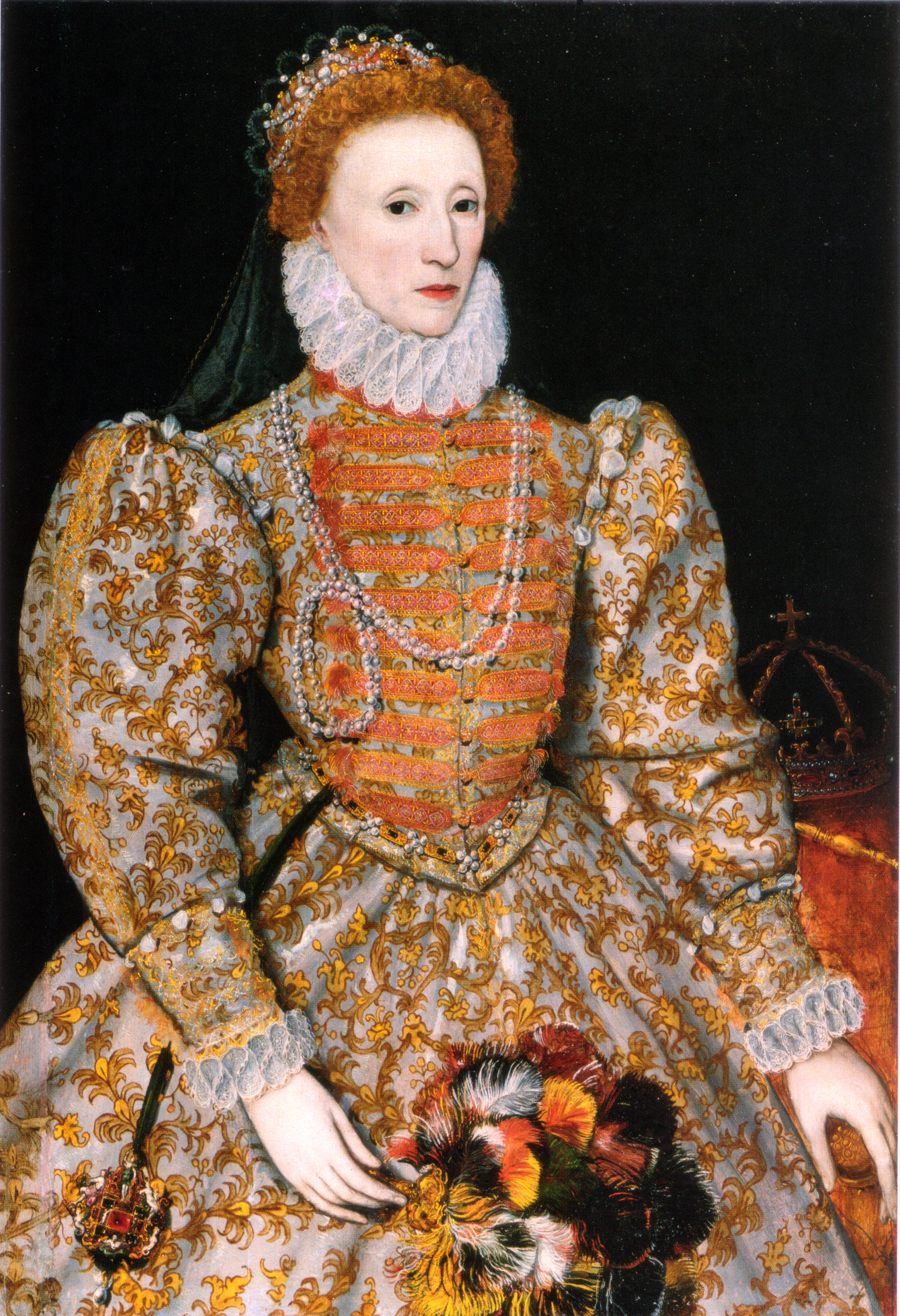
File:Darnley stage 3.jpgSince today is the Feast of the Nativity of the Blessed Virgin Mary, I'll begin this broadcast with the Collect for the Feast--and with the note that Elizabethan England celebrated the birth of the last Tudor monarch with more festivity than that of the Mother of God!

Starting with some biographical notes about Elizabeth Tudor (pictured at left: Wikipedia commons source), I'll then discuss her Reformation Parliament--Catholic resistance--the Via Media of the Church of England (39 Articles and the Book of Common Prayer. I'll also discuss how the compromise of the established church, between Calvinism and Catholicism, pleased no one, as "Puritans" were disappointed in the incomplete Reform and latent "Popishness" of the Church of England.

Then recusancy and resistance, rebellion and martyrdom will occupy much of the broadcast, as I discuss The Northern Rebellion, Pope St. Pius V's Papal Bull "Regnans in Excelsis", and the choice Catholics faced: loyalty to country; loyality to Church. The efforts of missionary priests; their dangerous missions; the laity's way of dealing with recusancy and conformity--those issues are very important and highlight the struggles and sacrifices of Catholics during Elizabeth's 45 year reign.

Next week, I'll wrap up the discussion of Elizabeth by looking at the diplomatic struggles she faced with Mary, Queen of Scots and Philip II of Spain--in the religious context of the 16th century, including war in the Spanish Netherlands, the Spanish Armada, reaction to its failure, war in Ireland, and the succession. This Virgin Queen left no offspring to follow her on the throne, so James VI of Scotland, Mary of Scotland's son, comes south in 1603 when Elizabeth dies.

Supremacy and Survival: How Catholics Endured the English Reformation is an excellent resource for understanding this reign, although I do say so myself.  welcome all listeners of Radio Maria US to my blog, whether you're listening on one of their radio stations or on line or through one of their apps.  I invite you to call in with questions and comments toll-free at 866-333-MARY(6279). Just a reminder, too, that podcasts of previous episodes of The English Reformation Today are available on the Radio Maria US website.

Thursday, August 23, 2012

Podcasts of The English Reformation Today

Podcasts of the first three episodes of my Radio Maria US show are now available and here is a link to the Program page:

“The English Reformation Today” tells the story of the English Reformation and its aftermath, focusing on how it affected Catholics in England after their Church was driven underground and their Faith and its practice outlawed. The series also highlights the on-going significance of the English Reformation today in many ways: issues of religious freedom; ecumenical issues between the Catholic Church and the Church of England, etc.

Episode One: August 4, 2012:  The English Reformation Today: Why is it relevant?

Relevance of the English Reformation for religious freedom issues in the United States (and around the world) today, including the HHS Mandate; context for the Personal Ordinariate established by Pope Benedict XVI for groups of Anglicans wishing to become Catholics; background for the U.S. Constitution’s First Amendment. Distinction of the English Reformation from the Protestant Reformation on the Continent in the 16th century.

Episode Two: August 11, 2012: Before the Reformation:

Brief notes on changing interpretations of the English Reformation in historical studies. Description of the Catholic Church in England before the Reformation/Break from Rome: based on landmark study by Eamon Duffy, note the vitality and integration of Catholicism with everyday life in England: introduce some main characters of the story: Thomas More, Thomas Wolsey, John Fisher, Henry VIII.

Episode Three: August 18, 2012: Henry VIII and the Break from Rome:

Tell the story of why Henry VIII broke away from the Holy Father in Rome and established the Church of England with himself as the Supreme Head and Governor; describe the first martyrs (the Carthusians, Thomas More, John Fisher, etc); the Dissolution of the Monasteries; the death of Henry VIII and his legacy.

This Saturday, August 25, we will pick up where we left off last week with the Pilgrimage of Grace and the Dissolution of the Monasteries. Then I'll describe the legacy of Henry VIII and the coming of a true Protestant--Calvinist--Reformation in England during the reign of his son, Edward VI.

Saturday, August 11, 2012

The English Reformation Today, Episode Two

Today we are going to look at the history of the history of the English Reformation briefly on my radio show, just to set up the context for examining the status of the Catholic Church in England before Henry VIII broke away from Rome. The great guide to this era for me has been Eamon Duffy, whose books The Stripping of the Altars, The Voices of Morebath, Marking the Hours, and his latest, Saints, Sacrilege and Sedition: Religion and Conflict in the Tudor Reformations, offer great insights into the religious changes that occurred during the Tudor Dynasty. His work is always based on research from primary sources.

Here's a couple of articles I wrote for PraytheMass.org summarizing his descriptions of Holy Week and the Triduum.

The other study that informs my understanding of how historians have written about the history of the English Reformation is English Catholic Historians and the English Reformation by John Vidmar, OP. Unfortunately, it is very expensive, as is Aidan Nichols' The Panther and the Hind: A Theological History of Anglicanism, which covers some very good ground of how historians/theologians in the Church of England viewed its history, especially Richard Hooker:

At a time if division and crisis in the Church of England, its identity and mission have come into question as never before. Its own members, but also the wider community of Christians in both East and West, need to understand its history and the reasons for its present crisis, as well as the distinctive contribution it can make to the Great Church of the future. Aidan Nichols provides a clear summary and analysis of the history of the Church of England by way of a sensitive appraisal of its rich theological tradition. This also gives the reader a firm grasp of the context of the issues currently being discussed by the Anglican-Roman Catholic International Commission. Aidan Nichols, O.P. is a member of the Dominican community at Blackfriars, Cambridge. He is the author of Rome and the Eastern Churches, The Shape of Catholic Theology and many other books.

I welcome all listeners of Radio Maria US to my blog, whether you're listening on one of their radio stations or on line or through one of their apps. Next week on The English Reformation Today we'll discuss Henry VIII, the Break from Rome, and its consequences during his reign. I invite you to call in with questions and comments toll-free at 866-333-MARY(6279).

And here's the mystery to consider this week and the next couple of weeks: if, as the evidence Eamon Duffy and others have offered demonstrates, the Catholic faithful in England were so devoted to the services and Sacraments of the Church, why did they ultimately go along with the changes that Henry VIII, Edward VI, and Elizabeth I introduced through Parliamentary laws and enforcement?

Saturday, August 4, 2012

The English Reformation Today, Episode One

Today on my radio program on Radio Maria (from 2:00 to 3:00 p.m. Central Time) I am going to discuss the relevance of the English Reformation today--and this article I wrote for the Catholic Exchange would be useful background:

Commentators have been noticing the parallels between the HHS Contraceptive Mandate handed down on January 20, 2012, and the Tudor religious mandates of the sixteenth century. In 1534, Henry VIII had himself declared the Supreme Head and Governor of the Ecclesiae Anglicanae (the Church of England) and separated Catholics in England from the ecclesiastical authority of the Pope, taking that power to himself by an Act of Parliament, the Act of Supremacy. In 1588, his younger daughter Elizabeth I’s first Parliament passed laws requiring her subjects to acknowledge both her Supremacy, modeled on her father’s, and the Uniformity of the Church of England, based upon the Book of Common Prayer and the Thirty-nine Articles developed by Thomas Cranmer. Thomas Cranmer was the Archbishop of Canterbury for both Henry VIII and Edward VI, burned at the stake as a heretic during the reign of Mary I.

Henry VIII’s actions gave him control over the Catholic Church in England, as he regarded himself as a good Catholic (perhaps a little more Catholic than the Pope) who continued to believe for instance in the Real Presence of Jesus Christ in the Eucharist and who left a will providing for prayers and Masses said for his soul after death. He required his subjects to accept this change, demanding loyalty through the Oath of Succession and the Oath of Supremacy, both of which denied the Pope’s authority over the Catholic Church in England. St. Thomas More, as MSNBC’s Chris Matthews recalled, was found guilty of treason and beheaded because he refused to accept this Tudor mandate that violated his Catholic conscience:

“I guess I grew up watching movies like Becket and A Man for All Seasons and seeing the church and state go to war with each other and being told stories from the Old Testament about the Maccabees, about people, families being told you got to eat pork,” he said. Matthews added that it is “frightening” to him “when the state tells the church what to do.”

Elizabeth I’s actions meant that Catholicism, even as her father had defined it after 1534 (sans monasteries, for example), was outlawed in England. When Catholics resisted, refusing to attend Church of England services, mounting a rebellion in the North of England—and when Pope St. Pius V issued a Papal Bull excommunicating Elizabeth and proclaiming her Catholic subjects free to disobey her—Parliament passed a series of recusancy laws. In an editorial in the Catholic World Report, “Twenty-first century Recusants” Matthew Cullinan Hoffman saw some parallels between those laws and the Obama administration’s HHS Mandate against Catholic consciences:

“Intentionally or not, the administration’s policy smacks of the methods established by England’s Queen Elizabeth against Catholic “recusants,” who refused to participate in the worship services of the Anglican Church during the late 16th century. Although Elizabeth’s regime, and those that followed for the next two hundred years, did not provide a penalty for Catholic belief as such, they found a simple and devastating way to coerce Catholics to violate their consciences: the recusancy fine, which was levied against those who absented themselves from Sunday Anglican worship or failed to receive communion once a year.”

Chris Matthews and Matthew Cullinan Hoffman are making reasonable connections. Even an anonymous poster to my local newspaper’s “Opinion Line” saw the point. The Wichita Eagle allows readers to post brief statements which appear both in print and in an on-line extra. This astute student of history commented, “Like Henry VIII’s Act of Supremacy, the Obama administration’s HHS mandate is an attempt to seize control of all Catholic institutions. But Catholics are only the beginning. If this decision stands, freedom of religion is dead in this country.” . . .

This link to the USSCB Fortnight for Freedom might also be helpful (especially as we'll begin with the prayer from that event as illustrated above), as would this one about the Anglican Ordinariate as Pope Benedict XVI describes it in Anglicanorum Coetibus.

I welcome all listeners of Radio Maria US to my blog, whether you're listening on one of their radio stations or on line or through one of their apps. Next week on The English Reformation Today we'll discuss some aspects of how the history of the English Reformation has been written and look at the state of the Catholic Church in England before the Reformation. I invite you to call in with questions and comments toll-free at 866-333-MARY(6279).

Thursday, August 2, 2012

Just Two More Days . . . .

. . . before I host my own radio show! The English Reformation Today will air live on Radio Maria US from 2:00 p.m. to 3:00 p.m. Central time. Radio Maria has stations in Louisiana, Mississippi, Ohio, Pennsylvania, Texas, Wisconsin, and New York. The website includes a link to listen on-line and also has multiple apps for your portable communications devices. Every Saturday I will include a post on this blog with links for listeners to follow up for more information. If you are listening and have a question or comment, please call toll free 1 866 333-6279!

Here's the outline for the first weeks of the 12 broadcasts:

Saturday, August 4: The English Reformation Today: Why Is It Relevant?

I'll introduce myself and then discuss the relevance of English Reformation history for us today-- for religious freedom issues in the United States (and around the world) today, including the HHS Mandate; as context for the Personal Ordinariate established by Pope Benedict XVI for groups of Anglicans wishing to become Catholics; as background for the U.S. Constitution's First Amendment, etc. I'll also highlight distinctions between the Protestant Reformation on the Continent in the 16th century and the English Reformation, time permitting.

Saturday, August 11: Catholicism in England Before the Reformation

Brief notes on changing interpretation of the English Reformation in historical studies. Description of the Catholic Church in England before the Reformation/Break from Rome: based on landmark study by Eamon Duffy, note the vitality and integration of Catholicism with everyday life in England: introduce some main characters of the story: Thomas More, Thomas Wolsey, John Fisher, Henry VIII.

Saturday, August 18: Henry VIII and the Break from Rome

Tell the story of why Henry VIII broke away from the Holy Father in Rome and established the Church of England with himself as the Supreme Head and Governor; describe the first martyrs (the Carthusians, Thomas More, John Fisher, etc); the Dissolution of the Monasteries; the death of Henry VIII and his legacy. The mystery of peoples' conformity to religious change.

Saturday, August 25: The Protestant Reformation Comes to England

Calvinism in England during the reign of Edward VI; the influence of Continental Reformers; Thomas Cranmer and the Book of Common Prayer; popular reaction and rebellion. Discuss Edward VI and his position as a young king trying to control his older half-sister Mary (conflict over her devotion to Mass) and the attempt to prevent a Catholic Queen from succeeding him (the story of Lady Jane Grey).

I hope that whets your appetite and just keeps coming back week after week! Thanks. Remember if you are listening on Radio Maria from 2 to 3 p.m. Central time on Saturday, August 4, and have a question or comment, please call toll free 1 866 333-6279!

Saturday, July 14, 2012

Coming Next Month, On the Radio

On Saturday, August 4--at 2:00 p.m. Central Time--I will host my very own live call-in hour long radio show! Yes, live from our basement in Wichita, Kansas, I'll present the story of the English Reformation every Saturday afternoon for 12 weeks, until October 20 on Radio Maria, US. I think we will call it something creative like "Catholics and the English Reformation" and the content will be based on my book, Supremacy and Survival: How Catholics Endured the English Reformation.

Radio Maria US is part of a worldwide Catholic radio network that began in Italy and has stations in Louisiana, Mississippi, Ohio, Pennsylvania, New York, Texas, and Wisconsin. It streams live on line and has apps for Blackberry, Android, and the iPhone, too. If Radio Maria is happy with my effort, and I am also willing, we might collaborate on another series, with another topic from Church History--something on Blessed John Henry Newman, maybe?

This all came about because I sent a review copy of my book and my CV to the host of one of their shows, "Meet the Author"! When you are trying to reach different audiences, I guess you never know what opportunities might present themselves.

I will provide updates on the program every week here on this blog, so just check back often! It's just three weeks away, you know!