Showing posts with label Advent and Christmas. Show all posts

Tuesday, November 26, 2024

A Preview of a Preview: "Waiting for Christ" on the Son Rise Morning Show

Just to prepare you: After a Thanksgiving break, I'll start an Advent/Christmas series on the Son Rise Morning Show on Monday, December 9 (which this year is the feast of the Immaculate Conception, a Holy Day of Obligation transferred from its usual date of December 8, the Second Sunday of Advent this year). 

Anna Mitchell or Matt Swaim and I will discuss four sermons by Saint John Henry Newman: on December 9th and 16th, and then after the show's Christmas holiday break, on January 6th and 13th. I'll be on the air at my usual time! about 7:50 a.m. Eastern Time/6:50 a.m. Central Time.

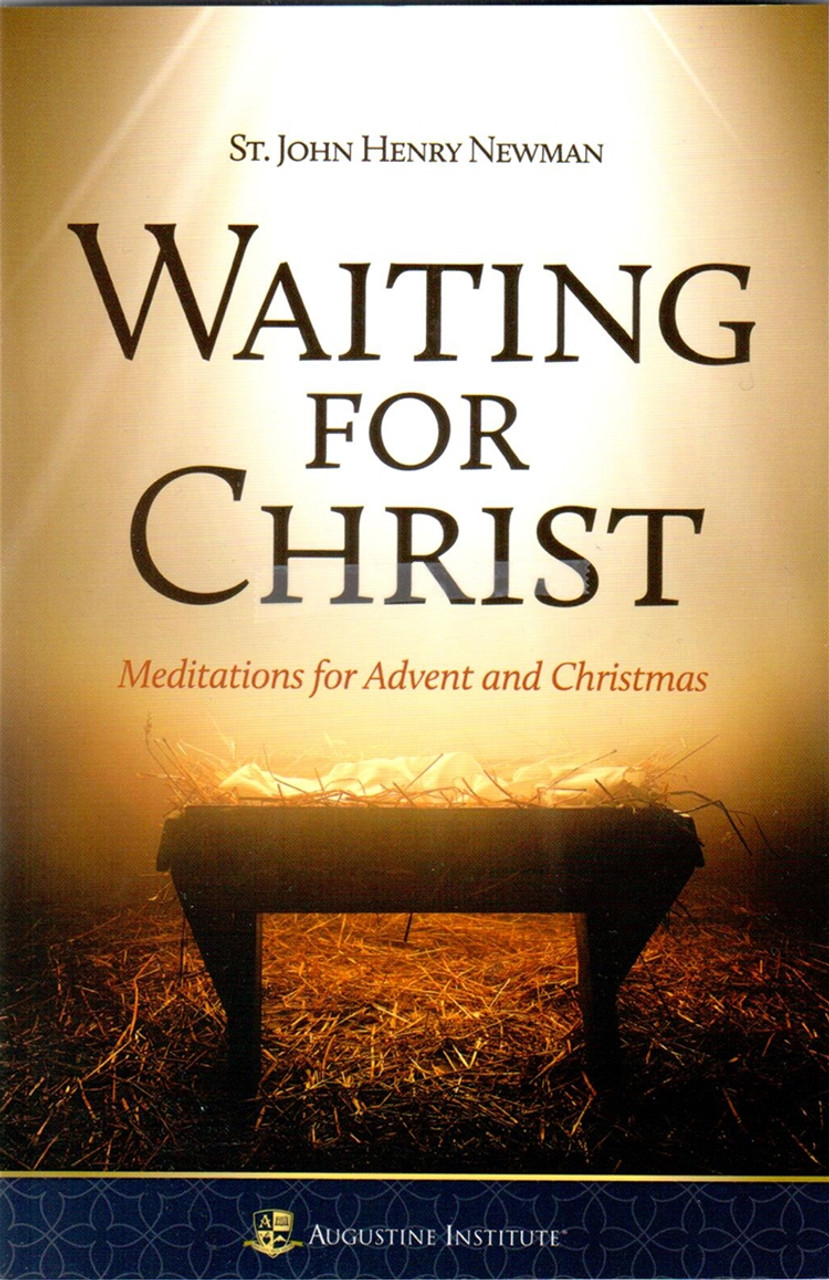
We'll use the edited/excerpted sermons from Waiting for Christ: Meditations for Advent and Christmas, from Ascension Press, which I reviewed for the National Catholic Register in 2018.

If you're still looking for Advent/Christmas spiritual reading, the book is available here from the Augustine Institute, other on-line sellers, and, I hope, at your local Catholic bookstore!

Friday, January 6, 2023

SRMS Preview: Newman on the Season of Epiphany


Resuming and completing our Advent/Christmas reflections based on sermons selected and edited by Christopher O. Blum in Waiting for Christ: Meditations for Advent and Christmas, I'll be on the Son Rise Morning Show on Monday, January 9, 2023! (Trying to get used to that new year number.) Anna Mitchell or Matt Swaim and I will discuss Newman's Parochial and Plain Sermon from January 17, 1841, "The Season of Epiphany".

So I'll be on the air at my usual time, about 6:50 a.m. Central/7:50 a.m. Eastern. Please listen live here and remember that you may find the recording of the show later that day on the Son Rise Morning Show website!

Our liturgical calendar this year according to the 1970/2002 revisions of the Roman Calendar makes it a little difficult to see the Season of Epiphany. The "Epiphany of the Lord" is traditionally represented by three events: the Visit of Magi, the Baptism of the Lord, and the Marriage Feast of Cana.

The feast of Epiphany was moved from January 6 to the Sunday celebration on January 8, and this year, we celebrate the feast of The Baptism of Jesus on Monday, January 9, instead of the following Sunday! And this liturgical year (B for the Sunday readings; only Year C for Sunday readings includes that Gospel), we won't read about the Marriage Feast of Cana, to which Newman alludes in the verse for this sermon:

"This beginning of miracles did Jesus in Cana of Galilee, and manifested forth His glory; and His disciples believed on Him." (John 2:11)

Newman begins with a review of the how the liturgical year helps us reflect on the Life of Christ:

THE Epiphany is a season especially set apart for adoring the glory of Christ. The word may be taken to mean the manifestation of His glory, and leads us to the contemplation of Him as a King upon His throne in the midst of His court, with His servants around Him, and His guards in attendance. At Christmas we commemorate His grace; and in Lent His temptation; and on Good Friday His sufferings and death; and on Easter Day His victory; and on Holy Thursday His return to the Father; and in Advent we anticipate His second coming. And in all of these seasons He does something, or suffers something: but in the Epiphany and the weeks after it, we celebrate Him, not as on His field of battle, or in His solitary retreat, but as an august and glorious King; we view Him as the Object of our worship. 

He does focus on the visit of the Magi and there places Jesus on His earthly throne, His mother's lap:

Then only, during His whole earthly history, did He fulfil the type of Solomon, and held (as I may say) a court, and received the homage of His subjects; viz. when He was an infant. His throne was His undefiled Mother's arms; His chamber of state was a cottage or a cave; the worshippers were the wise men of the East, and they brought presents, gold, frankincense, and myrrh. All around and about Him seemed of earth, except to the eye of faith; one note alone had He of Divinity. As great men of this world are often plainly dressed, and look like other men, all but as having some one costly ornament on their breast or on their brow; so the Son of Mary in His lowly dwelling, and in an infant's form, was declared to be the Son of God Most High, the Father of Ages, and the Prince of Peace, by His star; a wonderful appearance which had guided the wise men all the way from the East, even unto Bethlehem.

And Newman continues that theme of Our Lord's majesty being manifested mostly during His early years--before and after His birth--in the Incarnation and Infancy:

The only display of royal greatness, the only season of majesty, homage, and glory, which our Lord had on earth, was in His infancy and youth. Gabriel's message to Mary was in its style and manner such as befitted an Angel speaking to Christ's Mother. Elisabeth, too, saluted Mary, and the future Baptist his hidden Lord, in the same honourable way. Angels announced His birth, and the shepherds worshipped. A star appeared, and the wise men rose from the East and made Him offerings. He was brought to the temple, and Simeon took Him in His arms, and returned thanks for Him. He grew to twelve years old, and again He appeared in the temple, and took His seat in the midst of the doctors. But here His earthly majesty had its end, or if seen afterwards, it was but now and then, by glimpses and by sudden gleams, but with no steady sustained light, and no diffused radiance. . . .

[Here we might think of the Transfiguration as one of those glimpses or gleams, but even that glorious event was a secret to be shared by the three Apostles until after His Passion and Resurrection--His exodus as St. Luke's Gospel describes what Jesus, Moses, and Elijah are discussing.]

We are told at the close of the last-mentioned narrative, "And He went down with His parents, and came to Nazareth, and was subjected unto them." (Luke 2:51) His subjection and servitude now began in fact. He had come in the form of a servant, and now He took on Him a servant's office. How much is contained in the idea of His subjection! and it began, and His time of glory ended, when He was twelve years old.

After introducing the example of King Solomon above, Newman emphasizes the difference between that King of Israel and the King of the World:

Solomon, the great type of the Prince of Peace, reigned forty years, and his name and greatness was known far and wide through the East. Joseph, the much-loved son of Jacob, who in an earlier age of the Church, was a type of Christ in His kingdom, was in power and favour eighty years, twice as long as Solomon. But Christ, the true Revealer of secrets, and the Dispenser of the bread of life, the true wisdom and majesty of the Father, manifested His glory but in His early years, and then the Sun of Righteousness was clouded. For He was not to reign really, till He left the world. He has reigned ever since; nay, reigned in the world, though He is not in sensible presence in it—the invisible King of a visible kingdom—for He came on earth but to show what His reign would be, after He had left it, and to submit to suffering and dishonour, that He might reign.

Remember that when Our Lord spoke of the lilies of the field, he contrasted their glories with Solomon's: "Consider the lilies of the field, how they grow: they labour not, neither do they spin. But I say to you, that not even Solomon in all his glory was arrayed as one of these." (Matthew 6:28-29)

As always, Newman offers a conclusion to apply what he's elucidated to his congregation. He reminds us that if Our Lord enjoyed but a brief time of glory and majesty, and then submitted to a life of obedience not just to His Heavenly Father's Will but to his earthly parents' wills, we have to follow His pattern and be grateful for the seasons of His Life and our own:

For all seasons we must thank Him, for time of sorrow and time of joy, time of warfare and time of peace. And the more we thank Him for the one, the more we shall be drawn to thank Him for the other. Each has its own proper fruit, and its own peculiar blessedness. Yet our mortal flesh shrinks from the one, and of itself prefers the other;—it prefers rest to toil, peace to war, joy to sorrow, health to pain and sickness. When then Christ gives us what is pleasant, let us take it as a refreshment by the way, that we may, when God calls, go in the strength of that meat forty days and forty nights unto Horeb, the mount of God. Let us rejoice in Epiphany with trembling, that after the Baptism we may go into the vineyard with the labourers with cheerfulness, and may sorrow in Lent with thankfulness; let us rejoice now, not as if we have attained, but in hope of attaining. Let us take our present happiness, not as our true rest, but, as what the land of Canaan was to the Israelites,—a type and shadow of it. If we now enjoy God's ordinances, let us not cease to pray that they may prepare us for His presence hereafter. If we enjoy the presence of friends, let them remind us of the communion of saints before His throne. Let us trust in nothing here, yet draw hope from every thing—that at length the Lord may be our everlasting light, and the days of our mourning may be ended.

Newman is advising us to enter into the rhythms of the Liturgical Year as a way of persevering through the seasons of our own lives: times of anticipation; times of fulfillment. He contrasts the times of feasting and celebration with the times of fasting and sorrow--and even reminds us of the ultimate change of season: from our earthly life to everlasting life. Newman loved his friends and family on earth but knows he has even greater friends and family in the communion of saints, and offers us that consolation.

Saint John Henry Newman, pray for us!

Image Credit (Public Domain): Gerard David, "Adoration of the Magi".

Image Credit (Public Domain): "Solomon and the plan for the First Temple." Illustration from a Bible card

Friday, December 16, 2022

Preview: Newman and Loneliness at Christmas Time

We all know someone who is celebrating a first Christmas after the death of a loved one--or the second, or the third, or even the 12th or the 31st--and the special pang of that absence. 

We may be experiencing that pang ourselves. That's one reason I selected this sermon by Saint John Henry Newman just based on the title for our last Advent reflection, Monday, December 19 on the Son Rise Morning Show: "The Church a Home for the Lonely".

So I'll be on the air at my usual time, about 6:50 a.m. Central/7:50 a.m. Eastern. Please listen live here and remember that you may find the recording of the show later that day on the Son Rise Morning Show website!

As the late Father Ian Ker noted in his biography of Saint John Henry Newman, as a priest and cardinal Newman remembered many of his departed loved ones in Masses on the anniversaries of their deaths. His private chapel in the Birmingham Oratory was filled with pictures of his favorite saints and of his living and departed friends, for whom he prayed and offered Mass. There's a video about that chapel in this post on the New Liturgical Movement website. As his eyesight began to fail, Newman prepared by memorizing the propers for two Masses: "a Mass of the Blessed Virgin and a Mass of the Dead" so he could continue to pray for his beloved dead.

In this sermon from October 22, 1837, Newman takes a more existential point of view and sees the Church on earth as the place the Christian may find peace and consolation when rebuffed by the World*. But as I read the sermon, I thought of my parish church, and the other parishes or chapels at which I attend Mass, visit the Blessed Sacrament, or got to Confession, etc., as the local site through which the universal, Catholic Church is a home for me and I hope it is for you.

We have to remember that Newman's ideas about the Church on Earth and the Communion of Saints took some time to develop; influenced by Calvinist doctrines of Salvation after his major conversion at age 15, he for a time thought the true true communion of the Church was invisible. Yes, professed Christians gathered for services and registered in parishes, but unless they were predestined for salvation, they weren't really in the Church. I commented on Newman's developing ecclesiology here.

He takes as his verse Ephesians 2:6: "And [He] hath raised us up together, and hath made us sit together in the heavenly places, through Christ Jesus." 

In the excerpts Christopher Blum has provided in Waiting for Christ: Meditations for Advent and Christmas for December 21, Newman offers examples of different kinds of Christians:

Those who have always understood that "heaven is an object claiming our highest love and most persevering exertions. Such doubtless is the blessedness of some persons: such in a degree is perchance the blessedness of many. There are those who, like Samuel, dwell in the Temple of God holy and undefiled from infancy, and, after the instance of John the Baptist, are sanctified by the Holy Ghost, if not as he, from their mother's womb, yet from their second birth in Holy Baptism."

Those who may have had this understanding "even though it has been latent; not quenched or overborne by open sin, even though it has not been from the first duly prized and cherished." . . .  They "have never been wedded to this world; they have never given their hearts to it, or vowed obedience or done folly in things of time and sense. And therefore they are able, from the very power of God's grace, as conveyed to them the ordinances of the Gospel, to understand that the promise of heaven is the greatest, most blessed promise which could be given."

And those who have wandered away and have returned: 

They are recovered by finding disappointment and suffering from that which they had hoped would bring them good; they learn to love God and prize heaven, not by baptismal grace, but by trial of the world; they seek the world, and they are driven by the world back again to God. The world is blessed to them, in God's good providence, as an instrument of His grace transmuted from evil to good, as if a second sacrament, doing over again what was done in infancy, and then undone. They are led to say, with St. Peter, "Lord, to whom shall we go?" for they have tried the world, and it fails them; they have trusted it, and it deceives them; they have leant upon it, and it pierces them through; they have sought it for indulgence, and it has scourged them for their penance. O blessed lot of those, whose wanderings though they wander, are thus overruled; that what they lose of the free gift of God, they regain by his compulsory remedies!

Long before Pierce Brosnan as James Bond realized it (just for you, Matt Swaim), most of us, Newman says, recognize that "the world is not enough for [our] happiness".

[*If you go to the NewmanReader.org source for this entire sermon, you would find Newman's description of "the World" in the sense he means it. For example:

By the world, I mean all that meets a man in intercourse with his fellow men, whether in public or in private, all that is new, strange, and without natural connexion with him. This outward world is at first sight most attractive and exciting to the generality of men. The young commonly wish to enter into it as if it would fulfil all their wants and hopes. They wish to enter into life, as it is called. Their hearts beat, as they anticipate the time when they shall, in one sense or other, be their own masters. At home, or at school, they are under restraint, and thus they come to look forward to the liberty of the world, and the independence of being in it, as a great good. According to their rank {188} in life, they wish to get into service, or they wish to go into business, or they wish to be principals in trade, or they wish to enter into the world's amusements and gaieties, or they look forward with interest to some profession or employment which stirs their ambition and promises distinction.

Hint: Look for the page number (in bold type above)]


As Newman says, by whatever grace we discover this fact, that "the world is not enough", it demonstrates to us that  we need "some shelter, refuge, rest, home or sanctuary from the outward world" and that God [the Father] has provided us "the shelter or secret place . . . in Christ". He has provided us a home because we "need something which the world cannot give: this is what we need, and this it is which the Gospel has supplied."

Jesus has supplied with this home, establishing His Church and leaving a "blessing behind Him", after His Passion, Death, Resurrection, and Ascension: 

He left in the world what before was not in it,—a secret home, for faith and love to enjoy, wherever found, in spite of the world around us. Do you ask what it is? the chapter from which the text is taken describes it. It speaks of "the foundation of the apostles and prophets, Jesus Christ himself being the chief corner stone: In whom all the building, being framed together, groweth up into an holy temple in the Lord. In whom you also are built together into an habitation of God in the Spirit." (Ephesians 2:20-22) This is the Church of God, which is our true home of God's providing, His own heavenly court, where He dwells with Saints and Angels, into which He introduces us by a new birth, and in which we forget the outward world and its many troubles.

Newman notes that the Temple in Jerusalem served as the great home for the Jews, citing Psalm 27:4-5: "One thing I have asked of the Lord, this will I seek after; that I may dwell in the house of the Lord all the days of my life. That I may see the delight of the Lord, and may visit his temple. For he hath hidden me in his tabernacle; in the day of evils, he hath protected me in the secret place of his tabernacle." 


He says that the Church Jesus founded provides not just one place of refuge, in the Temple in Jerusalem, but "admits of being every where". In 1837, Newman may be speaking according to a less visible and established version of the Church (he uses the words "spiritual" and "invisible") but as Catholics we know that when we enter any Catholic church in union with the local bishop and the pope, we have entered The Catholic Church, "the one, holy, catholic, and apostolic Church" with the Blessed Sacrament really and truly present in Tabernacle, and even sometimes with the hint of incense still lingering in air (if we make a Visit after a Funeral Mass has been celebrated, for example). The Church Militant throughout the world, the Church Triumphant in Heaven, and the Church Suffering, the Holy Souls in Purgatory, is all represented there. And I use the word "is" because it is all One.

As Newman concludes in Blum's selection, 

There is a great privilege which we may enjoy, if we seek it, of dwelling in a heavenly home in the midst of this turbulent world. . . .

We may be full of sorrows; there may be fightings without and fears within; we may be exposed to the frowns, censure, or contempt of men; we may be shunned by them; or, to take the lightest case, we may be (as we certainly shall be) wearied out by the unprofitableness of this world, by its coldness, unfriendliness, distance, and dreariness; we shall need something nearer to us. What is our resource? . . . it is that holy home which God has given us in His Church; it is that everlasting City in which He has fixed His abode. It is that Mount invisible where Angels are looking at us with their piercing eyes, and the voices of the dead call us. "Greater is He that is in us than he that is in the world;" (1 John 4:4) "If God be for us, who can be against us?" (Romans 8:31)

Newman's complete sermon ends with this exhortation:

. . . Let not your past sins keep you from Him. Whatever they be, they cannot interfere with His grace stored up for all who come to Him for it. If you have in past years neglected Him, perchance you will have to suffer for it; but fear not; He will give you grace and strength to bear such punishment as He may be pleased to inflict. Let not the thought of His just severity keep you at a distance. He can make even pain pleasant to you. Keeping from Him is not to escape from His power, only from His love. Surrender yourselves to him in faith and holy fear. He is All-merciful, though All-righteous; and though He is awful in His judgments, He is nevertheless more wonderfully pitiful, and of tender compassion above our largest expectations; and in the case of all who humbly seek him, He will in "wrath remember mercy."

Saint John Henry Newman, pray for us!

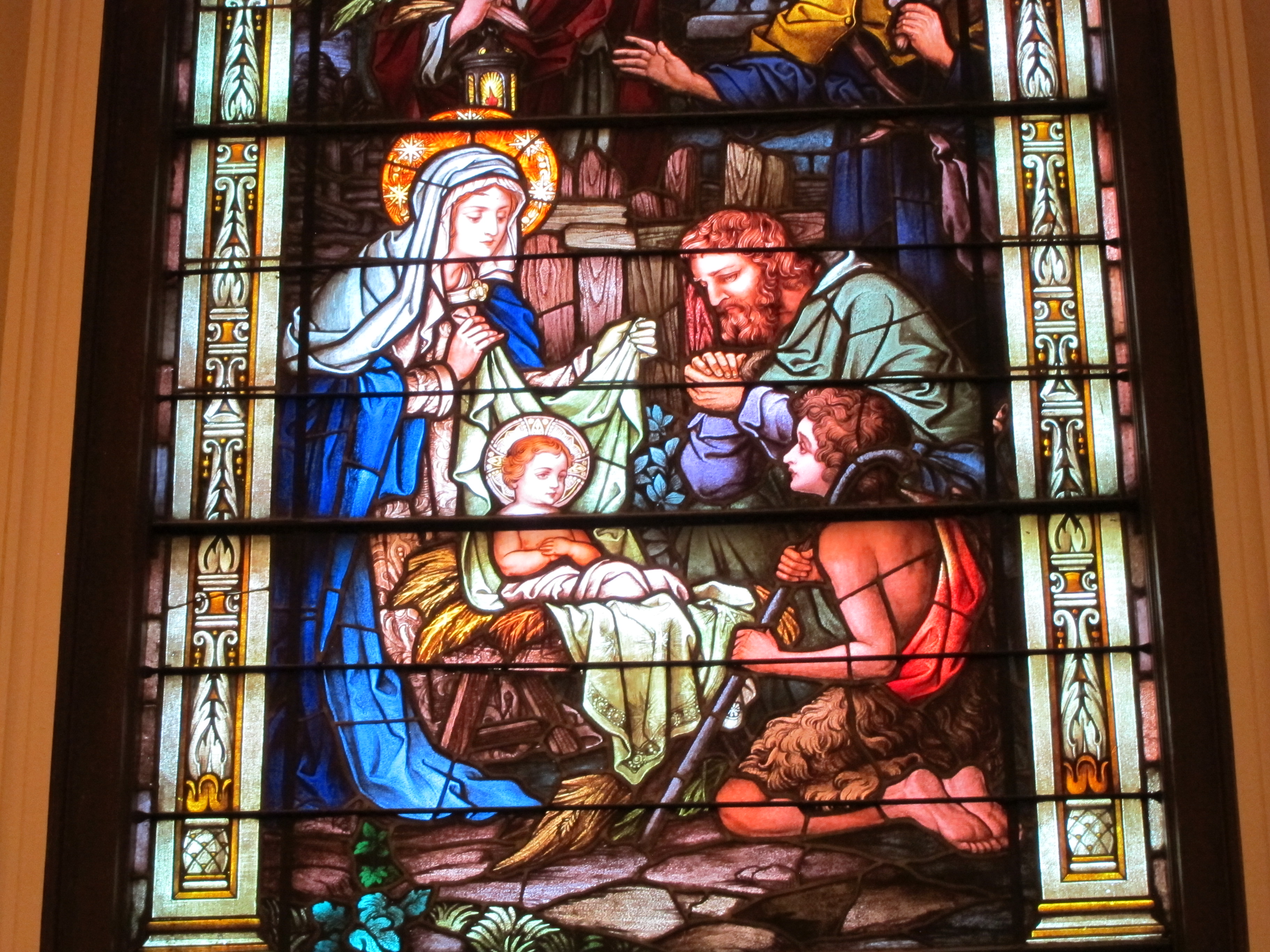
All photos (C) Stephanie A. Mann (2013-2022) and All Rights Reserved. Top photo: Crucifix carved by the deceased father of Jeanne Gordon, taken at her Rosary in Blessed Sacrament Catholic Church, Wichita, Kansas on January 3, 2017; Second photo: pulpit in the University Church of St. Mary's the Virgin in Oxford, England; Third photo: Stained glass  of the Third Joyful Mystery (detail) in the Cathedral of the Immaculate Conception, Wichita, Kansas; Fourth photo: Christmas Day Mass in 2013 at Saint Anthony of Padua Catholic Church, Wichita, Kansas.

Friday, December 9, 2022

Preview: The Light of Conscience and The Way of Obedience

As Christopher O. Blum selected, excerpted, and arranged these sermons by Saint John Henry Newman in Waiting for Christ, he has placed "Dispositions for Faith", (for December 14) about the role of Conscience in our lives as we begin to believe in God and His authority, and "Obedience to God the Way to Faith in Christ", (for December 15) about the role of Obedience in our lives as we continue to follow and imitate Him, one before the other. 

The excerpts from the first sermon take us only so far: the excerpts from the second present a plan for life that we should follow. So in our second Advent reflection on the Son Rise Morning Show, on Monday, December 12, we'll look at some brief highlights from both sermons. 

The first sermon is a Catholic sermon for the Fourth Sunday of Advent in 1856 preached at the University Church in Dublin, included in Sermons on Various Occasions; the second is from Parochial and Plain Sermons Volume 8, Sermon 14, offered in October 1830, just a couple of years after Newman had been named the Vicar of the University Church of St Mary the Virgin.

So I'll be on the air at my usual time, about 6:50 a.m. Central/7:50 a.m. Eastern. Please listen live here and remember that you may find the recording of the show later that day on the Son Rise Morning Show website!

In the complete sermon from 1856, Newman has taken as his verse "Prepare ye the way of the Lord, make straight His path. Every valley shall be filled, and every mountain and hill shall be brought low; and the crooked shall be made straight, and the rough ways plain: and all flesh shall see the salvation of God." Luke 3:4-6, and he wishes to explore how these images from nature apply to the preparation of the individual human soul to be disposed to Faith in God and the Good News. What prepares a man or woman to have Faith in God?

Newman suggests one great means: the Light and the Voice of Conscience, which each of us sees and hears:

What is the main guide of the soul, given to the whole race of Adam, outside the true fold of Christ as well as within it, given from the first dawn of reason, given to it in spite of that grievous penalty of ignorance, which is one of the chief miseries of our fallen state? It is the light of conscience, "the true Light," which enlightens every man." (John 1:9) 

Whether a man be born in pagan darkness, or in some corruption of revealed religion,—whether he has heard the name of the Saviour of the world or not,— whether he be the slave of some superstition, or is in possession of some portions of Scripture, and treats the inspired word as a sort of philosophical book, which he interprets for himself, and comes to certain conclusions about its teaching,—in any case, he has within his breast a certain commanding dictate, not a mere sentiment, not a mere opinion, or impression, or view of things, but a law, an authoritative voice, bidding him do certain things and avoid others. 

I do not say that its particular injunctions are always clear, or that they are always consistent with each other; but what I am insisting on here is this, that it commands,—that it praises, it blames, it promises, it threatens, it implies a future, and it witnesses the unseen. It is more than a man's own self. The man himself has not power over it, or only with extreme difficulty; he did not make it, he cannot destroy it. 

He may silence it in particular cases or directions, he may distort its enunciations, but he cannot, or it is quite the exception if he can, he cannot emancipate himself from it. He can disobey it, he may refuse to use it; but it remains.

Newman asserts that because we perceive that this voice comes from outside of us and calls us to an authority above us, it is preparation for Faith in God:

As the sunshine implies that the sun is in the heavens, though we may see it not, as a knocking at our doors at night implies the presence of one outside in the dark who asks for admittance, so this Word within us, not only instructs us up to a certain point, but necessarily raises our minds to the idea of a Teacher, an unseen Teacher: and in proportion as we listen to that Word, and use it, not only do we learn more from it, not only do its dictates become clearer, and at its lessons broader, and its principles more consistent, but its very tone is louder and more authoritative and constraining. And thus it is, that to those who use what they have, more is given; for, beginning with obedience, they go on to the intimate perception and belief of one God. His voice within them witnesses to Him, and they believe His own witness about Himself. They believe in His existence, not because others say it, not in the word of man merely, but with a personal apprehension of its truth.


Newman further points out--still before we have encountered Jesus and the Gospel--that as we learn and respond to the Light and Voice of Conscience we become frustrated with our own inability to obey it, and we may become fearful of the consequences of our failures, not knowing what to do. Thus, Newman says, we cry out, "Unhappy man that I am, who shall deliver me from the body of this death!" (Romans 7:24)

Nevertheless, this experience of our efforts to follow the Natural Law of Conscience is a preparation for Faith in Christ and the Gospel.

Indeed, in 1830--in a passage Blum does not quote--Newman told his Anglican congregation that 
"obedience to conscience leads to obedience to the Gospel, which, instead of being something different altogether, is but the completion and perfection of that religion which natural conscience teaches". It almost seems that Newman delivered  "Obedience to God the Way to Faith in Christ" the week after "Dispositions for Faith", not some 25 or 26 years earlier!

Blum's excerpt begins with another sign of continuity:

It would have been strange if the God of nature had said one thing, and the God of grace another; if the truths which our conscience taught us without the information of Scripture, were contradicted by that information when obtained. But it is not so; there are not two ways of pleasing God; what conscience suggests, Christ has sanctioned and explained; to love God and our neighbor are the great duties of the Gospel as well as of the Law; he who endeavors to fulfil them by the light of nature is in the way towards, is, as our Lord said, "not far from the kingdom;" (Mark 12:34) for to him that hath more shall be given.

It is not in one or two places merely that this same doctrine is declared to us; indeed, all revelation is grounded on those simple truths which our own consciences teach us in a measure, though a poor measure, even without it. It is One God, and none other but He, who speaks first in our consciences, then in His Holy Word; and, lest we should be in any difficulty about the matter, He has most mercifully told us so in Scripture, wherein He refers again and again (as in the passage connected with the text) to the great Moral Law, as the foundation of the truth, which His Apostles and Prophets, and last of all His Son, have taught us: "Fear God, and keep His commandments; for this is the whole duty of man." (Eccles 12:13.)

The Anglican Newman warns his congregation against Christian views that offer different paths to salvation, 

. . . because, it being very hard to keep God's commandments, men would willingly persuade themselves, if they could, that strict obedience is not necessary under the Gospel, and that something else will be taken, for Christ's sake, in the stead of it. Instead of laboring, under God's grace, to change their wills, to purify their hearts, and so prepare themselves for the kingdom of God, they imagine that in that kingdom they may be saved by something short of this . . .

substituting their own methods or measures of being disciples. But Newman presents many passages from the New Testament to demonstrate that these other methods are not what God has taught us. 

These texts, and a multitude of others, show that the Gospel leaves us just where it found us, as regards the necessity of our obedience to God; that Christ has not obeyed instead of us, but that obedience is quite as imperative as if Christ had never come; nay, is pressed upon us with additional sanctions; the difference being, not that He relaxes the strict rule of keeping His commandments, but that He gives us spiritual aids, which we have not except through Him, to enable us to keep them. Accordingly Christ's service is represented in Scripture, not as different from that religious obedience which conscience teaches us naturally, but as the perfection of it, as I have already said. We are told again and again, that obedience to God leads on to faith in Christ; that it is the only recognized way to Christ; and that, therefore, to believe in Him, ordinarily implies that we are living in obedience to God.

Blum does not include the end of Newman's Anglican sermon on "Obedience to God the Way to Faith in Christ", but in that exhortation, he reminds us of the reward those who obey will receive:

These, be they many or few, will then receive their prize from Him who died for them, who has made them what they are, and completes in heaven what first by conscience, then by His Spirit, He began here. Surely they were despised on the earth by the world; both by the open sinners, who thought their scrupulousness to be foolishness, and by such pretenders to God's favour as thought it ignorance. But, in reality, they had received from their Lord the treasures both of wisdom and of knowledge, though men knew it not; and they then will be acknowledged by Him before all creatures, as heirs of the glory prepared for them before the beginning of the world. 

Saint John Henry Newman, pray for us!

Image Credit (Permission Details): Conscience by Andrei Mironov (CC BY-SA 4.0)
Image Credit (Public Domain): James Tissot, Jesus Sits by the Seashore and Preaches

Friday, December 2, 2022

Preview: "The Weapons of Saints" in Advent

For our first Newman sermon reflection/meditation for Advent on the Son Rise Morning Show Monday, December 5, I've chosen "The Weapons of Saints", a Parochial and Plain Sermon. It seems appropriate to reflect on saints during the Second Week of Advent since we'll celebrate several holy memorials and one Solemnity during the week:

Saint Nicholas of Myra on December 6

Saint Ambrose of Milan on December 7

The Immaculate Conception on December 8 (a Holy Day of Obligation!)

Saint Juan Diego on December 9

Our Lady of Loreto on December 10

So I'll be on the Son Rise Morning Show at my usual time, about 6:50 a.m. Central/7:50 a.m. Eastern. Please listen live here.

In this sermon, originally delivered in October 29, 1837, Newman reflects on a verse from the Gospel of Saint Matthew, "Many that are first shall be last, and the last shall be first" (Matt. 19:30), exploring how the Kingdom of God has turned the world upside down:

Strength, numbers, wealth, philosophy, eloquence, craft, experience of life, knowledge of human nature, these are the means by which worldly men have ever gained the world. But in that kingdom which Christ has set up, all is contrariwise. "The weapons of our warfare are not carnal, but mighty through God to the pulling down of strongholds." (2 Cor 10:4)  What was before in honour, has been dishonoured; what before was in dishonour, has come to honour; what before was successful, fails; what before failed, succeeds. What before was great, has become little; what before was little, has become great. Weakness has conquered strength, for the hidden strength of God "is made perfect in weakness." (2 Cor 12:9) Death has conquered life, for in that death is a more glorious resurrection. Spirit has conquered flesh; for that spirit is an inspiration from above. A new kingdom has been established, not merely different from all kingdoms before it, but contrary to them; a paradox in the eyes of man,—the visible rule of the invisible Saviour. . . .

Yes, so it is; since Christ sent down gifts from on high, the Saints are ever taking possession of the kingdom, and with the weapons of Saints. The invisible powers of the heavens, truth, meekness, and righteousness, are ever coming in upon the earth, ever pouring in, gathering, thronging, warring, triumphing, under the guidance of Him “who died and came to life” (Revelation 2:8)

Newman then asks his congregation and his readers to apply this "great truth" to themselves because they and we "are the sons of God" . . . "soldiers of Christ." Crucially, he advises, "the kingdom is within us" and

really we are a part of it, or ought to be; and, as we wish to be a living portion of it, which is our only hope of salvation, we must learn what its characters are in order to imitate them. It is the characteristic of Christ's Church, that the first should be last, and the last first; are we realizing in ourselves and taking part in this wonderful appointment of God?

Newman, speaking to a university congregation, explores the hopes and dreams of youth to achieve great things, "something greater than the world can give". . . "having desires after things about this world":

While their hearts are thus unsettled, Christ comes to them, if they will receive Him, and promises to satisfy their great need, this hunger and thirst which wearies them. He does not wait till they have learned to ridicule high feelings as mere romantic dreams: He comes to the young; He has them baptized betimes, and then promises them, and in a higher way, those unknown blessings which they yearn after. . . .

But he applies the same rule to all of us, young or old:

The way to mount up is to go down. Every step we take downward, makes us higher in the kingdom of heaven. Do you desire to be great? make yourselves little.
There is a mysterious connexion between real advancement and self-abasement. If you minister to the humble and despised, if you feed the hungry, tend the sick, succour the distressed; if you bear with the ill-tempered, submit to insult, endure ingratitude, render good for evil, you are, as by a divine charm, getting power over the world and rising among the creatures. God has established this law. Thus He does His wonderful works. . . .

They rise by falling. Plainly so, for no condescension can be so great as that of our Lord Himself. The more they abase themselves the more like they are to Him; and the more like they are to Him, the greater must be their power with Him.

Finally, Newman offers a warning about the true power of the saints, which the world cannot understand:

Our warfare is not with carnal weapons, but with heavenly. The world does not understand what our real power is, and where it lies. And until we put ourselves into its hands of our own act, it can do nothing against us. Till we leave off patience, meekness, purity, resignation, and peace, it can do nothing against that Truth which is our birthright, that Cause which is ours, as it has been the cause of all saints before us.

And I'd propose that we could look at the lives of each of these saints to find examples of this rule: both Saint Nicholas of Myra and Saint Ambrose of Milan were known for their great works of charity and their battles against the Arian heresy, defending the true Catholic doctrine of the Incarnation, despite the conflict and danger. 

Saint Ambrose had the office of bishop forced upon him by popular demand, giving up his secular power. He had to receive the Sacraments of Initiation before he could be ordained! Saint Juan Diego obeyed Our Lady of Guadalupe with great patience and humility--like any visionary, his path was difficult.

In the midst of her Magnificat, the Mother of God demonstrated that she knew this rule of life from God's actions; as the handmaid of the Lord, she had submitted to His will:

From this day all generations will call me blessed:
the Almighty has done great things for me,
and holy is his Name.


He has mercy on those who fear him
in every generation.

He has shown the strength of his arm,
he has scattered the proud in their conceit.

He has cast down the mighty from their thrones,
and has lifted up the lowly.
 
He has filled the hungry with good things,
and the rich he has sent away empty.

And, as Newman himself reminds us, no One abased Himself like Our Lord (". . . no condescension can be so great as that of our Lord Himself. The more they abase themselves the more like they are to Him; and the more like they are to Him, the greater must be their power with Him."):

For let this mind be in you, which was also in Christ Jesus:
Who being in the form of God, thought it not robbery to be equal with God:
But emptied himself, taking the form of a servant, being made in the likeness of men, and in habit found as a man.
He humbled himself, becoming obedient unto death, even to the death of the cross.
For which cause God also hath exalted him, and hath given him a name which is above all names:
That in the name of Jesus every knee should bow, of those that are in heaven, on earth, and under the earth:
And that every tongue should confess that the Lord Jesus Christ is in the glory of God the Father.
(Philippians 2:5-10)

Saint Nicholas, pray for us!
Saint Ambrose, pray for us!
Immaculate Heart of Mary, pray for us!
Saint Juan Diego, pray for us!
Saint John Henry Newman, pray for us!

Image Credit (Public Domain): Saint Nicholas by Jaroslav Čermák (1831-1878)
Image Credit (Public Domain): Saint Ambrose by Claude Vignon
Image Credit (Public Domain): Saint Juan Diego by Miguel Cabrera

Monday, November 28, 2022

Preview of a Preview: "Waiting for Christ" on the Son Rise Morning Show!

While we're all waking up from our Thanksgiving Day long weekend with friends and family, we've also begun a new Liturgical Season: Happy Church New Year! It's Advent! 

So, next Monday, December 5, Anna Mitchell, Matt Swaim, and I will begin a new Newman series on the Son Rise Morning Show.

Each Advent Monday in December, we'll discuss a sermon featured in Waiting for Christ: Meditations for Advent and Christmas. On January 2, 2023, we'll wrap up this series with a Christmas Season sermon from the book. The show's hosts and Paul Lachmann (who calls me before my interviews) have the week of December 26-30 off!!

By the way, I reviewed this book for the National Catholic Register in 2018, when it was published with the words "Blessed John Henry Newman" at the top of the cover! Christopher Blum of the Augustine Institute selected, excerpted, and revised Newman's punctuation, spelling, and use of Bible translation (from King James to Douai-Rheims or Revised Standard Version, Second Catholic Edition) from the original Parochial and Plain Sermons.

So please watch this space on December 2, 9, and 16 for previews for those Monday discussions!

Blessed Advent to you all, as we wait for Christ to come at Christmas and at His glorious Second Coming!

Tuesday, December 24, 2019

BBC's Christmas CD 2019


I posted on the BBC's Classical Music Magazine's selection of a carol by Owain Park earlier this month. Yesterday I began listening to the CD included with the magazine, A Ceremony of Carols from the Choir of the Queen's College in Oxford.

You may see the selection of the Carols chosen here. You may notice that six of the works are by Michael Praetorius, who, according to this website was:

The son of a pastor who had been a pupil of Luther, he became organist at the Marienkirche, Frankfurt an der Oder, in 1585. From 1595 he served the Bishop of Halberstadt as organist, demonstrating a new instrument there to many famous organists the following year. When his patron became Duke of Braunschweig-Lüneburg, he went with him to Wolfenbüttel and became his Kapellmeister in 1603. This post necessitated much travelling in Germany, which enabled him to earn widespread renown as a conductor of musical performances, an organ consultant, and a knowledgeable expert on practical music and on musical instruments.

Praetorius was a Lutheran church composer of amazing industry. Dominating his output is the 9-volume Musae Sioniae containing 1,244 chorale settings, but he published many others too, altogether including pieces on every conceivable scale from little bicima (sic) to massive Polychoral variations with instrumental support. He also wrote much other liturgical music and a set of 312 dances (Terpsichore). His 3-volume treatise
Syntagma Musicum (1619) is an invaluable compendium of information on German music, musical instruments and performance, based on what he heard and saw in his travels.

Praetorius is most famous for his arrangement/harmonization of "Es ist ein Ros entsprungen", translated as "Low, how a Rose E'er Blooming" (see illustration of original tune).

I have an extensive collection of Christmas CD's from the BBC's Classical Music Magazine because my late husband bought me a subscription to the magazine for my birthday or Christmas for many years. This is the last issue from the last subscription he gave me last year. 

I've decided not to renew the subscription.

Monday, December 9, 2019

Reminder: The Chestertons and Christmas


Just a reminder that I'll be on the Son Rise Morning Show this morning at about 6:50 a.m. Central Time/7:50 a.m. Eastern Time. Anna Mitchell and I will talk about how Gilbert and Frances Chesterton celebrated the Nativity of Jesus and the Christmas Season with songs, plays, poems, and essays!

Listen live here; the podcast will be archived here

Friday, December 6, 2019

The Chestertons and Christmas on the Son Rise Morning Show

Anna Mitchell of Sacred Heart Radio asked me to contribute some Christmas material to the Son Rise Morning Show during my usual Monday morning spot for the next couple of weeks. We talked about Newman and Christmas, but since I'm anticipating the annual Advent/Christmas for our local American Chesterton Society's group, I suggested Chesterton and Christmas. Actually, we'll start with the Chestertons and Christmas, to include G.K.'s wife Frances, who also wrote many Christmas-themed works. So on Monday, December 9, we'll start by discussing how G.K. and Frances celebrated Christmas in their creative works. I'll be on the Son Rise Morning Show about 6:50 a.m. Central Time/7:50 a.m. Eastern; listen live here. The segment will be included in an EWTN hour of the program later in the week.

At our annual Chesterton Advent/Christmas party at Eighth Day Books in Wichita, Kansas we read excerpts from G.K. and Frances' poems, stories, plays, and essays. One of our resources is an out of print collection, The Spirit of Christmas. As Dale Ahlquist of the American Chesterton Society explains:

Each year for over thirty years, G.K. Chesterton would write at least five or six articles on Christmas, along with one or two poems and some other odd piece, that would be spread among the journals for which he was a regular contributor and Yuletide issues of other journals for which he was not. His biographer Maisie Ward once expressed the desire to collect all of Chesterton’s writings on Christmas into one volume, not only because there was such a wonderful variety of material available, but especially because this was a subject in which Chesterton’s charity seemed to shine most brightly.

It was Marie Smith who finally carried out Maisie’s idea and created a book by Chesterton on Christmas. She would go on to put together five posthumous Chesterton collections, only one fewer than Dorothy Collins.
The Spirit of Christmas is probably the most successful and possibly the most satisfying.

This book could easily have been five times larger, but even though it represents only a fraction of Chesterton’s Christmas writings, it is an excellent selection, containing both familiar delights and unusual gems. Presented in mostly chronological order, Marie provides a pleasing layout of poems, essays, stories and even the very rare play, “The Turkey and the Turk.” When the book was published in 1984, most of its material was appearing between the covers of a book for the first time. The other rarity, in addition to the mummer’s play, was the previously uncollected poem Gloria in Profundis – the paradoxical “Glory to God in the Lowest.”


There is a paperback edition available on Amazon.com for $542.00!!

G.K.'s Christmas essays explore how we celebrate Christmas with feasting, caroling, giving gifts, debating about Santa Claus ("The child who doubts about Santa Claus has insomnia. The child who believes has a good night's rest"), etc. He often included Charles Dickens in his Christmas essays--but more about that in the second episode of our miniseries on December 16! His poems, like his wife Frances's, are most often focused on the Baby in the Manger:

The Christ-child lay on Mary's lap,
His hair was like a light.
(O weary, weary were the world,
But here is all aright.)

The Christ-child lay on Mary's breast
His hair was like a star.
(O stern and cunning are the kings,
But here the true hearts are.)

The Christ-child lay on Mary's heart,
His hair was like a fire.
(O weary, weary is the world,
But here the world's desire.)

The Christ-child stood on Mary's knee,
His hair was like a crown,
And all the flowers looked up at Him,
And all the stars looked down.


There is another book we bring to our table at Eighth Day Books: A Chesterton Christmas: Essays, Excerpts, and Eggnog, edited by Brian G. Daigle. He includes a long excerpt from The Everlasting Man from Part II, Chapter One, "The God in the Cave", which someone has to read at least part of:

Bethlehem is emphatically a place where extremes meet. Here begins, it is needless to say, another mighty influence for the humanization of Christendom. If the world wanted what is called a non-controversial aspect of Christianity, it would probably select Christmas. Yet it is obviously bound up with what is supposed to be a controversial aspect (I could never at any stage of my opinions imagine why); the respect paid to the Blessed Virgin. When I was a boy a more Puritan generation objected to a statue upon my parish church representing the Virgin and Child. After much controversy, they compromised by taking away the Child. One would think that this was even more corrupted with Mariolatry, unless the mother was counted less dangerous when deprived of a sort of weapon. But the practical difficulty is also a parable. You cannot chip away the statue of a mother from all round that of a newborn child. You cannot suspend the new-born child in mid-air; indeed you cannot really have a statue of a newborn child at all. Similarly, you cannot suspend the idea of a newborn child in the void or think of him without thinking of his mother. You cannot visit the child without visiting the mother, you cannot in common human life approach the child except through the mother. If we are to think of Christ in this aspect at all, the other idea follows I as it is followed in history. We must either leave Christ out of Christmas, or Christmas out of Christ, or we must admit, if only as we admit it in an old picture, that those holy heads are too near together for the haloes not to mingle and cross.

Our other source is Nancy Charpentier Brown's collection of Frances Chesterton's works, How Far Is It to Bethlehem:

Frances Chesterton, wife of British journalist G.K. Chesterton, was a gentle poet and playwright. Her sweet works long lay in obscurity, except for a few Christmas lyrics, which have never gone out of print. Her plays for children were in demand when she wrote them; there is a demand for them again today. Her poems and plays reveal a woman of deep thought, a spiritual woman, a woman longing for Christ, and especially drawn to Him at the Nativity, when He was a small baby. To read these works is to understand better G.K. Chesterton’s wife and spiritual companion. And so, these works are offered back to a world that has almost forgotten them.

Included in
How Far Is It to Bethlehem are six plays for children and adults, an essay, numerous poems, and the collection of Christmas Card poems Frances wrote for the family Christmas Card each year.

Among the Christmas plays Frances wrote is The Christmas Gift, intended for very young children. On Christmas Eve, a family gathers for a meager supper; the father is off at war, and the mother reminds her children:

We won't forget to keep the holy night.
Though all is dark, here is a little light.

Their parish church has been destroyed, but some carolers come to sing around the family's manger:

Welcome, welcome, little Lord,
Out of the cold dark night.
We want to give Thee all we have
Of love and warmth and light.
We have no gold, incense or myrrh
To lay at Thy dear feet,
Only our little lips and hands
That offer service meet.

The simple rhymes, the slightly archaic language ("service meet"), and the surprise at the end create an atmosphere of love and simplicity. There's wonder in how strangers meet on Christmas Eve and share with each other the wonder of that Holy Night.

Frances' other plays and poems contain common themes of dark and light, night and eternity, the Baby in the manger, the gifts of the Magi, Mary and Joseph: all focused on the mystery of the Christ Child, God Made Man, as an infant, so tiny and helpless. Her last Christmas card poem was set to music by Herbert Howells:

Here is the little door, lift up the latch, oh lift! 
We need not wander more but enter with our gift; 
Our gift of finest gold, 
Gold that was never bought nor sold; 
Myrrh to be strewn about his bed; 
Incense in clouds about his head; 
All for the child that stirs not in his sleep, 
But holy slumber holds with ass and sheep. 

Bend low about his bed, for each he has a gift; 
See how his eyes awake, lift up your hand, O lift! 
For gold, he gives a keen-edged sword 
(Defend with it thy little Lord!) 
For incense, smoke of battle red, 
Myrrh for the honoured happy dead; 
Gifts for his children, terrible and sweet, 
Touched by such tiny hands, and Oh such tiny feet.

Friday, November 30, 2018

Preparing for Christmas with Blessed John Henry Newman


Hard on the heels of the announcement that the second miracle has been approved for the canonization of Blessed John Henry Newman, the National Catholic Register has published my review of a new book of devotions for Advent and Christmas, Waiting for Christ: Meditations for Advent and Christmas:

Believing that it is “better for Newman to be read in part than not at all,” Christopher Blum of the Augustine Institute has excerpted passages primarily from Blessed John Henry Newman’s Anglican Parochial and Plain Sermons for daily readings during the Advent and Christmas seasons, from Nov. 30 through Jan. 6. To remove any obstacles for readers concerned about Newman’s Victorian eloquence, Blum has also shortened some sentences by replacing semicolons with periods; he has also updated spelling and replaced scriptural quotations from the King James Bible with the Revised Standard Version, Second Catholic Edition.

Readers unfamiliar with Newman’s sermons will discover his spiritual depth, devotion to Jesus Christ and the Blessed Virgin Mary, and firm belief in the providence of God. Catholics preparing during Advent to celebrate Christmas will benefit from his consistent concern that his flocks, Anglican and Catholic, took their faith seriously, knew and understood what they believe, and lived according to those beliefs. These same goals can provide a framework for our four-week spiritual journey to Bethlehem. In the selection for Dec. 11 from “Unreal Words,” for example, Newman exhorts us:
“Aim at seeing things as God sees them. Aim at forming judgments about persons, events, ranks, fortunes, changes, objects, such as God forms. Aim at looking at this life as God looks at it. Aim at looking at the life to come, and the world unseen, as God does. Aim at ‘seeing the King in his beauty.’ All things that we see are but shadows to us and delusions, unless we enter into what they really mean.”
The closing sentences of “Watching” (Dec. 13) combine in a powerful reminder to prepare for the coming of Christ:
“Life is short. Death is certain. The world to come is everlasting.”
Speak those words aloud — for Newman read these sermons to his congregation — and you will feel the impact.

Please read the rest there and more about the second miracle here.