From the Catholic community of the University of Cambridge comes this on-line, .pdf Missal for the faithful to use in celebrating sung Masses of the Extraordinary Form of the Latin Rite:
The name ‘Saint John Fisher Missale’ for this website was chosen because most of its contents were originally made for the use of the faithful at Fisher House, the Catholic Chaplaincy of the University of Cambridge, which a few months after the promulgation of the Motu proprio Summorum Pontificum established a weekly Mass according to the Extraordinary Form.
The University Chaplaincy, founded in 1895, is fittingly named after St John Fisher, who was not only a Saint and a Martyr, but also one of the most important figures in the history of the University of Cambridge.
John Fisher, the son of a merchant, came up to Michaelhouse (later suppressed and taken over by Trinity College) in 1484 and eventually became head of several colleges, Proctor, Vice-Chancellor and Chancellor of the University. He was instrumental in transforming the late-medieval University into a centre of the modern, humanist scholarship, and persuaded his friend Erasmus of Rotterdam to work for a while at Queens’ College. Fisher became confessor to Lady Margaret Beaufort (+ 1509), the mother of Henry VII, and through her patronage he was able to found two colleges (Christ’s College and St John’s College) and to endow academic positions that could support a true Catholic reform of the Church, including a chair in Biblical studies and a preachership. In 1504 he was appointed Bishop of the small and impoverished diocese of Rochester, and in the following years he worked there as a zealous pastor, several times refusing to exchange it for a better-endowed see.
When King Henry VIII moved with increasing aggressiveness against the Church — both to use her endowments for his wars and to divorce Queen Catherine of Aragon — John Fisher was the only bishop in England who remained loyal to the Holy Father and opposed the King’s plans. Having been imprisoned several times in the early 1530s, Fisher was eventually arrested as a traitor because he refused to acknowledge the King’s supposed marriage to Ann Boleyn. In 1535 he was created Cardinal Priest of S. Vitale by Pope Paul III, and this fact enraged the king so much that he had him sentenced to death for refusing to acknowledge him as Supreme Head of the ‘Church of England’. St John Fisher was beheaded on June 22, 1535, dying as a martyr for the freedom of the Church and the sanctity of marriage. He was beatified in 1886 and canonised in 1935.
It's an interesting project, because it's all on-line and the materials are designed for individuals to print on an as needed basis:
The digital version of the St John Fisher Missale is a work in progress. In its complete form it will consist of a number of PDF-files with the following elements:
~The Ordo Missæ (available with and without a short Kyriale)
~The Order of Requiem Mass with some Propers of Masses for the Dead
~A selection of the Kyriale containing music for several Mass Ordinaries, Creeds and some other chants
~Proper texts for all Sundays, all feasts of First and Second Class, and some other occasions (like Ember Saturdays or Rogations)
For instance, here are links to the Propers for the Feast of the Exaltation of the Cross (September 14) and the Seven Sorrows of the Blessed Virgin Mary (September 15).
Further research and information on the English Reformation, English Catholic martyrs, and related topics by the author of SUPREMACY AND SURVIVAL: HOW CATHOLICS ENDURED THE ENGLISH REFORMATION
Wednesday, September 12, 2012
Tuesday, September 11, 2012
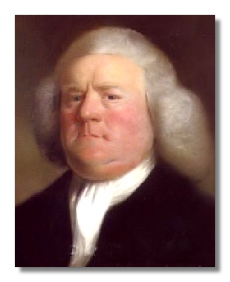
William Boyce and William Byrd
William Bird, was admitted a Gentleman of the Chapel Royal in 1569. He, in conjunction with Thomas Tallis, published in 1575 a collection of their own compositions in Latin, entitled, Sacred Songs: and in the Years 1589, 1591, and 1605, he printed three other collections of his own Productions in the same Language, all of which had the same Title with the first conjoint Publication.
His works were, in his own time, in great Repute, both at Home and Abroad, and are still held in general Estimation: His Canon of Non nobis Domine, will, in particular, remain a perpetual Monument to his Memory.--- He died in 1623.
Notice that there is no mention of William Byrd's religion or that the "Sacred Songs" published in 1605 were actually the Gradualia (volume 1) which comprises "many short pieces of liturgical music, set in verse sections, which can be combined in various ways to form liturgically accurate Propers cycles for every significant feast and votive mass of the Roman Catholic Rite." But it's due to William Boyce's inclusion and editing of William Byrd's music that it has been part of the Anglican musical patrimony. William Boyce's most popular works now are his Eight Symphonies.
Monday, September 10, 2012
St. Ambrose Barlow, OSB
From the English College of Valladolid in Spain:
ST. Ambrose BARLOW OSB was born in
Barlow Hall near Manchester, in the year 1595. Son of Sir Alexander Barlow and
Mary Brereton, he was baptised in November of the same year in Didsbury.
He received his first academic
training in the College of St. Gregory at Douai, and on the 20th of September
1610 was admitted as a pupil of the Royal College of St. Alban in VALLADOLID. On
completing the second year of philosophical studies, he returned to Douai, where
in 1616, in the College of St. Gregory, he made his religious profession. The
following year he was ordained a priest.
On going to England, he exercised
his missionary ministry mainly in the south of the county of Lancashire. His way
of living was said be very simple and apostolic, and his enthusiasm for his
sacred trade such that he was nonchalant about the dangers of the religious
persecution.
Several times he was stopped and
incarcerated. On Easter Sunday, the 25th of April 1631, at the moment of ending
a mass the Protestant vicar of EccIes and his followers, armed with sticks and
shields, arrested him. He was dragged before a judge, and incarcerated.
On the 7th of September, after
four months of detention, he was processed in Lancaster, before Sir Robert Heath
who had received orders from the government to inflict on him the maximum
punishment, as a deterrent to the Catholics who were very numerous in that
county.
Upon the reading of the
indictment, Father Ambrose, without more ado, admitted to being a priest and
having exercised his apostolate in England for more than twenty years. The
following day he was formally sentenced, and on Friday 10th of September 1641 he
was stripped hung and quartered.
Pope Paul VI, on the 25th of
October 1970, solemnly canonised him.
Some of the background on his family is particularly interesting:
In 1597, Ambrose was taken into the stewardship of Sir Uryan Legh, a relative who would care for him whilst he served out his apprenticeship as a page. However, upon completing this service, Barlow realised that his true vocation was for the priesthood, so he travelled to Douai in France to study at the English College there before attending the Royal College of Saint Alban in Valladolid, Spain.
Sunday, September 9, 2012
"Persuading to Popery" in 1587
One of the 85 Martyrs of England and Wales: In his earlier years, George Douglas, of Edinburgh, Scotland, worked as a schoolmaster in the English county of Rutland. He subsequently journeyed overseas to Paris, where he studied for the priesthood and was ordained. There are uncertainties in the biographical details of his life, including the specific year of his ordination. He may have been a member of a religious congregation, perhaps the Franciscan Order, but this cannot be established. Father Douglas came to England about ten years after his ordination to serve the country’s Catholics persecuted under Queen Elizabeth I. It was while laboring thus that he was arrested a first time, but was thereafter released. He was arrested a second time at Ripton in the northern county of Yorkshire. Father Douglas was sentenced to death for “persuading to popery,” that is, for winning converts to the Catholic faith. At York he was executed by drawing and quartering on September 9, 1587, manifesting great fortitude during his torments. He was beatified by Blessed John Paul II in 1987, more than 400 years after his martyrdom.
Saturday, September 8, 2012
Episode Six of "The English Reformation Today"!
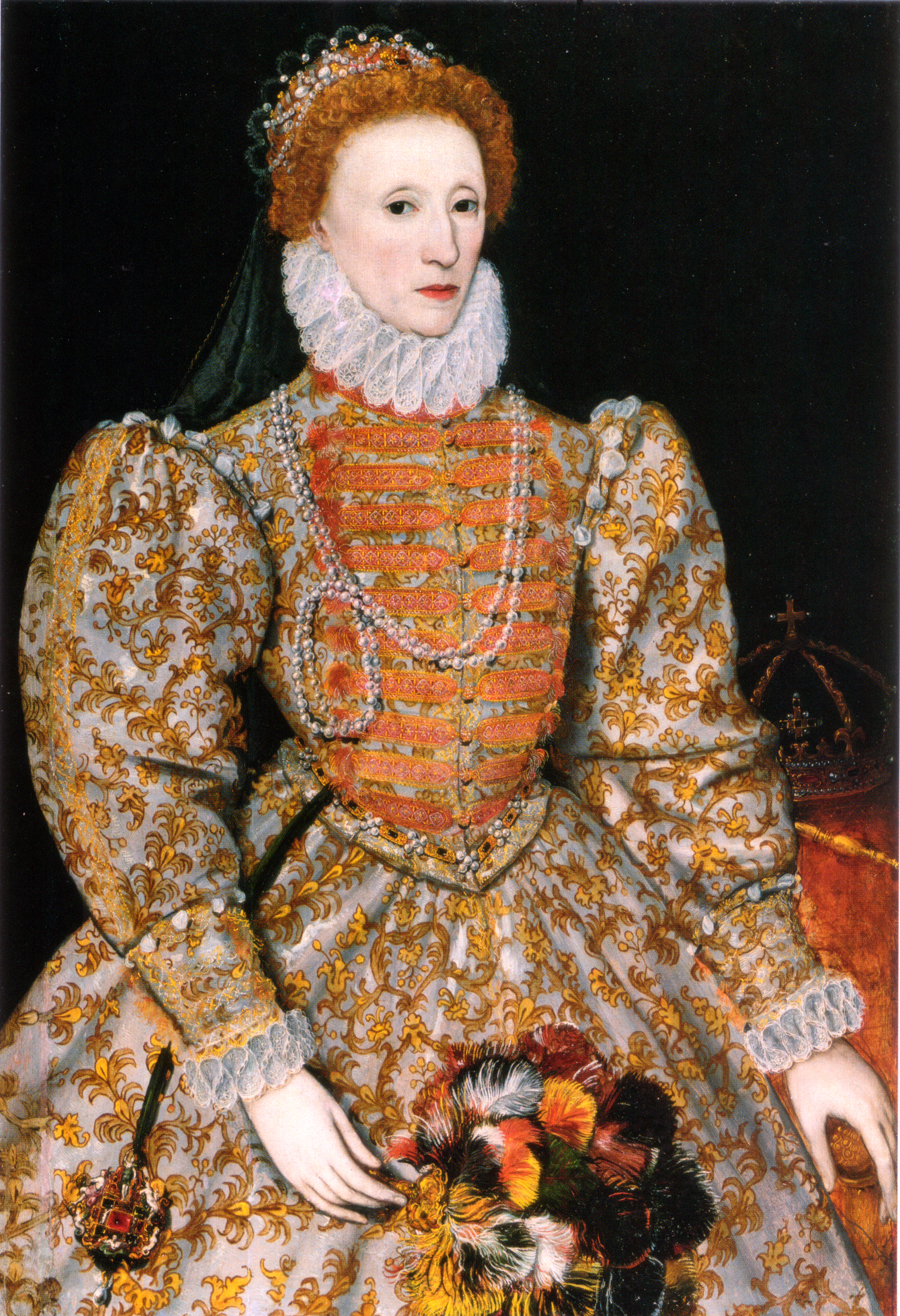
Starting with some biographical notes about Elizabeth Tudor (pictured at left: Wikipedia commons source), I'll then discuss her Reformation Parliament--Catholic resistance--the Via Media of the Church of England (39 Articles and the Book of Common Prayer. I'll also discuss how the compromise of the established church, between Calvinism and Catholicism, pleased no one, as "Puritans" were disappointed in the incomplete Reform and latent "Popishness" of the Church of England.
Then recusancy and resistance, rebellion and martyrdom will occupy much of the broadcast, as I discuss The Northern Rebellion, Pope St. Pius V's Papal Bull "Regnans in Excelsis", and the choice Catholics faced: loyalty to country; loyality to Church. The efforts of missionary priests; their dangerous missions; the laity's way of dealing with recusancy and conformity--those issues are very important and highlight the struggles and sacrifices of Catholics during Elizabeth's 45 year reign.
Next week, I'll wrap up the discussion of Elizabeth by looking at the diplomatic struggles she faced with Mary, Queen of Scots and Philip II of Spain--in the religious context of the 16th century, including war in the Spanish Netherlands, the Spanish Armada, reaction to its failure, war in Ireland, and the succession. This Virgin Queen left no offspring to follow her on the throne, so James VI of Scotland, Mary of Scotland's son, comes south in 1603 when Elizabeth dies.
Supremacy and Survival: How Catholics Endured the English Reformation is an excellent resource for understanding this reign, although I do say so myself. welcome all listeners of Radio Maria US to my blog, whether you're listening on one of their radio stations or on line or through one of their apps. I invite you to call in with questions and comments toll-free at 866-333-MARY(6279). Just a reminder, too, that podcasts of previous episodes of The English Reformation Today are available on the Radio Maria US website.
A Priest and Two Laymen in 1600
Franciscan Thomas Palaser and two laymen, John Norton and John Talbot who had assisted him were executed on September 8, 1600, near the end of
Elizabeth I's reign/life. According to the Royal English College of Valladolid, Spain:
BLESSED Thomas PALASER OSF was probably born in Ellerton-upon-Sway, near Richmond in the County of Yorkshire. He was seminarian at Rheims (France) and in VALLADOLID, where he was ordained a priest the year 1596. He was arrested shortly after returning to England, but escaped. He exercised his Mission in the north of the Country. Condemned for being a priest, he was stripped, hung, drawn and quartered in Durham, on the 8th of September 1600 (the same day as the Image of the Virgin "The Vulnerata" was solemnly received into the Chapel, before the wife of the King Philip III, Margarita Lady of Austria). More about "The Vulnerata" here.
He was beatified by the Pope John Paul II, on the 22nd of November 1987.
His two lay companions, Blessed John Norton and Blessed John Talbot, were also beatified that day, just as they shared the day of execution. Father Palaser was arrested in the home of John Norton, whose wife Margaret was also arrested. Norton, Mrs. Norton and Talbot were all found guilty of the felony of assisting a traitor, a Catholic priest. Mrs. Norton was not executed because she was pregnant at the time.
The College Prayer to Our Lady:
May our Lady Vulnerata and all our Martyr Saints intercede for us with the Lord, that our students and benefactors, past and present, may be helped and saved by him. Amen.
BLESSED Thomas PALASER OSF was probably born in Ellerton-upon-Sway, near Richmond in the County of Yorkshire. He was seminarian at Rheims (France) and in VALLADOLID, where he was ordained a priest the year 1596. He was arrested shortly after returning to England, but escaped. He exercised his Mission in the north of the Country. Condemned for being a priest, he was stripped, hung, drawn and quartered in Durham, on the 8th of September 1600 (the same day as the Image of the Virgin "The Vulnerata" was solemnly received into the Chapel, before the wife of the King Philip III, Margarita Lady of Austria). More about "The Vulnerata" here.
He was beatified by the Pope John Paul II, on the 22nd of November 1987.
His two lay companions, Blessed John Norton and Blessed John Talbot, were also beatified that day, just as they shared the day of execution. Father Palaser was arrested in the home of John Norton, whose wife Margaret was also arrested. Norton, Mrs. Norton and Talbot were all found guilty of the felony of assisting a traitor, a Catholic priest. Mrs. Norton was not executed because she was pregnant at the time.
The College Prayer to Our Lady:
May our Lady Vulnerata and all our Martyr Saints intercede for us with the Lord, that our students and benefactors, past and present, may be helped and saved by him. Amen.
Friday, September 7, 2012
Caroline Martyrs of 1644
From the Salford Liturgy Roman Martyrology: Blessed Ralph Corby, SJ, priest and martyr and Blessed John Duckett, priest and martyr
Martyred at Tyburn under Charles I in 1644. Ralph originated in the northeast and ministered in County Durham after his ordination, enjoying a lengthy ministry of 12 years until his arrest in July 1644. He was condemned at the Old Bailey and executed at Tyburn. John Duckett, executed with him, also worked in County Durham after his conversion to Catholicism and ordination.
Blessed Ralph Corby was born into a devout Irish Catholic family in Maynooth, Ireland, on March 25, 1598. All of Ralph's family took religious vows, including his parents who decided to do so after their children had all joined various orders. Ralph's father became a Jesuit lay brother and his mother a Benedictine nun.
Ralph joined the Jesuits, along with his two brothers and volunteered for the perilous mission to minister in England at a time when it was illegal to be a Catholic priest.
He ministered covertly in the north of England, near Durham, for 12 years before he was discovered and subsequently sentenced to death.
Blessed Ralph was hanged, drawn, and quartered on September 7, 1644 at Tyburn, England. He was beatified by Pope Pius XI in 1929.
Ralph joined the Jesuits, along with his two brothers and volunteered for the perilous mission to minister in England at a time when it was illegal to be a Catholic priest.
He ministered covertly in the north of England, near Durham, for 12 years before he was discovered and subsequently sentenced to death.
Blessed Ralph was hanged, drawn, and quartered on September 7, 1644 at Tyburn, England. He was beatified by Pope Pius XI in 1929.
Thursday, September 6, 2012
More Life Than Biography: Chesterton on Cobbett
G.K. Chesterton's short life of William Cobbett, author of Rural Rides and The History of the Protestant Reformation in England and Ireland contains, of course, some of Chesterton's famous paradoxical turns of phrase. One of my favorites comes in the penultimate chapter, "The Rural Rider": "Even the most elementary sketches of Cobbett have tended to give too much of his biography and too little of his life." (p. 82 of the IHS Press edition).
Chesterton really enshrines paradox--or seeming contradiction--as the method of this study of William Cobbett, for he says: "It is the paradox of his life that he loved the past, and he alone lived in the future. . . . he seemed like a survival and a relic of times gone by. And he alone was in living touch with the times that were to come."
Certainly Cobbett's reinterpretation of the English Reformation expressed great contradiction; contradiction of all that Englishmen had been taught about the 16th century: “He seemed to be calling black white, when he declared that what was white had been blackened, or that what seemed to be white had only been whitewashed.” Cobbett called Elizabeth I, "Bloody Bess" and Mary I, "Good Queen Mary"--and people reading his work knew that Elizabeth I had been Bloody, "if pursuing people with execution and persecution and torture makes a person bloody" and that Mary I had been good, "if certain real virtues and responsibilities make a person good" -- as Chesterton notes, "It was not really Cobbett's history that was in controversy; it was his controversialism. It was not his facts that were challenged, it was his challenge."
Dale Ahlquist of the American Chesterton Society provides a "lecture" on Chesterton's William Cobbett here, noting that "Chesterton’s books about others are really about himself. The qualities he admired in these indeed admirable characters were qualities that we immediately recognize in Chesterton. This is especially true of William Cobbett." So if you are interested in knowing more about either Cobbett or Chesterton, I recommend this book.
Chesterton really enshrines paradox--or seeming contradiction--as the method of this study of William Cobbett, for he says: "It is the paradox of his life that he loved the past, and he alone lived in the future. . . . he seemed like a survival and a relic of times gone by. And he alone was in living touch with the times that were to come."
Certainly Cobbett's reinterpretation of the English Reformation expressed great contradiction; contradiction of all that Englishmen had been taught about the 16th century: “He seemed to be calling black white, when he declared that what was white had been blackened, or that what seemed to be white had only been whitewashed.” Cobbett called Elizabeth I, "Bloody Bess" and Mary I, "Good Queen Mary"--and people reading his work knew that Elizabeth I had been Bloody, "if pursuing people with execution and persecution and torture makes a person bloody" and that Mary I had been good, "if certain real virtues and responsibilities make a person good" -- as Chesterton notes, "It was not really Cobbett's history that was in controversy; it was his controversialism. It was not his facts that were challenged, it was his challenge."
Dale Ahlquist of the American Chesterton Society provides a "lecture" on Chesterton's William Cobbett here, noting that "Chesterton’s books about others are really about himself. The qualities he admired in these indeed admirable characters were qualities that we immediately recognize in Chesterton. This is especially true of William Cobbett." So if you are interested in knowing more about either Cobbett or Chesterton, I recommend this book.
Wednesday, September 5, 2012
Monarchs as Monsters: Richard III and Henry VIII

A car park in Leicester may be home to the last king of England to die in battle: Richard III. Last weekend archaeologists from the University of Leicester brought in heavy diggers to the city’s Greyfriars car park, which historians believe to be the site of the old Franciscan friary where the last Plantagenet was buried.
It’s an exciting time for fans of Richard III, of whom there are many, this king having societies all over the English-speaking world dedicated to softening his image. This is a little strange, considering that Gloucester was a usurper and probably had his young nephews, Edward V and his brother Richard, murdered in the Tower. . . .
Best of all for Ricardians, there came proof in 1973 that a “hunchback” had been drawn on to the famous painting in the National Portrait Gallery, no doubt part of the Tudor black propaganda. Certainly no contemporary account ever mentions any deformity, at a time when a disability would be the central feature of someone’s public persona. . . .
If Richard is rescued from a car park (a fate that has also befallen John Knox), the only questions are where he should be re-buried – would it be Westminster Abbey, where the majority of late medieval kings rest? – and whether this pious man would have a Catholic ceremony.
Even if Richard were responsible for the princes’ deaths he would be nothing like as big a villain as his great-nephew Henry VIII, who destroyed Greyfriars Abbey in Leicester in the worst episode of cultural vandalism in English history. Among the many jewels ruined was Battle Abbey, built by William the Conqueror during one of his brief spasms of guilt over the deaths of 7,000 men here in 1066.
The Dissolution of the Monasteries="the worst episode of cultural vandalism in English history": well put. The University of Leicester has a website with resources on "The Greyfriars Project". I've read Josephine Tey's The Daughter of Time at least twice; the book has a neat premise of Inspector Alan Grant in hospital with a broken leg investigating the crime of the murder of the Princes in the Tower. She almost persuaded me, but I didn't like her dissing of Thomas More. Here's a re-evaluation of her historical mystery, from washingtonpost.com.
Tuesday, September 4, 2012
Lady Jane Grey and the Tower of London
From Nancy Bilyeau, author of The Crown, comes this background from The English Historical Fiction blog:On a December night in 1840, a sizable group of writers, editors, publishers, printers and illustrators gathered at the Sussex Hotel, in the fashionable town of Royal Tunbridge Wells, for a dinner party. It is possible that Charles Dickens, the young author of Oliver Twist and The Life and Adventures of Nicholas Nickleby, was invited to the party. Most definitely in attendance was George Cruikshank, the talented illustrator of Oliver Twist.
The host of this lavish affair was the famed 35-year-old novelist William Harrison Ainsworth. The occasion: the successful serialization over the last year of his fifth novel, The Tower of London: A Historical Romance, which told the story of the tragic Lady Jane Grey, beginning with her arrival by barge at the Tower to launch her nine-day-reign and ending with her decapitation on Tower Green on July 10, 1553. . . .
That dazzling night at Royal Tunbridge Wells, Ainsworth, mercifully, could not know that his books would go out of print, that fellow writers such as Edgar Allan Poe would describe his prose as "turgid pretension."
Yet he is not without a legacy. The book celebrated that night, The Tower of London: A Historical Romance, triggered a new kind of interest in William the Conqueror's castle keep. It was an interest that deepened through the Victorian age, and is part of the reason visitors pour into the Tower, to the tune of 2 million a year. . . .
Ainsworth opened the door to a more illustrious period in the Tower's history. It's true that the novel's prose is melodramatic ("heaving bosoms," "piercing black eyes" and "sinister smiles") and the pages are crowded with Gothic characters (not one or two but three supporting characters who are giants--and a dwarf!) along with august personages of the past. But Ainsworth's diligent research brings to life the grounds, the kitchens, the passageways, the prison cells and the beautiful chapels of the Tower. He made full, imaginative use of the Tower of London, as a setting for a story of high drama. And Cruikshank's 40 engravings and 58 woodcuts play their suggestive part.
And in the center of it all is Lady Jane Grey, a character of undeniable pathos, surrounded by conspiracies. Ainsworth invests the Spanish ambassador, Simon Renard, with the malevolent abilities of a Blofeld straight from Bond. Northumberland is formidable indeed.There is an energy to the book, and an eerie, even frightening atmosphere. The rack, the Scavenger's Daughter and the infamous Little Ease are all present and accounted for.
So, in addition to making the Tower of London a great tourist site, William Harrison Ainsworth might have contributed to the common view of Queen Jane Dudley as a great romantically tragic victim. As I commented on my Radio Maria US show last Saturday, I think that view was corrected by Leanda de Lisle in her book The Sisters Who Would be Queen: Mary, Katherine, and Lady Jane Grey: A Tudor Tragedy, which I reviewed here.
Subscribe to:
Posts (Atom)