Showing posts with label William Cobbett. Show all posts

Tuesday, February 23, 2016

The Four Sharpest Eyes in England

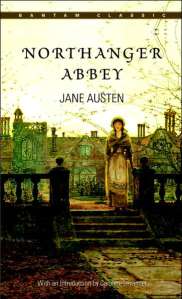
G.K. Chesterton compares what William Cobbett and Jane Austen saw when they looked at the ruins of England's abbeys, especially when some part of the abbey has become the manor house, as in Northanger Abbey (or Downton Abbey?):

We should think it rather odd if a profiteer had a country house that was called The Cathedral. We might think it strange if a stockbroker had built a villa and habitually referred to it as a church. But we can hardly see the preposterous profanity by which one chance rich man after another has been able to commandeer or purchase a house which he still calls an Abbey. It is precisely as if he had gone to live in the parish church; had breakfasted on the altar, or cleaned his teeth in the font. That is the short and sharp summary of what has happened in English history; but few can get it thus foreshortened or in any such sharp outline. Anyhow, this third type of monument of the past does offer itself visibly to the eye like the other two. The romantic reactionary at the end of the eighteenth century might not often find the Bad Baronet in a castle, but might really find him in an abbey. The most attractive of all such reactionaries, Miss Catherine Morland, was not altogether disappointed in her search for the Mysteries of Udolpho. She knew at least that General Tilney lived in an abbey; though even she could hardly have mistaken General Tilney for an abbot. Nor was she wrong in supposing that a crime had been committed by that gentleman in Northanger Abbey. His crime was not being an abbot. But Jane Austen, who had so piercing a penetration of the shams of her own age, had had a little too much genteel education to penetrate the shams of history. Despite the perverse humour of her juvenile History of England, despite her spirited sympathy with Mary Stuart, she could not be expected to see the truth about the Tudor transition. In these matters she had begun with books, and could not be expected to read what is written in mere buildings and big monuments. She was educated, and had not the luck to be self-educated like Cobbett. The comparison is not so incongruous as it may seem. They were the four sharpest eyes that God had given to the England of that time; but two of them were turned inward into the home, and two were looking out of the window. I wish I could think that they ever met.

From Chesterton's William Cobbett. 

BTW: Jane Austen enthusiasts will mark 2017 as the 200th anniversary of her death. She will replace Charles Darwin on the ten pound note, according to this BBC story in 2013!

Monday, December 14, 2015

Bishop Thomas Tanner, RIP

Thomas Tanner, the Anglican bishop of St. Asaph, died on December 14, 1735. He wrote a history of the English monasteries and friaries before the Reformation, Notitia Monastica, or a Short History of the Religious Houses in England and Wales. He describes the literary, administrative, social, and other benefits of the monasteries which William Cobbett quotes extensively in his History of the English Reformation in England and Ireland:

In every great abbey there was a large room called the Scriptorium, where several writers made it their whole business to transcribe books for the use of the library. They sometimes indeed wrote the ledger books of the house, and the missals, and other books used in divine service; but they generally were upon other works, viz. the the Fathers, Classics, Histories, etc. John Whethamsted, abbot of St. Alban's, caused above eighty books  to be thus transcribed during his abbacy. Fifty eight were transcribed by the care of one abbot at Glastonbury and so zealous were the monks in general for this work, that they often got lands given, and churches appropriated for the carrying of it on. In all the greater abbeys, there were also persons appointed to take notice of the principal occurrences of the kingdom, and at the end of every year to digest them into annals.

In these records they particularly preserved the memories of their founders and benefactors', the years and days of their births and deaths, their marriages, children, and successors; so that recourse was sometimes had to them for proving persons' age and genealogies . . .The constitutions of the clergy in their national and provincial synods, and (after the Conquest) even acts of parliament, were sent to the abbeys to be recorded ; which leads me to mention the use and advantage of these Religious houses. For, first, The choicest records and treasures in the kingdom were preserved in them. An exemplification of the charter of liberties granted by king Henry I was sent to some abbey in every county to be preserved. Charters and inquisitions relating to the county of Cornwall were deposited in the priory of Bodmin; a great many rolls were lodged in the abbey of Leicester and priory of Kenilworth, till taken from thence by king Henry III. King Edward I sent  to the Religious houses to search for his title to the kingdom of Scotland in their ledgers and chronicles, as the most authentic records for proof of his right to that crown. When his sovereignty was acknowledged in Scotland, he sent letters to have it inserted in the chronicles of the abbey of Winchcombe, and the priory of Norwich, and probably of many other such like places. And when he decided the controversy relating to the crown of Scotland between Robert Bruce and John Baliol, he wrote to the dean and chapter of St Paul's London, requiring them to enter into their chronicles the exemplification therewith sent of that decision.

The learned Mr. Selden hath his greatest evidences for the dominion of the narrow seas belonging to the king of Great Britain, from monastic records. The evidences and money of private families were oftentimes sent to these houses to be preserved. The seals of noblemen were deposited there upon their deaths. And even the king's money was sometimes lodged in them. Secondly, They were schools of learning and education; for every convent had one person or more appointed for this purpose ; and all the neighbours, that desired it, might have their children taught grammar and church music without any expense to them. In the nunneries also young women were taught to work, and to read English, and sometimes Latin also. So that not only the lower rank of people, who could not pay for their learning, but most of the noblemen's and gentlemen's daughters were educated in those places. Thirdly, All the monasteries were in effect great hospitals, and were most of them obliged to relieve many poor people every day. They were likewise houses of entertainment for almost all travellers. Even the nobility and gentry, when they were upon the road, lodged at one Religious house and dined at another, and seldom or never went to inns. In short their hospitality was such, that in the priory of Norwich one thousand five hundred quarters of malt, and above eight hundred quarters of wheat, and all other things in proportion, were generally spent every year. Fourthly, The nobility and gentry provided not only for their old servants in these houses by corrodies, but for their younger children and impoverished friends, by making them first monks and nuns, and in time priors and prioresses, abbots and abbesses. Fifthly, They were of considerable advantage to the crown, 1) By the profits received from the death of one abbot or prior to the election, or rather confirmation, of another. 2) By great fines paid for the confirmation of their liberties. 3). By many corrodies granted to old servants of the crown, and pensions to the king's clerks and chaplains till they got preferment. Sixthly, They were likewise of considerable advantage to the places where they had their sites and estates: 1) By causing great resort to them, and getting grants of fairs and markets for them; 2) By freeing them from the forest laws; 3) By letting their lands at easy rates. Lastly, they were great ornaments to the country; many of them were really noble buildings; and though not actually so grand and neat, yet perhaps as much admired in their times, as Chelsea and Greenwich hospitals are now. Many of the abbey churches were equal, if not superior, to our present cathedrals; and they must have been as much an ornament to the country, and employed as many workmen in building and keeping them in repair, as noblemen's and gentlemen's seats now.

Bishop Tanner also recounted the disadvantages and problems with the monasteries throughout the centuries, but it must be said that his listing of them is short in comparison with the work and charity--not to mention the prayer and worship--of the monasteries detailed above. He also discusses their relative decline in the sixteenth century, a decline they had no opportunity to recover from as they had in earlier ages (N.B., the tenth century!). The "corrodies" referred to above are the lifetime provisions of food, lodging, and clothing by the monasteries, providing a kind of retirement plan for royal and noble servants--thus saving the monarch from having to grant pensions to his former servants. More on Bishop Tanner here.

Monday, November 30, 2015

The Reconciliation of England with the Catholic Church

On November 30, 1554, Reginald Cardinal Pole, the Papal Legate, soon to be Archbishop of Canterbury, received the submission of the English Parliament and granted absolution to the entire kingdom, reconciling England to the Holy See and the universal Catholic Church. As both Alison Weir and H.F.M. Prescott comment in their biographies of Mary I, the first Queen Regnant of England and Ireland, this must have been one of the happiest days of her life as she witnessed this solemn act. She was married to Philip of Spain, her cousin had returned, Parliament and Convocation were both repenting of the acts led by her father and her half-brother to separate England from the Catholic Church--and she believed she was pregnant (as her doctors had told her).

For this day to occur, several things had to be arranged and decided. First of all, for the Papal Legate to arrive in England, the Act of Attainder against Reginald Pole had to be removed by Parliament. This was the Act that condemned his mother Margaret Pole, Countess of Salisbury, and many others to death. Parliament lifted this sentence of death and Mary invited the Papal Legate to return from exile on November 20, 1554. He would be the first Papal Legate present in England since the trial of her mother's marriage in 1529--when Katherine of Aragon appeared before Cardinal Campeggio and Cardinal Wolsey, appealed to Henry her husband and left the Court, impervious to pleas to return. The matter of former Church lands also had to be decided: Henry VIII and then Edward VI had seized the monasteries and then the chantries and the chantry schools, destroyed most of them, sold or given the lands to courtiers and others who benefited. Were these all to be given back?

The Papal Legate wanted them back, but Mary was concerned about alienating the Court and nobility her reign had so lately unified against the plots of Northumberland to replace her in the succession with Lady Jane Grey and that of Thomas Wyatt the younger to prevent the Spanish marriage and place her half-sister Elizabeth and young Edward Courtenay on the throne. She had to yield on the issue so that she could divest herself of the title Supreme Head and Governor of the Church in England and give it back to the Pope. So the lands and property of the Church stayed with their current owners.
As you might imagine, Cobbett explores this issue of the "plunderers" as he calls them extensively in his chapter on the reign of Mary I:

But when the question came, whether the Parliament should restore the Papal Supremacy, the plunder was at stake ; for to take the Church property was sacrilege and if the Pope regained his power in the kingdom he might insist on restitution. The greater part of this property had been seized on eighteen years before. In many cases it had been divided and subdivided, in many the original grantees were dead. The common people, too, had in many cases become dependants on the new proprietors ; and besides, they could not so easily trace their connexion between their faith and that supremacy, as they could between their faith and the mass and the sacraments. The Queen, therefore, though she most anxiously wished to avoid giving in any way whatever her sanction to the plunder, was reduced to the necessity of risking a civil war for the Pope's supremacy, to leave her kingdom unreconciled to the Church, and to keep to herself the title of Head of the Church, to her so hateful, or to make a compromise with the plunderers. She was induced to prefer the latter ; though it is by no means certain that civil war would not have been better for the country, even if it had ended in the triumph of the plun- derers, which, in all human probability, it would not. But observe in how forlorn a state as to this question she was placed. There was scarcely a nobleman or gentleman of any note in her kingdom who had not in one way or another soiled his hands with the plunder." The Catholic bishops, all but Fisher, had assented to the abolition of the Pope's supremacy. Bishop Gardiner, who was now her High Chancellor, was one of these, though he had been deprived of his bishopric and imprisoned in the Tower because he opposed Cranmer's further projects. These Catholic bishops, and Gardiner especially, must naturally wish to get over this matter as quietly as possible ; for how was he to advise the Queen to risk a civil war for the restoration of that the abolition of which he had so fully assented to and so strenuously supported? And how was she to do anything without councillors of some sort?

On November 28 Cardinal Pole spoke to Parliament and asked them to repeal all the other acts that were obstacles to reunion. On November 29 Parliament did so and then petitioned Queen Mary to intercede with the Papal Legate for absolution and reunion with Rome (two members refused to sign the petition).

Then on St. Andrew's Day Stephen Gardiner, Bishop of Winchester and Mary's Chancellor, led the members of both houses of Parliament to kneel before the Papal Legate and Mary, presenting the petition. The petition proclaimed that Parliament was "very sorry and repentant of the schism and disobedience committed in this realm against the See Apostolic" and begged to be returned "into the bosom and unity of Christ's Church." As Cobbett describes it grandly and effusively:

Thus was England once more a Catholic country. She was restored to the " fold of Christ": but the fold had been plundered of its hospitality and charity, and the plunderers before they pronounced the "amen" had taken care that the plunder should not be restored. The Pope had hesitated to consent to this; Cardinal Pole, who was a man full of justice, had hesitated still longer; but, as we have seen before Gardiner, who was now the Queen's prime minister, and indeed all her council were for the compromise, and therefore these "amen" people while they confessed that they had sinned by that defection, in virtue of which defection, and of that alone, they got the property of the Church and the poor, while they prayed for absolution for that sin, while they rose from their knees to join the Queen in singing Te Deum in thanksgiving for that absolution, while they were doing these things they enacted that all the holders of Church property should keep it, and that any person who should attempt to molest or disturb them therein should be guilty of praemunire and be punished accordingly! 

Cobbett even considers this compromise the greatest error of Mary's reign. She should have made sure the monasteries and chantries were returned to the Church because then Cobbett believes, the Catholic culture and economy that existed before the Dissolution of the Monasteries would have been restored. He does praise Mary for restoring the religious properties like Westminster Abbey and Syon Priory--and the tenths and first fruits of those benefices--that her father had seized.

Cardinal Pole then welcomed "the return of the lost sheep" and granted absolution to the entire kingdom, proclaiming a new Holy Day on November 30: the Feast of Reconciliation. Unfortunately, Cardinal Pole and Mary I would have only three celebrations of this Feast (in 1555, 1556, and 1557)--both died on November 17, 1558.
Saturday, November 28, 2015

Glastonbury and Its Legends

I am in the midst of re-reading William Cobbett's A History of the Protestant Reformation in England and Ireland, so A Clerk of Oxford's post on Glastonbury Abbey, with its legendary connections to King Arthur, Joseph of Arimathea caught my eye:

A story has been going around the British media this past week, springing from some new archaeological research which has been conducted at Glastonbury Abbey. This research, a four-year project based at the University of Reading, sounds very interesting: it has explored the early history of a site which has long held a unique place in popular culture in this country, associated as it is with Arthurian legend and with an early, mythical origin for the British church. You can read about the research and some of its findings on the University of Reading website.

This is all great. But the way this story has been reported in the media this week has been troubling me, so I finally gave in to temptation and decided to blog about it. What I intend to do in this post is to look at how this story has been reported, to challenge some of the unquestioned assumptions which are apparent in that reporting, and to suggest some alternative ways in which one might think about medieval monasteries and the legends they told. I want to make it clear that in doing so I’m absolutely not making any criticism of the archaeologists, their research, or how they communicated it; I don’t know enough about the circumstances or the subject to do that, and I’m sure their work is exemplary. (I’m not an archaeologist, nor a specialist on Glastonbury; I also know how easily a message can get distorted as it passes through the hands of journalists and spreads on social media.) I’m not criticising anyone, really, and I don't think anything I say here will be of much interest to academics or specialists. This is for those of you non-specialists - I know lots of you read this blog! - who are interested in history but who can sometimes find the medieval church and its legends bizarre and off-putting.

The media attention to the story emphasizes that the abbot and monks of Glastonbury decided in the twelfth century to mislead prospective pilgrims, and that's what the excellent Clerk addresses, namely:

Sticking, however, to the medieval, there are two things about this reporting which trouble me:
a) assuming that we know for sure the motive behind the monastery’s actions
b) passing moral judgement on that motive. . . .

Read some of these reports and you’d think the monks were raising money for the fun of rolling around in piles of gold like Scrooge McDuck; maybe some of them were, but I rather doubt it. So why use such language? I don’t know about you, but when I see a business selling its wares, a charity trying to raise money, or a school running a fundraiser I don’t think or talk in terms of these institutions being ‘on the make’ or ‘filling their coffers’. They’re raising money in order to do the things they do. It’s not a scam (although obviously it might be sometimes); it’s just life.

The moral judgement implied by terms such as ‘money-spinning’ must come, then, from the idea that these monks have deliberately and deceitfully distorted historical fact - 'forged', 'fabricated' and 'doctored' history - in order to raise their money. That’s one reading of the situation. Let me propose some others.

Read the rest there. In his history of what he always refers to as the "Reformation" (in quotes), Cobbett goes to great lengths to defend the monasteries in the sixteenth century against the attacks of David Hume in his History of England, which Cobbett quotes in chapter IV:

It is safest to credit the existence of vices naturally connected with the very institution of the monastic life. The cruel and inveterate factions and quarrels therefore, which the commissioners mentioned, are very credible among men who, being confined together within the same walls, can never forget their mutual animosities, and who, being cut off from all the most endearing connections of nature, are commonly cursed with hearts more selfish and tempers more unrelenting than fall to the share of other men. The pious frauds practised to increase the devotion and liberality of the people may be regarded as certain, in an order founded on illusion, lies, and superstition. The supine idleness also and its attendant, profound ignorance, with which the convents were reproached, admit of no question. No manly or elegant knowledge could be expected among men whose life, condemned to a tedious uniformity and deprived of all emulation, afforded nothing to raise the mind or cultivate the genius.

Cobbett finds in a source Hume often otherwise references (Bishop Tanner of St. Asaph's Notitia Monastica) a different picture of the monasteries and their benefits to English culture and society that contradicts Hume's characterization:

For, first, the choicest records and treasures in the kingdom were preserved in them. An exemplification of the charter of liberties granted by King Henry I. (Magna Charta) was sent to some abbey in every county to be preserved. Charters and Inquisitions relating to the County of Cornwall were deposited in the Priory of Bodmin ; a great many rolls were lodged in the Abbey of Leicester and Priory of Kenilworth, till taken from thence by King Henry III. King Edward I. sent to the religious houses to search for his title to the kingdom of Scotland, in their ledgers and chronicles, as the most authentic records for proof of his right to that crown. When his sovereignty was acknowledged in Scotland, he sent letters to have it inserted in the chronicles of the Abbey of Winchcomb and the Priory of Norwich, and probably of many other such-like places. And when he decided the controversy relating to the crown of Scotland, between Robert Bruce and John Baliol, he wrote to the Dean and Chapter of St. Paul's, London, requiring them to enter into their chronicles the exemplification therewith sent of that decision. The learned Mr. Selden hath his greatest evidences for the dominion of the narrow seas belonging to the King of Great Britain from Monastic records. The evidences and money of private families were oftentimes sent to these houses to be pre- served. The seals of noblemen were deposited there upon their deaths. And even the King's money was sometimes lodged in them. Secondly, they were schools of learning and education ; for every convent had one person or more appointed for this purpose; and all the neighbours that desired it might have their children taught grammar and church music without any expense to them. In the nunneries also young women were taught to work and to read English and sometimes Latin also. So that not only the lower rank of people who could not pay for their learning, but most of the noblemen's and gentlemen's daughters were educated in those places. Thirdly, all the monasteries were, in effect, great hospitals, and were most of them obliged to relieve many poor people every day. There were likewise houses of entertainment for almost all travellers. Even the nobility and gentry, when they were upon the road, lodged at one religious house and dined at another, and seldom or never went to inns. In short, their hospitality was such, that in the Priory of Norwich one thousand five hundred quarters of malt and above eight hundred quarters of wheat, and all other things in proportion, were generally spent every year. Fourthly, the nobility and gentry provided not only for their old servants in these houses by corrodies, but for their younger children and impoverished friends, by making them first monks and nuns, and in time priors and prioresses, abbots and abbesses. Fifthly, they were of considerable advantage to the Crown : (i) By the profits received from the death of one abbot or prior to the election, or rather confirmation, of another. (2) By great fines paid for the confirmation of their liberties. (3) By many corrodies granted to old servants of the Crown, and pensions to the king's clerks and chaplains, till they got preferment. Sixthly, they were likewise of considerable advantage to the places where they had their sites and estates : (i) By causing great resort to them, and getting grants of fairs and markets for them. (2) By freeing them from the forest laws. (3) By letting their lands at easy rates. Lastly, they were great ornaments to the country : many of them were really noble buildings, and though not actually so grand and neat, yet perhaps as much admired in their times as Chelsea and Greenwich Hospitals are now. Many of the abbey churches were equal, if not superior, to our present cathedrals; and they must have been as much an ornament to the country, and employed as many workmen in building and keeping them in repair, as noblemen's and gentlemen's seats now do.

Cobbett waxes wroth at "malignant Hume" saying that he always casts Catholics and the Catholic Church in the worst light possible. Perhaps this is what is going on in the stories about Glastonbury Abbey.

Saturday, March 9, 2013

Happy Birthday, William Cobbett!

In honor of William Cobbett's birthday on March 9, 1763, let us pretend we are gathered in The William Cobbett public house in Farnham, raising a pint in his honor!


Happy Birthday to the author of Rural Rides and A History of the Protestant Reformation in England and Ireland!

G.K. Chesterton wrote of the latter:

“He seemed to be calling black white, when he declared that what was white had been blackened, or that what seemed to be white had only been whitewashed.” Cobbett called Elizabeth I, "Bloody Bess" and Mary I, "Good Queen Mary"--and people reading his work knew that Elizabeth I had been Bloody, "if pursuing people with execution and persecution and torture makes a person bloody" and that Mary I had been good, "if certain real virtues and responsibilities make a person good" -- as Chesterton notes, "It was not really Cobbett's history that was in controversy; it was his controversialism. It was not his facts that were challenged, it was his challenge."

Photo credit: wikipedia commons.

Thursday, September 6, 2012

More Life Than Biography: Chesterton on Cobbett

G.K. Chesterton's short life of William Cobbett, author of Rural Rides and The History of the Protestant Reformation in England and Ireland contains, of course, some of Chesterton's famous paradoxical turns of phrase. One of my favorites comes in the penultimate chapter, "The Rural Rider": "Even the most elementary sketches of Cobbett have tended to give too much of his biography and too little of his life." (p. 82 of the IHS Press edition).

Chesterton really enshrines paradox--or seeming contradiction--as the method of this study of William Cobbett, for he says: "It is the paradox of his life that he loved the past, and he alone lived in the future. . . . he seemed like a survival and a relic of times gone by. And he alone was in living touch with the times that were to come."

Certainly Cobbett's reinterpretation of the English Reformation expressed great contradiction; contradiction of all that Englishmen had been taught about the 16th century: “He seemed to be calling black white, when he declared that what was white had been blackened, or that what seemed to be white had only been whitewashed.” Cobbett called Elizabeth I, "Bloody Bess" and Mary I, "Good Queen Mary"--and people reading his work knew that Elizabeth I had been Bloody, "if pursuing people with execution and persecution and torture makes a person bloody" and that Mary I had been good, "if certain real virtues and responsibilities make a person good" -- as Chesterton notes, "It was not really Cobbett's history that was in controversy; it was his controversialism. It was not his facts that were challenged, it was his challenge."

Dale Ahlquist of the American Chesterton Society provides a "lecture" on Chesterton's William Cobbett here, noting that "Chesterton’s books about others are really about himself. The qualities he admired in these indeed admirable characters were qualities that we immediately recognize in Chesterton. This is especially true of William Cobbett." So if you are interested in knowing more about either Cobbett or Chesterton, I recommend this book.