Showing posts with label The History of the Reformation in England and Ireland. Show all posts

Tuesday, February 23, 2016

The Four Sharpest Eyes in England

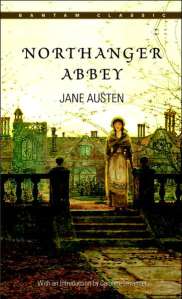
G.K. Chesterton compares what William Cobbett and Jane Austen saw when they looked at the ruins of England's abbeys, especially when some part of the abbey has become the manor house, as in Northanger Abbey (or Downton Abbey?):

We should think it rather odd if a profiteer had a country house that was called The Cathedral. We might think it strange if a stockbroker had built a villa and habitually referred to it as a church. But we can hardly see the preposterous profanity by which one chance rich man after another has been able to commandeer or purchase a house which he still calls an Abbey. It is precisely as if he had gone to live in the parish church; had breakfasted on the altar, or cleaned his teeth in the font. That is the short and sharp summary of what has happened in English history; but few can get it thus foreshortened or in any such sharp outline. Anyhow, this third type of monument of the past does offer itself visibly to the eye like the other two. The romantic reactionary at the end of the eighteenth century might not often find the Bad Baronet in a castle, but might really find him in an abbey. The most attractive of all such reactionaries, Miss Catherine Morland, was not altogether disappointed in her search for the Mysteries of Udolpho. She knew at least that General Tilney lived in an abbey; though even she could hardly have mistaken General Tilney for an abbot. Nor was she wrong in supposing that a crime had been committed by that gentleman in Northanger Abbey. His crime was not being an abbot. But Jane Austen, who had so piercing a penetration of the shams of her own age, had had a little too much genteel education to penetrate the shams of history. Despite the perverse humour of her juvenile History of England, despite her spirited sympathy with Mary Stuart, she could not be expected to see the truth about the Tudor transition. In these matters she had begun with books, and could not be expected to read what is written in mere buildings and big monuments. She was educated, and had not the luck to be self-educated like Cobbett. The comparison is not so incongruous as it may seem. They were the four sharpest eyes that God had given to the England of that time; but two of them were turned inward into the home, and two were looking out of the window. I wish I could think that they ever met.

From Chesterton's William Cobbett. 

BTW: Jane Austen enthusiasts will mark 2017 as the 200th anniversary of her death. She will replace Charles Darwin on the ten pound note, according to this BBC story in 2013!

Thursday, September 6, 2012

More Life Than Biography: Chesterton on Cobbett

G.K. Chesterton's short life of William Cobbett, author of Rural Rides and The History of the Protestant Reformation in England and Ireland contains, of course, some of Chesterton's famous paradoxical turns of phrase. One of my favorites comes in the penultimate chapter, "The Rural Rider": "Even the most elementary sketches of Cobbett have tended to give too much of his biography and too little of his life." (p. 82 of the IHS Press edition).

Chesterton really enshrines paradox--or seeming contradiction--as the method of this study of William Cobbett, for he says: "It is the paradox of his life that he loved the past, and he alone lived in the future. . . . he seemed like a survival and a relic of times gone by. And he alone was in living touch with the times that were to come."

Certainly Cobbett's reinterpretation of the English Reformation expressed great contradiction; contradiction of all that Englishmen had been taught about the 16th century: “He seemed to be calling black white, when he declared that what was white had been blackened, or that what seemed to be white had only been whitewashed.” Cobbett called Elizabeth I, "Bloody Bess" and Mary I, "Good Queen Mary"--and people reading his work knew that Elizabeth I had been Bloody, "if pursuing people with execution and persecution and torture makes a person bloody" and that Mary I had been good, "if certain real virtues and responsibilities make a person good" -- as Chesterton notes, "It was not really Cobbett's history that was in controversy; it was his controversialism. It was not his facts that were challenged, it was his challenge."

Dale Ahlquist of the American Chesterton Society provides a "lecture" on Chesterton's William Cobbett here, noting that "Chesterton’s books about others are really about himself. The qualities he admired in these indeed admirable characters were qualities that we immediately recognize in Chesterton. This is especially true of William Cobbett." So if you are interested in knowing more about either Cobbett or Chesterton, I recommend this book.