Showing posts with label Quinquagesima Sunday. Show all posts

Thursday, February 17, 2022

Newman and Quinquagesima Sunday on the Son Rise Morning Show

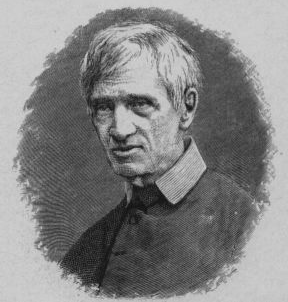
On Monday, February 21--which just happens to be the 221st anniversary of Saint John Henry Newman's birth in the City of London--Matt Swaim and I will discuss the third of Newman's pre-Lenten sermons on the Son Rise Morning ShowWe'll be on the air at my usual time, about 6:50 a.m. Central/7:50 a.m. Eastern time. Please listen live on EWTN Radio or on your local EWTN affiliate.

Newman preached on "Prejudice and Faith" on Quinquagesima Sunday, March 5, 1848, reflecting on the Gospel of Saint Luke, chapter 18, verses 31-43, in which Jesus announces His fate. Newman focuses on that third prophecy of His Passion and the Apostles' (His Twelve closest followers) confusion:

And taking the twelve, he said to them, “Behold, we are going up to Jerusalem, and everything that is written of the Son of man by the prophets will be accomplished. For he will be delivered to the Gentiles, and will be mocked and shamefully treated and spit upon; they will scourge him and kill him, and on the third day he will rise.” But they understood none of these things; this saying was hid from them, and they did not grasp what was said. (Luke 18: 31-34)

Exploring the Apostles' lack of understanding, Newman begins his sermon with other examples of their failures:

We have in the Gospel for this day what, I suppose, has raised the wonder of most readers of the New Testament. I mean the slowness of the disciples to take in the notion that our Lord was to suffer on the Cross. It can only be accounted for by the circumstance that a contrary opinion had strong possession of their minds—what we call a strong prejudice against the truth, in their cases an honest religious prejudice, the prejudice of honest religious minds, but still a deep and violent prejudice. When our Lord first declared it, St. Peter said, "Be it far from thee, Lord, this shall not happen to Thee." He spoke so strongly that the holy Evangelist says that he "took our Lord and began to rebuke Him." [Matthew 21:22-23] He did it out of reverence and love, as the occasion of it shows, but still that he spoke with warmth, with vehemence, is evident from the expression. Think then how deep his prejudice must have been.

This same prejudice accounts for what we find in today's gospel. . . . Could words be plainer? Yet what effect had they on the disciples? "They understood none of these things, and this was hid from them, and they understood not the things that were said." Why hid? Because they had not eyes to see.

And so again after the resurrection, when they found the sepulchre empty, it is said, "They knew not the Scripture, that He must rise again from the dead." [John 20:9] And when St. Mary Magdalen and the other women told them, "their words seemed to them as an idle tale, and they did not believe them" [Luke 24:10-11]; and accordingly when our Lord appeared to them, "He upbraided them with their incredulity and hardness of heart, because they did not believe them who had seen Him after He was risen again." [Mark 16:14]

This is certainly a very remarkable state of mind, and the record of it in the gospels may serve to explain much which goes on among us, and to put us on our guard against ourselves, and to suggest to us the question, Are we in any respect in the same state of imperfection as these holy, but at that time prejudiced, disciples of our Lord and Saviour?

Before he addresses the issue of his hearers' imperfection, Newman identifies the source of the Apostles' prejudice, their expectation of the Messiah's mission:

It was the opinion of numbers at that day that the promised Messiah or Christ, who was coming, would be a great temporal Prince, like Solomon, only greater; that he was to have an earthly court, earthly wealth, earthly palaces, lands and armies and servants and the glory of a temporal kingdom. This was their idea—they looked for a deliverer, but thought he would come like Gideon, David, or Judas Maccabaeus, with sword and spear and loud trumpet, inflicting wounds and shedding blood, and throwing his captives into dungeons.

And they fancied Scripture taught this doctrine. They took parts of Scripture which pleased their fancy, in the first place, and utterly put out of their minds such as went contrary to these.

And, putting off again his congregation's examination of conscience, Newman speaks about how some people ignore certain verses in the Holy Bible (and there we see how Newman echoes St. Joan of Arc, quoted in paragraph 795 in the Catechism of the Catholic Church "About Jesus Christ and the Church, I simply know they're just one thing, and we shouldn't complicate the matter."):

Far be it from me to be severe with such, but is it not so, that in this educated and intelligent and great people, there are multitudes,—nay more, the great majority is such, as to have put a false sense on Scripture, and to be violently opposed to the truth on account of this false interpretation? The Church of Christ walks the earth now, as Christ did in the days of His flesh, and as our Lord fulfilled the Scriptures in what was and what He did then, so the Church fulfils the Scriptures in what she is and what she does now; as Christ was promised, predicted, in the Scriptures as He was then, so is the Church promised, predicted, in the Scriptures in what she is now. Yet the people of this day, though they read the Scriptures and think they understand them, like the Jews then, who read the Scriptures and thought they understood them, do not understand them. Why? Because like the Jews then, they have been taught badly; they have received false traditions, as the Jews had received the traditions of the Pharisees, and are blind when they think they see, and are prejudiced against the truth, and shocked and offended when they are told it.

And, as the Jews then passed over passages in Scripture, which ought to have set them right, so do Christians now pass over passages, which would, if dwelt on, extricate them from their error.

When I read this sermon and came to this point, I thought this is a perfect sermon to discuss with Matt Swaim, who in addition to being the co-host of the Son Rise Morning Show, works at the Coming Home Network as Outreach Manager. Marcus Grodi, the President and Founder, used to host a radio program/podcast called "Verses I Never Saw" and that issue still comes up when converts tell their stories--how they started reading certain verses in the Bible differently on their journey home to the Catholic Church.

Newman cites a few of those verses and then starts to comment on what Catholics should do when faced with this situation of how some misread the Holy Bible. In other words, he instructs his congregation on a method of evangelization:
. . . how are we Catholics to behave ourselves to such prejudiced and erring persons? We should imitate our Lord and Master. He was most patient with them; He abounded in long-suffering. "A bruised reed did He not break, and smoking flax did He not quench." He did not argue, but He quietly led them on. He displayed His wonders to them. He gradually influenced them by His words and by His grace, and then enlightened them, till they believed all things. Till that Apostle [Thomas], who doubted most stoutly of His resurrection, cried out, overcome, "My Lord and My God." So must we do now—so does the Church do now. Argument is well in its place, but it is not the chief thing. The chief thing is to win the mind, to melt the heart, to influence the will. This the Church does. After the pattern of her Divine Lord she draws us with cords of a man, with cords of love, with divine charity; "she hopeth all things, endureth all things," she opens the gates of her temple, she lights up her altars, she displays the Most Holy under the sacramental veil, she bursts forth into singing, till the wayward soul, overcome and subdued, says with the Patriarch, "It is enough—let me now die, for I have seen Thy Face; Nunc Dimittis, Lord now lettest Thou Thy servant depart in peace, for mine eyes have seen Thy salvation. I have heard of Thee with the hearing of the ear, but now mine eye seeth Thee." And, as our Lord after His resurrection opened the understanding of the disciples to understand the Scripture, so now are the hearts of men softened and enlightened, and they see that the Church fulfils all the prophecies about herself, all that is written in the Law, the Prophets, and the Psalms; and thus they fall down and worship, and confess that God is here of a truth.

Finally, Newman concludes with some counsel for our own spiritual lives and progress, before the beginning of Lent on Ash Wednesday:

Be sure, my Brethren, that this must be our way too. Never does God give faith, but He tries it, and none without faith can enter the kingdom of heaven. Therefore all ye who come to serve God, all ye who wish to save your souls, begin with making up your minds that you cannot do so, without a generous faith, a generous self-surrender; without putting yourselves into God's hands, making no bargain with Him, not stipulating conditions, but saying "O Lord here I am—I will be whatever Thou wilt ask me—I will go whithersoever Thou sendest me—I will bear whatever Thou puttest upon me. Not in my own might or my own strength. My strength is very weakness—if I trust in myself more or less, I shall fail—but I trust in Thee—I trust and I know that Thou wilt aid me to do, what Thou callest on me to do—I trust and I know that Thou wilt never leave me nor forsake me. Never wilt Thou bring me into any trial, which Thou wilt not bring me through. Never will there be a failing on Thy part, never will there be a lack of grace. I shall have all and abound. I shall be tried: my reason will be tried, for I shall have to believe; my affections will be tried, for I shall have to obey Thee instead of pleasing myself; my flesh will be tried, for I shall have to bring it into subjection. But Thou art more to me than all other things put together. Thou canst make up to me all Thou takest from me and Thou wilt, for Thou wilt give to me Thyself. Thou wilt guide me."

Saint John Henry Newman, pray for us!

Sunday, February 26, 2017

PPS: Love for Quinquagesima Sunday

From Blessed John Henry Newman's sermon on "Love, the One Thing Needful":

Love, and love only, is the fulfilling of the Law, and they only are in God's favour in whom the righteousness of the Law is fulfilled. This we know full well; yet, alas! at the same time, we cannot deny that whatever good thing we have to show, whether activity, or patience, or faith, or fruitfulness in good works, love to God and man is not ours, or, at least, in very scanty measure; not at all proportionately to our apparent attainments. Now, to enlarge upon this.

In the first place, love clearly does not consist merely in great sacrifices. We can take no comfort to ourselves that we are God's own, merely on the ground of great deeds or great sufferings. The greatest sacrifices without love would be nothing worth, and that they are great does not necessarily prove they are done with love. St. Paul emphatically assures us that his acceptance with God did not stand in any of those high endowments, which strike us in him at first sight, and which, did we actually see him, doubtless would so much draw us to him. One of his highest gifts, for instance, was his spiritual knowledge. He shared, and felt the sinfulness and infirmities of human nature; he had a deep insight into the glories of God's grace, such as no natural man can have. He had an awful sense of the realities of heaven, and of the mysteries revealed. He could have answered ten thousand questions on theological subjects, on all those points about which the Church has disputed since his time, and which we now long to ask him. He was a man whom one could not come near, without going away from him wiser than one came; a fount of knowledge and wisdom ever full, ever approachable, ever flowing, from which all who came in faith, gained a measure of the gifts which God had lodged in him. His presence inspired resolution, confidence, and zeal, as one who was the keeper of secrets, and the revealer of the whole counsel of God; and who, by look, and word, and deed encompassed, as it were, his brethren with God's mercies and judgments, spread abroad and reared aloft the divine system of doctrine and precept, and seated himself and them securely in the midst of it. Such was this great servant of Christ and Teacher of the Gentiles; yet he says, "Though I speak with the tongues of men and of Angels, though I have the gift of prophecy, and understand all mysteries, and all knowledge, and have not charity, I am become as sounding brass, or a tinkling cymbal ... I am nothing." Spiritual discernment, an insight into the Gospel covenant, is no evidence of love.

Another distinguishing mark of his character, as viewed in Scripture, is his faith, a prompt, decisive, simple assent to God's word, a deadness to motives of earth, a firm hold of the truths of the unseen world, and keenness in following them out; yet he says of his faith also, "Though I have all faith, so that I could remove mountains, and have not charity, I am nothing." Faith is no necessary evidence of love.

A tender consideration of the temporal wants of his brethren is another striking feature of his character, as it is a special characteristic of every true Christian; yet he says, "Though I bestow all my goods to feed the poor, and have not charity, it profiteth me nothing." Self-denying alms-giving is no necessary evidence of love.

Once more. He, if any man, had the spirit of a martyr; yet he implies that even martyrdom, viewed in itself, is no passport into the heavenly kingdom. "Though I give my body to be burned, and have not charity, it profiteth me nothing." Martyrdom is no necessary evidence of love.

I do not say that at this day we have many specimens or much opportunity of such high deeds and attainments; but in our degree we certainly may follow St. Paul in them,—in spiritual discernment, in faith, in works of mercy, and in confessorship. We may, we ought to follow him. Yet though we do, still, it may be, we are not possessed of the one thing needful, of the spirit of love, or in a very poor measure; and this is what serious men feel in their own case.

Let us leave these sublimer matters, and proceed to the humbler and continual duties of daily life; and let us see whether these too may not be performed with considerable exactness, yet with deficient love. Surely they may; and serious men complain of themselves here, even more than when they are exercised on greater subjects. Our Lord says, "If ye love Me, keep My commandments;" but they feel that though they are, to a certain point, keeping God's commandments, yet love is not proportionate, does not keep pace, with their obedience; that obedience springs from some source short of love. This they perceive; they feel themselves to be hollow; a fair outside, without a spirit within it.

I mean as follows:—It is possible to obey, not from love towards God and man, but from a sort of conscientiousness short of love; from some notion of acting up to a law; that is, more from the fear of God than from love of Him. Surely this is what, in one shape or other, we see daily on all sides of us; the case of men, living to the world, yet not without a certain sense of religion, which acts as a restraint on them. They pursue ends of this world, but not to the full; they are checked, and go a certain way only, because they dare not go further. This external restraint acts with various degrees of strength on various persons. They all live to this world, and act from the love of it; they all allow their love of the world a certain range; but, at some particular point, which is often quite arbitrary, this man stops, and that man stops. Each stops at a different point in the course of the world, and thinks every one else profane who goes further, and superstitious who does not go so far,—laughs at the latter, is shocked at the former. And hence those few who are miserable enough to have rid themselves of all scruples, look with great contempt on such of their companions as have any, be those scruples more or less, as being inconsistent and absurd. They scoff at the principle of mere fear, as a capricious and fanciful principle; proceeding on no rule, and having no evidence of its authority, no claim on our respect; as a weakness in our nature, rather than an essential portion of that nature, viewed in its perfection and entireness. And this being all the notion which their experience gives them of religion, as not knowing really religious men, they think of religion, only as a principle which interferes with our enjoyments unintelligibly and irrationally. Man is made to love. So far is plain. They see that clearly and truly; but religion, as far as they conceive of it, is a system destitute of objects of love; a system of fear. It repels and forbids, and thus seems to destroy the proper function of man, or, in other words, to be unnatural. And it is true that this sort of fear of God, or rather slavish dread, as it may more truly be called, is unnatural; but then it is not religion, which really consists, not in the mere fear of God, but in His love; or if it be religion, it is but the religion of devils, who believe and tremble; or of idolaters, whom devils have seduced, and whose worship is superstition,—the attempt to appease beings whom they love not; and, in a word, the religion of the children of this world, who would, if possible, serve God and Mammon, and, whereas religion consists of love and fear, give to God their fear, and to Mammon their love.

Please read the rest here. In today's Gospel, Jesus foretells of His Passion in Jerusalem and then heals a blind man. John Keble's poem for Quinquagesima:

SWEET Dove! the softest, steadiest plume
In all the sunbright sky,
Brightening in ever-changeful bloom
As breezes change on high;--

Sweet Leaf! the pledge of peace and mirth,
"Long sought, and lately won,"
Bless'd increase of reviving Earth,
When first it felt the Sun;--

Sweet Rainbow! pride of summer days,
High set at Heaven's command,
Though into drear and dusky haze
Thou melt on either hand;--

Dear tokens of a pardoning God,
We hail ye, one and all,
As when our father's wak'd abroad,
Freed from their twelvemonths' thrall.

How joyful from th' imprisoning ark,
On the green earth they spring!
Not blither, after showers, the Lark
Mounts up with glistening wing.

So home-bound sailors spring to shore,
Two oceans safely past;
So happy souls, when life is o'er,
Plunge in th' empyreal vast.

What wins their first and finest gaze
In all the blissful field,
And keeps it through a thousand days?
Love face to face reveal'd:

Love imag'd in that cordial look
Our Lord in Eden bends
On souls that sin and earth forsook
In time to die his friends.

And what most welcome and serene
Dawns on the Patriarch's eye,
In all th' emerging hills so green,
In all the brightening sky?

What but the gentle rainbow's gleam,
Soothing the wearied sight,
That cannot bear the solar beam,
With soft undazzling light?

Lord, if our fathers turn'd to thee
With such adoring gaze,
Wondering frail man thy light should see
Without thy scorching blaze.

Where is our love, and where our hearts,
We who have seen thy Son,
Have tried thy Spirit's winning arts,
And yet we are not won?

The Son of God in radiance beam'd
Too bright for us to scan,
But we may face the rays that stream'd
From the mild Son of Man.

There, parted into rainbow hues,
In sweet harmonious strife,
We see celestial love diffuse
Its light o'er Jesus' life.

God, by His bow, vouchsafes to write
This truth in Heaven above;
As every lovely hue is Light,
So every grace is Love.

Lent begins this Wednesday, March 1!

Sunday, February 15, 2015

The Happiness of the Soul on Quinquagesima Sunday

From volume 5 of the Parochial and Plain Sermons,
Sermon 22. "The Thought of God, the Stay of the Soul";
"Ye have not received the spirit of bondage again to fear, but ye have received the Spirit of adoption, whereby we cry Abba, Father." Rom. viii. 15.:

I say, then, that the happiness of the soul consists in the exercise of the affections; not in sensual pleasures, not in activity, not in excitement, not in self esteem, not in the consciousness of power, not in knowledge; in none of these things lies our happiness, but in our affections being elicited, employed, supplied. As hunger and thirst, as taste, sound, and smell, are the channels through which this bodily frame receives pleasure, so the affections are the instruments by which the soul has pleasure. When they are exercised duly, it is happy; when they are undeveloped, restrained, or thwarted, it is not happy. This is our real and true bliss, not to know, or to affect, or to pursue; but to love, to hope, to joy, to admire, to revere, to adore. Our real and true bliss lies in the possession of those objects on which our hearts may rest and be satisfied.

Now, if this be so, here is at once a reason for saying that the thought of God, and nothing short of it, is the happiness of man; for though there is much besides to serve as subject of knowledge, or motive for action, or means of excitement, yet the affections require a something more vast and more enduring than anything created. What is novel and sudden excites, but does not influence; what is pleasurable or useful raises no awe; self moves no reverence, and mere knowledge kindles no love. He alone is sufficient for the heart who made it. I do not say, of course, that nothing short of the Almighty Creator can awaken and answer to our love, reverence, and trust; man can do this for man. Man doubtless is an object to rouse his brother's love, and repays it in his measure. Nay, it is a great duty, one of the two chief duties of religion, thus to be minded towards our neighbour. But I am not speaking here of what we can do, or ought to do, but what it is our happiness to do: and surely it may be said that though the love of the brethren, the love of all men, be one half of our obedience, yet exercised by itself, were that possible, which it is not, it would be no part of our reward. And for this reason, if for no other, that our hearts require something more permanent and uniform than man can be. We gain much for a time from fellowship with each other. It is a relief to us, as fresh air to the fainting, or meat and drink to the hungry, or a flood of tears to the heavy in mind. It is a soothing comfort to have those whom we may make our confidants; a comfort to have those to whom we may confess our faults; a comfort to have those to whom we may look for sympathy. Love of home and family in these and other ways is sufficient to make this life tolerable to the multitude of men, which otherwise it would not be; but still, after all, our affections exceed such exercise of them, and demand what is more stable. Do not all men die? are they not taken from us? are they not as uncertain as the grass of the field? We do not give our hearts to things irrational, because these have no permanence in them. We do not place our affections in sun, moon, and stars, or this rich and fair earth, because all things material come to nought, and vanish like day and night. Man, too, though he has an intelligence within him, yet in his best estate he is altogether vanity. If our happiness consists in our affections being employed and recompensed, "man that is born of a woman" cannot be our happiness; for how can he stay another, who "continueth not in one stay" himself?

But there is another reason why God alone is the happiness of our souls, to which I wish rather to direct attention:—the contemplation of Him, and nothing but it, is able fully to open and relieve the mind, to unlock, occupy, and fix our affections. We may indeed love things created with great intenseness, but such affection, when disjoined from the love of the Creator, is like a stream running in a narrow channel, impetuous, vehement, turbid. The heart runs out, as it were, only at one door; it is not an expanding of the whole man. Created natures cannot open us, or elicit the ten thousand mental senses which belong to us, and through which we really live. None but the presence of our Maker can enter us; for to none besides can the whole heart in all its thoughts and feelings be unlocked and subjected. "Behold," He says, "I stand at the door and knock; if any man hear My voice and open the door, I will come in to him, and will sup with him, and he with Me." "My Father will love him, and We will come unto him, and make Our abode with him." "God hath sent forth the Spirit of His Son into your hearts." "God is greater than our heart, and knoweth all things." [Rev. iii. 20. John xiv. 23. Gal. iv. 6. 1 John iii. 20.] It is this feeling of simple and absolute confidence and communion, which soothes and satisfies those to whom it is vouchsafed. We know that even our nearest friends enter into us but partially, and hold intercourse with us only at times; whereas the consciousness of a perfect and enduring Presence, and it alone, keeps the heart open. Withdraw the Object on which it rests, and it will relapse again into its state of confinement and constraint; and in proportion as it is limited, either to certain seasons or to certain affections, the heart is straitened and distressed. If it be not over bold to say it, He who is infinite can alone be its measure; He alone can answer to the mysterious assemblage of feelings and thoughts which it has within it. "There is no creature that is not manifest in His sight, but all things are naked and opened unto the eyes of Him with whom we have to do." [Heb. iv. 12.]

Read the rest here.