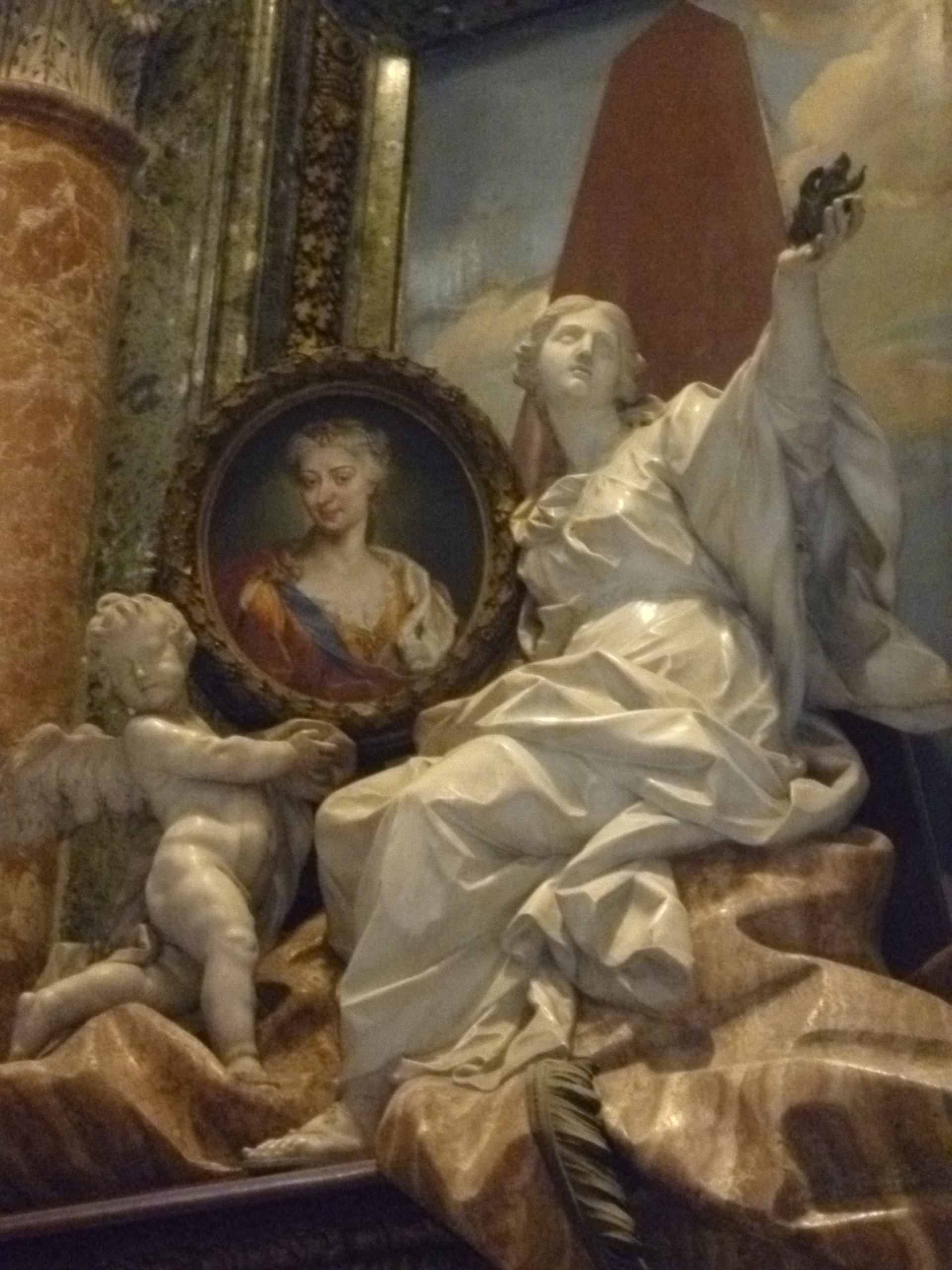
Saint John Henry Newman composed a Litany on the Holy Name of Mary in his Meditations and Devotions.
Dr. Lamb focuses on intersections between theology, visual arts and literature, from the long nineteenth century to the present. However, her research and teaching has also led her into Biblical Studies, Dante, and Christian Personalism. She is especially interested in the religious and aesthetic implications of inter-art projects, such as Pre-Raphaelite poem and painting pairings, and links between writing and theology in the Victorian period and late modernity. Her research increasingly focuses on John Henry Newman, Christina Rossetti, TS Eliot, Catherine Doherty, and Michael O’Brien. She is completing a book on the aesthetic and religious implications of boredom in the nineteenth and twentieth centuries (McGill-Queen’s University Press), and is currently co-editing a special issue on the life and thought of John Henry Newman with Michael D. Hurley (Cambridge) for Religion and Literature.
Dr Lamb has published articles, encyclopedia entries, book chapters, and review essays in The Journal of Pre-Raphaelite Studies, The Palgrave Encyclopedia of Victorian Women’s Writing, New Blackfriars, Religions, Theology in Scotland, and elsewhere. A developing branch of her research involves a series of essays on the relationship between history, theology and formation--in the contexts of the university and digital culture--as informed by the thought of John Henry Newman, Stratford Caldecott and Joseph Ratzinger.
I've been listening to this podcast of Dr. Rebekah Lamb's lecture on "Newman's Marian Theology of History" posted by the Thomistic Institute, given on April 26, 2022 at Oxford University. Here are a couple of quotations from her lecture, which the Thomistic Institute used on their Facebook page announcements of this lecture:
"Newman's early poetic interests in the relationship between hiddenness and holiness demonstrate how his heart already stirred after the Marian even before he recognized, let alone fully accepted, the Mother of God's central and distinctive importance within salvation history." —Dr. Rebekah Lamb
"The Marian influences on Newman's thought are Marian in character: that is, they're hidden, humble, and yet profoundly essential." —Dr. Rebekah Lamb
"Newman's early poetic interests in the relationship between hiddenness and holiness demonstrate how his heart already stirred after the Marian even before he recognized, let alone fully accepted, the Mother of God's central and distinctive importance within salvation history." —Dr. Rebekah Lamb
"The Marian influences on Newman's thought are Marian in character: that is, they're hidden, humble, and yet profoundly essential." —Dr. Rebekah Lamb
It's interesting that she cites many of the same sources (the Apologia pro Vita Sua, Parochial and Plain Sermons, the Development of Doctrine, etc) I highlighted in the August series on the Son Rise Morning Show! Rather "affirms" me that I do know what I'm talking about!
Rebekah Ann Lamb is a Lecturer in Theology, Imagination and the Arts in the School of Divinity at St Mary's College at the University of St. Andrew in Scotland. Her research interests pique my interest:
Dr. Lamb focuses on intersections between theology, visual arts and literature, from the long nineteenth century to the present. However, her research and teaching has also led her into Biblical Studies, Dante, and Christian Personalism. She is especially interested in the religious and aesthetic implications of inter-art projects, such as Pre-Raphaelite poem and painting pairings, and links between writing and theology in the Victorian period and late modernity. Her research increasingly focuses on John Henry Newman, Christina Rossetti, TS Eliot, Catherine Doherty, and Michael O’Brien. She is completing a book on the aesthetic and religious implications of boredom in the nineteenth and twentieth centuries (McGill-Queen’s University Press), and is currently co-editing a special issue on the life and thought of John Henry Newman with Michael D. Hurley (Cambridge) for Religion and Literature.
Dr Lamb has published articles, encyclopedia entries, book chapters, and review essays in The Journal of Pre-Raphaelite Studies, The Palgrave Encyclopedia of Victorian Women’s Writing, New Blackfriars, Religions, Theology in Scotland, and elsewhere. A developing branch of her research involves a series of essays on the relationship between history, theology and formation--in the contexts of the university and digital culture--as informed by the thought of John Henry Newman, Stratford Caldecott and Joseph Ratzinger.
I'll be on the lookout for her book Suspended in Time: Boredom and Other Discontents in the Pre-Raphaelites and Their Circle and will subscribe to Religion and Literature forthwith.