Joyce DiDonato is a Kansas native (Prairie Village, Kansas) and graduate of my alma mater, Wichita State University (like Samuel Ramey!). She's currently singing the title role in Donizetti's Maria Stuarda and the WSJ review praises her performance:
Ms. DiDonato is a splendid bel canto singer, and her interpretation of Mary has come a long way from her first outing in the role at the Houston Grand Opera last spring. Her singing now has more edge, definition and fire, emphasizing the pride and regal confidence that has endured through Mary's decades of imprisonment, making her a fit antagonist for Elizabeth. Her Mary had many moods. Ms. DiDonato brought a luminous, meditative loveliness to Mary's nostalgic opening aria, in which she thinks back to her home in France; the soft, floating trills were magical. But you could also see the effort required by her attempt at submission to Elizabeth, and her pride resurfaced with ferocious intensity. Equally fascinating was the confession scene, with the turbulence of her guilt giving way to an angelic serenity. Even her final aria—on her way to the block, she forgives Elizabeth—became a demonstration of Mary's victory. She may be losing her head, but as her voice soared above the chorus she had the moral upper hand.
As I've noted before, Donizetti, basing his opera on Schiller, ignores many facts of history for the sake of drama: Heidi Waleson summarizes the issues and the plot:
The opera centers on the confrontation of two powerful women: Queen Elizabeth I and Mary, Queen of Scots. Giuseppi Bardari's libretto, based on the 1800 play by Friedrich Schiller, takes considerable liberties with history: The two queens never actually met, nor were they in romantic competition for Robert Dudley, Earl of Leicester. The opera's plot is minimal: Mary, suspected of scheming against Elizabeth, and other crimes, is imprisoned at Fotheringhay Castle. Leicester persuades Elizabeth to travel to Fotheringhay so that Mary can plead her cause. Mary's attempt at submissive behavior fails; when Elizabeth taunts her, Mary lashes out with her own dynastic insults—"Vile bastard," in particular. Elizabeth signs her death warrant. Mary then confesses her sins, bids her followers farewell, and goes to the block.
The New York Times likes it too and includes several photos of the production.
Wednesday, January 9, 2013


Tuesday, January 8, 2013
Adventure and Kansas: A Book Review
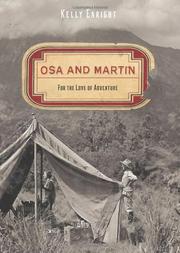
Although the author provides a great narrative of the events and activities of the adventures of Osa and Martin Johnson in Africa, photographing natives and wild animals, I never felt the drive behind their efforts, except that they could not stay put in civilization. In fact, their adventures seemed superficial and Enright does not fully explain the impact of their adventures. Each safari is the same mixture of failure and success--cameras don't work, cars break down, animals won't cooperate; Osa saves Martin's life, a new guide comes through, Martin gets a great shot of elephants. I wanted to know why these problems occurred--what were the technical limitations of the cameras they used, for example. I also wondered about the real influence of the Johnson's work in filming animals and natives in Africa and beyond--other than the curiosity of the the movie goers, what effect did they have? How would wildlife experts or environmentalists judge their efforts today? How well does their work hold up to current viewing? In Enright's telling, the different safari trips and the materials the Johnsons produced (films, vaudeville shows, animals brought home as pets and zoo animals, etc) flow together without real distinction.
Enright's best work is her description of Martin Johnson's first adventure with Jack London, the great writer. The weakest section is Osa's life after Martin dies in a commercial, domestic airline crash. Osa seemed adrift after the man she married when she was 16 is gone--has a couple of bad relationships and abuses alcohol and yet continues the trailblazing path of her partnership with her husband through books and a television series.
I do think the book would have benefitted from a separate photographic section, with better quality prints--the pictures included on the pages of the text are rather small and the details hard to make out. There's a great adventure story there somewhere, but this book didn't convey that adventure to me.
Note: I checked this book out from the public library.
Monday, January 7, 2013
Katherine of Aragon and Peterborough Cathedral
 In the months before the death of Katherine of Aragon on January 7, 1536,
both she and Mary her daughter had been very ill. They were both feeling the
pressure of Henry VIII's anger and frustration with them because they were not
cooperating with him. Cromwell told Mary that the very fact that she and
Katherine of Aragon were alive was detrimental to Henry's relationships to
foreign princes. She and Katherine were warned constantly against using the
titles Princess or Queen for one another--the Princess Elizabeth and Queen Anne
Boleyn owned those titles.
In the months before the death of Katherine of Aragon on January 7, 1536,
both she and Mary her daughter had been very ill. They were both feeling the
pressure of Henry VIII's anger and frustration with them because they were not
cooperating with him. Cromwell told Mary that the very fact that she and
Katherine of Aragon were alive was detrimental to Henry's relationships to
foreign princes. She and Katherine were warned constantly against using the
titles Princess or Queen for one another--the Princess Elizabeth and Queen Anne
Boleyn owned those titles.News of the executions of both John Fisher and Thomas More in June and July 1535 led mother and daughter to write to the Holy Father and the Holy Roman Emperor respectively, imploring them to do something about the religious changes Henry was making.
When Mary became so ill that Henry sent his own physician to care for her, Katherine begged him to send Mary to her, so she could care for her daughter--after all, they shared some of the same symptoms, sorrow and heartache. Henry refused.
When it became clear that Katherine was also very ill, perhaps near death, Katherine again begged him to let her see Mary one last time. Again, Henry refused.
Katherine died after speaking with Eustace Chapuys, Charles V's ambassador and delivering a heartfelt letter of love to her estranged husband. Henry and Anne responded by at first rejoicing at her death, wearing yellow, dining and dancing. He was relieved that the threat of war was lessened with her death.
Mary was not told of her mother's death until four days had passed. Katherine was buried in Peterborough Cathedral with a service befitting a Dowager Princess of Wales. Henry did not allow Mary to attend the funeral Mass either. Her tomb was upgraded with the marker "Katherine Queen of England" during the reign of George V.
May she rest in peace.
Peterborough Cathedral is planning its annual Katherine of Aragon Festival, to be held at the end of this month--more information here.
I have a set of Peterborough Cathedral bookends and I hope to see the Cathedral in person some day--if God wills!
Sunday, January 6, 2013
Twelfth Night and the Feast of Epiphany

From another British writer of Christmas Carols, William Chatterton Dix (1836-1898):
As with gladness, men of old
Did the guiding star behold
As with joy they hailed its light
Leading onward, beaming bright
So, most glorious Lord, may we
Evermore be led to Thee.
As with joyful steps they sped
To that lowly manger bed
There to bend the knee before
Him Whom Heaven and earth adore;
So may we with willing feet
Ever seek Thy mercy seat.
As they offered gifts most rare
At that manger rude and bare;
So may we with holy joy,
Pure and free from sin’s alloy,
All our costliest treasures bring,
Christ, to Thee, our heavenly King.
Holy Jesus, every day
Keep us in the narrow way;
And, when earthly things are past,
Bring our ransomed souls at last
Where they need no star to guide,
Where no clouds Thy glory hide.
In the heavenly country bright,
Need they no created light;
Thou its Light, its Joy, its Crown,
Thou its Sun which goes not down;
There forever may we sing
Alleluias to our King!
B.E.R. (Before the English Reformation), Twelfth Night/Epiphany (January 5/6) was the last great day of processions, feasts, festivity, and fun--the yule log burned until the end of the Feast and spicy foods (representing the eastern magi) were part of the feast. Twelfth Night/Epiphany marked the end of Christmastide. Some of the customs of the King of the Bean and the wassail remained and Shakespeare's 1602 play Twelfth Night or What you Will expresses the confusion and folly of the day (with the disguise of Viola and the elaborate trick on Malvolio). January 7 was called St. Distaff Day, meaning it was time to get back to work, clean up the mess, and settle down to normal life.
Also B.E.R., the Monday following Epiphany was Plough Monday, when farmers and their families would pray the blessing of God through their favorite saints for good crops. They would beg alms to purchase the votive candles to light before the statues of the saints and offer their prayers for intercession. A.E.R. (After the English Reformation) when the statues were gone, the farmers continued to beg for the alms, except now they just bought ale and got drunk! (According to Christine Chaundler's A Year Book of Customs).
Saturday, January 5, 2013
Good news from the Ordinariate in England!
 The Ordinariate now has a parish in London: Our Lady of the Assumption and Saint Gregory, Warwick Street, according to this news release:
The Archbishop of Westminster, the Most Reverend Vincent Nichols, has today announced that the church of Our Lady of the Assumption and Saint Gregory, Warwick Street, is being dedicated to the life of the Personal Ordinariate of Our Lady of Walsingham.
The historic church, which is situated in Soho, previously served as the chapel of the Portuguese, and later Bavarian, embassies. In the nineteenth century the sanctuary was rebuilt by the architect, J. F. Bentley, who designed Westminster Cathedral. In his ‘Apologia’ Blessed John Henry Newman mentions a visit to the church as a young boy with his father. He converted from Anglicanism to the Catholic faith in 1845and is the patron of the Personal Ordinariate.
Speaking of the news, Monsignor Keith Newton, the Ordinary of the Personal Ordinariate, said, “We are very grateful to Archbishop Vincent Nichols for this gesture of goodwill and support for the Ordinariate. The church is a beautiful example of ecclesiastical architecture in a very central part of London. We will be challenged to provide a strong Christian witness to those who frequent the surrounding area of Soho. It will also provide a fitting place for the liturgical and spiritual traditions of the Anglican tradition to flourish, in complete union with the Catholic Church. These demonstrate our fervent hope for the realisation of the ultimate goal of all ecumenical work, the restoration of full ecclesial communion”.
"The missionary work of the slum clergy of our Anglican forebears to the marginalised of our society must be at the heart of our mission. We relish the opportunity to engage in this important pastoral ministry, faithfully presenting the teaching of the Catholic Church as the means by which light of Jesus Christ can shine on the dark places of our world. Together with the recent formation of a religious community of former Anglican religious within the Ordinariate this is really good news as we begin 2013".
Read the rest here.
This site includes more detail about the church and its history, including the damage it suffered during the Gordon Riots :
Roman Catholic Church of Our Lady of the Assumption and St. Gregory, Warwick Street
This church, which was built in 1789–90, is the sole survivor of the few Roman Catholic chapels which existed in London during the eighteenth century. Its erection was one of the earliest manifestations of the Roman Catholic resurgence which accompanied the gradual relaxation of the penal laws. A smaller chapel, belonging successively to the Portuguese and Bavarian envoys who lived in Golden Square, had stood on part of the site of the present church, probably since 1724, and this long tradition of faith gives the Warwick Street church its unique cachet.
In 1724 the Portuguese envoy moved into the adjoining Nos. 23 and 24 Golden Square and it may reasonably be assumed that a Catholic chapel, to which his diplomatic privileges entitled him, was established there at about that time. Despite the penal laws against the celebration of Mass, his English co-religionists were evidently allowed to worship there unmolested.
The chapel must have been a small building. It was probably adapted from the existing outbuildings between the two houses in Golden Square and the legation stables fronting on to the east side of Warwick Street. A deed of 1700 which refers to the buildings behind No. 23 Golden Square mentions 'the room next the Garden' and an adjoining room containing 'a stove set with dutch tiles and wainscot over it'. It may therefore have been these, or similar buildings behind No. 24, that were subsequently converted into the envoy's chapel. He and his family and staff probably had a private entrance from the houses in Golden Square but the public entry was through a narrow passage from Warwick Street.
The Portuguese legation remained in Golden Square until 1747. Its most famous occupant was Don Sebastian Joseph de Carvalho, later Marquis of Pombal and dictator of Portugal who, soon after his arrival in London in 1739, issued a series of minute regulations governing the conduct of the services in his chapel.
In 1747 the Portuguese legation moved to South Street, Mayfair. The two houses in Golden Square, with the chapel and other outbuildings in Warwick Street, were then taken by Count Haslang, the Bavarian minister, who remained there until his death in 1783; the danger of the chapel being closed by the withdrawal of diplomatic patronage and immunity was thus averted. The priests who served the chapel were technically the minister's chaplains, but in practice they were evidently charged mainly with ministering to the English Catholics in the neighbourhood, of whom in 1780 there were nearly a thousand living in St. James's parish, as well as many more in St. Anne's, Soho. Of the forty-four priests who are known to have served the chapel during its years under Bavarian protection, only three had foreign names.
The statutory relaxation of the penal laws began in 1778 with the passing of Sir George Savile's Catholic Relief Act. This occasioned the formation of the Protestant Association to procure its repeal and eventually culminated in the acts of mob violence which took place between 2 and 13 June 1780 and which have since been known as the Gordon Riots.
Count Haslang's chapel was amongst the first to suffer. On the night of 2–3 June, while another mob was destroying the Sardinian envoy's chapel in Lincoln's Inn Fields, a large party of rioters arrived in Warwick Street from Palace Yard, where the Protestant Association had gathered under Lord George Gordon. The rioters forced an entry and set about the despoilment of the chapel, most of the furniture and fittings being taken out into the street and burnt.
In the Diocese of Southwark, another parish has been established for the Ordinariate at the Church of the Most Precious Blood (from the same Ordinariate website):
| Ordinariate priest appointed to South London parish | ||||
| 24 December 2012 | ||||
 An announcement was made yesterday (Sunday) that the Parish of the Most Precious Blood, Borough, is to be cared for by the Personal Ordinariate of Our Lady of Walsingham. By the kind invitation of the Archbishop of Southwark, the Most Reverend Peter Smith, the diocesan parish of the Precious Blood near London Bridge station will be cared for by Fr Christopher Pearson - a priest of the Personal Ordinariate - with the permission of the Ordinary of the Personal Ordinariate, Mgr Keith Newton. Replacing the Religious Community of the Society of the Divine Saviour (Salvatorians), who currently care for the parish, Fr Pearson will undertake the pastoral care of the diocesan faithful alongside the London (South) Ordinariate Group, who have worshipped in the parish in recent months. Fr Pearson's appointment begins in January 2013. Mgr Keith Newton said, "We are very grateful to Archbishop Peter Smith and the diocesan authorities for making this possible. It represents a positive moment in the life of the Ordinariate, as we grow towards the establishment of our own parishes and communities". The parish of the Precious Blood was founded in 1891. | ||||
Friday, January 4, 2013
William Roper, RIP
Biographer of St. Thomas More, born 1496; died 4 January, 1578. Both his father and mother belonged to distinguished legal families. He was educated at one of the English universities, and received his father's office of clerk of the pleas in the Court of King's Bench. He held this post till shortly before his death. When he was about twenty-three he seems to have been taken into Sir Thomas More's household, and he married Margaret, Sir Thomas's eldest daughter, in 1521. Erasmus who saw much of the More family describes him as a young man "who is wealthy, of excellent and modest character and not unacquainted with literature". He became fascinated, however, by the Lutheran doctrine of justification by faith, and professed his heresy so openly as to be summoned before Wolsey. Sir Thomas frequently reasoned with his son-in-law: "Meg", he said to his daughter, "I have borne a long time with thy husband; I have reasoned and argued with him in these points of religion, and still given to him my poor fatherly counsel, but I perceive none of all this able to call him home; and therefore, Meg, I will no longer dispute with him, but will clean give him over and get me to God and pray for him". To these prayers Roper attributed his return to the Faith; henceforth he was an ardent Catholic. He sat in four of Mary's parliaments, twice as member for Rochester and twice as member for Canterbury. His Catholicism got him into difficulties with the Government under Elizabeth and he was summoned before the Council in 1568; in the following year he was bound over to be of good behaviour and to appear before the Council when summoned. He does not seem to have been troubled further. His reminiscences of Sir Thomas More were written in the time of Queen Mary nearly twenty years after the events with which they deal, but his relations with his father-in-law had been so close and the impressions he received in that delightful household so vivid, that these rather disjointed notes form a most attractive biography. Roper's "Life" was not printed till 1626, but it was used by the earlier biographers of More, and is the chief authority for his personal history.
Corin Redgrave played William Roper in the the Zinneman production of Robert Bolt's A Man for All Seasons. The video above contains his two great scenes: when More refuses his hand for daughter Margaret "as long as you're a heretic" and when Roper wants to cut down all the laws in England.
Thursday, January 3, 2013
More Music from the Tudor Era--and Beyond!
I just can't keep up with all the groups exploring and performing the music of the Tudor era! It seems that every new release I find exemplifies the religious conflicts of that dynasty, with composers like the Catholic William Byrd, who attempted to maintain their career and their faith or like John Merbercke, who stopped composing Catholic church music because he became a Protestant, even arrested in March of 1543 for "having written against the Mass" according to the CD booklet from The Byrd Ensemble's recording of music from the Peterhouse Partbooks, "Our Lady", which I've been listening to often this Christmas season:

Now the December issue of BBC Music Magazine contains an advert for a recording by The Marian Consort, An Emerald in a Work of Gold: Music from the Dow Partbooks, with music by Byrd, Thomas Tallis, Robert Parsons, etc:
 For their second Delphian recording, The Marian Consort have leaved through the beautifully scripted pages of the partbooks compiled at the close of the sixteenth century by the Elizabethan scholar Robert Dow, to present a sequence of some of their brightest jewels. Sumptuous motets, melancholy consort songs and intricate, harmonically daring viol fantasies are seamlessly interwoven, all brought to life by seven voices and the robust plangency of the Rose consort of Viols in the chapel of All souls College, Oxford – where Dow himself was once a Fellow.
Taking its name from the Blessed Virgin Mary, a popular focus of religious devotion in the sacred music of all ages, The Marian Consort was formed at Oxford in 2007 to explore the repertoire of the Renaissance and early Baroque, combining academic insight with the highest levels of performance practice.
Then I go to the website for Delphian Records in Scotland and see this recording from the Choir of Caius and Gonville College:

Both are interesting albums, and both are available from Amazon.com as MP3 downloads only.
Now the December issue of BBC Music Magazine contains an advert for a recording by The Marian Consort, An Emerald in a Work of Gold: Music from the Dow Partbooks, with music by Byrd, Thomas Tallis, Robert Parsons, etc:

- William Mundy Sive Vigilem
- Nicholas Strogers A doleful deadly pang, In Nomine a 5 No. 2, Non me vincat, Deus meus
- (?) Robert Mallory Miserere a 5
- Nathaniel Giles Vestigia mea dirige
- Robert White In Nomine a 5, Justus es, Domine
- William Byrd O Lord, how vain, La verginella
- Christopher Tye In Nomine ['Follow me']
- Thomas Tallis O salutaris hostia
- Robert Parsons Retribue servo tuo, Ave Maria
- Anon. Come, Holy Ghost
- Vincenzo Ruffo La Gamba
- Anon. ['Roose'] Dum transisset Sabbatum
- Jean Maillard Ascendo ad Patrem meum
- (?) Philippe Verdelot Madonna somm’acorto
- Philip van Wilder Je file quand Dieu me donne de quoy, Pour vous aymer j’ay mis toute ma cure
Taking its name from the Blessed Virgin Mary, a popular focus of religious devotion in the sacred music of all ages, The Marian Consort was formed at Oxford in 2007 to explore the repertoire of the Renaissance and early Baroque, combining academic insight with the highest levels of performance practice.
Then I go to the website for Delphian Records in Scotland and see this recording from the Choir of Caius and Gonville College:
|
The Choir of Gonville & Caius College, Cambridge explores the fascinating relationship between 16th- and early 20th century music as understood by the pioneers of the Tudor revival in England. Centred on Byrd’s Mass for Five Voices – revelatory and inspirational listening for a whole host of composers – this mosaic of reworkings, reimaginings and lovingly-crafted homages is brought to life with all the scholarly acumen and full-throated fervour that are the hallmarks of one of Britain’s finest choirs. Caius College Choir is one of the UK's leading collegiate choirs. Its members are almost all undergraduates of the College who have been elected into Choral Exhibitions. The twenty-three singers and two organ scholars, under the direction of Dr Geoffrey Webber, perform a wide range of sacred and secular choral music ranging from the fourteenth century to the present day, and have developed a niche for reviving neglected repertoires. |
|
Track
listing 1. Ralph Vaughan Williams: Whitsunday Hymn (1930) 2. William Harris: Eternal Ruler (1930) 3. Gustav Holst: Man born to toil (1927) 4. Thomas Tallis arr. M. & G. Shaw: Funeral Music (1915) 5. Percy Whitlock: O living Bread, who once didst die (1930) 6. Gerald Finzi: Up to those bright and gladsome hills (1925) 7-11. William Byrd: Mass for Five Voices 12. William Byrd arr. J.E. Borland: Fantasia in C (1907) 13. Benjamin Britten: A Hymn to the Virgin (1930) 14. Herbert Howells: Haec dies (1918) 15. Robert Pearsall: Tu es Petrus (1854) 16. Arnold Bax: Lord, thou hast told us (1931) 17. Herbert Howells: Master Tallis’s Testament (1940) Nicholas Kenyon noted in The Observer last year: As concept albums go this is interesting, juxtaposing William Byrd's great five-part mass with a range of 20th-century British works that draw on Tudor sources. There are fairly straight arrangements, like the version of Tallis's "third tune" that Vaughan Williams also used, and the William Harris anthem Eternal Ruler using a magnificent Orlando Gibbons melody. A lovely Robert Pearsall anthem from the 1840s is the bridge to the world of Howells, Bax, Holst and Finzi, where the prize is taken by Britten's little teenage masterpiece, A Hymn to the Virgin. The later works feel more idiomatically sung than the Byrd, which is too ample, but the sonorously rich sound of the recording will appeal to all choral music enthusiasts. |
Both are interesting albums, and both are available from Amazon.com as MP3 downloads only.
Wednesday, January 2, 2013
Mary Ward in York and the Bar Convent
 Mary Ward was born and died in January (23 January 1585-30 January 1645) and if one were travelling to York and had any interest in her life or in the history of Catholicism in England, a stop at Bar Convent would be in order:
The Bar Convent is England’s oldest convent, founded in 1686 and still active with a resident religious community. It was established as a school for girls, and the fine 18th century buildings now house a Museum, Library & Archives, and gift Shop, together with well-equipped Meeting rooms, guest house Accommodation with free wi-fi and a Café. . . .
The Community of nuns who still reside at the Bar Convent belong to the Congregation of Jesus which was founded by the Yorkshire woman, Mary Ward (1585-1645).
More about Mary Ward later this month, but here's a link to the Bar Convent's biography of the Venerable nun. You might also note that the Chapel of the Bar Convent has a relic of St. Margaret Clitherow, the great Yorkshire martyr.
Tuesday, January 1, 2013
January 1, 2013: Here We Come A-Wassailing!
 Here we come a-wassailing
Among the leaves so green;
Here we come a-wand'ring
So fair to be seen.
Love and joy come to you,
And to you your wassail too;
And God bless you and send you
a Happy New Year
And God send you a Happy New Year.
We're not daily beggars
That beg from door to door;
But we are neighbors' children,
Whom you have seen before.
Love and joy come to you,
And to you your wassail too;
And God bless you and send you
a Happy New Year
And God send you a Happy New Year.
Good master and good mistress,
Are sitting by the fire,
Pray think of us poor children
Who wander in the mire.
Love and joy come to you,
And to you your wassail too;
And God bless you and send you
a Happy New Year
And God send you a Happy New Year.
God bless the master of this house
Likewise the mistress too!
And all the little children
that 'round the table go
Love and joy come to you,
And to you your wassail too;
And God bless you and send you
a Happy New Year
And God send you a Happy New Year
More on wassailing at New Year's here.
I look forward to another year of updates and posts on the English Reformation, the Catholic martyrs of England, the ongoing revival of Catholicism in England--and the big announcement I hinted at yesterday! May 2013 bring great blessings to us all! Happy New Year!
Monday, December 31, 2012
"In the Ending of the Year"~~December 31, 2012

John Mason Neale included this translation of the medieval hymn, In hoc anni circuli in his 1853 Carols for Christmas-tide:
In the ending of the year
Life and light to man appear;
And the Holy Babe is here,
De Virgine;
And the Holy Babe is here,
De Virgine Mariâ.
What in ancient days was slain
This day calls to life again;
God is coming, God shall reign,
De Virgine;
God is coming, God shall reign,
De Virgine Mariâ.
From the desert grew the corn,
Sprang the lily from the thorn,
When the Infant King was born
De Virgine;
When the Infant King was born
De Virgine Mariâ.
On the straw He lays His head,
Hath a manger for His bed,
Thirsts and hungers and is fed
De Virgine;
Thirsts and hungers and is fed
De Virgine Mariâ.
Angel hosts His praises sing,
Three Wise men their off'rings bring,
Ox and ass adore the King,
Cum Virgine;
Ox and ass adore the King,
Cum Virgine Mariâ.
Wherefore let us all to-day
Banish sorrow far away,
Singing and exulting aye,
Cum Virgine;
Singing and exulting aye,
Cum Virgine Mariâ.
Life and light to man appear;
And the Holy Babe is here,
De Virgine;
And the Holy Babe is here,
De Virgine Mariâ.
What in ancient days was slain
This day calls to life again;
God is coming, God shall reign,
De Virgine;
God is coming, God shall reign,
De Virgine Mariâ.
From the desert grew the corn,
Sprang the lily from the thorn,
When the Infant King was born
De Virgine;
When the Infant King was born
De Virgine Mariâ.
On the straw He lays His head,
Hath a manger for His bed,
Thirsts and hungers and is fed
De Virgine;
Thirsts and hungers and is fed
De Virgine Mariâ.
Angel hosts His praises sing,
Three Wise men their off'rings bring,
Ox and ass adore the King,
Cum Virgine;
Ox and ass adore the King,
Cum Virgine Mariâ.
Wherefore let us all to-day
Banish sorrow far away,
Singing and exulting aye,
Cum Virgine;
Singing and exulting aye,
Cum Virgine Mariâ.
As 2012 draws to a close, thank you for your attention to and comments on this blog! I look forward to more research and sharing in 2013--including a big announcement I should be making in the next few weeks!
Subscribe to:
Posts (Atom)