Showing posts with label The Spiritual Life Center. Show all posts

Wednesday, March 18, 2020

"To Strive, to Seek, to Find, and Not to Yield"(?) and Cruel Ulysses

I break my pattern of not posting often again to highlight a passage from Dante's Inferno, Canto XXVI (26)--I'm attending a class at the Spiritual Life Center here in Wichita every Thursday night during Lent: we are finishing up the first book of the Divine Comedy tomorrow night and moving on to Purgatory, which we hope to finish before Holy Week.

BTW: we're going to have some festive treats for the Solemnity of St. Joseph tomorrow night too!

You might remember that all of Dante the Pilgrim's tour of Hell, Purgatory, and Heaven occurs during the Holy Triduum (Holy/Maundy Thursday, Good Friday, and Holy Saturday), Easter Sunday and the first three days of the Octave (ending on Wednesday). Our class will meet last on the Thursday before Holy Week, so it will be up to each of us attending the class to read Paradise during the Easter Season.

But last week, we ended the presentation with the great speech of Ulysses and the hint that Dante's Ulysses (who was not inspired by his appearance in either of Homer's epics, unavailable in Europe at that time) had inspired Lord Tennyson's poem Ulysses.

Virgil, the pilgrim Dante's guide, asks Ulysses to speak to Dante and tell his story: Virgil was no fan of the wily adventurer, who designed the Trojan Horse that led to the fall of Troy, but did lead to the founding of Rome by the Aeneas, Virgil's hero (Oh, Happy Deception?). When Virgil mentions Ulysses in The Aeneid, he is always "Cruel Ulysses", the deceiver and conniver. The Greek hero probably wouldn't speak to the medieval Italian poet, but will respond to the ancient Roman poet, and describes his last journey after his return to Ithaca (from the 1819 translation by The Rev. Henry Francis Cary):

Of the old flame forthwith the greater horn
Began to roll, murmuring, as a fire
That labours with the wind, then to and fro
Wagging the top, as a tongue uttering sounds,
Threw out its voice, and spake: "When I escap'd
From Circe, who beyond a circling year
Had held me near Caieta by her charms,
Ere thus Æneas yet had nam'd the shore;
Nor fondness for my son*, nor reverence
Of my old father, nor return of love,
That should have crown'd Penelope with joy,
Could overcome in me the zeal I had
To' explore the world, and search the ways of life,
Man's evil and his virtue. Forth I sail'd
Into the deep illimitable main,
With but one bark, and the small faithful band
That yet cleav'd to me. As Iberia far,
Far as Marocco either shore I saw,
And the Sardinian and each isle beside
Which round that ocean bathes. Tardy with age
Were I and my companions, when we came
To the strait pass*, where Hercules ordain'd
The bound'ries not to be o'erstepp'ed by man.
The walls of Seville to my right I left,
On the' other hand already Ceuta past.

'O brothers!' I began, 'woe to the west
'Through perils without number now have we reach'd;
'To this the short remaining watch, that yet
'Our senses have to wake, refuse not proof
'Of the unpeopled world, following the track
'Of Phoebus. Call to mind from whence ye sprang:
'Ye were not form'd to live the life of brutes,
'But virtue to pursue and knowledge high.'
With these few words I sharpen'd for the voyage
The mind of my associates, that I then
Could scarcely have withheld them. To the dawn
Our poop we turn'd, and for the witless flight
Made our oars wings*, still gaining on the left.
Each star of the' other pole night now beheld*,
And ours so low, that from the ocean-floor
It rose not. Five times re-illum'd, as oft
Vanish'd the light from underneath the moon,
Since the deep way we enter'd, when from far
Appear'd a mountain dim*, loftiest methought
Of all I e'er beheld. Joy seiz'd us straight,
But soon to mourning chang'd. From the new land
A whirlwind spring, and at her foremost side
Did strike the vessel. Thrice* it whirl'd her round
With all the waves, the fourth time lifted up
The poop, and sank the prow: so fate decreed:
And over us the booming billow clos'd*."


Ulysses is, with Diomedes, his companion in deception, in Hell because of his misuse of human reason: he is in lower circles of Hell because of sins greater than murder or violence, because he corrupted his humanity, even with his men on this last voyage, as he leads them on into the West just for the sake of his desire for adventure.

Like Ulysses and his men, Dante the Pilgrim is about to see that lofty mountain--Mount Purgatory--although Dante can climb the mountain, and Virgil can too, for a time.

Tennyson takes on that spirit of adventure and constant daring in his poem:

It little profits that an idle king,
By this still hearth, among these barren crags,
Match'd with an aged wife, I mete and dole
Unequal laws unto a savage race,
That hoard, and sleep, and feed, and know not me.
I cannot rest from travel: I will drink
Life to the lees: All times I have enjoy'd
Greatly, have suffer'd greatly, both with those
That loved me, and alone, on shore, and when
Thro' scudding drifts the rainy Hyades
Vext the dim sea: I am become a name;
For always roaming with a hungry heart
Much have I seen and known; cities of men
And manners, climates, councils, governments,
Myself not least, but honour'd of them all;
And drunk delight of battle with my peers,
Far on the ringing plains of windy Troy.
I am a part of all that I have met;
Yet all experience is an arch wherethro'
Gleams that untravell'd world whose margin fades
For ever and forever when I move.
How dull it is to pause, to make an end,
To rust unburnish'd, not to shine in use!
As tho' to breathe were life! Life piled on life
Were all too little, and of one to me
Little remains: but every hour is saved
From that eternal silence, something more,
A bringer of new things; and vile it were
For some three suns to store and hoard myself,
And this gray spirit yearning in desire
To follow knowledge like a sinking star,
Beyond the utmost bound of human thought. . . .


He wants to set sail again like Dante's Ulysses until he dies, calling to his men "To Strive, to Seek, to Find, and Not to Yield."

We often think that is exactly what we ought to do too. What if that's not what God wills?

On a less grand scale, that may be how some of us are feeling during this Covid-19 pandemic: we're restrained by warnings not to be in large gatherings, not to shake hands, not to be out in public much at all, especially if we are of a certain age or have chronic health issues. Catholic dioceses around the country and the world have issued various decisions about schools and churches, activities and Masses--we grow restless because we are used to going, going where and when we want, and now we can't or shouldn't. Dante's Ulysses could not restrain himself and left home and those he loved--and who loved him--even after he had undergone so much to be reunited with his wife and son and homeland. He did not think of them; he really wasn't thinking that much of what he would achieve or the destination he would reach, just the doing of it.

But as Christians, we know there's a different way. As Jesus told Peter by the Sea of Tiberius: "Truly, truly, I say to you, when you were young, you girded yourself and walked where you would; but when you are old, you will stretch out your hands, and another will gird you and carry you where you do not wish to go.” (This he said to show by what death he was to glorify God.) And after this he said to him, “Follow me.” (John 21: 18-19) Emphasis added!

In 2013/2014, The Paris Review published an on-line series on the Inferno and Alexander Aciman offered his insights into this passage from the Inferno, citing another poem inspired by Ulysses by the Greek poet C.P. Cavafy about the adventurer's journey to Ithaca:

As you set out for Ithaka
hope the voyage is a long one,
full of adventure, full of discovery.
Laistrygonians and Cyclops,
angry Poseidon—don’t be afraid of them:
you’ll never find things like that on your way
as long as you keep your thoughts raised high,
as long as a rare excitement
stirs your spirit and your body.
Laistrygonians and Cyclops,
wild Poseidon—you won’t encounter them
unless you bring them along inside your soul,
unless your soul sets them up in front of you.

Hope the voyage is a long one.
May there be many a summer morning when,
with what pleasure, what joy,
you come into harbors seen for the first time;
may you stop at Phoenician trading stations
to buy fine things,
mother of pearl and coral, amber and ebony,
sensual perfume of every kind—
as many sensual perfumes as you can;
and may you visit many Egyptian cities
to gather stores of knowledge from their scholars.

Keep Ithaka always in your mind.
Arriving there is what you are destined for.
But do not hurry the journey at all.
Better if it lasts for years,
so you are old by the time you reach the island,
wealthy with all you have gained on the way,
not expecting Ithaka to make you rich.

Ithaka gave you the marvelous journey.
Without her you would not have set out.
She has nothing left to give you now.

And if you find her poor, Ithaka won’t have fooled you.
Wise as you will have become,so full of experience,
you will have understood by then what these Ithakas mean.


Until we are in Heaven--where we hope to go after our journey's end--we are torn between being home and being some where else, on the way, seeing new things, hoping to see new things when we get home. We need to think more of how to glorify God and serve others rather than how to satisfy ourselves. Perhaps that's the lesson of "Cruel Ulysses".

Thursday, February 20, 2020

My Lenten Thursday Nights

Every Thursday evening during Lent, I plan to attend the 5:30 p.m. Mass in the Extraordinary Form of the Latin Rite at Blessed Sacrament Catholic Church and then go study Dante's Divine Comedy at the Spiritual Life Center (SLC). The series, An Introduction to the Divine Comedy, begins on February 27, the Thursday after Ash Wednesday (next Thursday):

Join us as we travel with Dante on this Lenten journey through Hell, Purgatory, and Heaven as we seek to gain spiritual insights from the sinners and saints encountered along the way.

Written in the fourteenth century by Italian poet and philosopher Dante Alighieri, The Divine Comedy is arguably the greatest epic poem of all time—presenting Dante’s brilliant vision of the three realms of Christian afterlife: Inferno, Purgatory, and Paradise.

We will be using Professor Anthony Esolen’s translation of the Comedy, and will have copies available for sale.


I'll take my copies Dorothy L. Sayers' translation and see how it goes. 

After a break for Holy Week, Easter and its Octave, I'll be back--Lord willing--at the SLC to attend the Catholic Culture Conference, with another program on Dante:

The Catholic Culture Conference is an opportunity for faithful Christians to come together for formation and fellowship. The program intends to promote Catholic values in personal and family life, as well as in society at large. 
 
The theme for the 2020 Catholic Culture Conference is “Dante and the End of Men”. The title plays off the title of a 2010 article which appeared in The Atlantic magazine. In her article “The End of Men” author Hanna Rosin tells the story of a culture which once gave respect, and even deference, to the role of men. According to Rosin, though, times have changed, and modern culture no longer needs men. Women can now do everything that men used to do, which makes them “equal” to men in most every way, and even preferential to men in most things.

One reason for this shift has been a denigration of all things authentically masculine, and a lowering of expectations for men. A culture which fosters true masculinity will hold men accountable for their behavior, look to them for leadership in faith and morals, and be able to count on them as trustworthy providers and protectors.

Dr. Jason Baxter of Wyoming Catholic College will give three talks on the theme of “Dante and the End of Men”; one focusing on men in each of the three stages of Dante’s pilgrimage: Hell, Purgatory, and Heaven. For additional insights on Catholic masculinity, Bo Bonner of Mercy College will present talks on St. Joseph.

The Culture Conference is open to all. Join us for a weekend of study, discussion, and culture-building.

Professor Baxter was here in December of 2017 and made a presentation at Eighth Day Books before his book was published.

Wednesday, October 9, 2019

Newman's Feast and Canonization, 2019


I was very happy to see all the events the Chaplain at Newman University here in Wichita is planning for this week leading up to Newman's canonization--I plan to attend the Mass on Sunday evening, October 13.

Our Diocesan Spiritual Life Center is hosting two events after the canonization to help Catholics understand the significance of Newman's life and works. There's a series starting on October 21 and a retreat in November. The series is taught by one of the IHM sisters who has been studying Newman for years:

Join Sr. Mary Catherine Blanding, IHM for a series on the life and teachings of soon-to-be Saint John Henry Newman. Sister will present on four (4) Mondays, Oct. 21, Oct. 28, Nov. 4 and Nov. 11. The following topics will be her focus:

"John Henry Newman: Unifier among the Polarized"
"Newman: The Master of Friendship in an age of Loneliness and Isolation"
"Education par Excellance: Newman and the Idea of a University"
"Newman and the Priesthood"

I'll be making a couple of presentations at the retreat on November 15 and 16:

Under the direction of Stephanie Mann and Fr. Tom Hoisington, this retreat will feature presentations, immersive Catholic Culture, and discussion of Newman's Kansas connection.

The retreat will include a Friday evening social including entertainment by local musician Jack Korbel, breakfast and lunch on Saturday, daily Mass, and opportunity for confession.

“I sought to hear the voice of God and climbed the topmost steeple, but God declared: "Go down again - I dwell among the people.” ~ Saint John Henry Newman  

Please join us for an overnight retreat exploring the life and teachings of the soon to be canonized Blessed John Henry Newman.

Newman’s writings have long been esteemed by scholars. Now, with his canonization, his influence is being lifted up for all to see; not just for theologians, but for the whole Church. Among many other things, Newman is famous for his explanations of the way doctrine develops, the way God saves us through his Church, and the way people come to know and accept truth.

Retreatants will walk through his teachings under the direction of Stephanie Mann and Fr. Tom Hoisington, both of the Wichita Diocese. Stephanie Mann will give two presentations: one focusing on the impact Newman has had in our diocese, and the other on the importance of Newman for the laity in light of his being raised to the altars. Fr. Hoisington will present on Newman’s personalism- his explanation of how an individual subject makes response to objective truth in a way that is both personal and universal- an essential area of Newman’s thought that is often misunderstood and underappreciated.

New this retreat, participants will enjoy a Friday evening social time with music, appetizers and drinks as they enjoy eachother’s company and build a Catholic Culture. Musician Jack Korbel will provide entertainment.

The retreat includes all presentations, a Friday evening social, breakfast and lunch on Saturday, daily Mass, opportunity for confession, and overnight lodging for those who wish to stay.

This event starts on Friday, November 15 at 7:00 p.m. and continues Saturday, November 16 with Morning Prayer at 9:00 a.m., with presentations, Mass, and lunch following. We might work in a brief panel discussion before the end at 3:30 p.m.

O God, who bestowed on the Priest John Henry Newman
the grace to follow your kindly light
and find peace in your Church;
graciously grant that,
through his intercession and example,
we may be led out of shadows and images
into the fulness of your truth.
Through our Lord Jesus Christ, your Son,
who lives and reigns with you
in the unity of the Holy Spirit,
one God, for ever and ever.
Amen.

I don't know if there will be any update to the Office of Readings for Newman's feast, which is now a memorial in the Dioceses in England and Wales; if his feast will raised to the level of a Feast for the Oratories or the Personal Ordinariates or those dioceses--but I hope his feast will be a memorial on the calendar here in the USA next October 9. Then he has to compete with St. John Leonardi and St. Denis the martyr!

Blessed John Henry Newman, pray for us!

Thursday, December 14, 2017

A Brief Encounter and A New Publication

Last week my husband and I went to the Spiritual Life Center to attend one of the "Dinners with the Doctors" presentations--Erin Doom of the Eighth Day Institute on St. John of Damascus--and enjoyed the evening very much. Toward the end of the Q and A, a lady came in and sat at one of the tables; she looked familiar. At the conclusion of the presentation, she came over and asked, "Don't I know you?"

She was my college French instructor (15 hours of college credit)! Mark and I had also known her and her husband at the Newman Center at WSU and at our home parish at Blessed Sacrament. She lives in France, in the Moselle region, but visits the USA often. She was at the Spiritual Life Center for a retreat before going to visit some friends in Florida for Christmas. It's one of those coincidences: if we hadn't attended and if she hadn't come into the room (helping with some clean up as part of her retreat), we wouldn't have reconnected.

One of the things we mentioned to her was that we had been able to travel to Paris so many times since we had last seen her. Mark talked about how much her French lessons had helped me on those trips. We exchanged business cards and parted. On our way home, Mark and I reminisced about our college years at WSU. Who knows if we'll ever see her again! She commented that she hopes we'll visit France again soon.

There's my segue into mentioning that I've had an article accepted in a brand new publication, Faith & Culture. It's the Journal of The Augustine Institute, edited by Joseph Pearce. He had accepted an article on Paris for the St. Austin Review a few years ago and used it in his new publication instead. It's available here. More about the The Augustine Institute here.

Monday, November 20, 2017

Meeting Mister Pearce

Things have been hectic lately and I haven't mentioned two events I attended in the past two months: The Eighth Day Institute Inklings Oktoberfest in October and the Spiritual Life Fall Forum just concluded this month. These events had in common the keynote speaker: author and editor Joseph Pearce.

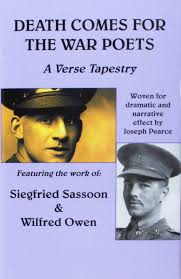
At the Inklings Oktoberfest his lectures were focused on World War I, since we are still remembering the centenary of the War to End All Wars. Pearce offered three lectures: one on the great poets of World War I, including Sassoon and Owen as featured in one of Pearce's most recent books, Death Comes for The War Poets, and one each on the wartime experiences of Tolkien and Lewis. Here's an excerpt from an essay Pearce submitted for the EDI blog:

It would have been very easy for Tolkien and Lewis to have become embittered by their experience of the trenches in the first world war. Both men lost close friends in the war, and both men experienced horrors that would be difficult for most of us to even imagine. And yet they emerged from their world on fire with imaginations that would set the world ablaze with the flame of divine light and love. Tolkien began working in earnest on the invention of his elvish language in 1915 and 1916, only months before the “animal horror” of the Somme, and this would serve as the inspirational launching pad for the creation of Middle-earth in which his world-changing stories are set. Meanwhile, C. S. Lewis discovered the works of G. K. Chesterton in early 1918, while serving in the British Army and recovering from trench fever, an encounter that would set his soul on the road to recovery. Reading Chesterton helped baptize Lewis’s imagination, contributing to his transition from cynical atheism to Christian conversion. And so it was that Lewis and Tolkien received priceless inklings of light amid the darkness of war. From the very ashes of the World on Fire these great writers would enkindle the power and the glory of the Word on Fire!   

Another poet whom Pearce featured in his first lecture was the American Joyce Kilmer, most famous for "Trees". Pearce recited this poem,"Prayer of a Soldier in France":

My shoulders ache beneath my pack
(Lie easier, Cross, upon His back).

I march with feet that burn and smart
(Tread, Holy Feet, upon my heart).

Men shout at me who may not speak
(They scourged Thy back and smote Thy cheek).

I may not lift a hand to clear
My eyes of salty drops that sear.

(Then shall my fickle soul forget
Thy agony of Bloody Sweat?)

My rifle hand is stiff and numb
(From Thy pierced palm red rivers come).

Lord, Thou didst suffer more for me
Than all the hosts of land and sea.

So let me render back again
This millionth of Thy gift. Amen.

The Oktoberfest was combined with the celebration of the 29th anniversary of the opening of Eighth Day Books, and there was a fun reception at the store after the Friday night lecture. Pearce will be returning to Wichita in late January 2018 for the Eighth Institute's Eighth Annual Symposium titled "STRANGERS & SOCIETY: Cultivating Friendship in a Fractured Age".

Mr. Pearce came back to Wichita this past weekend for the Spiritual Life Center's first Fall Forum, focused on Catholic liturgy,  “Memory & Mystery: Perspectives on the Sacred Liturgy”, at which he gave two lectures: “The Liturgy and the Second Spring” and “The Death & Resurrection of the Mass: Modernism versus Tradition”. In the first lecture he addressed the efforts of Joseph Cardinal Ratzinger/Pope Benedict XVI to reform the reform of the liturgy after the Second Vatican Council, restoring reverence, silence, and Latin to the celebration of the Mass. Pearce used Blessed John Henry Newman's great homily from the Westminster Diocesan Synod in 1852, "The Second Spring" as his inspiration and also quoted extensively from Ratzinger's The Spirit of the Liturgy. Eighth Day Books provided a book table at the forum and Mr. Pearce was busy signing copies of his books.

He and I had some opportunities to discuss submissions I've made previously to the St. Austin Review and another journal he is editing, so I'll have more announcements about those publications soon. 

By the way, Joseph Pearce will be back in Kansas early in 2018 for the Third Annual Prairie Troubadour Symposium in February: "Field and Family: Reflections on a Healthy Human Ecology"! That's held in Fort Scott.

Saturday, July 29, 2017

Apologetics: Tradition at the Spiritual Life Center

At the Spiritual Life Center of the Diocese of Wichita on Tuesday, August 22 at 7:00 p.m.: 

Apologia: The Merit of Tradition
Defending the Faith in the 21st Century
Stephanie A. Mann

Apologizing isn’t saying “I’m Sorry.”

apologia or ἀπολογία (Greek): a speech in defense

An apology, in the classical sense, is a reasoned defense of the faith.

Join Dusty Gates, M.A., and guest presenters for these sessions of apologetic dialogue. Each session will address a different topic, pertinent to 21st century Catholics, which we have the need and obligation to be able to defend and explain: firstly for ourselves, secondly to our families and religious brethren, and thirdly to the greater public who may inquire of us; either as seekers of the faith, or as its attackers.

Protestants and Catholics alike often ask, "Where is that Catholic Church teaching in the Bible?" Thus, even Catholics are influenced by one of the basic tenets of the Protestant Reformation: sola scriptura, citing the Holy Bible as the only source of authority in Christianity. The Catholic Church has consistently taught that there are two sources of authority in the Church: the Tradition of the Church and the Holy Bible, formed and canonized by that Tradition. This month's Apologia at the Spiritual Life Center, presented by Stephanie A. Mann, will explore this teaching and look at how even Protestants have Tradition in their communities' authority for being a Christian.

$10 admission: online, by phone, or at the door. 7pm-8:30pm.

Each session features a one hour presentation on one topic, followed by 15-30 minutes for Q/A and discussion of this topic, and/or any topic pertaining to apologetics.

Seems natural that someone interested in Church History would be interested in Tradition! In preparation for this presentation next month, I've been reading Yves Congar's The Meaning of Tradition. Congar, a Dominican and periti at the Second Vatican Council, wrote two longer works on Tradition: La Tradition et les traditions: essai historique and La Tradition et les traditions: essai théologique, combined in the English translation as Tradition and Traditions: An historical and a theological essay. Ignatius Press provides an excerpt from The Meaning of Tradition, the introduction, here.

Sunday, July 2, 2017

Conscience and Conversion at the Spiritual Life Center


If my blogging lately has been pretty light, I have an excuse: I've been working on three presentations for next month. One is on the depiction of conscience in a Pre-Raphaelite painting; another on St. Thomas More and Conscience, and third on Blessed John Henry Newman and Conscience. More information, including registration, here:

The Spiritual Life Center will host a three-day Symposium on Conversion and Conscience July 13-15 for adult faith formation, prayer, celebration, and intellectual exchange. The theme is “Conversion and Conscience: Freedom, Will, and Truth in the Human Quest for Meaning.”

The faculty for the 2017 symposium consists of Dr. James Madden, professor of philosophy at Benedictine College; Fr. Thomas Hoisington, priest in residence at St. Mary’s Parish in Garden Plain; Fr. Joshua Lollar, priest at St. Nicholas Orthodox Church in Lawrence; and Stephanie Mann, local author of “Supremacy and Survival: How Catholics Endured the English Reformation.”

The symposium begins with a keynote banquet Thursday evening, July 13, and continues all day Friday and Saturday with a schedule consisting of morning prayer, Mass, and lectures in four pillar content areas.

The symposium will discuss how the life of Christ provides us with a model for obedience. In the person of Jesus, human will was perfectly aligned with divine will. But with lives filled with distraction and cross-pressures, and minds filled with confusion and doubt, how are we to follow in his example? How can we overcome the dissenting voices around us, and the sinful impulses within us, which tempt us to follow the example of the world, rather than the example of our Lord?

Utilizing Christological, philosophical, and historical perspectives, the symposium will provide insights into ways our forebears have pursued authentic human liberty by focusing on the transcendent, even in the midst of persecution.

The painting chosen for the program is the Call of St. Matthew by Caravaggio. Whom to you think Jesus is pointing to when He gestures to the future St. Matthew? The man with the beard or the young man counting coins? Do you think that Caravaggio wanted us to wonder?

Monday, April 3, 2017

At the Spiritual Life Center this July

I'll be one of the presenters at the Spiritual Life Center's Summer Symposium 2017, Thursday, July 13 through Saturday, July 15:

"Conversion and Conscience: Freedom, Will, and Truth in the Human Quest for Meaning"

The Summer Symposium is an opportunity for presenters and participants to gather for prayer, celebration, and intellectual exchange. The symposium begins with a keynote banquet, and continues with two full days consisting of morning prayer, Holy Mass, and lectures in four pillar content areas (Doctrine, Spirituality, Literature, and Catholic Living).

This year’s theme is "Conversion and Conscience: Freedom, Will, and Truth in the Human Quest for Meaning" and will feature lectures by Dr James Madden, professor of philosophy at Benedictine College, Fr. Thomas Hoisington, priest in residence at St. Mary's Parish in Garden Plain, Fr. Joshua Lollar, priest at St. Nicholas Orthodox Church in Lawrence, and Stephanie Mann, local author of "Supremacy and Survival: How Catholics Endured the English Reformation."

The life of Christ provides us with a model for obedience: In the person of Jesus, human will was perfectly aligned with divine will. But, with lives filled with distraction and cross-pressures, and minds filled with confusion and doubt, how are we to follow in his example? How can we overcome the dissenting voices around us, and the sinful impulses within us, which tempt us to follow the example of the world, rather than the example of our Lord? Utilizing Christological, philosophical, and historical perspectives, this symposium will provide insights into ways our forebears have pursued authentic human liberty by focusing on the transcendent, even in the midst of persecution.

I'll be talking about "St. Thomas More: Conscience and Martyrdom" and "Blessed John Henry Newman: Conscience and Conversion", on Saturday. At the Thursday evening keynote banquet, I'll give a brief talk on the Pre-Raphaelite painting, "The Awakening Conscience" by William Holman Hunt. More info to come soon.

Monday, April 25, 2016

Report on the Second Annual Catholic Culture Conference

Last year I wrote: "The Catholic Culture Conference was a great success in my view, with excellent presenters, a great venue, and wonderful fellowship during the lunch and breaks. Our local chapter of the American Chesterton Society made some good contacts and we hope to gain new members and/or guests at our monthly meetings." I can repeat those comments this year too, after the second annual Catholic Culture Conference, with the addition that I am happy with how my presentation was received Saturday afternoon. Dusty Gates announced that there will be a third annual Catholic Culture Conference next year (that's 2017!--2020 is in sight!) on April 28 and 29, with Monsignor Stuart Sweatland, the President of Donnelly College in Kansas City, Kansas as the keynote speaker--with the specific topic to be announced.

Professor Anthony Esolen gave three talks: one Friday night and two Saturday morning and then headed back to Providence, RI after lunch. Poetry was one of his themes, and he cited a poem of G.K. Chesterton's Friday night, "The Holy of Holies":

‘ELDER father, though thine eyes
Shine with hoary mysteries,
Canst thou tell what in the heart
Of a cowslip blossom lies?

‘Smaller than all lives that be,
Secret as the deepest sea,
Stands a little house of seeds,
Like an elfin’s granary.

‘Speller of the stones and weeds,
Skilled in Nature’s crafts and creeds,
Tell me what is in the heart
Of the smallest of the seeds.’

‘God Almighty, and with Him
Cherubim and Seraphim,
Filling all eternity—
Adonai Elohim.’

In his second lecture, he emphasized the fact that in Dante's Divine Comedy, poetry is not mentioned in the Inferno, and is replaced by prayer and song in the Paradiso, but is included in the Purgatorio. He highlighted these aspects (from the foreword of another translation) of Dante's journey through Purgatory and toward Heaven:

Of the three sections of the poem, only Purgatory happens on the earth, as our lives do, with our feet on the ground, crossing a beach, climbing a mountain. All three parts of the poem are images of our lives, of our life, but there is an intimacy peculiar to the Purgatorio. Here the times of day recur with all the sensations and associations that the hours bring with them, the hours of the world we are living in as we read the poem. Tenderness, affection, poignancy, the enchantment of music, the feeling of the evanescence of the moment in a context beyond time, occur in the Purgatorio as they do in few other places in the poem. And hope, as it is experienced nowhere else in the poem, for there is none in Hell, and Paradise is fulfilment itself. Hope is central to the Purgatorio and is there from the moment we stand on the shore at the foot of the mountain, before the stars fade. To the very top of the mountain hope is mixed with pain, which brings it still closer to the living present. . . .

The Purgatorio is the section of the poem in which poets, poetry, and music recur with fond vividness and intimacy. The meetings between poets — Virgil's with his fellow Mantuan Sordello, over twelve hundred years after Virgil's own life on earth; his meeting with the Roman poet Statius; Dante's with Guido Guinizzelli and with Arnaut Daniel and the singer Casella — are cherished and moving moments. It is worth noting something about the current of poetic tradition that Dante had come to in his youth.

And in his third lecture, Esolen described the three dementias of our current day: fatal errors in category, premise, and logic.

The Spiritual Life Center will probably post video or audio recordings of these presentations. 

I also attended Dusty Gates' presentation on St. George, in which he explored some themes from the Inklings and G.K. Chesterton on true myths, traditions, and fairyland. Matthew Umbarger of Newman University described how rabbis read scripture and interpreted it with a great deal of imagination and creativity to delve deeper into its mysteries--midrash. He gave us an example of Christian midrash, the Gospel of Nicodemus, which depicts the Harrowing of Hell, when Jesus freed the dead from Sheol:

1 And as Satan the prince, and Hell, spoke this together, suddenly there came a voice as of thunder and a spiritual cry: Remove, O princes, your gates, and be ye lift up, ye everlasting doors, and the King of glory shall come in. When Hell heard that he said unto Satan the prince: Depart from me and go out of mine abode: if thou be a mighty man of war, fight thou against the King of glory. But what hast thou to do with him? And Hell cast Satan forth out of his dwelling. Then said Hell unto his wicked ministers: Shut ye the hard gates of brass and put on them the bars of iron and withstand stoutly, lest we that hold captivity be taken captive.

2 But when all the multitude of the saints heard it, they spake with a voice of rebuking unto Hell: Open thy gates, that the King of glory may come in. And David cried out, saying: Did I not when I was alive upon earth, foretell unto you: Let them give thanks unto the Lord, even his mercies and his wonders unto the children of men; who hath broken the gates of brass and smitten the bars of iron in sunder? he hath taken them out of the way of their iniquity. And thereafter in like manner Esaias said: Did not I when I was alive upon earth foretell unto you: The dead shall arise, and they that are in the tombs shall rise again, and they that are in the earth shall rejoice, for the dew which cometh of the Lord is their healing? And again I said: O death, where is thy sting? O Hell, where is thy victory?

3 When they heard that of Esaias, all the saints said unto Hell: Open thy gates: now shalt thou be overcome and weak and without strength. And there came a great voice as of thunder, saying: Remove, O princes, your gates, and be ye lift up ye doors of hell, and the King of glory shall come in. And when Hell saw that they so cried out twice, he said, as if he knew it not: Who is the King of glory? And David answered Hell and said: The words of this cry do I know, for by his spirit I prophesied the same; and now I say unto thee that which I said before: The Lord strong and mighty, the Lord mighty in battle, he is the King of glory. And: The Lord looked down from heaven that he might hear the groanings of them that are in fetters and deliver the children of them that have been slain. And now, O thou most foul and stinking Hell, open thy gates, that the King of glory may come in. And as David spake thus unto Hell, the Lord of majesty appeared in the form of a man and lightened the eternal darkness and brake the bonds that could not be loosed: and the succour of his everlasting might visited us that sat in the deep darkness of our transgressions and in the shadow of death of our sins.

It's apocryphal, of course, but it's the background of  one of the York Mystery Plays and the great reading in the Office for Holy Saturday!

Wednesday, October 7, 2015

Our Lady of the Rosary; Our Lady of Victory


Today is the feast of Our Lady of the Rosary (and October is the month of the Rosary). This feast was first known as Our Lady of Victory, for it commemorates the great victory of the Battle of Lepanto in 1571. As C.N.A. explains:

On October 7, the Roman Catholic Church celebrates the yearly feast of Our Lady of the Rosary. Known for several centuries by the alternate title of “Our Lady of Victory,” the feast day takes place in honor of a 16th century naval victory which secured Europe against Turkish invasion. Pope St. Pius V attributed the victory to the intercession of the Blessed Virgin Mary, who was invoked on the day of the battle through a campaign to pray the Rosary throughout Europe.

The feast always occurs one week after the similar Byzantine celebration of the Protection of the Mother of God, which most Eastern Orthodox Christians and Eastern Catholics celebrate on October 1 in memory of a 10th-century military victory which protected Constantinople against invasion after a reported Marian apparition.


G.K. Chesterton wrote a narrative poem about this day:

White founts falling in the courts of the sun,
And the Soldan of Byzantium is smiling as they run;
There is laughter like the fountains in that face of all men feared,
It stirs the forest darkness, the darkness of his beard,
It curls the blood-red crescent, the crescent of his lips,
For the inmost sea of all the earth is shaken with his ships.
They have dared the white republics up the capes of Italy,
They have dashed the Adriatic round the Lion of the Sea,
And the Pope has cast his arms abroad for agony and loss,
And called the kings of Christendom for swords about the Cross,
The cold queen of England is looking in the glass;
The shadow of the Valois is yawning at the Mass;
From evening isles fantastical rings faint the Spanish gun,
And the Lord upon the Golden Horn is laughing in the sun.


Dim drums throbbing, in the hills half heard,
Where only on a nameless throne a crownless prince has stirred,
Where, risen from a doubtful seat and half attainted stall,
The last knight of Europe takes weapons from the wall,
The last and lingering troubadour to whom the bird has sung,
That once went singing southward when all the world was young,
In that enormous silence, tiny and unafraid,
Comes up along a winding road the noise of the Crusade.
Strong gongs groaning as the guns boom far,
Don John of Austria is going to the war,
Stiff flags straining in the night-blasts cold
In the gloom black-purple, in the glint old-gold,
Torchlight crimson on the copper kettle-drums,
Then the tuckets, then the trumpets, then the cannon, and he comes.
Don John laughing in the brave beard curled,
Spurning of his stirrups like the thrones of all the world,
Holding his head up for a flag of all the free.
Love-light of Spain—hurrah!
Death-light of Africa!
Don John of Austria
Is riding to the sea.

My friend Jeri Holladay is going to teach a class about this great event next week at the Spiritual Life Center here in Wichita, as part of the Docentium series:

Join us on the third Thursday of every month at the Spiritual Life Center for an evening of food, friendship, and learning. Doors open at 6 p.m., food is served at 6:30 p.m., and a lecture will be given on some topic related to religion and culture. The cost is $15 per person.

The topic for October is: “In Defense of Christendom: The Battle of Lepanto”

For centuries, Christian lands had been attacked and gobbled up by Islamic conquerors. The Holy Land, Syria, Iran, Iraq, North Africa, even Spain. As if things could not get worse, the Turks then conquered the Anatolian Peninsula. In 1453 the Byzantine capital city of Constantinople fell into Islamic hands, where it remains even today known as Istanbul. By the 16th century the Turks were pressing into the European heartland, determined to take that too. Until God intervened through a great pope -- Pope St. Pius V, who called for a final Crusade and for the Rosary to be prayed throughout Europe -- and a great warrior -- Don Juan of Austria, who was appointed by the Pope to lead the Holy League in battle against the attackers. Learn about this amazing battle and period of history and its continuing importance today.

Tuesday, April 28, 2015

The Real Saint Thomas More on Saturday, May 2nd

The latest episode of Wolf Hall was the best one so far with its focus on Cromwell's efforts to suppress dissension from Henry VIII's new role as Supreme Head and Governor of the Church of England and the breakaway from the Catholic Church. Watching this episode was homework for my presentation this Saturday at the Spiritual Life Center on The Real Saint Thomas More from 9:30 to 11:00 a.m. this Saturday (May 2). If you're in the Wichita area, register here or call 316-744-0167.

While this was the best of the episodes so far, it also contained some historical inaccuracies, as Nancy Bilyeau notes in her review for Medievalists.net:

A tough and wily Cromwell questions Barton, who comes across as vindictive and unbalanced, and then interviews each of the important people who've been conspiring with the nun. Not one of them comes within a country mile of Cromwell’s abilities and intelligence. The true motive of the last remaining Plantagenets’ unhappiness with Henry VIII during this period is not explored in Wolf Hall—their respect and affection for Henry’s first wife, Catherine of Aragon; their (justifiable) fear for what will happen to her daughter Mary; and their fear of the country’s religious future in this fast-moving Reformation. Instead, the Poles and Courtenays and Bishop Fisher, one of the most respected scholars in all of Europe in the early 16th century, are shown as stupid, easily duped, and ungrateful for Henry VIII’s supposed years of kindness.

Wolf Hall strains to connect the followers of Sister Elizabeth Barton to an international conspiracy bent on destroying England and taking orders from Rome. At one point, Cromwell tells Margaret Pole, the niece of Edward IV, that through his spies in the kitchen he knows that her sons, Henry and Geoffrey Pole, had dinner with the Lady Mary twice and “talked about the Emperor, the invasion, and the best way to bring it about.” The Emperor Charles V was Mary Tudor’s first cousin through her Mother, and according to Wolf Hall, England was terrified of Spanish invasion in the mid-1530s.

There are two problems with this scene. One is that as Anne Boleyn made clear at the beginning of the episode, Lady Mary is a virtual prisoner in the household of her half-sister Princess Elizabeth. She was in reality subjected to emotional and even physical abuse during this time and watched like a hawk for receiving any letters from sympathizers. The possibility that she could escape her jailers to have dinner with her Yorkist relations and drink toasts to Spanish invasion is nothing short of ludicrous. Second, if such dinners had taken place it would fit the definition of treason to a “T.” All parties would have been carted to the Tower of London immediately. Several years later, when a religious rebellion in the North of England left Henry VIII even more paranoid, Cromwell would orchestrate the destruction of Henry Pole and Edward Courtenay on evidence much flimsier than the content of these alleged dinners. But the deaths of those found guilty in the “Exeter Conspiracy” lies years ahead of this episode, between Wife No. 3 and Wife No. 4. 


[Note that Bilyeau includes a magnificent sequence on the parties involved in the "Exeter Conspiracy" in her second Joanna Stafford novel, The Chalice.]

and

The marriage of Henry and Anne endures another blow when the queen miscarries. Afterward, the queen is even more vengeful and vindictive. “I’ll have no peace until Fisher is dead,” she says. “I’ll have no peace until More is dead.”

Anne tells Cromwell she wants him to “make” More talk, to say why he won’t sign the oath. When Cromwell replies, “No, Madam, we don’t do that,” she runs from the room.

This is one of the most dishonest moments of Wolf Hall. It is no secret that the real Thomas Cromwell, during this same period, presided over the arrest, questioning and executions of a group of friars and monks who also refused to sign the oath. The Carthusian monks of the Charterhouse were starved, hanged, cut down while still alive, castrated and dismembered. This is one of the most well known aspects of England under Thomas Cromwell: the swift arrests, the torture, the convictions without trial, the harrowing executions. No matter how many kittens that Wolf Hall’s Cromwell cuddles or women he flirts with, the historical record is inescapable. Yet at one point in this series, a fair and tolerant Cromwell tells More to “repent your cruelties.”

Bilyeau is referring to Blesseds Humphrey Middlemore, William Exmew and Sebastian Newdigate, who were executed on June 19, 1535, after being arrested on May 25 and kept bound to pillars with iron rings around their necks, hands, and feet, without any relief for 14 days before trial--the rest of the Carthusians who refused to support Henry VIII's supremacy were imprisoned and left to starve to death without even an attainder. The Observant Franciscans were similarly treated.

Mantel and the BBC deceive viewers when they present such a merciful Cromwell in contrast with such a vindictive More.

Richard Rex analyses the controversy about Thomas More's prosecution of heretics and the rather rough language he used in his apologetics in The Cambridge Companion to Thomas More:

Thomas More’s dealings with heresy and heretics have been the most bitterly contested aspects of his career. Even within his lifetime they aroused controversy, as his own Apology demonstrates. John Foxe’s famous ‘Book of Martyrs’ cast More, along with the Tudor bishops, among the deepest-dyed villains, and the stories it told, true and false alike, have been handed down and continue to be supplemented and embellished to this day. Thus Brian Moynahan has bizarrely proposed that More, from his confinement in the Tower of London, masterminded the taking of William Tyndale in Antwerp; while the numbers of heretics executed during More’s chancellorship were recently inflated from half a dozen to ‘a few hundred’ by one of England’s leading journalists; and in 2009 a novelist won the Man Booker Prize for Fiction (appropriately enough) with a story in which she has More admit in conversation the allegations of torture he denied in print. Which all goes to show that, while there have always been admirers for whom Thomas More was a ‘man for all seasons’, there have always been critics for whom he was a fanatical persecutor.

More’s Tudor critics mostly censured him not for persecution as such but for persecuting the wrong people, namely Protestants. Today’s critics censure him rather for the fact of the persecution, and for his emotional intensity in going about it, than for his particular choice of victims. The contrast that mattered for John Foxe was between papist and Protestant; the contrast that matters more today is between the apostle of tolerance some detect in the author of
Utopia and the inquisitorial magistrate who became Henry VIII’s lord chancellor.

Sunday, April 19, 2015

Report on the Catholic Culture Conference

The Catholic Culture Conference was a great success in my view, with excellent presenters, a great venue, and wonderful fellowship during the lunch and breaks. Our local chapter of the American Chesterton Society made some good contacts and we hope to gain new members and/or guests at our monthly meetings.

Dale Ahlquist is a remarkably approachable key note speaker--highly recommended. He mingled with the attendees immediately when we started gathering Friday night. His presentations were filled with Chestertonian wisdom and winsomeness. All the local speakers--I could not bilocate today so only saw four of the six--acquitted themselves well (I can never bilocate of course).

Next year's event is already scheduled and Anthony Esolen will be the keynote speaker. My husband and I took these pictures today:


Also, I feel rather hopeful about attendance at the St. Thomas More presentation I'm making on Saturday, May 2nd, as several attending spoke to me about it and Dusty highlighted it during one of his announcements. One friend is going to drive from Frontenac, Kansas--and then we are going to go to lunch!

As ever with such events, the camaraderie and connections are as wonderful as the learning experience. Not even the fact that the power steering belt on our truck broke on the way home could mar the day!

Saturday, March 28, 2015

The First Saturday in May: St. Thomas More

This is a bargain, folks, if I do say so myself: I'll be making a presentation at the Spiritual Life Center here in Wichita on Saturday, May 2 on St. Thomas More. From the Spiritual Life Center website:

The Real Saint Thomas More
A discussion and objection to the portrayal of St. Thomas More in the currently running miniseries on PBS "Wolf Hall"
Stephanie Mann

The 1966 movie
A Man for All Seasons has been the most popular and familiar depiction of St. Thomas More. Based on Robert Bolt’s play, the movie presents More as a family man, a man of conscience, faith, good humor, wit, and of course bravery. Hilary Mantel’s novel Wolf Hall and the BBC miniseries based on it, now airing on PBS on Masterpiece Theatre, give a very different view of St. Thomas More.

Mann will present this morning program at the Spiritual Life Center on Saturday, May 2 from 9:30 to 11:00 a.m. She will discuss the life and martyrdom of St. Thomas More and review some of the controversies of his era, including state prosecution of religious heresy and the issues of loyalties to secular and religious authority.

“One of the headlines in England when the miniseries first aired asked ‘Sir Thomas More: Saint or Sinner?’ and the answer is yes,” said Mann, “so we’ll reexamine what it means to be proclaimed a saint in the Catholic Church. It certainly does not mean that a saint never committed a sin.”

St. John Fisher and St. Thomas More were canonized as martyrs in 1935 by Pope Pius XI and Pope St. John Paul II named St. Thomas More the Patron of Statesmen and Politicians in 2000. More is also the patron saint of lawyers, large families, and adoption.


The cost for attending this presentation? Time, of course, and transportation--but the Spiritual Life Center's fee is only $10.00!

Friday, January 23, 2015

Chesterton Tonight: Beginning to Wade into "The Well and the Shallows"

Our Greater Wichita local group of the American Chesterton Society meets tonight at Eighth Day Books (6:30 p.m.) to begin our discussions of another book of Chesterton's essays included in volume III of Ignatius Press's Collected Works. These essays/articles were gathered into a book called The Well and the Shallows in 1935.

I have a hardcover copy of the book from Sheed & Ward, printed in Great Britain in 1935--this is one of Chesterton's last books.

We will also start discussing promotion of the next big Chesterton event in Wichita--the Catholic Culture Conference at the Spiritual Life Center on April 17 and 18, 2015. More info here:

Join Dale Ahlquist and many Diocesan speakers for this great conference about being Catholic in the world.

The Catholic Culture Conference is an opportunity for faithful Christians to come together for formation and fellowship. The program intends to promote Catholic values in personal and family life, as well as in society at large.

The Conference will consist of multiple sessions, each geared towards some particular component of Catholic life in our modern age. A combination of large group lectures and smaller breakout sessions will give each participant the opportunity to learn more about how Catholicism relates to–and is intended to positively change-our culture.

Our Catholic Faith is not just a notional idea. It is a concrete reality with the power to open the hearts and minds of all peoples. It can make the societies in which we live flourish in the way God intended. This Conference will give participants knowledge and inspiration to go about doing just that.

Our Keynote speaker is one of th emost respected G.K. Chesterton scholars in the world, Mr. Dale Ahlquist. He will give a keynote lecture entitled "The Glorious Side of Social Decline" and a second lecture on "The Trouble with Catholic Social Teaching."


As for tonight: 6:30 p.m. at Eighth Day Books, 2838 East Douglas Avenue (refreshments will be served!!). If you are interested in Chesterton, drop by!