Monday, May 11, 2015

Carthusian Martyrs in York, 1537

On May 11, 1537, two of the Carthusians of the Charterhouse of London began their agonizing and slow death by being hung in chains from the York city battlements: Blessed John Rochester and Blessed James Walworth. They were beatified by Pope Leo XIII on the 29th of December in 1886 (December 29 is the feast of St. Thomas a Becket so the Pope chose an appropriate date).

After the first three Carthusian priors were executed on May 4, 1535, the next three leaders in line, Humphrey Middlemore, William Exmew and Sebastian Newdigate, were executed on June 19 that same year and these two monks were taken from London to the Charterhouse of St. Michael in Hull. In the wake of the Pilgrimage of Grace, Rochester and Walworth were tried in York by Thomas Howard, the Duke of Norfolk and found guilty of treason.

The Catholic Encyclopedia offers this detail about Blessed John Rochester:

Priest and martyr, born probably at Terling, Essex, England, about 1498; died at York, 11 May, 1537. He was the third son of John Rochester, of Terling, and Grisold, daughter of Walter Writtle, of Bobbingworth. He joined the Carthusians, was a choir monk of the Charterhouse in London, and strenuously opposed the new doctrine of the royal supremacy. He was arrested and sent a prisoner to the Carthusian convent at Hull. From there he was removed to York, where he was hung in chains. With him there suffered one James Walworth (?Wannert; Walwerke), Carthusian priest and martyr, concerning whom little or nothing is known. He may have been the "Jacobus Walwerke" who signed the Oath of Succession of 1534.


So if he had taken the Oath of Succession in 1534, Blessed James Walworth must have recanted his oath or refused the Oath of Supremacy in 1535.

It must have been an agonizing death--hanging until death by exposure and dehydration--left like their brother Carthusians in Newgate Prison in London as this site notes:

Ten continued to refuse, and on 1st June 1537 were imprisoned in Newgate. There they were left, and all but one died of starvation and ill-usage. They were: Richard Bere, Thomas Johnson and Thomas Green, priests; John Davy, deacon; and Brothers William Greenwood, Thomas Scryven, Robert Salt, Walter Pierson, Thomas Redyng and William Horn. The last-named lingered in Newgate for nearly three years, and was finally executed on 4th August 1540.

The image above does not depict the Carthusians hanging from the battlements; it is from the Wikipedia entry for Blessed John Rochester. It is by Vicente Carducho and is part of a series of paintings in the Charterhouse of El Paular near Madrid. The article on John Rochester includes these details about their trial and execution:

The two London monks were brought from Hull to York and brought before the Lord President of the North, the Duke of Norfolk, on trumped up treason charges. Condemned to death, they provided the desired menacing spectacle for the city when on 11 May 1537 both were hanged in chains from the city battlements[2] until their bodies fell to pieces.[3]

Blessed martyrs of the Carthusians, pray for us!

Cutting off Cromwell's Story at the End of "Wolf Hall"

Wolf Hall, the BBC adaptation of Hilary Mantel's Wolf Hall and Bring Up the Bodies, ended last night on PBS's Masterpiece Theatre with Thomas Cromwell in Henry VIII's arms after the execution of Anne Boleyn. Henry is very happy; Cromwell looks stunned.

Nancy Bilyeau provides her as usual excellent review and analysis here. I agree with this comment from The New York Times review by Louis Bayard:

Mantel is currently writing the last volume of the “Wolf Hall” trilogy, and I can’t help but wish this superb production had waited to incorporate that final strand. The story, as it stands, is “complete” enough, but it lacks the full arc that Cromwell demands. We need to see him go to his end, not for the sake of retribution but for the sake of reckoning.

Bayard also emphasizes that, whatever modern heroism Hilary Mantel wants to impute to Thomas Cromwell, her protagonist has committed great acts of injustice and violence in this final episode. He may be doing it because the mockery of his former master Chancellor/Archbishop Thomas Wolsey at Court after Wolsey's death, or because his current master Henry VIII wants rid of Anne Boleyn. Cromwell has gone too far, as Bayard contends:

Until Sunday night’s episode, I think, a Cromwell apologist could have written off his actions — even his prosecution of Thomas More — as a kind of hard-edged Realpolitik, anchored to an innate sense of justice. No longer. As we watch Cromwell fasten his web around the lovesick musician Mark Smeaton (Max Fowler), we see an inner rot take hold. “I need guilty men,” he says to Norris. “So I found men who are guilty. Though not necessarily as charged.”

Cromwell knows he is perverting the system of justice in England in the service of the King. Remember the scene in A Man for All Seasons when Thomas More would give even the Devil the benefit of English Law? While Cromwell is approaching the heights of his power in Mantel's narrative, he will soon discover the results of destroying English justice and laws: without evidence of guilt, he will be attainted a traitor and sentenced to death--and Bayard is correct: as the BBC's Wolf Hall stands now it is incomplete, like Henry VIII's own play mentioned last night. He says he's written his own story in a tragedy. Henry has forgotten what happens to the hero of classical tragedy: he dies.

Saturday, May 9, 2015

Newman's Idea and Reality of University Education

In The Weekly Standard, Edward Short reviews a new book on Blessed John Henry Newman's theory of university education and its reality:

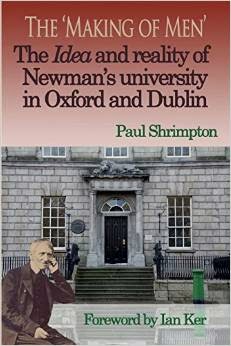
Until now, the two most highly regarded books on Newman’s treatment of the subject were Fergal McGrath’s Newman’s University: Idea and Reality (1951) and Dwight Culler’s The Imperial Intellect: A Study of Newman’s Educational Ideal (1955). Now, in The ‘Making of Men,’ Paul Shrimpton contends that past studies of Newman’s educational achievement have suffered from failing to take into account the full scope of Newman’s educational endeavors, and he has written his own book to rectify that.

Deeply researched and persuasively argued, The ‘Making of Men’ is a major contribution to our understanding of Newman’s commitment to university education. It will enliven and refine all future discussions of the subject by encouraging readers to revisit not only Newman’s classic text but the practical challenges he addressed—first as fellow of Oxford’s Oriel College, and then as rector of the Catholic University in Dublin. Shrimpton draws on Newman’s copious correspondence and memoranda, as well as “accounts ledgers, buttery records, punishments books, timetables, rules and regulations, prospectuses, minute books, reports of all types, and a host of other documents,” all of which give The ‘Making of Men’ an admirable richness.

Read the rest there. The 'Making of Men' is published by Gracewing in the UK.

Friday, May 8, 2015

Stile Antico in Oxford at St. John the Evangelist


I've noted this new release on Amazon.com but can't find any information yet about whether it's a new release or a compilation of previously released material yet. Neither the Harmonia Mundi website nor the Stile Antico website provide any hints. It isn't out until June.

The Stile Antico website did lead me to the Oxford Early Music Festival website since Stile Antico will be performing "Music for Compline" at the Church of St. John the Evangelist on May 17:

Internationally renowned vocal ensemble, Stile Antico, celebrate their tenth anniversary with this performance of works written for the monastic Office of Compline.

As the darkness folded around the pillars of their churches, mediaeval worshippers gathered for the service of Compline, commending themselves to God’s protection through the long watches of the night. It was an occasion that inspired the great English composers to some of their most intimate and uplifting music. Tonight’s programme features music by the great composers of the Tudor era, including Byrd, Tallis and Taverner.

Stile Antico is firmly established as one of the world’s most accomplished and innovative vocal ensembles. Working without a conductor, its twelve members have thrilled audiences throughout Europe and North America with their fresh, vibrant and moving performances of Renaissance polyphony. Its bestselling recordings on the Harmonia Mundi label have earned accolades including the Gramophone Award for Early Music, the Diapason d’or de l’annĂ©e, the Edison Klassiek Award and the Preis der deutschen Schallplattenkritik, and have twice received Grammy® nominations.


The Church of St. John the Evangelist was once the home of an Anglican religious order for men:

From 1866 to 1980, this complex of buildings was the mother house of the Society of St John the Evangelist (the ‘Cowley Fathers’). Established in 1866 by Richard Meux Benson whilst vicar of St James’ church, Cowley, it was the first religious community for men founded in the Church of England since the Reformation. With two other ‘mission priests’ he planted his community in the fast developing suburb between Cowley village and Oxford town. The community eventually spread to the United States of America, India and Japan. The English province of the Society still maintains a presence at St Edward’s House, Westminster, close to the Abbey and Westminster School.

In 1859, a new parish was created out of St James Cowley and St Clement’s: Cowley St John. Fr Benson established the ‘iron church’ on Marston Street. He was joined in 1865 by Fr Grafton and Fr O’Neill.

In 1866 the Society of St John the Evangelist was constituted and placed under the care of the Bishop of Oxford.

From a quick glance at it's North American website, the order is definitely High Church and Anglo-Catholic: the sacramental and liturgical life is emphasized. In the U.K., the order has become a charity and there is no community:

In 2012 the last monastery of SSJE in England, St Edward’s House, Westminster, closed and the three remaining monks moved, continuing their Religious life as Solitaries. The noviciate is closed in England.

More on Richard Meux Benson (any relation to the famous Benson family?) here.

Thursday, May 7, 2015

The Last Catholic Consort of England Dies in 1718

Queen Mary Beatrice of Modena died on May 7, 1718--after living in exile since the "Glorious" Revolution of 1688. She had known great trouble throughout her life after marrying James, the Duke of York. Exiled during the Popish Plot and the Exclusionist Crisis in 1678, she had endured her husband's affairs, including one with Catherine Sedley even as they were in exile. She, like Catherine of Aragon before her, had also experienced several pregnancies that ended in miscarriages, stillbirths, or infant death. Finally, she bore her son James Francis Edward Stuart, and her success led their final exile and fall--or at least, was a contributing cause because the English feared a Catholic heir--so off she and her infant son went to exile in France. Then James II joined her, with his Court in exile, at St. Germain-en-Laye.

She served briefly as her son's regent when James II died in 1701 and would not accede to Scottish demands that her son, James III, renounce Catholicism for the throne of Scotland--but compromised on restrictions of the number of Catholic priests in England and leaving the Church of England intact when he should succeed William of Orange. Perhaps Mary of Modena erred in not allowing the young king to go Scotland in 1702 and she ended her regency when he turned 16.

Mary of Modena remained at St. Germain-en-Laye but also spent time at the Convent of the Visitation nuns at Chaillot in Paris (destroyed, of course). She had wanted to be a nun before her marriage in 1673 and thus her attraction to the convent, where she met the former mistress of Louis XIV, Louise de la Valliere. Her daughter Louisa Maria had been born in France in 1692, but died in 1711 of smallpox--and the loss her daughter, along with the departure of her son after the Treaty of Utrecht removed French support of his claim to the throne, devastated her. She was buried in the Convent of the Visitation and thus her grave has been lost. She died of cancer on May 7, 1718, alone in France as James Francis Edward was exiled after France recognized the Hanoverian succession in the Treaty of Utrecht.

Some in France called her a saint; she had certainly endured many vicissitudes: exile, the unfaithfulness of her husband, little babies dying, widowhood, the loss of her daughter, and separation from her son--and by all reports, Queen Mary Beatrice responded to these sorrows by relying on prayer and her Catholic faith.

Wednesday, May 6, 2015

Two Priests and Martyrs on the 6th of May in 1590

As the Catholic Encyclopedia recounts, Blessed Edward Jones was one of Richard Topcliffe's victims, enduring the torture meted out by Elizabeth I's personal pursuivant:

Blessed Edward Jones:  Priest and martyr, b. in the Diocese of St. Asaph, Wales, date unknown; d. in London, 6 May 1590. Bred an Anglican, he was received into the Church at the English College, Reims, 1587; he was ordained priest in 1588, and went to England in the same year. In 1590 he was arrested by a priest-catcher, who pretended to be a Catholic, in a shop in Fleet Street. He was imprisoned in the Tower and brutally tortured by Topcliffe, finally admitting he was a priest and had been an Anglican. These admissions were used against him at his trial, but he made a skillful and learned defense, pleading that a confession elicited under torture was not legally sufficient to ensure a conviction. The court complimented him on his courageous bearing, but of course he was convicted of high treason as a priest coming into England. On the same day he was hanged, drawn, and quartered, opposite the grocer's shop where he had been captured, in Fleet Street near the Conduit. 

Blessed Anthony Middleton: On the same day there suffered Anthony Middleton, priest and martyr, born probably at Middleton-Tyas, Yorkshire, date unknown, son of Ambrose Middleton of Barnard Castle, Durham, and Cecil, daughter of Anthony Crackenthorpe of Howgill Castle, Westmoreland. He entered the English College at Reims 9 Jan., 1582; was ordained 30 May 1586, and went to England in the same year. His work lay in London and the neighbourhood and he laboured very successfully; he was captured at a house in Clerkenwell (London) by the same artifice which was practiced on Father Jones. On the ladder he said: "I call God to witness I die merely for the Catholic Faith, and for being a priest of the true Religion"; and someone present called out, "Sir, you have spoken very well". The martyr was cut down and disemboweled while yet alive.

So both priests, graduates of the English College in Reims, were captured by pursuivants posing as Catholics. They both impressed those who tried and executed them, but to no avail. There is a high school in Wales named for Blessed Edward Jones. They were beatified by Pope Pius XI in 1929, along with 135 more.

Tuesday, May 5, 2015

Like Mother, Like Daughter? Joanne Whalley in "Wolf Hall" and "The Virgin Queen"

Historical novelist Nancy Bilyeau is providing historically informed reviews of each episode of Wolf Hall at medievalists.net. In this week's review she provides some analysis of scenes concerning Catherine of Aragon and the Dissolution of the Monasteries. Although Cromwell did not really visit Catherine of Aragon in exile, Bilyeau comments on both Catherine's stubbornness and her kindness when Wolf Hall imagines such a scene:

Cromwell then moves from Henry VIII’s future woman [Jane Seymour] to his past woman: Catherine of Aragon. The first wife, after 20 years of marriage, fought hard to preserve her rights, and is still refusing to answer to anyone who will not address her as queen—despite the fact that Henry VIII has married Anne Boleyn and had a child with her. “That’s why he sent you, to see if I am really dying,” she says, weak and fighting spasms of pain. She pleads with Cromwell to allow her to see Mary, the daughter whom Henry keeps isolated and away from Catherine. Finally she says she heard “Boleyn’s daughter” had a miscarriage. “I know how that is,” she says, showing a humanity Anne never for an instance extends her way.

Catherine is also shrewd and picks up on the fact that Cromwell doesn't know if Anne is pregnant again. “I thought she always confided in you—I do hope there is no rift,” she says, allowing herself a moment of malice.

Later in the episode, some other historical inaccuracies are depicted:

In the next scene, an important character, Eustace Chapuys, ambassador to the Emperor Charles V, emerges from the dark shadows of Cromwell’s sitting room at home. They drink wine together, in Cromwell’s increasingly luxurious home, hung with a large tapestry the king personally gifted to him.

“I hear you’re going to put all the monks and nuns out on the road,” says Chapuys sternly, referring to the Dissolution of the Monasteries, one of Thomas Cromwell’s main achievements. Thousands of monks, friars and nuns were in reality ejected from their abbeys as Cromwell oversaw their destruction, the buildings stripped of value and given to the king’s friends. In this scene, Cromwell assures Chapuys that most of the nuns and monks wanted to leave when his commissioners visited their abbeys, which were places of corruption and vice. This is where
Wolf Hall falls back into the distortion and propagandizing which marred the previous episode, “Devil’s Spit.” The massive corruption that Cromwell keeps referring to throughout Wolf Hall is exaggerated. It was a pretext to convince Parliament to make legal the seizure of the buildings and land, which poured thousands of pounds into Henry VIII’s treasury.

In a bizarre fiction, Chapuys says, “I see famine before the spring. You’re buying corn from the territories of the Emperor. This trade could be stopped.” When Cromwell asks quietly what Emperor Charles V would gain from starving England, Chapuys says it would prove how badly governed the kingdom of England is.

In the 16th century, the country was in no way reliant on importing food from the land controlled by the Holy Roman Emperor, which included Spain, Portugal and Austria, the German lands, the Netherlands, and part of the Americas. There was trade between England and the Netherlands, mostly of wool. The threat of starving a country to make a point of politics belongs to some more modern age. Also, the show must mean “wheat” when Chapuys says “corn,” a common description of the time, because in the reign of Henry VIII the English did not eat maize, which was discovered by Spanish explorers in Mexico.


Wolf Hall is back on solid ground when Chapuys tearfully begs to be able to see Catherine of Aragon so that she will not die “all alone.” When Cromwell asks the king and queen on Chapuys’ behalf, Anne mocks Catherine. It seems that permission is refused, but in reality Henry VIII relented and Chapuys did visit her in exile the week before she died.

Joanne Whalley plays Catherine of Aragon in Wolf Hall and she played Catherine and Henry's daughter Mary I in a previously aired BBC series on the Tudors, The Virgin Queen. Playing Mary I in the 2005 series, Whalley found some sympathy for the queen usually called "Bloody Mary":

Actress Joanne Whalley is keen to clear up exactly who Queen Mary was, "No one really knows about her. You say I'm playing Queen Mary and they go, 'Oh, Mary Queen of Scots?' and you go 'No! Mary Tudor!' - and they don't know who she is. She is completely overshadowed by Elizabeth - as she was in their time."

"She has a terrible reputation as Bloody Mary but she didn't have an easy time of it. She had a terribly unhappy childhood; she has an unhappy marriage, a nightmare half-sister and religious trouble, so she has a full plate!"

"Elizabeth's mother (Anne Boleyn) replaced Mary's mother in the favour of the King; Mary's mother was sent away to live in exile and Mary wasn't allowed to see her, and she was forced to wait upon Elizabeth's mother," explains Joanne. "So there's a lot of history in their relationship and her paranoia, her fears, are all based in reality. She could have had Elizabeth killed really, but didn't - she was not an unkind person. There are various reports of her showing this much more kind, benign side of her personality, but given the times that she was in that bit wasn't allowed to shine through very often."

"She had a miserable and difficult journey to becoming Queen and it turns out very differently than she had imagined," says Joanne. "One of the keys to that is her relationship with her husband, Philip of Spain. She was hoping for a real marriage, she thinks how wonderful to have a companion - and there was nothing. They had no relationship at all really which is a huge disappointment to her."

All they really seemed to share was their Catholic religion and the desire to overturn the years of Protestant rule instigated by Mary's father, Henry VIII, which led to the religious persecution that earned Mary her gruesome nickname.

"She was very devout and she believed absolutely that she was putting things to rights with the country and in the eyes of God," says Joanne. "Crazy as it is, there is some sympathy to be drawn - she was completely devoted; in her life and her work, everything, she believed she was doing the right thing. Her only moments of joy and pleasure were in her more devout, communing-with-God moments because day-to-day life was pretty tough on her. She was very alone and very conflicted about how to deal with things. I feel sorry for her."

About Catherine of Aragon in Wolf Hall, Whalley commented in Harper's Bazaar:

"We don’t often think of the women around him when we think of Henry VIII. But we should because they were amazing and they operated within such restraints. I didn't expect to like Catherine of Aragon as much as I did. But she was an extraordinary woman. She was well educated and very much into education for women. Women at the time were not generally allowed to run things. But she grew up with her mother as an example - Queen Isabella of Castile - so she wasn't bound, at least in her own mind, by the restrictions of the time. It’s interesting how Elizabethan costume affects everything you do: how you sit, how you stand, how you carry yourself. You don’t have the same physical freedom. And the locations too: I remember shooting at Broughton Hall on the hottest day of the year. The walls were so thick but it was cool inside. You could feel the history in the walls."

On the one hand, it's great to have Nancy Bilyeau correct some of the historical inaccuracies in Wolf Hall; on the other, it's great to see an actress have some sympathy with the historical characters she plays. While she's appearing as the sixteenth century Catherine of Aragon on PBS, Whalley's portrayal of Claudia, Pontius Pilate's wife is on NBC, in A.D. The Bible Continues.

Monday, May 4, 2015

480 Years Ago: The Protomartyrs of the English Reformation, May 4, 1535


Today is the great feast honoring all of the Catholic Martyrs of the English Reformation: those canonized by Pope Paul VI and those beatified by Popes John Paul II, Pius XI, and Leo XIII. Many of the beatified martyrs, especially those declared martyrs by Popes Pius XI and Leo XIII, are not well known. Perhaps all the beatified martyrs should be canonized by Pope Francis? I'll be on the Son Rise Morning Show this morning after the 7:45 a.m. Eastern/6:45 a.m. Central time news break in the last segment of the EWTN broadcast to discuss this feast and these martyrs. 

This feast was moved to this date in 2000 with a new liturgical calendar for the dioceses of England and Wales approved by the Vatican; then in 2010 it was elevated to a Feast (not just a Memorial). It is not a Feast or Memorial on the Liturgical Calendar in the USA--I think it should be!  

Moving it to May 4 meant that the feast is celebrated on the anniversary of the protomartyrs of the English Reformation, the Priors of the Carthusian order, a parish priest, and the confessor and chaplain of the Brigittine order at Syon Abbey. These five men, St. John Houghton, St. Augustine Webster, St. Robert Lawrence, Blessed John Haile, and St. Richard Reynolds, were brutally executed at Tyburn before a crowd of Court witnesses. Some sources even suggest that Henry VIII was there in disguise. Drawn on hurdles from the Tower of London (whence St. Thomas More saw them depart), they were hung and quartered while still alive.

The Feast honors all the martyred saints, blessed and canonized from these protomartyrs, through all the others who suffered during the reign of Henry VIII. I call them the Supremacy Martyrs, because they suffered for their denial of Henry VIII's claim to be the Supreme Head and Governor of the Church of England. It includes the other Carthusians, the Observant Franciscans, St. John Stone, the Abbots of Glastonbury, Reading, and Colchester, Katerine of Aragon's Chaplains, Blessed Margaret Pole, the Prebendaries Plot victims, etc.

The Feast also honors all the martyred saints, blessed and canonized from throughout the reigns of Elizabeth I, James I, and Charles I, those whom I call the Recusant Martyrs, because they suffered under the recusancy or penal laws passed by successive Parliaments to eliminate the Catholic faith throughout England. That group includes everyone from the three women martyrs, St. Margeret Clitherow, St. Margaret Ward, and St. Anne Line, to the great Jesuits, St. Edmund Campion, St. Robert Southwell, St. Henry Walpole, Blessed Thomas Holland, and the many laymen who died because they protected or aided a Catholic priest: St. Swithun Wells, Blesseds John Mason, Sidney Hodgson, Richard Langley, Brian Lacey, Marmaduke Bowes, and those laymen who suffered because of their "stubborn" recusancy: St. Philip Howard, Blesseds James Bird, John Bretton, et al.

Finally, the Feast honors all the martyred saints, blessed and canonized from the reign of Charles II, innocent victims of the Popish Plot, who suffered the double injustice of the recusancy laws and the twisted legal system of England (witnesses prevented from testifying; Oates and his conspirators' evidence valued above the Catholic witnesses, obvious anti-Catholic bias in court, etc): St. John Kemble, St. John Wall, Blessed William Howard, St. Oliver Plunkett, St. David Lewis, Blessed Richard Langhorne, et al.

The list of all these names makes quite a great litany of saints for private devotion! And this blog offers this excellent closing prayer for the litany:

Glorious English Martyrs, you endured exile from your country and your families for love of God and the faith. Help all who live in exile today; and help us to value our faith above our securities.

Glorious English Martyrs, you had the courage to witness for Christ before men without counting the cost. Help us to have this same courage in our day.

Glorious English Martyrs, you loved England, your country, enough to suffer exile, persecution, and death to proclaim Jesus Christ here. Intercede for England, and for all who are called to proclaim Christ today. 

Glorious English Martyrs, you had a great love of the sacraments, especially the Eucharist, for which you were ready to give up your lives. Help us to have something of this same love, and never to take for granted these great gifts of God. 

Glorious English Martyrs, you had a profound love of truth, and would not deny it even though this meant suffering and death. Give us the same love of truth, and zeal for the faith, that you had.

Glorious English Martyrs, at the heart of all you did and endured was the love of God. Help us to know this love, and to pass it to our neighbour.

Glorious English Martyrs, you had such a compassion for sinners that you risked all that they might be converted and live. Help us not to judge others, but to show God’s merciful love to all; help us, too, not to despair of our own sins, but to lay them humbly before the Father who loves us.

Glorious English Martyrs, you readily forgave those who persecuted you, and offered your sufferings for their conversion. Intercede for us to have something of the same spirit in the face of injustice or persecution.

Glorious English Martyrs, you persevered in your witness to the end, and joyfully accepted the sufferings that opened to you the Kingdom. Intercede for us, and those who are near to death, or undergoing a trial of faith, that we too may have the grace of final perseverance. 

Amen.

So it was 480 years ago today that St. Thomas More and his dear daughter Meg (Margaret Roper) stood at a window in the Tower of London and saw the priors, and Father Haile, and Father Reynolds being taken away to Tyburn. According to the biography written by his son-in-law William Roper:

As Sir Thomas More in the Tower chanced on a time looking out of his window to behold one Mr. Reynolds, a religious, learned and virtuous father of Sion, and three monks of the Charterhouse for the matter of the supremacy going out of the Tower to execution, he, as one longing in that journey to have accompanied them, said unto my wife, then standing there beside him, "Lo, dost thou not see (Meg) that these blessed fathers be how as cheerful going to their deaths, as bridegrooms to their marriages? Wherefore thereby mayest thou see (mine own good daughter) what a difference there is between such as have in effect spent all their days in a strait, hard, penitential, and painful life religiously, and such as have in the world, like worldly wretches, as thy poor father hath done, consumed all the time in pleasure and ease licentiously. For God, considering their long-continued life in most sore and grievous penance, will not longer suffer them to remain here in this vale of misery, and iniquity, but speedily hence take them to the fruition of his everlasting deity: whereas thy silly father (Meg) that, like a most wicked caitiff, hath passed forth the whole course of his miserable life most pitifully, God, thinking him not worthy so soon to come to that eternal felicity, leaveth him here yet, still in the world further to be plunged and turmoiled with misery." 

Sunday, May 3, 2015

The May/June Issue of the St. Austin Review


There's my name on the cover of the May/June issue of the St. Austin Review, reversed out of one of Monet's studies of the Cathedral in Rouen. I contributed an article about the role of Marian apparitions in France in renewing devotion and faith after the French Revolution: “Revolution and Private Revelation: Some Notes on Marian Apparitions in France”. As always, I'm looking forward to receiving my comp copy and reading the rest of the articles!


Saturday, May 2, 2015

480 Years Ago: St. Thomas More Writes to His Daughter Meg

While I am teaching about The Real St. Thomas More this morning at the Spiritual Life Center here in Wichita, I'll be sure to highlight the appropriateness of holding such a class on this date.

On April 30, 1535, Thomas More was called out of his cell in the Tower of London to be presented with the opportunity to swear the new Oath of Supremacy under the threat of the Treason Act. He learned that the Carthusian Priors and Richard Reynolds had been found guilty and were condemned to death. He would see them leave the Tower for Tyburn on May 8, 1535. These events took place 480 years ago. He wrote to his daughter, Margaret Roper, on May 2 to describe the discussion he and Thomas Cromwell had regarding his refusal to take this new Oath (when he had refused to take the former Oath of Succession in 1534, more than a year before).

More argued that he was doing nothing to oppose Henry VIII and that Henry VIII knew it:

I answered that in good faith I had well trusted that the King's Highness would never have commanded any such question to be demanded of me, considering that I ever from the beginning well and truly from time to time declared my mind unto his Highness, and since that time I had, I said, unto your Mastership Master Secretary also, both by mouth and by writing. And now I have in good faith discharge my mind of all such matters, and neither will dispute King's titles nor Pope’s, but the King’s true faithful subject I am and will be, and daily I pray for him and for all his, and for you all that are of his honorable Council, and for all the realm, and otherwise than thus I never intend to meddle. 

More writes to Margaret how they tried a different tactic with him to persuade him to swear and how he replied:

I am, said I, the King’s true faithful subject and daily beadsman and pray for his Highness and all his and all the realm. I do nobody harm, I say none harm, I think none harm, but wish everybody good. And if this be not enough to keep a man alive, in good faith, I long not to live. And I am dying already, and have since I came here been divers times in the case that I thought to die within one hour, and I thank our Lord I was never sorry for it, but rather sorry when I saw the pang past. And therefore my poor body is at the King’s pleasure; would God my death might do him good. 

More then went back to his cell. When he wrote to Margaret on May 2, he was preparing his family for what was was coming.

Whereupon I was delivered again to Master Lieutenant, which was then called in, and so was I by Master Lieutenant brought again into my chamber, and here am I yet in such case as I was, neither better nor worse. That which shall follow lies in the hand of God, whom I beseech to put in King’s Grace’s mind that thing that may be to his high pleasure, and in mine, to mind only the weal of my soul, with little regard of my body. 

 And you with all yours, and my wife and all my children and all our friends both bodily and ghostly heartily well to fare. And I pray you and all them, pray for me, and take no thought whatsoever shall happen me. For I verily trust in the goodness of God, seem it never so evil to this world, it shall indeed in another world be for the best. 

More remained in his cell until June 3, 1535, when he was questioned again--and then went to trial on July 1 and to Tower Hill for execution on July 6. My publisher, Scepter, has this book  (see the cover above) of selected letters of St. Thomas More in their catalog--fewer than 200 copies are in stock--that provides brief introductions to each of the letters in the book. It's an excellent resource.