Showing posts sorted by relevance for query Robert Bellarmine. Sort by date Show all posts

Tuesday, September 17, 2019

St. Robert Bellarmine, Pray for Us!


Saint Robert Bellarmine is one of my favorite saints. I read The Art of Dying Well and The Mind's Ascent to God years ago; I've studied his involvement in the Galileo crisis; and recently I've noticed his efforts to explain the power of both popes and monarchs. As Franciscan Media describes his life's work:

When Robert Bellarmine was ordained in 1570, the study of Church history and the fathers of the Church was in a sad state of neglect. A promising scholar from his youth in Tuscany, he devoted his energy to these two subjects, as well as to Scripture, in order to systematize Church doctrine against the attacks of the Protestant Reformers. He was the first Jesuit to become a professor at Louvain.

His most famous work is his three-volume Disputations on the Controversies of the Christian Faith. Particularly noteworthy are the sections on the temporal power of the pope and the role of the laity. Bellarmine incurred the anger of monarchists in England and France by showing the divine-right-of-kings theory untenable. He developed the theory of the indirect power of the pope in temporal affairs; although he was defending the pope against the Scottish philosopher Barclay, he also incurred the ire of Pope Sixtus V.

Bellarmine was made a cardinal by Pope Clement VIII on the grounds that “he had not his equal for learning.” While he occupied apartments in the Vatican, Bellarmine relaxed none of his former austerities. He limited his household expenses to what was barely essential, eating only the food available to the poor. . . .


John M. Vella reviewed two books by theologian Stefania Tutino in a 2012 post for Homiletic & Pastoral Review. One book, Empire of Souls: Robert Bellarmine and the Christian Commonwealth published by Oxford University Press, explores Bellarmine's theories of papal power and the Divine Right of Kings:

Robert Bellarmine was one of the pillars of post-Reformation Catholicism: he was a celebrated theologian and a highly ranked member of the Congregations of the Inquisition and of the Index, the censor in charge of the Galileo affair. Bellarmine was also one of the most original political theorists of his time, and he participated directly in many of the political conflicts that agitated Europe between the end of the sixteenth and the beginning of the seventeenth century.

Stefania Tutino offers the first full-length study of the impact of Bellarmine's theory of the potestas indirecta in early modern Europe. Following the reactions to Bellarmine's theory across national and confessional boundaries, this book explores some of the most crucial political and theological knots in the history of post-Reformation Europe, from the controversy over the Oath of Allegiance to the battle over the Interdetto in Venice. The book sets those political and religious controversies against the background of the theological and institutional developments of the post-Tridentine Catholic Church. By examining the violent and at times surprising controversies originated by Bellarmine's theory, this book challenges some of the traditional assumptions regarding the theological shape of post-Tridentine Catholicism; it offers a fresh perspective on the centrality of the links between confessional affiliation and political allegiance in the development of the modern nation-states; and it contributes to our understanding of the development of 'modern' notions of power and authority.


The other book, which Professor Tutino translated, edited, and annotated, is a collection of St. Robert Bellarmine's works on power and authority: On Temporal and Spiritual Authority: On Laymen or Secular People; On the Temporal Power of the Pope Against William Barclay; On the Primary Duty of the Supreme Pontiff, is published by Liberty Fund.

Vella commented on Bellarmine's influence at the end of his reivew:

Despite his rehabilitation in the last quarter of the 19th century, Bellarmine’s intellectual legacy remains mixed. In one respect, at least, he was a product of his time because his vision of a res publica Christiana depended on a united Christendom that could never be restored. Yet, what is easy to see, in hindsight, was not so clear in the early 17th century. On the other hand, his defiance of royal absolutism, in defense of rule of law and religious truth, is far from outdated. Indeed, the very modern assertion of state power only justified further the papal need to secure its political independence by maintaining its temporal possessions. Yet, the Papal States could not secure this independence because the pope depended on other nations for their defense. This dilemma was resolved satisfactorily when the Italian state formally recognized the Vatican as a sovereign entity in 1929. The concordat, negotiated by Pius XI, secured for the papacy, the freedom to exercise its spiritual duties. Furthermore, Bellarmine’s effort to limit spiritual and political power to their proper jurisdiction, was a continuation of, rather than a departure from, the long Scholastic tradition that formed the basis of Jesuit political ideas. As Harro Höpfl observed in Jesuit Political Thought, “In Jesuit political theory…legitimate government was limited government.” Given the modern state’s insatiable hunger for power, Bellarmine’s political philosophy has not lost its relevance.

St. Robert Bellarmine, Pray for Us!

Thursday, September 17, 2020

Saint Robert Bellarmine and Constitution Day

In the life of a Christian, trusting in God, there are no coincidences. I don't think it's a coincidence that today is the anniversary of the signing of the Constitution of the United States of America  in 1787 (and thus, Constitution Day) and the feast day of Saint Robert Bellarmine, the great scholar and Cardinal, patron saint of Catechists. Bellarmine entered Eternal Life on September 17, 1621. As Franciscan Media describes his life:

When Robert Bellarmine was ordained in 1570, the study of Church history and the fathers of the Church was in a sad state of neglect. A promising scholar from his youth in Tuscany, he devoted his energy to these two subjects, as well as to Scripture, in order to systematize Church doctrine against the attacks of the Protestant Reformers. He was the first Jesuit to become a professor at Louvain.

His most famous work is his three-volume Disputations on the Controversies of the Christian Faith. Particularly noteworthy are the sections on the temporal power of the pope and the role of the laity. Bellarmine incurred the anger of monarchists in England and France by showing the divine-right-of-kings theory untenable. He developed the theory of the indirect power of the pope in temporal affairs; although he was defending the pope against the Scottish philosopher Barclay, he also incurred the ire of Pope Sixtus V.

Bellarmine was made a cardinal by Pope Clement VIII on the grounds that “he had not his equal for learning.” While he occupied apartments in the Vatican, Bellarmine relaxed none of his former austerities. He limited his household expenses to what was barely essential, eating only the food available to the poor. He was known to have ransomed a soldier who had deserted from the army and he used the hangings of his rooms to clothe poor people, remarking, “The walls won’t catch cold.”

Among many activities, Bellarmine became theologian to Pope Clement VIII, preparing two catechisms which have had great influence in the Church.


I've posted on Bellarmine's political writings before and as I as post this I'm still reading a discussion of his contributions to the theory of the pope's indirect power in temporal affairs by John Courtney Murray, SJ, published in 1948 in Theological Studies 9 (December), pages 491–535. 

Although Karl Maurer is commenting in this article on Thomas Jefferson's knowledge of Bellarmine's denial of the divine right of kings by reading a book contesting with the Cardinal, it is still appropriate to cite on Constitution Day, since that document providing for the structure of governance in the United States of America was developed to protect liberty and freedom, properly understood and provide for an ordered but not repressive federalist government, with its power derived from the people. 

As the article notes, we know that Jefferson read Robert Filmer's defense of the divine right of kings, Patriarcha: The Naturall Power of Kinges Defended Against the Unnatural Liberty of the People, By Arguments, Theological, Rational, Historical and Legall because he wrote comments in the margins of his copy of the book, now in the Library of Congress:

In Patriarcha, Filmer quotes Bellarmine directly as follows: "Secular or Civil authority (saith he) 'is instituted by men; it is in the people unless they bestow it on a Prince. This Power is immediately in the Multitude, as in the subject of it; for this Power is in the Divine Law, but the Divine Law hath given this power to no particular man. If the Positive Law be taken away, there is left no Reason amongst the Multitude (who are Equal) one rather than another should bear the Rule over the Rest. Power is given to the multitude to one man, or to more, by the same Law of Nature; for the Commonwealth cannot exercise this Power, therefore it is bound to bestow it upon some One man or some Few. It depends upon the Consent of the multitude to ordain over themselves a King or other Magistrates, and if there be a lawful cause, the multitude may change the Kingdom into an Aristocracy or Democracy' (St. Robert Bellarmine, Book 3 De Laicis, Chapter 4). Thus far Bellarmine; in which passages are comprised the strength of all that I have read or heard produced for the Natural Liberty of the Subject." (Patriarcha, page 5.)

Imagine what Jefferson must have been thinking as he read the opening paragraphs of
Patriarcha, a direct assault on the Roman Catholic scholarship of Bellarmine:

"Since the time that school divinity (i.e. Catholic Universities) began to flourish, there hath been a common opinion maintained as well by the divines as by the divers of learned men which affirms: 'Mankind is naturally endowed and born with freedom from all subjection, and at liberty to choose what form of government it please, and that the power which any one man hath over others was at the first by human right bestowed according to the discretion of the multitude.' This tenet was first hatched in the (Medieval Roman Catholic Universities), and hath been fostered by all succeeding papists for good divinity. The divines also of the reformed churches have entertained it, and the common people everywhere tenderly embrace it as being most plausible to flesh and blood, for that it prodigally distributes a portion of liberty to the meanest of the multitude, who magnify liberty as if the height of human felicity were only to be found in it — never remembering that the desire of liberty was the cause of the fall of Adam."

There is no doubt that Jefferson, after reading Filmer, must have been struck by Bellarmine's definition of individual freedom and popular sovereignty.
. . .

Please read the rest there.

Happy Constitution Day!
Saint Robert Bellarmine, pray for us!

Wednesday, April 18, 2012

Was Robert Bellarmine Ahead of His Time?

So asks this book review essay by John M. Vella in the on-line version of Homiletic & Pastoral Review:

Empire of Souls: Robert Bellarmine and the Christian Commonwealth. By Stefania Tutino (New York: Oxford University Press, 2010), 416 pp. ISBN 978-0-19974-053-6.
On Temporal and Spiritual Authority. By Robert Bellarmine. Edited, translated and with an introduction by Stefania Tutino (Indianapolis, IN: Liberty Fund, 2012), 500 pp. PB: ISBN 978-0-86597-717-4.

In Empire of Souls, Stefania Tutino offers a fresh perspective on the central role Robert Bellarmine (1542-1621) played in the development of post-Reformation Catholicism, and its relationship to the early modern state. Tutino compliments her study with a newly published collection of writings, never before translated into English, that she believes best represents Bellarmine’s political theology. These two impressive scholarly achievements go beyond the standard story of a reactionary crusader battling anti-papal princes, and protesting Protestants, typical of most traditional studies. Rather, Bellarmine is portrayed sympathetically as a controversial figure whose political theology was too liberal, or better yet, Whiggish, for some members of the Roman Curia who doubted his commitment to papal supremacy. Yet, his sophisticated defense of papal spiritual authority was influential enough to provoke many critical responses from across Europe. For Tutino, Bellarmine was not only the central figure in the debate over the proper relationship between Church and state in early modern Europe; his vision of the papacy still resonates today, perhaps more than it did during his lifetime.

However, his relevance in our day should not diminish in our minds how preeminent he was in his time. Before he began teaching at the Roman College in 1576, Bellarmine established a reputation as a distinguished scholar and preacher at Louvain, where he lectured on Aquinas at the Jesuit College. While there, he would counsel apologists to master the core of Catholic theology. He followed his own advice when he wrote his three-volume, Disputationes de controversies Christianae fidei (or Controversiae for short), by weaving contemporary controversies into the larger fabric of the faith, presenting a comprehensive understanding of Christian doctrine. He re-imagined the Catholic Church as a res publica Christiana, a theo-political organism that enveloped into itself all Christian commonwealths without violating their temporal jurisdiction. This concept of Christian empire was a reconstruction of medieval Christendom with the pope as its spiritual head. Tutino believes this expansive vision of the Catholic Church as an empire of souls was a notable departure from the theological approaches of Bellarmine’s contemporaries. . . .

This is the William Barclay referrred to later in the review essay, not to be confused with the other William Barclay from Scotland.

Saturday, September 17, 2016

A Portmanteau Post: St. Robert Bellarmine and the Blessed Virgin Mary

Nearly every Saturday on the Roman Calendar of the Catholic Church is dedicated to the Blessed Virgin Mary as an optional memorial and today is also the optional memorial of St. Robert Bellarmine, whose connection to the English Reformation I have highlighted before. We can observe both by exploring St. Robert's devotion to the Blessed Virgin Mary!

Servant of God Father John Hardon, SJ describes St. Robert Bellarmine's devotion to the Blessed Virgin Mary, including this poem:

Among St. Robert’s extant writing there is a short poem of twenty stanzas which he composed in the nature of a Litany to the Blessed Virgin. The text was first published in Italian some fifty years ago, and to the best of the writer’s knowledge, has never been translated into English. Each verse-line begins with the name “Virgin,” joined to a title and petition to Our Lady, starting with the letter “A” and going down the Italian alphabet to “V.” Thus the first seven verses begin with the invocation: “Vergine adorna … Vergine Bella …Vergine casta … Vergine degna … Vergine eletta … Vergine felice … Vergine gradita …”

A free translation to this tribute to the Virgin Mother reads as follows:
“Virgin adored and clothed with the sun, grant me thine aid.
Virgin most beautiful, mystical rose, take abode in my heart.
Virgin most chaste, all undefiled, grant me true peace.
Virgin deserving of all honor and praise, give me thy love.
Virgin elect and full of all grace, lead me to God.
Virgin most blessed, star of the sea, dispel the storms besetting me.
Virgin most virtuous, holy and sweet, show me the way.
Virgin illustrious, with thy burning light, enlighten thou my mind.
Virgin more precious than jewels or gold, make reparation for me.
Virgin most worthy of all praise, mother, daughter, and immaculate spouse.
Virgin and Mother, make me more pleasing to Jesus thy Son.
Virgin most innocent of any stain or fault, make me more worthy of God.
Virgin enriched with every gift and grace, obtain the remission of my sins.
Virgin most pure, grant me to enjoy the bliss of heavenly love.
Virgin, thou lily among thorns, I pray thee for the grace of a happy death.
Virgin more rare than the rarest dream, bring joy to my heart.
Virgin so great there is none like thee on earth, bring peace to my soul.
Virgin most true, loving Mother too, Virgin Mary.”
Holy Mother of God, pray for us!

St. Robert Bellarmine, pray for us!

Saturday, July 2, 2016

St. Robert Bellarmine and the Declaration of Independence

Matthew Bunson, formerly editor of OSV's The Catholic Answer Magazine, writes now for EWTN's National Catholic Register. One of his first contributions is this editorial:

On the day that the Continental Congress approved its resolution for independence for the American colonies, July 2, 1776, John Adams wrote Patrick Henry, “The decree is gone forth, and it cannot be recalled, that a more equal liberty than has prevailed in other parts of the earth must be established in America.”

The formal Declaration of Independence that was approved two days later was a masterful statement of the rights of men in an age of royal absolutism.

It also had deep Catholic roots.


At a time when many Americans have lost touch with both the historical and philosophical foundations of the United States, Independence Day — July 4th — is always a good opportunity to reflect on the particular genius of our Founding Founders and the influences that shaped their thought and actions.

But any discussion of genius and influence must include two names, one the author of the Declaration of Independence and the other a doctor of the Church.

Thomas Jefferson is honored rightly as one of the greatest minds in American history, who bequeathed to his country a statement of principles that began the extraordinary experiment of the American republic. It is surprising to learn, then, that a careful study of the Declaration reveals striking parallels between Jefferson’s eloquent appeal to the unalienable rights of men and self-determination and the Church’s teachings on the human person and a properly ordered society. In fact, nearly two centuries before Jefferson, his very same ideas were written by a Counter-Reformation Catholic of equal genius: the Jesuit theologian, saint, cardinal and doctor of the Church Robert Bellarmine (1542-1621).


Bunson then compares Bellarmine's De Laicis on civil government and some passages in the Declaration of Independence and notes that Jefferson indeed know of St. Robert Bellarmine's ideas because he read Patriarcha: The Naturall Power of Kinges Defended Against the Unnatural Liberty of the People, By Arguments, Theological, Rational, Historical and Legall by Robert Filmer, a Protestant theologian defending King James I's idea of the Divine Right of Kings.

Read the rest there.

Saturday, September 17, 2011

St. Robert Bellarmine and the English Reformation

Today's saint has connections to England and the aftermath of the English Reformation. First, his book addressing Protestant teaching and doctrine, The Controversies, based on lectures he gave at the Roman College, proved so effective that Queen Elizabeth I banned its publication and distribution in England.

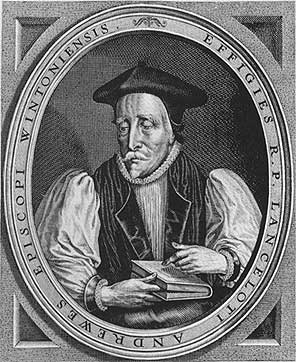
Robert Bellarmine conducted disputations with James I of England and one of the king's favorite Anglican bishops, Lancelot Andrewes. Bellarmine did not support James I's doctrine of the Divine Right of Kings, arguing that the true source of political power was indeed from God, but that the power of the king or magistrate depended on the consent of the people and that, indeed, the people may withdraw their consent and change the form of government. This scholar even argues that Bellarmine's disputations with King James I provided Thomas Jefferson with some of the terminology of the Declaration of Independence.

For example:

Equality of man

Declaration of Independence: “All men are created equal; they are endowed by their Creator with certain inalienable rights.”

Bellarmine: “All men are equal, not in wisdom or grace, but in the essence and nature of mankind” (“De Laicis,” c.7) “There is no reason why among equals one should rule rather than another” (ibid.). “Let rulers remember that they preside over men who are of the same nature as they themselves.” (“De Officus Princ.” c. 22). “Political right is immediately from God and necessarily inherent in the nature of man” (“De Laicis,” c. 6, note 1).

The source of power

Declaration of Independence: “Governments are instituted among men, deriving their just powers from the consent of the governed.”

Bellarmine: “It depends upon the consent of the multitude to constitute over itself a king, consul, or other magistrate. This power is, indeed, from God, but vested in a particular ruler by the counsel and election of men” (“De Laicis, c. 6, notes 4 and 5). “The people themselves immediately and directly hold the political power” (“De Clericis,” c. 7).

The late great Fr. Hardon provides this overview of Bellarmine's life and works. He died on September 17, 1621 and was proclaimed a Doctor of the Church on the same date in 1931. The Art of Dying Well is certainly one of those works that contributed to his being named a Doctor of the Church.

Friday, September 17, 2010

Feast of St. Robert Bellarmine, SJ

Today's saint has connections to England and the aftermath of the English Reformation. First, his book addressing Protestant teaching and doctrine, The Controversies, based on lectures he gave at the Roman College, proved so effective that Queen Elizabeth I banned its publication and distribution in England.

Robert Bellarmine conducted disputations with James I of England and one of the king's favorite Anglican bishops, Lancelot Andrewes. Bellarmine did not support James I's doctrine of the Divine Right of Kings, arguing that the true source of political power was indeed from God, but that the power of the king or magistrate depended on the consent of the people and that, indeed, the people may withdraw their consent and change the form of government. This scholar even argues that Bellarmine's disputations with King James I provided Thomas Jefferson with some of the terminology of the Declaration of Independence.


The late great Fr. Hardon provides this overview of Bellarmine's life and works. He died on September 17, 1621 and was proclaimed a Doctor of the Church on the same date in 1931.

Tuesday, March 13, 2018

Belloc on Two Philosophers: Descartes and Pascal

Tomorrow, Anna Mitchell and I will conduct our penultimate discussion of Hilaire Belloc's Characters of the Reformation on the Son Rise Morning Show. This time, we'll look at his views of two philosophers: Rene Descartes and Blaise Pascal:

In the midst of these political figures. Kings and Statesmen and Soldiers, whom we have been considering in connection with the great religious struggle of the seventeenth century, we must turn for a moment to two men who had no political power. They were neither Soldiers nor Statesmen nor men of any hereditary position; but they influenced the mind of Europe so greatly that their indirect effect weighed more than the direct effect of others.

These two men stood to each other in time as might a father to a son. Descartes, nearly the contemporary of Cromwell, was born in 1596 and died in 1650. Pascal was twenty-seven years younger, but died only twelve years after Descartes in 1662. It is remarkable to note how both of them survived to see the settlement in the political and military fields of the great quarrel between the Reformation and the Catholic Church.


Since he included two philosophers among his Characters, I think Belloc should have profiled a couple of theologians, perhaps St. Robert Bellarmine or Reginald Cardinal Pole or someone from the School of Salamanca: Pole would have been a great choice to include in the Tudor section; Bellarmine in the Stuart era. Pole had a great role in the Church and in the restoration of Catholicism in England during Mary I's reign; Bellarmine was a great theologian, reformer, and argued against James I's doctrine of the Divine Right of Kings.

Belloc includes these two philosophers, however, because of their influence on philosophy in the modern era and how that influence has affected our culture:

These two men represent the effects upon the Catholic culture of two very great forces let loose by the Reformation, or at any rate let loose by the break-up of the old united Christian order in Europe. The first was Rationalism: the second may be called (I think with propriety) Emotionalism. Both men remained orthodox throughout their lives, each could claim that he was not only orthodox but strongly attached to the Catholic Church and all that the Catholic Church believes and teaches, yet from them proceeded results which stretched throughout the Catholic culture and shook its stability, while at the same time spreading far outside the boundaries of the culture into the Protestant culture and affecting the whole of European thought. 

 Of the two it was Descartes who did the most. He was undoubtedly the greater man — indeed, intellectually one of the greatest men Europe has ever produced. But negatively Pascal was also of high effect, because his example and the power of his word fostered that non-rational dependence upon emotion which is ultimately as disruptive of Catholic solidity as is Rationalism.

He compares their scientific and literary achievements:

Both men were great mathematicians. Descartes much the greater. Both men were remarkable writers, Pascal much the greater. From Pascal you may say comes the whole habit of clear modern prose writing; and from Descartes comes the whole business of analytical geometry and the theory of the calculi, differential and integral.

Belloc clearly appreciates what Descartes accomplished in mathematics but notes that his philosophical method has had a disastrous influence on modern culture:

Descartes approached the problem of the discovery of truth by a process of elimination. "What are we? Whence do we come? Whither do we go? What is the Universe and what are we therein ? " To answer these prime questions he began by throwing overboard everything which he felt he could not, in the new scientific temper of the time, affirm. And he reached the residuum that the only thing of which he was absolutely certain — the only thing which he could take as a first postulate, the only thing "known" whence he could proceed to discover the unknown, was his own existence.

That postulate was undoubtedly true, but it was the postulate of a skeptic, and it has acted ever since as a poison. For there is another thing of which we are also just as certain, really, as we are of our own existence — and that is the existence of things outside ourselves. There is no rational process by which the reality of the external universe can be discovered; all we know is that it can be confidently affirmed. Aristotle, who might be called reason itself; St. Thomas, whose whole process was that of beginning with a doubt, and examining all that there was to be said for that doubt before the denial of it and the corresponding certitude could be arrived at, both postulate this second truth. Not only am I, I, but that which is not myself is just as real as I am, and what is more, can be and is apprehended by myself. 

That is, like all true philosophy, common sense. Your plain man, who is made in the image of God and who, so long as his reason and conscience are not warped, is on the right lines, has no patience with any denial of it. The whole of human society takes it for granted and must take it for granted. The witness in a Court of Justice, the man con- ducting his own affairs, the simplest activities of daily life, takes for granted as absolutely certain, not only the external universe in which we live, but our own power of apprehending it. Descartes returned to the very extreme of the old Greek skepticism, and said, "No, we must begin with the prime certitude of our own existence; from which, no doubt, we can proceed to a second certitude that the external world exists. But we must not take it as a primal postulate." Therefore, it is from Descartes that the whole stream of modern skepticism flows. He built up a system carefully and accurately from so exiguous a beginning; it was like building a pyramid upside down, balanced upon a point, yet that system was stable and indeed on all its main lines it has stood for 300 years. It included the idea which most men still have of space, of the universe in three dimensions and three dimensions only, of the value of physical experiment and the certitude of our scientific conclusions therefrom. Of the certitude also of our power of measurement, upon which all modern physical science is built. The philosophy of Descartes remained stable and held the field because it was supported and continued by the rising flood of physical science. In some of his detailed conclusions he was fantastic, and would seem particularly fantastic in modern eyes; but his general spirit conquered the European mind and directed it right on into the memory of men now living. Indeed, no small part of our bewilderment, when we hear the doubts or questions of the latest physical science, is due to our being disturbed in what we thought to be our quite secure Cartesian philosophy; namely, that matter and spirit are quite distinct, and that all time and motion are referable to fixed standards — and so forth. But there is no denying Descartes' far-reaching influence.

Belloc notes that Pascal has a very different starting point from Descartes in his pursuit of truth:

Pascal started from the very other end from Descartes of the mental process ; not from a search for the last ultimate thing of which reason is certain, but from that which emo- tion most poignantly affirms. With Descartes it was, "I am sure of one thing — that I think." With Pascal it was, " I am sure of one thing — that I feel." Descartes began like a man pursuing a piece of research in history or chemistry; Pascal began like a man moved suddenly by a vision or a great love. The one would have told you that he had done nothing until he had begun to analyse — the other that he had not lived until he had been overwhelmed by a spiritual flood from within.

There were two occasions in Pascal's life in which he suffered or enjoyed that experience which is often called "conversion." Each confirmed the other, without either he would not have been what he was, and it was under the influence of intense personal feeling in the matter of religion that he began his famous quarrel with the Jesuits — which quarrel is, I am afraid, the main source of his reputation in the anti-Catholic world. For the attitude of the anti- Catholic world towards Pascal, and particularly the academic Protestant world, is something like this: — "The Jesuits are the quintessence of Catholicism. Pascal attacked the Jesuits. Therefore, although we are very sorry that he remained orthodox and was never excommunicated we feel that he was on our side."

Belloc describes the conflict between the Jansenists and the Jesuits and Pascal's role as the spokesman for the Jansenists in France. He notes that Pascal's literary legacy is the Pensees and the Lettres Provinciales:

It is strange that the literary and spiritual influence of Pascal should repose as it does upon such a very small body of matter. Apart from the Provinciales the only thing of his that really counts is a jumble of disjointed aphorisms which have had to be edited and re-edited to give them any cohesion, which even so have no unity, and to which the tide is generally given of the Pensees or "Thoughts" of Pascal. Two of his ideas at least were profound and of high value, quite apart from the merely aesthetic value of his power of the "Word." One of these was the somewhat whimsical but arresting conception of the "wager." It is not a rational conception, but it is calculated to make the sceptic think. It amounts virtually to this: — If the Christian revelation be not true, I lose nothing by accepting it. If it be true, I gain everything by accepting it. As against this, I for my part will at once advance a certain sentence of St. Paul's, to the effect that if we are wrong in our choice of the Christian revelation, then we are "of all men the most miserable."

The other and more valuable and what will, I think, prove the most permanent literary "find" of Pascal's was his famous paradox on the coincident greatness and littleness of man. He did not invent that idea of course; it is as old as human thought upon these things: Man is miserably weak, even physically; he is mortal, limited in all his powers, even those of the reason; subject to all manner of suffering and apparently unable to help himself, even where the path to a tolerable existence lies clear. But at the same time man is gifted with a mind which can conceive the universe, he is the child of God and in the image of God, all beauty is at his command, he can even in a sense create, he is vastly greater than anything else there is within our immediate experience, yet he is immeasurably less than what he knows he might be. He is at once despicable and awful; petty and supreme. That consideration on the contrasting and dual nature of man is perhaps the most fecund germ that can be planted in the soil of the mind — and Pascal planted it more surely and deeply than any other man in his brief statement.

Saturday, July 25, 2020

Book Review: "America on Trial" by Robert Reilly (Part One)

From Ignatius Press:

The Founding of the American Republic is on trial. Critics say it was a poison pill with a time-release formula; we are its victims. Its principles are responsible for the country's moral and social disintegration because they were based on the Enlightenment falsehood of radical individual autonomy.

In this well-researched book, Robert Reilly declares: not guilty. To prove his case, he traces the lineage of the ideas that made the United States, and its ordered liberty, possible. These concepts were extraordinary when they first burst upon the ancient world: the Judaic oneness of God, who creates ex nihilo and imprints his image on man; the Greek rational order of the world based upon the Reason behind it; and the Christian arrival of that Reason (Logos) incarnate in Christ. These may seem a long way from the American Founding, but Reilly argues that they are, in fact, its bedrock. Combined, they mandated the exercise of both freedom and reason.

These concepts were further developed by thinkers in the Middle Ages, who formulated the basic principles of constitutional rule. Why were they later rejected by those claiming the right to absolute rule, then reclaimed by the American Founders, only to be rejected again today? Reilly reveals the underlying drama: the conflict of might makes right versus right makes might. America's decline, he claims, is not to be discovered in the Founding principles, but in their disavowal.


The Catholic World Report published a symposium of reactions to America on Trial: A Defense of the Founding, but I encourage you to read the book--like I did--before you read the 13 responses by philosophers, historians, and others. Form your own opinion first on what Reilly has attempted and achieved before being influenced by them. I saw the symposium, scanned the summaries of the responses, and stopped--then went to Eighth Day Books and bought my copy. When I was last in the store Tuesday this week (for a discussion of Book III of Boethius' The Consolations of Philosophy with a group of friends) Warren was sold out, but I'm sure he'll be getting more copies soon.

Robert R. Reilly, whom I saw speak at the Midwest Catholic Family Conference in Wichita  (cancelled this year by COVID of course) a few years ago on his book The Closing of the Muslim Mind: How Intellectual Suicide Created the Modern Islamist Crisis, in this book offers an exploration of the philosophical and intellectual sources that inspired the Founders of the United States of America in their quest for independence from Great Britain and the establishment of a new nation. 

He goes all the way back to the pre-philosophical era, explores Greek philosophy focusing on Aristotle, Jewish monotheism, and the Latin/Roman Catholic synthesis of Greek philosophy and Revelation focusing on St. Thomas Aquinas, and continues his philosophical lessons through to the eighteenth century. 


Aristotle and Aquinas, with their confidence in our ability to reason based on the reality we experience around us are his heroes in these chapters. The Catholic synthesis of Aristotelian metaphysics and Revelation meant that we could, in a limited way of course, try to understand God and His creation with confidence, determine what is good, true, and beautiful, and live according to the Natural Law He created in the world, demonstrating the continuity between His Natural Law and His Revelation. This synthesis, Reilly argues, provided the foundation for the equality of all before the law, Divine and human, and the rights of all of God's creation to justice, including the consent to be governed. 

Along the way he offers an important defense of the Middle Ages, so often misidentified as the age of the "divine right of kings". Although it created many struggles between the hierarchy of the Catholic Church and the rulers of countries and empires, Reilly suggests that the "two swords" theory of the Middle Ages created a balance of rights and responsibilities for the ordinary person that a single sword--the state controlling both secular and religious order in each country--takes away. This recalled to my mind how the 17th century courts of the Inquisition were considered more just by those being tried in the Civil in those Catholic countries that still--even though as Reilly later points out, many Catholic rulers adopted the single sword model--maintained some semblance of the "two swords" theory with two Court systems. There was a greater presumption of innocence and a higher standard of proof of guilt in the Church Courts of the Inquisition, such that those accused of secular crimes would fake religious crimes to change the court they would be tried in--the BBC even said so!

Then he demonstrates how William Ockham in philosophy and Martin Luther in theology, through their nominalism and voluntarism, destroyed this synthesis and shifted the basis of knowledge and action from Reason to Will: even God's Reason. Larry P. Arnn of Hillsdale College addresses Reilly's view of Martin Luther in his Preface, counselling Lutherans and other Protestants to respond carefully and charitably, noting that Reilly quotes Martin Luther accurately and judiciously.

Reilly asserts that the English theologian Richard Hooker re-established Aristotelian realism in the (High) Church of England but I found that chapter not as convincing as Reilly intended. Hooker's Laws of Ecclesiastical Polity did not restore the "two swords" to England--the Church of England was as Erastian after as before--and even if James I praised Hooker's work that king upheld the theory of the Divine Right of Kings and the right of the monarch to rule the Church and the state without the consent of the governed. Yes, Hooker helped restore Natural Law to some extent, but the history of the Church of England demonstrates the limits of his legacy. His section on the relationship of the Church to the State, as Reilly notes in a later chapter, was not published until after both his and James I's deaths, because it was too controversial during that reign.

Reilly adds Thomas Hobbes to his triumvirate of the enemies of Reason and the Natural Law as he examines that gloomy philosopher's Leviathan as an effort to avoid civil war through absolute earthly obedience to the monarch, even above obedience to God. Heaven is no rewarding destination, only enforced peace on earth. The control of the state is necessary to hold in check the common, individual desires of each citizen to keep them from killing each other in the pursuit of worldly goods and security. Like Ockham and Luther, Hobbes deplored the thought and influence of Aristotle.

(Reilly mentions Machiavelli in his discussions of these contrasting views of political authority, but evidently judges him and The Prince to be a little outside the English background of the Founders.)

Juxtaposing James I of England's doctrine of the Divine Right of Kings to arguments by St. Robert Bellarmine and Father Francisco Suarez defending the sovereignty of the people and their right to consent to be governed, echoing Medieval theories. He cites parallel statements of Bellarmine, Suarez, the Virginia Declaration of Rights, and the Declaration of Independence on the "Source of Political Power", "Power of the People and the Requirement of Consent", and "Right to Revolution and Self-Determination". Reilly notes that our Founding Fathers weren't citing these arguments because their authors were Catholics (whom most of them detested and feared) but that they acknowledged the truth and effectiveness of these arguments as they were cited in Robert Firmer's defense of the Divine Right of Kings in his attempts to refute them. Lastly, he describes the influence of Algernon Sidney and his Discourses Concerning Government on the Founders, again noting the congruence between the two Jesuit scholastic theologians and Sidney.

The chapter on John Locke ("Problem and Solution") is a crucial one for Reilly's argument as he works to separate Locke's epistemological theories from his political theories. Again, part of his effort is to demonstrate what in Locke's philosophical and political works influenced the Founders. Reilly defends Locke from charges that he valued freedom and liberty only for the sake of hedonistic pleasures and shows that Locke has the common philosophical view of happiness as the fulfillment of Natural Law and Reality. He compares and contrasts Hobbes and Locke to demonstrate that the latter's thoughts are congruent with "orthodox" philosophies of Reality and Natural Law. Locke's epistemological skepticism did not extend to the afterlife, as he hoped for Heaven on his deathbed and wanted the Psalms read to him. That chapter was convincing to me.

I continue this review another day as this post is getting long! Since my background in Philosophy is scanty--one class at WSU that started with the thought of A.J. Ayer and scattered reading on my own--Reilly's systematic review of this history has been thought-provoking and fascinating to me.

Wednesday, September 28, 2011

Another Great Anthology from OUP

After highlighting the forthcoming Firmly I Believe and Truly, a new anthology of works by Catholic authors in England from the 15th to the 20th centuries, I thought of this very helpful volume edited by Robert S. Miola. It is also available from Oxford University Press:

Early Modern Catholicism makes available in modern spelling and punctuation substantial Catholic contributions to literature, history, political thought, devotion, and theology in the sixteenth and early seventeenth centuries. Rather than perpetuate the usual stereotypes and misinformation, it provides a fresh look at Catholic writing long suppressed, marginalized, and ignored. The anthology gives back voices to those silenced by prejudice, exile, persecution, or martyrdom while attention to actual texts challenges conventional beliefs about the period.

The anthology is divided into eight sections entitled Controversies, Lives and Deaths, Poetry, Instructions and Devotions, Drama, Histories, Fiction, and Documents, and includes sixteen black and white illustrations from a variety of Early Modern sources. Amongst the selections are texts which illuminate the role of women in recusant community and in the Church; the rich traditions of prayer and mysticism; the theology and politics of martyrdom; the emergence of the Catholic Baroque in literature and art; and the polemical battles fought within the Church and against its enemies. Early Modern Catholicism also provides a context that redefines the established canons of Early Modern England, including such figures as Edmund Spenser, John Donne, John Milton, William Shakespeare, and Ben Jonson.

Find more of the Table of Contents here--here's just a sample:

Controversies

Desiderius Erasmus: On the New Testament, 1516
Desiderius Erasmus: On Free Will, 1524
Thomas More: A Dialogue Concerning Heresies, 1530
Edmund Plowden: A Treatise on Mary, Queen of Scots, 1566
Nicholas Sander: A Treatise of the Images of Christ and of his Saints, 1567
Edmund Campion: A Letter to the Privy Council, 1580
Edmund Campion: The Tower Debates, 1581
Alban Langdale: Reasons why Catholics may go to Church, 1580
William Allen: A True, Sincere, and Modest Defence of English Catholics, 1584
William Allen: A Declaration of the Sentence and Deposition of Elizabeth, 1588
Henry Garnet: Of Indulgence or Pardons, 1592-6
Henry Garnet: A Treatise of Equivocation, c.1598
Juan de Mariana: On the King and the Education of the King, 1599
Robert Bellarmine: On the Authority of the Pope against William Basday, 1610
Jane Owen: An Antidote against Purgatory, 1634

Lives and Deaths
Augustine of Hippo (354-430)
Teresa of Ávila (1515-82)
Thomas More (1477-1535)
Edmund Campion (1540-81)
Margaret Clitherow (1556?-86)
William Weston (1550-1615)
Alexander Rawlins (1555?-95) and Henry Walpole (1558-95)
Toby Matthew (1577-1655)
Mary Ward (1585-1645)

Miola's Introduction, and you can read part of it with the Amazon.com Look Inside! feature, is excellent. Highly recommended.

Sunday, September 25, 2011

Lancelot Andrewes, September 25, 1626--His Cathedrals and His Influences

The great Anglican divine, Lancelot Andrewes, Bishop of Chicheser, Ely and finally Winchester, overseer of the Authorized Translation of the Holy Bible (the King James version) died on September 25, 1626.

James I liked Andrewes' sermon style and he became Lord High Almoner, in charge of charity. Andrewes also preached the commemorative sermon after the discovery of the Gunpowder Plot, argued with Robert Bellarmine over the Divine Right of Kings, and tried to assist James I in convincing the Scots to give up the Kirk for the Church of England.

He is commonly thought of as an Anglo-Catholic, and his theology of the Eucharist was quite high for he believed in the Real Presence--although he did not quite accept transubstantiation as an explanation. Andrewes celebrated Holy Communion with candles, incense, and beautiful altar furnishings (in private). His Private Devotions were translated from the Greek by Blessed John Henry Newman and from the Latin by John Mason Neale in this edition. This article describes Newman's interest in the Caroline divines of the 17th century. Remember also that T.S. Eliot admired Archbishop Andrewes.

Ely Cathedral, one of the cathedrals he would have known, is a Norman style cathedral. Before the English Reformation, it would have been the site of many pilgrimages to the shrine of St. Etheldreda. According to the cathedral web site today:

She was the daughter of Anna, king of East Anglia, and was born, probably, at Exning, near Newmarket in Suffolk. At an early age she was married (c.652) to Tondberht, ealdorman of the South Gyrwas, but she remained a virgin. On his death, c.655, she retired to the Isle of Ely, her dowry. In 660, for political reasons, she was married to Egfrith, the young king of Northumbria who was then only 15 years old, and several years younger than her. He agreed that she should remain a virgin, as in her previous marriage, but 12 years later he wished their marital relationship to be normal. Etheldreda, advised and aided by Wilfred, bishop of Northumbria, refused. Egfrith offered bribes in vain. Etheldreda left him and became a nun at Coldingham under her aunt Ebbe (672) and founded a double monastery at Ely in 673. (from FARMER, David: The Oxford Dictionary of Saints, 3rd ed. OUP, 1992.) . . .

For centuries, Etheldreda's shrine was the focus for vast numbers of medieval pilgrims.

It was destroyed in 1541, but a slate in the Cathedral marks the spot where it stood, and the 23 June and 17 October are still kept as major festivals in the Cathedral. Some relics are alleged to be in St Etheldreda's Church, Ely Place, London (where the bishops of Ely formerly had their London residence). Her hand, which was discovered in a recusant hiding place near Arundel in 1811, is claimed by St Etheldreda's Roman Catholic church at Ely. . . .
Work on the present Cathedral began in the 11th century under the leadership of Abbot Simeon, and the monastic church became a cathedral in 1109 with the Diocese of Ely being carved out of the Diocese of Lincoln. The monastery at Ely was dissolved by Henry VIII in 1539. Ely suffered less than many other monasteries, but even so, statues were destroyed together with carvings and stained glass. St Etheldreda's Shrine was destroyed.

The Cathedral was refounded with a Chapter of eight canons in 1541 as was the Kings School. Robert Steward, the last Prior of the monastery, became the first Dean.

I like that choice of words: "is claimed by"! That the former Prior became the first Dean was a pretty common event in the "transition" from the dissolution of the monasteries to the establishment of new cathedral chapters.

Another of Andrewes' cathedrals was Chichester: St. Richard of Chichester was the main draw before the Reformation:

Richard of Wych, bishop of Chichester from 1245 - 1253, was canonized in 1262 when plans were made to move his body from its first burial place in the Nave to the Retroquire. The ceremony of translation took place on 16 June 1276, in the presence of King Edward I. From that day until the shrine was destroyed in 1538, the Shrine of St Richard attracted pilgrims from all over England and beyond. In 1930 an alter (sic) was restored to the site of the shrine.

Finally, Winchester, which I have noted before in the Sunday Shrine Series.

Monday, September 28, 2020

This Morning on the Son Rise Morning Show: Saints Roberts and Almond

Just a reminder that I'll be on the Son Rise Morning Show at about 7:50 a.m. Eastern/6:50 a.m. Central to continue our series on the 40 Martyrs of England and Wales. Matt Swaim and I will discuss Saint John Roberts, OSB and Saint John Almond.

Please listen live here on the Sacred Heart Radio website; the podcast will be archived here; the segment will be repeated on Friday next week during the EWTN hour of the Son Rise Morning Show (from 6:00 to 7:00 a.m. Eastern/5:00 to 6:00 a.m. Central).

If you read my preview post thoroughly, you may have noticed that during one of his longer exiles from England, Saint John Roberts, OSB, founded a Benedictine Monastery at Douai, the home of many English Catholics in exile at the time. Douai, in Flanders, was invaded by the forces of the French Revolution; the monks at the abbey returned to England in 1795, eventually founding the Abbey of Saint Gregory the Great in 1876 and opening a school for boys. The abbey church was designated a minor basilica and the scholarly monks of Downside, including Dom David Knowles and Dom Hubert van Zeller made the abbey a center of Catholic revival and Benedictine learning in England.

Sadly, because of verified accusations of sexual abuse of boys, the monks have stopped managing and teaching at the school and are leaving Downside. They announced their decision in late August this year:

The separation of Downside Abbey and Downside School in September 2019 has enabled the Monastic Community to concentrate on discerning their future. They have now unanimously decided to make a new start and to seek a new place to live. To lead them in the renewal of their monastic vocation and in their search for a new home, they have elected Dom Nicholas Wetz as their Abbot.

The last six years have given the Downside Community time to reflect with sorrow on failures in the care for children entrusted to them and to discern the Community’s future. With smaller numbers and changing circumstances, the current monastery buildings are no longer suitable.

One of the great issues at the trials of both Roberts and Almond was the contested authorities of the king and the pope in religious but also secular matters, particularly whether or not the pope had the authority--not necessarily the power--to depose a monarch if the pope judged the monarch's rule a danger to the practice of the Catholic faith in a country. St. Robert Bellarmine thought the pope had such authority, upholding the pope's indirect power in secular affairs. George Abbott in 1610 and John King in 1612, both the Bishop of London at the time, took the lead in questioning Saints John Roberts and Saint John Almond, respectively, on this issue. Both priests were urged to take King James I's Oath of Allegiance, but refused to do so.

Saint John Roberts, pray for us!
Saint John Almond, pray for us!

Tuesday, March 29, 2016

Tobias Matthew, RIP (And His Son)

Tobias Matthew was born in 1546, son of Sir John Mathew of Ross and died on March 29, 1628. In between those dates, he attended University College and Christ Church at the University of Oxford, taking his B.A. in 1564 and his M.A. in 1566. Attracting the kind attention of Queen Elizabeth I, he continued to rise along a university and clerical career: Public Orator in 1569, President of St. John's College in 1572; Dean of Christ Church in 1576 and then Vice Chancellor of the University in 1579. He then became Dean of Durham in 1579; Bishop of Durham in 1595 and finally Archbishop of York during the reign of James I in 1606.

In 1581, he was one of the debate opponents of St. Edmund Campion at Westminster and he published his argument in Piissimi et eminentissimi viri Tobiae Matthew, archiepiscopi olim Eboracencis concio apologetica adversus Campianam. Although he may have wanted to celebrate his efforts, but it was clear that Campion had bested the Anglican divines: that's why only the first debate was held in public (the rest were in private apartments in the Tower). As Archbishop of York he worked hard to convert recusants, to persuade them to conform to the established Church of England. Nevertheless, he fell out of James I's favor.

Ironically, then, his son Tobie Matthew born in October of 1577, became a Roman Catholic! Like his father he attended Christ Church, receiving his M.A. in 1597; then he studied at Gray's Inn and became a friend of Francis Bacon and a Member of Parliament. Active at both the Courts of Elizabeth and James, he traveled to Italy in 1604--there he met several Catholics and became a Catholic. He had promised his parents that he would not travel in Italy; evidently they were concerned about some attractions he would encounter there. Obviously, the conversion of the Archbishop of York's son was a serious matter. When he returned to England he was imprisoned and held in the Fleet Prison for six months as officials attempted to re-convert him. Eventually he was released and returned to the Continent where he studied for the priesthood in Rome, ordained by Cardinal Robert Bellarmine on May 20, 1614.

James I allowed him to return to England and he translated Bacon's Essays into Italian in 1617--then he was exiled again from 1619 to 1622, recalled thereafter to assist in the negotiations for the marriage of Charles to Maria Anna, the Infanta of Spain. James I sent him to Madrid, Spain and knighted him. Even though that marriage plan fell through, Charles I would marry Henrietta Maria after his accession, and Father Tobie Matthew was very much in that Catholic Queens' circle at Court.

When the Civil War started in 1640 he fled to Ghent and lived with the Jesuits there, dying in October of 1655. He completed other translations and wrote A Relation of the death of Troilo Severe, Baron of Rome (1620), A Missive of Consolation sent from Flanders to the Catholics of England (1647), and A True Historical Relation of the Conversion of Sir Tobie Matthew to the Holie Catholic Faith. There is some debate about whether or not he became a Jesuit.

Tuesday, March 29, 2011

Father and Son

Tobias Mathew was born in 1546, son of Sir John Mathew of Ross and died on March 29, 1628. In between those dates, he attended University College and Christ Church at the University of Oxford, taking his B.A. in 1564 and his M.A. in 1566. Attracting the kind attention of Queen Elizabeth I, he continued to rise along a university and clerical career: Public Orator in 1569, President of St. John's College in 1572; Dean of Christ Church in 1576 and then Vice Chancellor of the University in 1579. He then became Dean of Durham in 1579; Bishop of Durham in 1595 and finally Archbishop of York during the reign of James I in 1606.

In 1581, he was one of the debate opponents of St. Edmund Campion at Westminster and he published his argument in Piissimi et eminentissimi viri Tobiae Matthew, archiepiscopi olim Eboracencis concio apologetica adversus Campianam. As Archbishop of York he worked hard to convert recusants, to persuade them to conform to the established Church of England. Nevertheless, he fell out of James I's favor.

Ironically, then, his son Tobie Matthew born in October of 1577, became a Roman Catholic! Like his father he attended Christ Church, receiving his M.A. in 1597; then he studied at Gray's Inn and became a friend of Francis Bacon and a Member of Parliament. Active at both the Courts of Elizabeth and James, he traveled to Italy in 1604--there he met several Catholics and became a Catholic. He had promised his parents that he would not travel in Italy; evidently they were concerned about some attractions he would encounter there. Obviously, the conversion of the Archbishop of York's son was a serious matter. When he returned to England he was imprisoned and held in the Fleet Prison for six months as officials attempted to re-convert him. Eventually he was released and returned to the Continent where he studied for the priesthood in Rome, ordained by Cardinal Robert Bellarmine on May 20, 1614.

James I allowed him to return to England and he translated Bacon's Essays into Italian in 1617--then he was exiled again from 1619 to 1622, recalled thereafter to assist in the negotiations for the marriage of Charles to Maria Anna, the Infanta of Spain. James I sent him to Madrid, Spain and knighted him. Even though that marriage plan fell through, Charles I would marry Henrietta Maria after his accession, and Father Tobie Matthew was very much in that Catholic Queens' circle at Court.

When the Civil War started in 1640 he fled to Ghent and lived with the Jesuits there, dying in October of 1655. He completed other translations and wrote A Relation of the death of Troilo Severe, Baron of Rome (1620), A Missive of Consolation sent from Flanders to the Catholics of England (1647), and A True Historical Relation of the Conversion of Sir Tobie Matthew to the Holie Catholic Faith. There is some debate about whether or not he became a Jesuit.

Friday, June 13, 2025

Preview: 2025 Anniversaries: Fisher and More, Canonized


Ninety years ago, Pope Pius XI presided over the canonizations of John Cardinal Fisher and Sir Thomas More in Vatican City on May 19, 1935. It's important to note that Pope Pius XI beatified many other martyrs from the English Reformation and Recusant era (136 on December 15, 1929, witnessed by G.K. Chesterton!) and canonized several other significant men and women during his pontificate (1922-1939): Saints Therese of Lisieux, John Eudes, John Vianney, Robert Bellarmine, Bernadette Soubirous, and the North American/Canadian Jesuit martyrs.

So we'll remember this anniversary on Monday, June 16 on the Son Rise Morning Show. So I'll be on the air at the usual time at about 7:50 a.m. Eastern/6:50 a.m. Central. Please listen live here or catch the podcast later here.

Before we go any further, you have to see this brief video of how men risked life and limb to illuminate Saint Peter's Basilica for the canonization Mass celebrated inside!!

Pope Pius XI spoke of Fisher and More in his homily as being: 
the bright champions and the glory of their nation, were given to the Christian people, in the words of the prophet Jeremias, “as a fortified city, and a pillar of iron, and a wall of brass.” Therefore they could not be shaken by the fallacies of heretics, nor frightened by the threats of the powerful. They were, so to speak, the leaders and chieftains of that illustrious band of men who, from all classes of the people and from every part of Great Britain, resisted the new errors with unflinching spirit, and in shedding their blood, testified their loyal devotedness to the Holy See.

Of Saint John Fisher, he contrasted the Cardinal Bishop's pastoral gentleness with his doctrinal and moral zeal:

Nevertheless, whilst he was meek and affable towards the afflicted and the suffering, whenever there was question of defending the integrity of faith and morals, like a second Precursor of the Lord, in whose name he gloried, he was not afraid to proclaim the truth openly, and to defend by every means in his power the divine teachings of the Church. You are well aware, Venerable Brethren and Beloved Sons, of the reason why John Fisher was called in judgment and obliged to undergo the supreme test of martyrdom. It was because of his courageous determination to defend the sacred bond of Christian marriage—a bond indissoluble for all, even for those who wear the royal diadem—and to vindicate the Primacy with which the Roman Pontiffs are invested by divine command.

Of the layman, Thomas More, he praised the continuity of his life and death:

Endowed with the keenest of minds and supreme versatility in every kind of knowledge, he enjoyed such esteem and favour among his fellow-citizens that he was soon able to reach the highest grades of public office. But he was no less distinguished for his desire of Christian perfection and his zeal for the salvation of souls. Of this we have testimony in the ardour of his prayer, in the fervour with which he recited, whenever he could, even the Canonical Hours, in the practice of those penances by which he kept his body in subjection, and finally in the numerous and renowned accomplishments of both the spoken and the written word which he achieved for the defence of the Catholic faith and for the safeguarding of Christian morality.

A strong and courageous spirit, like John Fisher, when he saw that the doctrines of the Church were gravely endangered, he knew how to despise resolutely the flattery of human respect, how to resist, in accordance with his duty, the supreme head of the State when there was question of things commanded by God and the Church, and how to renounce with dignity the high office with which he was invested. It was for these motives that he too was imprisoned, nor could the tears of his wife and children make him swerve from the path of truth and virtue.

Of course, this event was not without controversy: in Great Britain, King George V and Queen Mary were celebrating their Silver Jubilee; Catholics had just been granted more rights in 1929--being allowed to include bequests in their last wills and testaments for Masses said after their deaths for example--and this raising of two Englishmen who had defied their King and Parliament could raise some hackles. 

Arthur Cardinal Hinsley, the Archbishop of Westminster (1935-1943) even "asked the British Minister to the Holy See, Sir Charles Wingfield whether it would be possible for the king to send a special mission to the canonisation ceremony to highlight the special patriotic loyalty of the English and Welsh Catholic community" according to Moloney, Thomas, Westminster, Whitehall and the Vatican: the Role of Cardinal Hinsley 1938–1943, (London, 1985), p. 41." which could be considered rather bold!

But King George V, like his father Edward VII before him, had wanted the anti-Catholic denunciations to be removed from the Parliamentary/Coronation Oath he was required to make, and they were, in the "Act to alter the form of the Declaration required to be made by the Sovereign on Accession" in 1910, so perhaps he was not offended at all. But unlike the canonization of Saint John Henry Newman, which then Prince Charles attended, I found no indication that any official delegation attended in 1935.

You might recall that when Pope Benedict XVI made his state visit to Scotland and England during which he beatified John Henry Newman, there was a diplomatic incident, when an internal memo got out: 

The memo suggested that Pope Benedict XVI, during his visit, could launch a range of branded condoms, visit an abortion clinic, bless a gay marriage and apologise for the Spanish Armada.[3] The cover note to the memo read "Please protect; these should not be shared externally. The 'ideal visit' paper in particular was the product of a brainstorm which took into account even the most far-fetched of ideas."

Perhaps not all brainstorming sessions should be documented. The government apologized, of course.

Saint John Fisher, pray for us!

Saint Thomas More, pray for us! 

Note that 25 years ago, Pope Saint John Paul II declared St. Thomas More Patron of Statesmen and Politicians (October 31, 2000). The anniversaries just keep coming! And in my research for this post I found this article about St. Thomas More as one of the intercessors for Opus Dei!

Image Source (Public Domain): Portrait of King/Emperor George V by Arthur Stockdale Cope, 1933

Sunday, October 13, 2019

Will Newman Be Named a "Doctor of the Church" Today?

Pope Pius IX granted Father John Henry Newman an honorary Doctorate in Divinity (D.D.) in 1850; Trinity College (his alma mater) named Doctor John Henry Newman an honorary Fellow in 1877; Pope Leo XIII named him a Cardinal Deacon in 1879; Pope Benedict XVI beatified him in 2010; Pope Francis will canonize him today at St. Peter's Basilica in Vatican City, Rome--will Pope Francis also name him a Doctor of the Church?

His famed biographer Father Ian Ker thinks that St. John Henry Newman should be added to the roster of Doctors of the Church, which now numbers 36. Who are the Doctors of the Church and how did those 36 gain that title? According to Dr. Marcellino D'Ambrosio writing for the Crossroads Initiative:

The title “Doctor of the Church,” unlike the popular title “Father of the Church,” is an official designation that is bestowed by the Pope in recognition of the outstanding contribution a person has made to the understanding and interpretation of the sacred Scriptures and the development of Christian doctrine.

As of 2019, the official list includes thirty-six men and women who hail from all ages of the Church’s history. Of these, four are women (Catherine of Siena, Teresa of Avila, Therese of Lisieux, Hildegard of Bingen) and twenty-four are quoted in the
Catechism of the Catholic Church (Those who are not quoted are Saints Ephraem, Isidore, “the Venerable” Bede, Albert the Great, Anthony of Padua, Peter Canisius, Robert Bellarmine, John of Avila, Hildegard of Bingen, Gregory of Narek and Lawrence of Brindisi).

There are three requirements that must be fulfilled by a person in order to merit being included in the ranks of the “Doctors of the Catholic Church”:

1) holiness that is truly outstanding, even among saints;

2) depth of doctrinal insight; and

3) an extensive body of writings which the church can recom­mend as an expression of the authentic and life-giving Catholic Tradition.


Cardinal Marc Ouellet of Canada also believes that St. John Henry Newman fulfills those criteria, according to this article in The Tablet:

John Henry Newman should be considered a Doctor of the Church who ranks alongside early Christianity’s great thinkers, a senior cardinal has argued.

In a powerfully argued speech ahead of Newman’s canonisation, Cardinal Marc Ouellet, Prefect of the Congregation for Bishops and a respected theologian, said the new English saint was eligible thanks to his contribution to the development of Christian teaching. Doctors of the Church are saints who have helped deepen understanding of the faith. Just 36 men and women have been elevated to the position in Christian history.

“It seems to me that the English master ranks among such Doctors of the Faith as Athanasius and Augustine, whose lives were confessions of faith at the cost of great sacrifice, and who provided decisive insights on either its content or its act,” the 75-year-old Canadian cardinal said during a speech at the Casino Pio IV, in the Vatican gardens.

Newman will be canonised in a ceremony in St Peter’s Square tomorrow, along with four others. To mark the event the British Embassy to the Holy See hosted an event to celebrate his life. . . .

The praise for Newman was echoed by Cardinal Fernando Filoni, the Prefect of the Congregation for the Evangelisation of Peoples, who told the gathering that the Victorian priest as a “modern-day Saint Augustine”. Cardinal Pietro Parolin, the Holy See’s Secretary of State, added that Pope Paul VI had described Newman as an “invisible presence at Vatican II”. 

Please read the rest there.

Friday, August 1, 2025

Preview: The 135th Anniversary of Saint John Henry Newman's Death

Early yesterday morning the news came that Saint John Henry will be declared a Doctor of the Church soon. Pope Leo XIV accepted the recommendation of the Dicastery for the Causes of Saints that Newman be conferred that title. He will be the 38th saint declared a Doctor of the Church. 

Since one can't be named a Doctor of the Church unless one is declared a Saint and one can't be declared a Saint until after one is dead, it seems appropriate to remember the 135th anniversary this year of Newman's death on August 11, 1890 in our 2025 anniversary series on the Son Rise Morning Show. 

So that's what we'll do around 7:50 a.m. Eastern/6:50 a.m. Central on Monday, August 4. Please listen live here or catch the podcast later here.

The New Liturgical Movement website offers some context to the brief announcement made on July 31, 2025:

With this decree, St John Henry becomes the 38th Doctor of the Church, the first Oratorian to be granted the title, the second Englishman, after the Venerable Bede, and the third cardinal, after Ss Bonaventure and Robert Bellarmine. (St Anselm, the eleventh Doctor, is often called “of Canterbury” because of the episcopal see he held, but he was Italian by birth, from the northern region of the Val d’Aosta.) He is also the first Doctor of the Church who converted from Protestantism.

As a reminder, there are three qualities required for a saint to be named a Doctor of the Church: "eminent learning (eminens doctrina), a high degree of sanctity (insignis vitae sanctitas), and a formal proclamation by the Church (Ecclesiae declaratio)" as Father Juan Velez reminds us.

Many Newman scholars have hoped Newman would be named a Doctor of Church, some of them like Erich Przywara, SJ and Ida Friederike Gorres, long before his Cause for Canonization had made much progress. Father Juan Velez also reminds us that "Such a declaration benefits the faithful by highlighting the saint’s teachings and encouraging devotion. The Doctor is added to the Church’s universal calendar." What that will mean for the liturgical calendar in the USA we'll have to see. Newman currently shares an optional memorial with St. Denis and Companions and St. John Leonardi on October 9, the anniversary of his conversion.

[The date of his death, August 11 (in 1890) wasn't used because it's already the feast of St. Clare of Assisi, as a Memorial.] 

When Newman died 135 years ago, many praised him, in the Church and even in the British establishment. The Newman Reader offers a collection of contemporary press comments on Newman's death. One highlight is from the The Times of London:

A great man has passed away; a great link with the with past has been broken. Thus enviably closes a most noteworthy life; a life that in itself sums up in the best and most attractive way one side of the religious life of the century. At ninety years of age, full of years, full of honour, but not of honours, in the obscurity of his almost private home, the great man receives the last summons and quietly obeys. A most interesting chapter of our history closes his death, and a life which bears strange testimony to the permanence of certain types in human nature becomes a part of the past. Once more the world is reminded of the degree in which respect and love still attach to the saintly life, when it is coupled with one or another kind of intellectual leadership. Cardinal NEWMAN is literally the last of his generation. Many of his old friends and colleagues he has long survived; others have but lately passed away; but he, to all appearance the most fragile of all, has remained till now. . . .

Will NEWMAN'S memory survive in the estimation of his country? Will his books maintain it? That is a question which may be asked today, but which the future only can answer. Of one thing we may be sure, that the memory of his pure and noble life, untouched by worldliness, unsoured by any trace of fanaticism, will endure, and that whether Rome canonizes him or not he will be canonized in the thoughts of pious people of many creeds in England. The saint and the poet in him will survive. "Lead, kindly Light," is already something better than a classic; the life at Littlemore and at Edgbaston will engrave itself deep into the memory of all to whom religion and lofty human character are dear.
And the Sussex News, highlighting his Oratorian community:
A great Englishman and another of the saints of God has passed to his peace. When JOHN HENRY NEWMAN laid down his long and immortal life's work he was surrounded by young men, any one—or all—of whom would joyfully have given up his own life if it had been possible by such sacrifice to prolong yet a little while the life of the greatest theologian and one of the greatest thinkers of this century. No one who knows anything of the Brothers at the Oratory of S. Philip Neri can doubt this for a moment. Their love for their illustrious and aged chief has scarcely a parallel in these days * * * * * Not in England only but throughout Christendom the death of Cardinal NEWMAN will inspire a feeling of reverent sorrow. He was in his ninetieth year, and it might be said that his work was done; but it is not in human nature to say "Farewell!" without a feeling of grief to such a pure and glorious spirit. In the Christian Church he was the foremost man of his age among the English speaking race, and it is generally agreed among all the most competent critical authorities that he stood before all living prose writers as the master of the English language. . . .

As any future canonized saint should, Newman denied that he that he was one when praised by a correspondent in 1850:

I return you Miss Moore’s letter. You must undeceive her about me, though I suppose she uses words in a general sense. She called Newman a saint. I have nothing of a Saint about me as every one knows, and it is a severe (and salutary) mortification to be thought next door to one. I may have a high view of many things, but it is the consequence of education and of a peculiar cast of intellect—but this is very different from being what I admire. I have no tendency to be a saint—it is a sad thing to say. Saints are not literary men, they do not love the classics, they do not write Tales. I may be well enough in my way, but it is not the ‘high line.’ People ought to feel this, most people do. But those who are at a distance have fee-fa-fum notions about one. It is enough for me to black the saints’ shoes—if St. Philip uses blacking, in heaven.
But 20,000 people in Birmingham lined the streets for his funeral procession and even Cardinal Manning, who did not see eye-to-eye with Newman as a Catholic as much as he had when they were both Anglicans, praised him in his funeral sermon:
. . . A noble and beautiful life is the most convincing and persuasive of all preaching, and we have all felt its power. Our Holy Father Leo XIII. knew the merits and the gifts, both natural and supernatural, which were hidden in his humility, and to the joy of all he called him to the highest dignity next to his own.

The history of our land will hereafter record the name of John Henry Newman among the greatest of our people, as a confessor for the faith, a great teacher of men, a preacher of justice, of piety, and of compassion.

May we all follow him in his life, and may our end be painless and peaceful like his.

Saint John Henry Newman, pray for us!