Showing posts with label book covers. Show all posts

Tuesday, October 31, 2023

Cover Story: Queen Catherine of Aragon at Blackfriars

Two new books feature cover illustrations of Queen Catherine of Aragon before Henry VIII on June 21, 1529 at the ecclesiastical trial held at Blackfriars to determine the validity of their marriage: Criminal-Inquisitorial Trials in English Church Courts: From the Middle Ages to the Reformation by Henry Ansgar Kelly from CUA Press and Betrayed Without a Kiss: Defending Marriage after Years of Failed Leadership in the Church by James Clark from TAN Books.

It's a dramatic scene of course--one that Shakespeare could not resist--as the queen ignored the Papal Legate and Cardinal Wolsey and spoke directly to her husband. Her speech is equally compelling. Here's another image (since I'm not completely sure of the copyright status of the other two illustrations, I won't post them) by Henry Nelson O'Neil, which is in the Public Domain:


The blurb for the CUA Press book by Henry Ansgar Kelly mentions this crucial event in the lives of Henry and Catherine:

After inquisitorial procedure was introduced at the Fourth Lateran Council in Rome in 1215 (the same year as England’s first Magna Carta), virtually all court trials initiated by bishops and their subordinates were inquisitions. That meant that accusers were no longer needed. Rather, the judges themselves leveled charges against persons when they were publicly suspected of specific offenses—like fornication, or witchcraft, or simony. Secret crimes were off limits, including sins of thought (like holding a heretical belief). Defendants were allowed full defenses if they denied charges. These canonical rules were systematically violated by heresy inquisitors in France and elsewhere, especially by forcing self-incrimination. But in England, due process was generally honored and the rights of defendants preserved, though with notable exceptions.

In this book, Henry Ansgar Kelly, a noted forensic historian, describes the reception and application of inquisition in England from the thirteenth century onwards and analyzes all levels of trial proceedings, both minor and major, from accusations of sexual offenses and cheating on tithes to matters of religious dissent. He covers the trials of the Knights Templar early in the fourteenth century and the prosecutions of followers of John Wyclif at the end of the century. He details how the alleged crimes of "criminous clerics" were handled, and demonstrates that the judicial actions concerning Henry VIII’s marriages were inquisitions in which the king himself and his queens were defendants. Trials of Alice Kyteler, Margery Kempe, Eleanor Cobham, and Anne Askew are explained, as are the unjust trials condemning Bishop Reginald Pecock of error and heresy (1457-59) and Richard Hunne for defending English Bibles (1514). He deals with the trials of Lutheran dissidents at the time of Thomas More’s chancellorship, and trials of bishops under Edward VI and Queen Mary, including those against Stephen Gardiner and Thomas Cranmer. Under Queen Elizabeth, Kelly shows, there was a return to the letter of papal canon law (which was not true of the papal curia). In his conclusion he responds to the strictures of Sir John Baker against inquisitorial procedure, and argues that it compares favorably to the common-law trial by jury.

The preview from TAN for Clark's book demonstrates that he does address The King's Great Matter and Saint John Fisher's role in it: Chapter Three: "Searching for John Fisher: The Counter-Revolution to Protestantism from the Council of Trent to Humanae Vitae". [Get it: "Searching for Bobby Fischer"?]

It's still interesting that two publishers chose illustrations of this event on these books on rather different topics.

Saint John Fisher, pray for us!

Saturday, July 16, 2016

Scarisbrick on MacCulloch

Writing for The Catholic Herald, Henry VIII biographer J.J. (Jack) Scarisbrick reviews Diarmaid MacCulloch's book of essays on the Reformations (English and Continental):

There are remarkable essays, for example, on the Protestant reformers and Our Lady, on the making of the Book of Common Prayer, the (Catholic) genius William Byrd and the (eventually rather tragic) career of Richard Hooker. There is a masterly review of writings on the English Reformation, including positive appreciations of Hilaire Belloc, the Redemptorist Fr Thomas Edward Bridgett and Philip Hughes’s bold trilogy; and a fascinating account of how the 17th-century Irish Protestant firebrand (psychopath?) Robert Ware produced blatant forgeries to promote his cause.

Some of these essays are a bit heavy going, but MacCulloch has a gift for explaining complicated things simply. He can also produce the arresting new insight: for example, that Thomas Cromwell may have indeed have been a “sacramentary”, as his enemies claimed, ie one who denied any Real Presence, and was thus more radical than was Cranmer at the time. Or how the Polish ex-priest-turned-Protestant Jan Łaski did much to drive forward the English Reformation. Or how remarkable was the survival – unique in Protestant lands – of our cathedrals with their full array of deans and canons, organs, choirs and closes, and how their liturgy and hymnody contributed to the rise of Anglicanism. . . . 


Alas, there is an anti-Catholic tone throughout this book. Catholics are always “Roman” or “Romish”. There are anachronistic references to “the Vatican” (a rather nasty place). The Jesuits are a “sect”. The revolution of 1688 is “Glorious” without inverted commas. It is really excessive to describe as a “catastrophe” the Council of Chalcedon (491) which, thanks not least to Pope Leo the Great, courageously reaffirmed the crucial truth that Christ is both truly God and truly man. . . .

There is another worry. He says several times that Catholics believe in a “corporal” or “corporeal” presence in the Eucharist. He even adds the word “physical” sometimes. That one so accomplished in elucidating even the subtlest differences between Luther and his ex-followers, and between him and other major Protestant leaders such as Bucer, Oecolampadius, Zwingli, Bullinger and, above all, John Calvin (not to mention the radicals who fled to Poland and Hungary, etc), this is alarming. How can he be so inaccurate?

One reason that Catholics don't like the label Roman Catholics is that it ignores the diversity of the Catholic Church. It forgets about the other Latin Rites, for example, and displays compete ignorance of Eastern Rite Catholics. The error that Scarisbrick is highlighting in MacCulloch's statements about the Eucharist is that our doctrine is that the Real Presence of Jesus in the Eucharist is Sacramental, not physical (corporal or corporeal). It's stated clearly in the Catechism of the Catholic Church, so MacCulloch has a ready resource for accuracy.

The cover illustrated above is the U.K. edition, which is out now. The U.S. edition, with a different subtitle, is due out in August. According to OUP-USA:

The most profound characteristic of Western Europe in the Middle Ages was its cultural and religious unity, a unity secured by a common alignment with the Pope in Rome, and a common language - Latin - for worship and scholarship. The Reformation shattered that unity, and the consequences are still with us today. In All Things Made New, Diarmaid MacCulloch, author of the New York Times bestseller Christianity: The First Three Thousand Years, examines not only the Reformation's impact across Europe, but also the Catholic Counter-Reformation and the special evolution of religion in England, revealing how one of the most turbulent, bloody, and transformational events in Western history has shaped modern society.

The Reformation may have launched a social revolution, MacCulloch argues, but it was not caused by social and economic forces, or even by a secular idea like nationalism; it sprang from a big idea about death, salvation, and the afterlife. This idea - that salvation was entirely in God's hands and there was nothing humans could do to alter his decision - ended the Catholic Church's monopoly in Europe and altered the trajectory of the entire future of the West.

By turns passionate, funny, meditative, and subversive, All Things Made New takes readers onto fascinating new ground, exploring the original conflicts of the Reformation and cutting through prejudices that continue to distort popular conceptions of a religious divide still with us after five centuries. This monumental work, from one of the most distinguished scholars of Christianity writing today, explores the ways in which historians have told the tale of the Reformation, why their interpretations have changed so dramatically over time, and ultimately, how the contested legacy of this revolution continues to impact the world today.

Wednesday, April 27, 2016

New Biography of Elizabeth I: UK and US Versions

John Guy, author of several books on the Tudor dynasty and other periods of English history, including studies of Thomas More, Thomas Wolsey, and Thomas a Becket, promotes his new study of the last years of Elizabeth I on his website. He sets out many unique features of Elizabeth: The Last Years, including:

  • Guy steers clear of the myths originating with William Camden's Annales or History of Elizabeth, published between 1615 and 1627 - Camden, for example, air-brushed the brutal torture of Catholics that took place in Elizabeth's later years and promoted the image of a 'benevolent queen' who had rewarded 'those that were wounded and indigent' after the 1588 Armada campaign 'with noble pensions'.
  • Guy dispels the myth of her popularity, exploding the concept of 'Good Queen Bess' to show that this complex character was unpopular even with the men who fought for her, many of whom she left die in the gutters without their wages, or else to beg. Comments such as those to war veterans describing them as 'wandering idle persons of [the] condition of rogues and vagabonds' earned her few fans.
  • Guy counters Lytton Strachey's argument that Elizabeth was in love with Essex, arguing that Essex was partly an accessory, ultimately disposable: 'She was not in love; that could never be. ' Whereas Strachey based his biography Elizabeth and Essex on 'facts' that were nebulous or even wrong, Guy strikes out and gets closer to the truth about the ageing Elizabeth by returning to the original, handwritten letters and documents in the archives rather than by recycling familiar anecdotes culled from unreliable memoirs
  • Most biographers are unaware of the fact that Elizabeth disliked having her portrait painted and may have only sat for her portrait as little as five times. Courtiers as opposed to the queen commissioned portraits as a sign of their loyalty - but these were often copied from previous depictions or occasionally modelled on the queen's bedchamber women wearing her clothes instead of the monarch. The 'Virgin Queen' image was also only introduced later in her life than has been previously thought, not until 1578 - a Victorian misreading of Camden's Annales is responsible for the misconception that she spun this view of herself for propaganda purposes.
  • By returning to original French writings rather than relying on often defective translations, Guy is able to dispel certain misconceptions about Elizabeth's character - for example the idea that she flaunted her sexuality in her choice of dress, disproven by going back to the original writings and rediscovering the correct sixteenth century meanings of words like gorge and échancré, which shows that in fact Elizabeth favoured Italian and especially Venetian necklines. New documents also throw fresh light on the vexed question of whether Elizabeth really did ever finally designate James VI of Scotland as her successor.

I always find it interesting how publishers market the same book in different countries. Guy's new study of Elizabeth has two different covers: one for the UK (at right) and one for the US (above). I like the UK cover better. Penguin UK is the UK publisher and posts a brief blurb on their site for the book. The Viking blurb for the US is much longer and more detailed:

A groundbreaking reconsideration of our favorite Tudor queen, Elizabeth is an intimate and surprising biography that shows her at the height of her power by the bestselling, Whitbread Award-winning author of Queen of Scots.

Elizabeth was crowned at twenty-five after a tempestuous childhood as a bastard and an outcast, but it was only when she reached fifty and all hopes of a royal marriage were dashed that she began to wield real power in her own right. For twenty-five years she had struggled to assert her authority over advisers who pressed her to marry and settle the succession; now, she was determined not only to reign but also to rule. In this magisterial biography of England’s most ambitious Tudor queen, John Guy introduces us to a woman who is refreshingly unfamiliar: at once powerful and vulnerable, willful and afraid. In these essential and misunderstood forgotten years, Elizabeth confronts challenges at home and abroad: war against the Catholic powers of France and Spain, revolt in Ireland, an economic crisis that triggered riots in the streets of London, and a conspiracy to place her cousin Mary Queen of Scots on her throne. For a while she was smitten by a much younger man, but could she allow herself to act on that passion and still keep her throne?

For the better part of a decade John Guy mined long-overlooked archives, scouring court documents and handwritten letters to sweep away myths and rumors. This prodigious historical detective work has made it possible to reveal for the first time the woman behind the polished veneer: wracked by insecurity, often too anxious to sleep alone, voicing her own distinctive and surprisingly resonant concerns. Guy writes like a dream, and this combination of groundbreaking research and propulsive narrative puts him in a class of his own.

Elizabeth: The Forgotten Years is due out May 6, 2016.

Wednesday, February 17, 2016

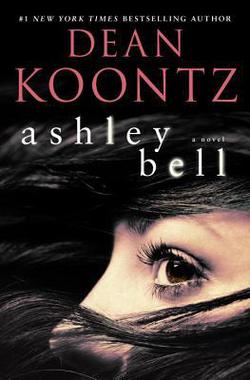
Who Is Ashley Bell?

My husband is a fan of Dean Koontz's books and he just finished Ashley Bell a couple of days ago and let me read the book before he has to return it to the Wichita Public Library. According to the publisher's blurb:

The girl who said no to death.

Bibi Blair is a fierce, funny, dauntless young woman—whose doctor says she has one year to live.

She replies, “We’ll see.”

Her sudden recovery astonishes medical science.

An enigmatic woman convinces Bibi that she escaped death so that she can save someone else. Someone named Ashley Bell.

But save her from what, from whom? And who is Ashley Bell? Where is she?

Bibi’s obsession with finding Ashley sends her on the run from threats both mystical and worldly, including a rich and charismatic cult leader with terrifying ambitions.

Here is an eloquent, riveting, brilliantly paced story with an exhilarating heroine and a twisting, ingenious plot filled with staggering surprises.Ashley Bell is a new milestone in literary suspense from the long-acclaimed master.


The book has a different cover in the U.K. and other markets, one that reflects more on the mystery of Ashley Bell and less on the character of Bibi Blair (whom I assume is pictured on the U.S. cover).

Koontz combines suspense and mystery with otherworldly questions about life and death. Not wanting to give away the plot, but as an author Koontz is reflecting on the power of imagination and even the responsibility of those, like even him, who create worlds and characters with their imaginations. In addition to the intriguing thematic aspect of the novel, Koontz maintains tremendous pace and interest, dropping hints along the way about Bibi's search for Ashley Bell. One of the reasons I enjoy Koontz's recent works (I have not read the Odd or Frankenstein series) is his emphasis on the conflict between good and evil, in which good, being good, always triumphs, even though its practitioners suffer from the assaults of evil. Although he ultimately did not like the book, Patrick Anderson admires Koontz's prose style in this review for The Washington Post:

Koontz’s increasingly bizarre story is enhanced by his colorful prose. A woman’s “blue eyes were two jewels of hatred.” A woman smiles at a naive man “the way a fox smiled at a tender rabbit.” At evening, “the sun balanced on the sea, a fat round bead of blood.”One peculiarity of the novel is Koontz’s endless evocation of the fog that rolls in off the Pacific; it’s variously “the white eclipse . . . cataracts of fog . . . headlight-silvered fog . . . the claustrophobic fog . . . the long fingers of fog . . . the hampering fog . . . a towering slow-moving tsunami of mist through which headlights swam like golden koi.” There are perhaps 50 such phrases, and they make the story increasingly otherworldly. Is anything real here, or are we adrift in a world of dreams?

I'd recommend Ashley Bell to those who like Dean Koontz and can accept the world of suspense and fantasy, especially as it reflects the war in Heaven and the defeat of Hell. 

Saturday, December 20, 2014

Book Covers and History

When I see this cover my first thought is that the novel is set in the 18th century and the protagonist is a Jane Austen character:


But it's actually the third volume in Nancy Bilyeau's Tudor suspense trilogy:

Welcome to the world of Joanna Stafford, heroine of THE CROWN, THE CHALICE, and the upcoming THE TAPESTRY. The award-winning series takes place in Tudor England, with Joanna, a Dominican novice, struggling to survive the turbulent reign of King Henry VIII.

The trilogy made its debut in 2012 when THE CROWN earned rave reviews and went to No. 1 on Amazon.com. Oprah magazine said, "Bilyeau deftly weaves extensive historical detail throughout, but the real draw of this suspenseful novel is its juicy blend of lust, murder, conspiracy and betrayal."

In 2013 appeared THE CHALICE, revolving around a prophecy-fueled conspiracy against Henry VIII. Parade magazine said "English history buffs and mystery fans alike will revel in this richly detailed sequel." The book won Best Historical Mystery of 2013 from RT Reviewers.

On March 24, 2015, the final book in the historical trilogy will appear. In THE TAPESTRY, Joanna is drawn into the court of the king, becoming closer than ever to her friend Catherine Howard, tangling with Thomas Cromwell and the Duke of Norfolk--and trying to stay one step ahead of a plot against her own life.

Nun or wife, spy or subject, rebel or courtier, Joanna Stafford must finally choose her fate...


When I think of tapestry decoration in the sixteenth century, I think of mille-fleurs in the background:


The cover above looks more like a jacquard style pattern. I am certainly no expert in sixteenth century tapestries, but the cover does not seem to fit the era to me. According to the book description above, Joanna Stafford is deep into Henry VIII's reign and I rather presume that the slender neck of the silhouette above is meant to be Catherine Howard's!