Showing posts with label fiction. Show all posts

Friday, July 12, 2024

Preview: Two by Ward for the Son Rise Morning Show

For your late summer reading plan, we're going to discuss two of Josephine Ward's novels on the Son Rise Morning Show Monday, July 15, after Matt Swaim and Anna Mitchell (and perhaps Paul Lachmann, the Sound Engineer and the first voice I hear when I connect with Sacred Heart Radio on Monday mornings) come back from their summer break. 

I recommend both of these books: One Poor Scruple and Tudor Sunset

One Poor Scruple is a contemporary novel of manners/morals at the turn of the 19th and 20th centuries; Tudor Sunset is a historical fiction set in the last years of Elizabeth I's reign at the beginning of the 17th century (1600-1603).

I reviewed One Poor Scruple here and Tudor Sunset here.

I'll be on the Son Rise Morning Show at my usual time, about 6:50 a.m. Central/7:50 a.m. Eastern. Please listen live here or listen to the podcast later. 

Since I talked to Anna Mitchell about Josephine Ward's life and significance, I went to Eighth Day Books and bought the book that inspired her to ask me to talk about Ward in the first place: Women of the Catholic Imagination: Twelve Inspired Novelists You Should Know. I agree with Eleanor Bourge Nicholson's comments about these two novels in her essay "Josephine Ward: Transforming a Heritage of Exile". She writes of One Poor Scruple that is an "unequivocally Catholic as well as a masterfully executed novel that well deserves the positive reception" it received upon its publication "by Catholic and non-Catholic readers alike". (p. 15) It might even be a more Catholic novel today since the issue at the heart of Marge's moral dilemma is Catholic moral teaching forbidding divorce and remarriage. She wants to be accepted in British society and does not know how to resist the temptation to a prestigious marriage. Crucially, Marge is not receiving the Sacraments!

Of Tudor Sunset, Nicholson comments "that it brings together the themes that had absorbed Ward throughout her life, especially Catholic identity and its relationship to patriotism and her conviction of the operation of grace." (p. 19) When Elizabeth I is dying, Meg Scrope, who has suffered imprisonment and the threat of Richard Topcliffe's cruel attentions in Newgate Prison because of the Queen's religious policy, prays for her salvation through the grace of God, whispering the Ave Maria at her beside on the eve of the Feast of the Annunciation.

The Josephine Ward novel I hope to see published soon is Out of Due Time, since it deals with the Modernist Crisis as described in yesterday's post on Elizabeth Huddleston's project, “‘A Story of Well-Defined Purpose’: Josephine Hope-Scott Ward’s Social Criticism of Modernism.”

Friday, June 28, 2024

Preview: Introducing Mrs. Wilfrid (Josephine) Ward on the Son Rise Morning Show

Anna Mitchell asked me if I'd like to comment on the life and career of Mrs. Wilfrid Ward (nee Josephine Mary Hope-Scott) during my usual Son Rise Morning Show spot on Monday, July 1. She had read a chapter about her in a book from Word on Fire, Women of the Catholic Imagination: Twelve Inspired Novelists You Should Know, edited by Haley Stewart, which I have not read. 

But I have read about Josephine Ward from other sources and have read two of her novels, so I said yes, I'd be happy to. So, Anna will bring what she knows about Josephine and I'll bring what I know about Josephine to our discussion.

The SRMS team will take the week of July 8 through 12 off (although Anna Mitchell has prepared many interviews to air during that week).

We will talk about the two novels by Josephine Ward I have read (One Poor Scruple and Tudor Sunset) during my resumed Monday segment on July 15!

BTW: for those of you few (!) who haven't followed this blog from the beginning, I started appearing on the Son Rise Morning Show in 2010, soon after Supremacy and Survival: How Catholics Endured the English Reformation was published. I even visited Sacred Heart Radio's former location during a business trip with my late husband Mark in 2012, driving from Columbus to Cincinnati, and meeting Anna and Matt Swaim.

I'll be on the Son Rise Morning Show at my usual time, about 6:50 a.m. Central/7:50 a.m. Eastern. Please listen live here or listen to the podcast later.

Josephine Ward (May 18, 1864 – November 20, 1932) was the daughter of one of Saint John Henry Newman's good friends, James Hope-Scott (please note the "-Scott") and his second wife Lady Victoria Alexandrina Fitzalan-Howard, a daughter of the 14th Duke of Norfolk, Henry Granville Fitzalan-Howard, the leading Catholic peer and Earl Marshall of England. By his first wife, Charlotte Harriet Jane Lockhart, Sir Walter Scott's granddaughter, James Hope inherited Abbotsford House in 1853 and added the "-Scott' to his name.

After her parents' deaths, she and her brother James went to live with her maternal grandmother, Augusta Minna Howard, the dowager Duchess of Norfolk at Arundel Castle in West Sussex.

I drop all these names and titles because they demonstrate the rich Catholic background Josephine Mary had--both "Old" Catholic and "New" Catholic, with ties to the recently Emancipated Recusants and the Oxford Movement/Tractarian converts. 

She lived in two historically storied homes: Abbotsford, where she describes how she used play "as a child amidst [her great-grandfathers's] coats of mail in Hall . . . and [pass] between them shivering with terror on my lonely way to bed" in her note to Alfred Noyes in her last novel, Tudor Sunset. Reflecting on her ancestor's writing career, she says as child she didn't really think about attempting "to write an historical novel!", and yet in 1932, she published one about the last years of Queen Elizabeth I.

Then she lived in Arundel Castle, associated with two Catholic martyrs, Saint Philip Howard--where his then-Venerable/Beatified remains were entombed in the Fitzalan Chapel--and Blessed William Howard. So she had those deep ties to the past and the nine pages of books consulted at the end of Tudor Sunset demonstrates how she had studied her family's Catholic heritage.

In 1887, she married Wilfrid Philip Ward, the son of another important Oxford Movement convert, William George Ward. Wilfrid wrote biographies of his father (two separate titles), of Cardinal Nicholas Wiseman, and of Cardinal Newman (two volumes). She wrote novels, One Poor Scruple, Out of Due Time and The Job Secretary, for example. Wilfrid and Josephine knew all the great Catholics of that era, from Newman to Manning and Noyes to Belloc, not to mention other literary figures like Chesterton and Tennyson! Can you imagine a dinner party at their home?

To appreciate how close she and Wilfrid were to Cardinal Newman, see the letters she wrote and he wrote to Newman, announcing their engagement to be married in 1887!

Furthermore, Josephine and Wilfrid's daughter Maisie Ward married Frank Sheed in 1926, and they founded Sheed & Ward publishers, which republished some of Josephine's novels in 1933, including One Poor Scruple. Josephine assisted Maisie and Frank financially to found the company. Maisie went on to write many great books too, including biographies of her parents, Chesterton, Caryll Houselander, and Cardinal Newman--and one of my favorites, Saints Who Made History: The First Five Centuries!

Wilfrid died in 1916, Josephine in 1932; she was buried on the Isle of Wight.

The editors of the Catholic Women Writers series, Julia Meszaros and Bonnie Lander Johnson have included One Poor Scruple among the first works published in the series by the Catholic University of America Press, which I reviewed here.

In an article published in the Newman Review, they wrote of Josephine:

One of the Revival’s greatest literary treasures is Josephine Ward, who lived between 1864–1932. . . . In their writing, Josephine and Wilfrid were both concerned with the question of how to realize the fullness of human character in prose: What is a person? How is character formed? Josephine wrote in the Dublin Review that “the greatest drama is the unfolding of the action of the will as it adheres to or thwarts the Divine purpose.” But as a life-long friend of Newman’s, she was also steeped in his ideas about conscience and the formation of moral character, as well as about the importance of doctrine for both. Another central concern of Josephine’s—as topical today as it was then—was how to enable her children to participate in the best of public, intellectual, and cultural life, without exposing them over-much to the influence of institutions that remained fundamentally opposed to Catholic belief and practice.

I'm excited about this discussion on Monday and am grateful to Anna Mitchell for suggesting it.

Image Source (Public Domain): Portrait by Thomas Lawrence, c. 1820s

Saturday, October 22, 2022

The Catholic Literary Revival in England, Houselander, and Kaye-Smith, et al.

The Catholic University of America Press is publishing the "Catholic Women Writers" series, edited by Bonnie Lander Johnson and Julia Meszaros. From the CUA Press blog:

The novels of Evelyn Waugh and Graham Greene often focus on the solitary figure of a priest or layman in spiritual combat with the world around him. By contrast, the lost novels of Catholic women are usually situated in families and parishes and in the institutional communities in which the writers themselves first encountered the faith: schools and convents. Almost wholly unrecognized by scholarship on the Catholic novel are the frequent depictions of female religious life. The women writers of the Catholic Literary Revival were in their own time well-known and well-read, with no shortage of best-selling authors among their ranks. Most predated and greatly influenced Waugh and Greene. They wrote from a more diverse range of social and political positions than Waugh and Greene, and were often more radical in their use of ninetheenth- and twenthieth-century literary innovations. Their works are set in locations male writers never considered, and they often posed very different questions about how a person can find their way in a fallen world. . . .

After introducing the first two volumes in the series and discussing the achievements of their authors (Caryll Houselander and Sheila Kaye-Smith), "The Lost Women of the Catholic Literary Revival" post continues:

This all leads back to the big question: if Houselander’s work was daring and experimental as the literary scholars craved, and Kaye-Smith’s works resonated with the masses, how did they and other women writers of the Catholic Literary Revival fall out of circulation in both critical and commercial circles, in indeed they were ever there to begin with? We can point to changes in the commercial publishing world after World War II, changes within the Church itself, and redefinitions of the literary canon in University departments in the last decades of the twentieth century. Yet it remains puzzling that a body of writing so creative, so attuned to its historical moment, and so unique in its perspective on the human condition, should have fallen out of print for so long.

Please read the rest there.

Cluny Media, however, have published Caryll Houselander novel, The Dry Wood, the same one the series begins with, and the Maisie Ward biography of her already, still in preparation in the CUA Press series. And I know that I'm just an independent author with one book to her name, but I included Sheila Kaye-Smith in my book Supremacy and Survival in the litany of 20th century converts. Virago Press published some of her novels in the 1980's, although they're no longer in their catalog, and Country Books published a biography, The Shining Cord. So maybe these authors--certainly Caryll Houselander's spiritual writings have been in print for quite some time--aren't as forgotten as the post claims! Nevertheless, it's important to have a major press sponsoring a uniform edition of these works.

And when a friend asked about my birthday/Christmas wish list, I told her about Kaye-Smith's The End of the House of Alard! I wonder if the "House of Alard" is about the same family as Kate Alard's, the heroine of Superstition Corner?

Wednesday, February 17, 2016

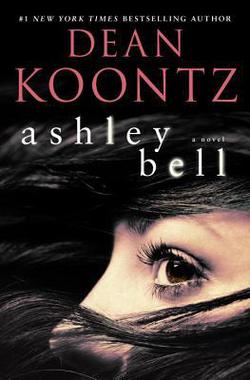
Who Is Ashley Bell?

My husband is a fan of Dean Koontz's books and he just finished Ashley Bell a couple of days ago and let me read the book before he has to return it to the Wichita Public Library. According to the publisher's blurb:

The girl who said no to death.

Bibi Blair is a fierce, funny, dauntless young woman—whose doctor says she has one year to live.

She replies, “We’ll see.”

Her sudden recovery astonishes medical science.

An enigmatic woman convinces Bibi that she escaped death so that she can save someone else. Someone named Ashley Bell.

But save her from what, from whom? And who is Ashley Bell? Where is she?

Bibi’s obsession with finding Ashley sends her on the run from threats both mystical and worldly, including a rich and charismatic cult leader with terrifying ambitions.

Here is an eloquent, riveting, brilliantly paced story with an exhilarating heroine and a twisting, ingenious plot filled with staggering surprises.Ashley Bell is a new milestone in literary suspense from the long-acclaimed master.


The book has a different cover in the U.K. and other markets, one that reflects more on the mystery of Ashley Bell and less on the character of Bibi Blair (whom I assume is pictured on the U.S. cover).

Koontz combines suspense and mystery with otherworldly questions about life and death. Not wanting to give away the plot, but as an author Koontz is reflecting on the power of imagination and even the responsibility of those, like even him, who create worlds and characters with their imaginations. In addition to the intriguing thematic aspect of the novel, Koontz maintains tremendous pace and interest, dropping hints along the way about Bibi's search for Ashley Bell. One of the reasons I enjoy Koontz's recent works (I have not read the Odd or Frankenstein series) is his emphasis on the conflict between good and evil, in which good, being good, always triumphs, even though its practitioners suffer from the assaults of evil. Although he ultimately did not like the book, Patrick Anderson admires Koontz's prose style in this review for The Washington Post:

Koontz’s increasingly bizarre story is enhanced by his colorful prose. A woman’s “blue eyes were two jewels of hatred.” A woman smiles at a naive man “the way a fox smiled at a tender rabbit.” At evening, “the sun balanced on the sea, a fat round bead of blood.”One peculiarity of the novel is Koontz’s endless evocation of the fog that rolls in off the Pacific; it’s variously “the white eclipse . . . cataracts of fog . . . headlight-silvered fog . . . the claustrophobic fog . . . the long fingers of fog . . . the hampering fog . . . a towering slow-moving tsunami of mist through which headlights swam like golden koi.” There are perhaps 50 such phrases, and they make the story increasingly otherworldly. Is anything real here, or are we adrift in a world of dreams?

I'd recommend Ashley Bell to those who like Dean Koontz and can accept the world of suspense and fantasy, especially as it reflects the war in Heaven and the defeat of Hell. 

Thursday, May 24, 2012

Rereading MR. BLUE


Mr. Blue is a novella by Myles Connolly, screenwriter and editor of The Knights of Columbus Columbia magazine (in fact, during the Cristiada era in Mexico). I first read Mr. Blue while attending Kapaun-Mt. Carmel High School; Sister Eustacia had a list of extra reading, which included some Catholic classics -- she also had Sheila Kaye-Smith's Superstition Corner on that list (but that's another post!)

Loyola Classics brought out a new paperback edition a few years ago with an introduction by John Breslin, SJ. Father Breslin points out two disparate models for the character J. Blue--G.K. Chesterton's St. Francis of Assisi and F. Scott Fitzgerald's Jay Gatsby in The Great Gatsby. Father Breslin offers more thoughts on J. Blue and the novel here:

Recently, I read Mr. Blue again, and I have come to realize that the character of Blue must also have appealed to us all, and to countless other readers, because he was a uniquely American personality. As Myles Connolly wrote him, J. Blue was the man that the ambitious Jay Gatsby might have become had he steered by a higher truth than the sound of money in Daisy Buchanan's voice.


It is hard to overestimate G. K. Chesterton's effect on several generations of young Catholic intellectuals-in-the-making. He took on the modern world with all its scientific works and philosophical pomps in the name of a reimagined Christendom, alive with story and redolent of paradox. "To have fallen into any of the fads from Gnosticism to Christian Science would indeed have been obvious and tame," he wrote in Orthodoxy. "But to have avoided them all has been one whirling adventure; and in my vision the heavenly chariot flies thundering through the ages, the dull heresies sprawling and prostrate, the wild truth reeling but erect. . . . There are an infinity of angles at which one falls, only one at which one stands."


Chesterton's method was simple but brilliantly realized: One by one he raised and demolished, often through ridicule or humor, the suppositions of pseudoscience and the secular nostrums of the educated classes. In response to the Freudian notion that Gothic spires were phallic symbols, Chesterton sagely agreed; otherwise, he deadpanned, they would surely have been built upside down.


Chesterton saw himself as an apostle of affirmation in a world gone gray. At the same time, he threw open doors and windows in a Church that seemed cautious to a fault and not very interested in new ideas. The Council of Trent had settled all the important questions four centuries before, but G. K. made orthodoxy exciting, even dangerous. Rather than viewing it as a straitjacket that stifled Christian theology, he preferred to see orthodoxy as a glorious balancing act and spoke of its "romance." Myles Connolly made young Mr. Blue its ardent embodiment.

I re-read it last week myself, and found Breslin's frame of reference very helpful. The part of the novella I remember having a great impact when I first read it was J. Blue's idea for a movie about a dystopian future where Christianity and free will have been obliterated--one man, a mere number in his cell, turns out to be a Catholic priest celebrating the Last Mass on Earth even as the world comes to an end and Jesus returns.

(BTW: I am not very happy with the new blogger interface as it adds spaces between paragraphs; after awhile, I give up the struggle to take them away! I apologize for the odd spacing.)

Sunday, May 13, 2012

The "best Catholic novel of the Twentieth Century"

Father Robert Barron states that Evelyn Waugh's Brideshead Revisited should receive that title. Allow me to parse the phrase: It is a novel; the author is Catholic; it was written in the 20th century; it is set in the 20th century; it is about a Catholic family and the protagonist's interactions with each member of that Catholic family; it is well-written, plotted, and filled with fascinating characters; it seems to fit the bill.

Charles Ryder meets Sebastian Flyte at Christ Church in Oxford and becomes his friend (and more?); Charles becomes the lover of Julia, the confidante of Cordelia, the antagonist of both Lady Marchmain and her eldest son, Bridey (the former because of his relationship with Sebastian, particularly his aiding and abetting Sebastian's alcoholism; the latter because of his relationship with Julia, particularly his leading her into "living in sin"), and finally the witness of Lord Marchmain's reconciliation to Jesus and His Church.

Through all the evocation of Oxford, the beauty of Brideshead, the curiosity of a Catholic noble family in Anglican England, all the tangle of relationships and conflicts, Waugh stated that real theme of the novel was the operation of God's grace in the Marchmain family and by extension, Charles, as he is a member of that family. Although none of the characters achieve a worldly happy ending, each of them receives grace:

Lady Marchmain remains true to her Catholic faith: she makes mistakes in handling the faults of others around her (her husband's infidelity, her son's drunkenness, etc), but she is faithful. She is not perfectly good; but no one in the novel is perfectly bad, either. She is like Bridey, staunch and strict: we don't really like her, but she has integrity.

Lord Marchmain returns home to Brideshead and home to the Church, and through his conversion, he brings Julia back to the Church: she feels the twitch upon the thread and knows that she cannot commit adultery with Charles. Whatever else Lady Marchmain else accomplished, Julia knows her Catholic faith, like Sebastian, she has the vocabulary of Catholicism, as when she acknowledges that she cannot choose a lesser love (Charles) instead of God!

Sebastian finds grace even in his drunkenness; Cordelia, who shares some of her mother and her brother's attributes, is my favorite character in the novel. She is the one who sees the dangers Charles and Julia face and also appreciates the holiness that Sebastian finds as the doorman at a monastery in Northern Africa. I always enjoy reading the scene in which Cordelia tells Charles the story of Sebastian's life at the monastery. She sees with eyes of faith the grace that Charles misses, even in her, when she accurately states his impression of her after returning from the Spanish Civil War: "thwarted"--because then she turns the term right back on him. She has prayed for his conversion and she works for her father's return to the Faith, because Cordelia believes in heaven and wants to go there after death: she is simple and profound.

Finally, Charles himself experiences conversion: he recognizes the grace that Lord Marchmain has received, and that it is "no little thing"; through that sign of Lord Marchmain on his deathbed, Charles realizes that there is a God--and he can even accept Julia's decision with a kind of bitter regret, yet understanding. The last scene, in the chapel Lord Marchmain built for his Catholic wife, demonstrates Charles' conversion and faith.

I do think Brideshead Revisited is the best Catholic novel of the twentieth century; it may be one of the best Christian novels on the twentieth century as it depicts the providence of God working in one family's, one man's life. Waugh's special insight is that he understands the human person in the fullest Catholic sense--fallen, redeemed, receiving God's grace and love all unmerited and yet participating in that grace with free will; he depicts the sacramentality of the Catholic Christian life. And although Waugh is dealing with very serious matters--life and death; love; eternal salvation or eternal damnation--there is a brilliant sense of humor and of the absurd (Rex Motram's attempt to become Catholic; Mr. Samgrass trying to keep up with Sebastian; Charles at home with his father during the summer break, etc).

If you haven't read it, I think you should; I reread it every other year. The 1981 Granada tv series is a good supplement; avoid the recent movie adaptation like the plague, or like Mr. Samgrass.