Showing posts with label Fasting. Show all posts

Friday, February 25, 2022

Preview: "Fasting a Source of Trial" on the Son Rise Morning Show

On Monday, February 28, we'll continue our discussions of seasonal sermons of Saint John Henry Newman, now moving into the Season of Lent, which starts on Ash Wednesday, March 2, on the Son Rise Morning Show. We'll be on the air at my usual time, about 6:50 a.m. Central/7:50 a.m. Eastern time. Please listen live on EWTN Radio or on your local EWTN affiliate.

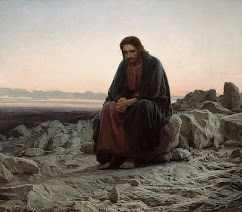
Since Pope Francis has urged us to fast and pray for peace in Ukraine (for Russia to cease waging war against the people and government of Ukraine), it seems appropriate to focus on fasting with one of Newman's Parochial and Plain Sermons, "Fasting a Source of Trial", which Newman preached on the First Sunday of Lent, March 4, 1838.

The gist of the sermon is: 
  • Jesus fasted for 40 days in the desert after His Baptism by John in the Jordan; 
  • we imitate Him when we observe Lent for 40 days; 
  • fasting is hard; 
  • we may face some temptations when we fast but that doesn't mean we shouldn't fast;
  • we can only fast through God's grace; we cannot rely solely on our will and human effort
  • the example of Jesus and God's promises to protect us from sin and death should comfort us.

"And when He had fasted forty days and forty nights, He was afterward an hungered." Matt. 4:2.

Distinguishing between Our Lord's Fast in the Desert and our Lenten penitence, which includes fasting, Newman begins the sermon, emphasizing that Love must inspire our fasting and penitence:

THE season of humiliation which precedes Easter lasts for forty days in memory of our Lord's long fast in the wilderness. . . . We fast by way of penitence, and in order to subdue the flesh. Our Saviour had no need of fasting for either purpose. His fasting was unlike ours, as in its intensity, so in its object. And yet when we begin to fast, His pattern is set before us; and we continue the time of fasting till in number of days we have equaled His.

There is a reason for this: we must do nothing except with Him in our eye. As He it is, through whom alone we have the power to do any good thing, so unless we do it for Him it is not good. From Him our obedience comes, towards Him it must look. He says, "Without Me ye can do nothing." [John 15:5.] No work is good without grace and without love. . . .

Even in our penitential exercises, Christ has gone before us to sanctify them to us. He has blessed fasting as a means of grace, in that He has fasted; and fasting is only acceptable when it is done for His sake. Penitence is mere formality, or mere remorse, unless done in love. If we fast without uniting ourselves in heart to Christ, imitating Him, and praying that He would make our fasting His own, would associate it with His own, and communicate to it the virtue of His own . . . [then] we beat the air and humble ourselves in vain.

Newman acknowledges that fasting is harder for some than it is for others and does not always or immediately produce the effect we want it to in our spiritual lives:

And this is singularly the case with Christians now, who endeavour to imitate Him; and it is well they should know it, for else they will be discouraged when they practice abstinences. It is commonly said, that fasting is intended to make us better Christians, to sober us, and to bring us more entirely at Christ's feet in faith and humility. This is true, viewing matters on the whole. On the whole, and at last, this effect will be produced, but it is not at all certain that it will follow at once. On the contrary, such mortifications have at the time very various effects on different persons, and are to be observed, not from their visible benefits, but from faith in the Word of God. Some men, indeed, are subdued by fasting and brought at once nearer to God; but others find it, however slight, scarcely more than an occasion of temptation. For instance, it is sometimes even made an objection to fasting, as if it were a reason for not practising it, that it makes a man irritable and ill-tempered. I confess it often may do this.

Fasting and abstinence can make it hard to pray and can even be a source of temptation to sin. Newman explores the mystery of this trial/temptation, citing the desert fathers and perhaps alluding to Saint Anthony the Great:

It is undeniably a means of temptation, and I say so, lest persons should be surprised, and despond when they find it so. And the merciful Lord knows that so it is from experience; and that He has experienced and thus knows it, as Scripture records, is to us a thought full of comfort. I do not mean to say, God forbid, that aught of sinful infirmity sullied His immaculate soul; but it is plain from the sacred history, that in His case, as in ours, fasting opened the way to temptation. And, perhaps, this is the truest view of such exercises, that in some wonderful unknown way they open the next world for good and evil upon us, and are an introduction to somewhat of an extraordinary conflict with the powers of evil. Stories are afloat of hermits in deserts being assaulted by Satan in strange ways, yet resisting the evil one, and chasing him away, after our Lord's pattern, and in His strength; and, I suppose, if we knew the secret history of men's minds in any age, we should find a remarkable union in the case of those who by God's grace have made advances in holy things, a union on the one hand of temptations offered to the mind, and on the other, of the mind's not being affected by them, not consenting to them, even in momentary acts of the will, but simply hating them, and receiving no harm from them. So far persons are evidently brought into fellowship and conformity with Christ's temptation, who was tempted, yet without sin.

[Saint Anthony, as described by Saint Athanasius of Alexandria (Newman's great hero) once endured a tremendously violent temptation by a host of demons. After he had fought them off, God came to his aid. Anthony asked Him where He'd been during the temptation and God told him He was with Anthony all the time, sustaining him!]

So Newman concludes from those examples that when we fast, we must rely on Jesus and take comfort in thoughts of His fast and temptation in the desert:

Let it not then distress Christians, even if they find themselves exposed to thoughts from which they turn with abhorrence and terror. Rather let such a trial bring before their thoughts, with something of vividness and distinctness, the condescension of the Son of God. For if it be a trial to us creatures and sinners to have thoughts alien from our hearts presented to us, what must have been the suffering to the Eternal Word, God of God, and Light of Light, Holy and True, to have been so subjected to Satan, that he could inflict every misery on Him short of sinning? . . . 

[One has gone] before us more awful in His trial, more glorious in His victory. He was tempted in all points "like as we are, yet without sin." (Hebrews 4:15) Surely here too, Christ's temptation speaks comfort and encouragement to us.

Newman cites Psalm 91: "He shall give His Angels charge over Thee, to keep Thee in all Thy ways" and "A thousand shall fall beside Thee, and ten thousand at Thy right hand, but it shall not come nigh Thee" as reminders that "we have nothing to fear while we remain within the shadow of the throne of the Almighty."

Then he offers this final encouragement:

Therefore let us be, my brethren, "not ignorant of their devices (2 Cor 2:11);" and as knowing them, let us watch, fast, and pray, let us keep close under the wings of the Almighty, that He may be our shield and buckler. Let us pray Him to make known to us His will,—to teach us our faults,—to take from us whatever may offend Him,—and to lead us in the way everlasting. And during this sacred season, let us look upon ourselves as on the Mount with Him—within the veil—hid with Him—not out of Him, or apart from Him, in whose presence alone is life, but with and in Him—learning of His Law with Moses, of His attributes with Elijah, of His counsels with Daniel—learning to repent, learning to confess and to amend—learning His love and His fear—unlearning ourselves, and growing up unto Him who is our Head.

Saint John Henry Newman, pray for us!
Saint Anthony of the Desert, pray for us!
Saint Athanasius of Alexandria, pray for us!

Image Credit (public domain): Christ in the Wilderness by Ivan Kramskoy, 1872.
Image Credit (public domain): The Temptation of Saint Anthony, 1487–88, by the young Michelangelo, copying Martin Schongauer's engraving

Friday, April 25, 2014

Easter Friday: Feasting in Easter after Fasting in Lent


Today, being Easter Friday and a Solemnity, we are free of any obligation of abstinence. Blessed John Henry Newman discussed the proper way of observing the cycle of fasts and feasts of the liturgical year in this PPS:

And yet, though the long season of sorrow which ushers in this Blessed Day, in some sense sobers and quells the keenness of our enjoyment, yet without such preparatory season, let us be sure we shall not rejoice at all. None rejoice in Easter-tide less than those who have not grieved in Lent. This is what is seen in the world at large. To them, one season is the same as another, and they take no account of any. Feast-day and fast-day, holy tide and other tide, are one and the same to them. Hence they do not realize the next world at all. To them the Gospels are but like another history; a course of events which took place eighteen hundred years since. They do not make our Savior's life and death present to them: they do not transport themselves back to the time of His sojourn on earth. They do not act over again, and celebrate His history, in their own observance; and the consequence is, that they feel no interest in it. They have neither faith nor love towards it; it has no hold on them. They do not form their estimate of things upon it; they do not hold it as a sort of practical principle in their heart. This is the case not only with the world at large, but too often with men who have the Name of Christ in their mouths. They think they believe in Him, yet when trial comes, or in the daily conduct of life, they are unable to act upon the principles which they profess: and why? because they have thought to dispense with the religious Ordinances, the course of Service, and the round of Sacred Seasons of the Church, and have considered it a simpler and more spiritual religion, not to act religiously except when called to it by extraordinary trial or temptation; because they have thought that, since it is the Christian's duty to rejoice evermore, they would rejoice better if they never sorrowed and never travailed with righteousness. On the contrary, let us be sure that, as previous humiliation sobers our joy, it alone secures it to us. Our Savior says, "Blessed are they that mourn, for they shall he comforted;" and what is true hereafter, is true here. Unless we have mourned, in the weeks that are gone, we shall not rejoice in the season now commencing. It is often said, and truly, that providential affliction brings a man nearer to God. What is the observance of Holy Seasons but such a means of grace?

Continuing the contrast of the worldly and the Christian when the seasons of Lent and then of Easter occur in the course of each year, Newman describes the different patterns of fasting and feasting--the world begins with the last and then is forced into the first; the Christian begins with the first and rejoices in the last:

This too must be said concerning the connection of Fasts and Feasts in our religious service, viz., that that sobriety in feasting which previous fasting causes, is itself much to be prized, and especially worth securing. For in this does Christian mirth differ from worldly, that it is subdued; and how shall it be subdued except that the past keeps its hold upon us, and while it warns and sobers us, actually indisposes and tames our flesh against indulgence? In the world feasting comes first and fasting afterwards; men first glut themselves, and then loathe their excesses; they take their fill of good, and then suffer; they are rich that they may be poor; they laugh that they may weep; they rise that they may fall. But in the Church of God it is reversed; the poor shall be rich, the lowly shall be exalted, those that sow in tears shall reap in joy, those that mourn shall be comforted, those that suffer with Christ shall reign with Him; even as Christ (in our Church's words) "went not up to joy, but first He suffered pain. He entered not into His glory before He was crucified. So truly our way to eternal joy is to suffer here with Christ, and our door to enter into eternal life is gladly to die with Christ, that we may rise again from death, and dwell with him in everlasting life." And what is true of the general course of our redemption is, I say, fulfilled also in the yearly and other commemorations of it. Our Festivals are preceded by humiliation, that we may keep them duly; not boisterously or fanatically, but in a refined, subdued, chastised spirit, which is the true rejoicing in the Lord.

In one of those great, long sentences Newman can sustain with clarity to its periodic end, he cites three Gospel accounts of Resurrection appearances:

In such a spirit let us endeavor to celebrate this most holy of all Festivals, this continued festal Season, which lasts for fifty days, whereas Lent is forty, as if to show that where sin abounded, there much more has grace abounded. Such indeed seems the tone of mind which took possession of the Apostles when certified of the Resurrection; and while they waited for, or when they had the sight of their risen Lord. If we consider, we shall find the accounts of that season in the Gospels, marked with much of pensiveness and tender and joyful melancholy; the sweet and pleasant frame of those who have gone through pain, and out of pain receive pleasure. Whether we read the account of St. Mary Magdalen weeping at the sepulchre, seeing Jesus and knowing Him not, recognizing His voice, attempting to embrace His feet, and then sinking into silent awe and delight, till she rose and hastened to tell the perplexed Apostles;—or turn to that solemn meeting, which was the third, when He stood on the shore and addressed His disciples, and Peter plunged into the water, and then with the rest was awed into silence and durst not speak, but only obeyed His command, and ate of the fish in silence, and so remained in the presence of One in whom they joyed, whom they loved, as He knew, more than all things, till He broke silence by asking Peter if he loved Him:—or lastly, consider the time when He appeared unto a great number of disciples on the mountain in Galilee, and all worshiped Him, but some doubted:—who does not see that their Festival was such as I have been describing it, a holy, tender, reverent, manly joy, not so manly as to be rude, not so tender as to be effeminate, but (as if) an Angel's mood, the mingled offering of all that is best and highest in man's and woman's nature brought together,—St. Mary Magdalen and St. Peter blended into St. John? And here perhaps we learn a lesson from the deep silence which Scripture observes concerning the Blessed Virgin after the Resurrection; as if she, who was too pure and holy a flower to be more than seen here on earth, even during the season of her Son's humiliation, was altogether drawn by the Angels within the veil on His Resurrection, and had her joy in Paradise with Gabriel who had been the first to honor her, and with those elder Saints who arose after the Resurrection, appeared in the Holy City, and then vanished away.

Thus Blessed John Henry Newman reminds us that the source of our rejoicing is the Resurrection; even as we feast and do not fast during this Easter Octave, our joy should be in the Lord's triumph over death, not the meat or the other pleasures we enjoy. Read the rest of the sermon here.

Tuesday, March 4, 2014

Confessing and Feasting in Shrovetide


As I mentioned yesterday, I'll be on the Son Rise Morning Show to talk with Matt Swaim about Shrovetide and its aspects of confessing and feasting: the spiritual and practical preparations for Lent. You may listen live here on the EWTN Radio network.

Here is a good source for a description of this season:

Shrove Tuesday is the last day of what traditionally was called "Shrovetide," the week preceding the beginning of Lent. The word itself, Shrovetide, is the English equivalent for "Carnival," which is derived from the Latin words carnem levare, meaning "to take away the flesh." (Note that in Germany, this period is called "Fasching," and in parts of the United States, particularly Louisiana, "Mardi Gras.") While this was seen as the last chance for merriment, and, unfortunately in some places, has resulted in excessive pleasure, Shrovetide was the time to cast off things of the flesh and to prepare spiritually for Lent.     

Actually, the English term provides the best meaning for this period. "To shrive" meant to hear confessions. In the Anglo-Saxon "Ecclesiastical Institutes," recorded by Theodulphus and translated by Abbot Aelfric about AD 1000, Shrovetide was described--w as follows: "In the week immediately before Lent everyone shall go to his confessor and confess his deeds and the confessor shall so shrive him as he then may hear by his deeds what he is to do in the way of penance." To highlight the point and motivate the people, special plays or masques were performed which portrayed the passion of our Lord or final judgment. Clearly, this Shrovetide preparation for Lent included the confessing of sin and the reception of absolution; as such, Lent then would become a time for penance and renewal of faith.
    

While this week of Shrovetide condoned the partaking of pleasures from which a person would abstain during Lent, Shrove Tuesday had a special significance in England. Pancakes were prepared and enjoyed, because in so doing a family depleted their eggs, milk, butter, and fat which were part of the Lenten fast. At this time, some areas of the Church abstained from all forms of meat and animal products, while others made exceptions for food like fish. For example, Pope St. Gregory (d. 604), writing to St. Augustine of Canterbury, issued the following rule: "We abstain from flesh, meat, and from all things that come from flesh, as milk, cheese, and eggs." These were the fasting rules governing the Church in England; hence, the eating of pancakes on Shrove Tuesday.


The Latin term for this pre-Lenten period is Septuagesima (roughly seventy days before Easter). The short liturgical season of Septuagesima is still observed on the Liturgical Calendar for the Extraordinary Form of the Latin Rite (and is also observed in the Anglican Use for the Personal Ordinariates). For the past three Sundays, our priests at St. Anthony of Padua's Extraordinary Form community have worth purple vestments; we have not sung either the Gloria or the Alleluia. It's a time to prepare for Lent as Lent helps us prepare for Holy Week and Easter.

As Pieter Bruegel the Elder depicted in The Fight Between Carnival and Lent (above), we can get carried away with the possible excesses of Carnival/Fasching/Shrovetide/Mardi Gras--we don't want to incur sins of gluttony just before the season of penitence and repentance!! Shrovetide seems to achieve the right balance: spiritually preparing for Lent with confession of sins and penance while practically getting ready for fasting and abstinence by using up what you won't be using any more from Ash Wednesday to Easter!

As they say before the great Pancake Races in Olney, England and Liberal, Kansas: On your mark, get set, GO!

Wednesday, December 18, 2013

Advent Ember Days


As this site reminds us:

Wednesday, Friday, and Saturday after Gaudete Sunday (3rd Sunday of Advent) are known as "Advent Embertide," and they come near the beginning of the Season of Winter (December, January, February). Liturgically, the readings for the days' Masses follow along with the general themes of Advent, opening up with Wednesday's Introit of Isaias 45: 8 and Psalm 18:2 :
Drop down dew, ye heavens, from above, and let the clouds rain the Just: let the earth be opened and bud forth a Savior. The heavens show forth the glory of God: and the firmament declareth the work of His hands.
Wednesday's and Saturday's Masses will include one and four Lessons, respectively, with all of them concerning the words of the Prophet Isaias except for the last lesson on Saturday, which comes from Daniel and recounts how Sidrach, Misach, and Abdenago are saved from King Nabuchodonosor's fiery furnace by an angel. This account, which is followed by a glorious hymn, is common to all Embertide Saturdays but for Whit Embertide.

The Gospel readings for the three days concern, respectively, the Annunciation (Luke 1:26-28), Visitation (Luke 1:37-47), and St. John the Baptist's exhorting us to "prepare the way of the Lord and make straight His paths" (Luke 3:1-6).
 
The Rorate Caeli performed above at Hereford Cathedral is from William Byrd's Gradualia:
 
℣ Rorate coeli desuper et nubes pluant justum
(Drop down dew, ye heavens, from above, and let the clouds rain the just)
℟ Aperiatur terra et germinet salvatorem"
(Let the earth be opened and send forth a Saviour").
 
Ps. Benedixisti, Domine, terram tuam: avertisti captivitatem Iacob
O Lord thou hast blessed thy land: thou hast turned away the captivity of Jacob.

Gloria Patri, et Filio, et Spiritui Sancto . . .
Glory to the Father, and to the Son, and to the Holy Spirit . . .
 
It is part of a Votive Mass for Our Lady during Advent and you may find the sheet music here.