Showing posts with label spying. Show all posts

Saturday, April 12, 2014

"History Today"--April Issue On-line Highlights

I'm not sure how long these stories will be available for free online, but there are several that interest me today:

A discussion of the last king of the House of Valois, Henri III, by the author of a new biography of the same:

In the 19th century, Henry appeared in the novels of Alexandre Dumas and other works of fiction. In 1941 Pierre Champion began a biography, but died before completing it. Following the Second World War, historical biography fell into disrepute among French academics, who preferred to study man as part of a group, but in the last decades the form has regained academic respectability. In 1985 Pierre Chevallier published a substantial biography of Henry III bearing the subtitle: ‘a Shakespearean king’. Since then Jacqueline Boucher, Nicolas Le Roux, Denis Crouzet, Monique Chatenet, Xavier Le Person and others have revolutionised our understanding of the reign. Unfortunately their contributions remain largely unknown to English-speaking readers. The only biography of Henry III in English, by Martha Walker Freer, dates from 1858.

Recent research has exploded the myth of Henry as an ineffectual and pleasure-seeking monarch surrounded by mignons, effeminate young men with absurd hair-dos. Henry is now seen as a highly intelligent and conscientious monarch who tried to bring peace to his troubled kingdom. Pleasure loving he may have been, but Boucher has shown that he spent long hours reading official reports and replying to them. Hundreds of his letters have been published by the Société de l’Histoire de France since 1959. Intellectually, Henry was also keen to learn: he set up a Palace Academy at the Louvre, where leading scholars discussed philosophy, astronomy or other topics. As for the mignons, far from being the parvenus of legend, they were mostly the sons of long-serving provincial nobles. They represented an attempt by Henry to use men of his own generation rather than older ministers chosen by his mother, Catherine de’ Medici.


A comparison between modern surveillance and the Tudor spy network:

Analogies between modern Britain and early modern England can also be seen in the history of social welfare. Beveridge and the creators of the welfare state hoped that by making benefits universal they would remove the stigma associated with poverty. Welfare benefits would simply be ‘social’ rights that would be as generally acceptable as property and political rights. However, opposition to taxation, benefits means testing and fears over fraud have led to the wholesale sharing of data between government bodies such as the Department of Work and Pensions and HM Revenue and Customs. ‘Troubled’ families are now targeted for various forms of social intervention to prevent them from becoming a burden on the state.

Similarly, during the English Reformation, the Dissolution of the Monasteries led to the destruction of institutions such as hospitals, which had traditionally assisted the poor. The Reformation’s emphasis on salvation by faith also undermined the belief in the spiritual efficacy of charitable works, although that does not mean that Christian charity vanished. These religious, economic and social shifts led to a perceived crisis of welfare. The response of the Tudor state was to supplement the promptings of Christian charity with the legal requirements of the Poor Laws. Each locality was to raise funds through a poor rate and disburse them to those in need via overseers. Over the following centuries this system came to be seen by the poor as a right. Yet the response of rate payers was increasingly to view the poor as a nuisance to be controlled. Consequently the Poor Laws spawned a vast system of surveillance to determine the circumstances of families and the parentage of illegitimate children.


The recounting of an exorcism conducted by a missionary Catholic priest in Elizabethan London by Jessie Childs, set in the context of the English Reformation:

Few periods of English history have endured such liberal applications of hindsight as the Golden Age of Good Queen Bess. It may indeed have been a time of glorious national achievement, but the country was not, with a nod to Sellar and Yeatman, ‘bound to be C of E’. The children of Henry VIII (whose own brand of reformation was unpredictable) had hardly imbued their subjects with a sense of religious stability. As Daniel Defoe put it, the country had swung ‘from the Romish religion to reformed, from reformed back again to Romish, and then to reformed again’. By 1586 Elizabeth I had been on the throne for just over a quarter of a century, long enough for the dizziness to have subsided, long enough for a new generation to have been raised on the Book of Common Prayer and long enough – just – for the word ‘Protestant’ to have become an acceptable term of self-reference. It was not so long, however, for Elizabethan Catholics to have stopped praying for one more swing of the pendulum. Often their prayers were linked to those for ‘God’s prisoner’, Mary, Queen of Scots, still alive in 1586 and still, for most people, England’s putative heir.

Church attendance was compulsory in Elizabethan England, the fine for absenteeism having been raised in 1581 from 12 pence to a swingeing £20 a month. Most Catholics conformed, some only occasionally or partially, and suffered the label ‘church papist’ or ‘schismatic’ for their sins. Those who persisted in their nonconformity were known as recusants (from the Latin recusare: to refuse). Many of them hoped, not only for freedom of worship, but also for the restoration of the Catholic faith in England. They were a minority – thousands in a population of around four million – but they had a loud voice, amplified by powerful friends on the Continent. ‘God has already granted’, declared Mary I’s widower, Philip II of Spain, ‘that by my intervention and my hand that kingdom has previously been restored to the Catholic Church once.’ It was an ominous statement of chutzpah and intent.


And from the magazine's blog, this examination of Jacques le Goff's legacy as an Annales historian:

By showing how it could be applied meaningfully to transform perceptions of major problems in the study of the past, Le Goff ensured that the Annales School had an enduring relevance for historical scholarship. Thanks to works such as La Naissance du Purgatoire and Pour un autre Moyen Âge, its influence both in medieval studies and more widely has become palpable. Not only are undergraduates now introduced to the Annalistes’ ideas as a matter of course, but the scholarly value of such topics as popular culture and environmental history is also appreciated by historians around the world, especially in those regions (such as Britain and the US) which were previously most hostile to the Annales approach. And it was only right that by the time of Le Goff’s death on April 1st, 2014, he had been elevated to the pantheon of modern historians.

But if Le Goff’s contribution should be celebrated for having resurrected the Annales School from its mid-century Purgatory, his death is also an occasion to reflect once again on the future of the nouvelle histoire. While it may be true that few scholars now doubt the merit of the approach he pioneered, it is striking that the grand vision which marked both his work and that of his most eminent colleagues has perhaps not survived the test of time as well as it might.


Much good reading there on four interesting topics.

Saturday, February 23, 2013

Review Essay on Spying in Elizabeth I's Reign


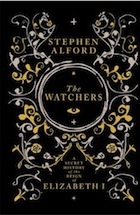
Paul Dean, Head of English at Summer Fields School, Oxford, reviews two books for The New Criterion about the spy network operating in England during the reign of Elizabeth I. One is a new biography of Sir Francis Walsingham, which must be the third biography in the past five to ten years, The Queen's Agent by John Cooper; the other is a book I've mentioned before: The Watchers by Stephen Alford. A couple of excerpts:

A “loyal Catholic” was a contradiction in terms. Since the queen had been excommunicated by Pope Pius V’s bull Regnans in excelsis in 1570—which, incidentally, prompts the surprising reflection that England remained technically a Catholic country for the first twelve years of her reign—her Catholic subjects had been released from obedience to her or her laws. (John Cooper, however, remarks that the bull was not widely publicized in England and suggests that “most English Catholics never saw a copy.”) Many priests and laity worked actively to overthrow and replace her, first by Mary Queen of Scots, then, after the latter’s execution for treason in 1587—an act which was forced upon a reluctant Elizabeth by her ministers, who had effectively rigged the case against her royal cousin—by King Philip of Spain. Alford’s book tells the stories of many plotters on both sides: some, like John Somerville, minor figures, others among the great of the land. Intriguing though these stories are, they give the work an episodic feel; it lacks the narrative drive of Cooper’s biography of Walsingham (which Alford seems not to know). Where they cover the same ground, Cooper is usually clearer and more perceptive.

and

Cooper sensibly warns us of the danger of reading history written by the victors: “The myth that Catholicism is somehow alien to Englishness has had a long and corrosive effect on the national memory of the British Isles.” The first generation of Catholic missionary priests did not seek Elizabeth’s overthrow—indeed, Pope Pius IV offered to leave the Church of England undisturbed if only Catholics were granted freedom to worship. Cardinal Allen’s seminary at Douai, founded in 1568, initially encouraged its graduates to go to England to give pastoral support to Catholic families, not to make converts. (Allen himself, however, advocated the invasion of England by the powers of France and Spain.) Several priests prayed for the queen on the scaffold. Walsingham was uneasy about so many executions—not from humane motives, but because he felt that to create martyrs was to play into the enemy’s hands. It became increasingly difficult, and finally impossible, for many Catholics to take the oath of loyalty which was imposed on every citizen, requiring them “to withstand, pursue, and suppress” anyone designing to hurt the queen. Meanwhile, parliamentary legislation of the 1570s and 1580s, steered through by Walsingham, greatly extended the legal definition of treason.

Commenting on Cooper's explanation of Walsingham's involvement in the downfall of Mary, Queen of Scots, Dean notes:

Walsingham alone, the spider in the center of the web, saw the whole picture. Propelled by his extreme Protestant zeal, he was not above bypassing the law in order to gain his ends. He even recruited a Catholic priest, Gilbert Gifford, by whose means he was able to intercept correspondence between Mary, Queen of Scots and her contacts in Paris, and thereby unmask the Babington plot. (Among the plotters, by the way, was Chidiock Tichborne, whose poem written on the eve of his execution, “My prime of youth is but a frost of cares,” is a small masterpiece.) Gifford was trained by Thomas Phelippes, Walsingham’s chief cipher specialist, about whom Alford writes interestingly. Phelippes and Walsingham went so far as to add a coded postscript to one of Mary’s letters to Babington, using wording which would support a charge of treason against her. Also working on this case was Robert Poley, who was implicated in the death of Marlowe and was probably acting on government orders. (Alford’s downplaying of the evidence for Marlowe’s espionage activity as “sketchy and circumstantial” is questionable.) Babington realized too late that Poley might not be reliable, and wrote him a heartrending note: “I am the same I always pretended. I pray God you be so.” Babington’s inevitable execution in 1586 was made exceptionally brutal; on the personal orders of Elizabeth, “for more terror,” he was rent limb from limb. Mary, being royal, was beheaded, although Elizabeth would have preferred her quietly murdered in private, and even tried to persuade her jailer to do the deed himself.

Read the rest here. Remember, though, that the public reaction to Babington's horrible execution led Elizabeth to withdraw that order: the other conspirators were hung until dead, then cut up and their body parts displayed as the usual warning to plotters.

Saturday, January 19, 2013

Tudor Portrait Recycling with a Twist

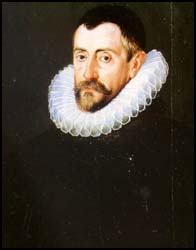
Portrait of Sir Francis Walsingham.From Elena Maria Vidal's Tea at Trianon blog comes this story from The Guardian about a special exhibition at the National Portrait Gallery in London:

He was the eyes and ears of Elizabeth I, the loyal spymaster and ruthless counterterror chief: Sir Francis Walsingham was the man who knew everything. Or not quite everything, it seems. Certainly not that his portrait was secretly painted over an overtly Roman Catholic image of the holy Virgin and Child.


“He would not have been delighted,” speculated Dr Tarnya Cooper, standing in front of the remarkable new discovery going on show at the National Portrait Gallery. “You do wonder if the artist might be enjoying a private joke."

The gallery on Thursday opened a display showing x-rays of devotional paintings it has discovered underneath its portraits of two key Tudor statesmen. As well as a Virgin and Child under Walsingham, researchers found A Flagellation of Christ under the Queen’s lord treasurer Thomas Sackville.

The Walsingham portrait dates from the 1580s when Protestant England was isolated and supporting the war in the Netherlands against the Spanish.

“The Catholics are the absolute enemy at this period so the idea that you’ve got this wonderful devotional image underneath your portrait would probably be rather horrifying to him,” Cooper, the NPG’s chief curator, said. 


It was a surprise finding. “There is not very much that Walsingham does not know about of what’s going on in courts across Europe, he has a huge network of informers, is an incredibly wily man and is someone with a public reputation. For somebody who is not wonderfully keen on Walsingham this would be a clever way of getting at him."

The NPG believes it cannot be accidental that after x-raying more than 120 Tudor portraits and mostly finding nothing, it found an image so emblematic of Roman Catholicism under Walsingham. “It is intriguing that it is under the spymaster-general,” said Cooper.

You can see the portrait in question and the x-ray results here, although I find it hard to see the image behind the portrait on-line:

Recent technical analysis undertaken as part of the Making Art in Tudor Britain project has revealed that some of the Gallery’s sixteenth-century portraits were painted over pre-existing paintings. This could have occurred for a variety of reasons and provides fascinating insight into artistic production during the period.

This display highlights two rare examples in which paintings with religious iconography have been discovered beneath portraits. Images generated by analytical techniques such as x-radiography and infrared reflectography are used to reveal the hidden paintings, and the portraits are also paired with loans from other collections to give an impression of the underlying compositions. The display also includes an interesting portrait with a fragment from a decorative scheme on the reverse, which suggests that it was originally intended to be viewed from both sides.

More on Francis Walsingham here.

Friday, September 21, 2012

Spying in Elizabethan England

Appropriately enough after yesterday's post on the Babington Plot and Sir Francis Walsingham's spy network against Mary, Queen of Scots, here is a review from the U.K. Guardian newspaper of a book about spying in Elizabethan England:

The age of Elizabeth I, so often celebrated as a period of glorious national achievement, was one of intense insecurity. Beset by enemies at home and abroad, the Queen knew that her hold on the crown was always precarious. The Catholic powers of Europe regarded her as a heretic and a bastard. Pope Pius V tried to depose her. Philip II of Spain attempted armed invasion. The loyalty of English Catholics, unreconciled to her Protestant church settlement, was always in doubt.

Elizabeth created further anxiety by persistently refusing to nominate her successor. The stability of the regime thus depended entirely on her own personal survival. As one MP put it in 1567: "If God should take her Majestie, the succession being not established, I know not what shall become of myself, my wife, my children, lands, goods, friends or country."

Feelings of anxiety and distrust were intensified by an unending series of conspiracies and assassination plots. The Rising of the Northern Earls in 1569, the Ridolfi Plot of 1569-71, the Throckmorton Plot of 1583 and the Babington Plot of 1585-6 were only the best publicised of repeated attempts to dethrone the Queen by insurrection, foreign invasion or simple assassination. There were three such plots in 1596 alone. Many of these conspiracies sought to replace Elizabeth with the Catholic Mary Stuart, the ex-Queen of the Scots who had taken refuge in England after her forced abdication in 1568, and whose strong hereditary claim to the succession was terminated only by her execution in 1587. . . .

Confronted by these threats, the Elizabethan government embarked on a draconian policy of counter-terrorism. The laws of treason were extended to catch not just those who questioned Elizabeth's right to rule, but all missionary priests and those who sheltered them. Torture was not permitted by the common law, but special powers were invoked to justify its regular use to extract information from Catholic suspects. The procedure in treason trials gave the accused no chance of offering an adequate defence, and unsafe convictions were common. The standard penalty for traitors was to be hanged, cut down when still alive, castrated, disembowelled and dismembered. Over 100 Catholic priests suffered this fate. This was not enough for Elizabeth, who wanted her Privy Councillors to devise an even more terrible death for the Babington conspirators, who had planned to murder her.

In my book collection I have this interesting title, Tudor Underground, by Denis Meadows. Kirkus Reviews wasn't that thrilled in 1950, but perhaps I'll read it again some day:

Personalities, hangings and quarterings, spies and Elizabethan religious turmoil provide a tempestuous background for a relatively pallid story of religious conversion. Hugh Rampling, young Catholic heir of an aquiline-nosed (and therefore, of course, loyal) English family attempts to align his hereditary Catholicism with a neutralized religious position which his career with the Protestant Principal Secretary, of Queen Elizabeth, Sir Francis Walsingham, demands. Aiding in the Secretary's spy ring formed to root out Catholic infiltration into England, Hugh, in successful adventures with a female demon aiding the purge, pursuers in Rome and in other narrow squeaks, is on the way up. However, in the midst of this uneasy neutrality, Hugh meets one of the most coveted prizes of the State -- Father Persons, a Jesuit priest. Not only does the priest induce Hugh to allow him and other followers to escape, but brings Hugh back into the fold, and positive action for the Catholic mission. Some elements of a good story here, but Hugh as the hero is the usual blank cartridge bright boy not peculiarly adaptive to heavenly meditation. A sprawling, uneven historical.