Showing posts with label obituaries. Show all posts

Friday, July 26, 2019

Marie Borroff, RIP and Sir Gawain

The penultimate work on our Christendom Academy reading list is Sir Gawain and the Green Knight. Since I still have my two volume Norton anthology of English literature, I am reading the Marie Borroff translation. J.R.R. Tolkien also translated this poem from its Middle English Midlands dialect. The British Library has the only manuscript that survives (as far as we know now), which also includes three other poems: Patience, Pearl, and Cleanness. Simon Armitage, another recent translator, describes the provenance of this manuscript in the British Library collection:

We know next to nothing about the author of the poem which has come to be called Sir Gawain and the Green Knight. It was probably written around 1400. In the early 17th century the manuscript was recorded as belonging to a Yorkshireman, Henry Saville of Bank. It was later acquired by Sir Robert Cotton, whose collection also included the Lindisfarne Gospels and the only surviving manuscript of Beowulf . The poem then lay dormant for over 200 years, not coming to light until Queen Victoria was on the throne, thus leapfrogging the attentions of some of our greatest writers and critics. The manuscript, a small, unprepossessing thing, would fit comfortably into an average-size hand, were anyone actually allowed to touch it. Now referred to as Cotton Nero A X, it is considered not only a most brilliant example of Middle English poetry but also as one of the jewels in the crown of English Literature; it now sits in the British Library under conditions of high security and controlled humidity.

To cast eyes on the manuscript, or even to shuffle the unbound pages of the Early English Text Society's facsimile edition, is to be intrigued by the handwriting: stern, stylish letters, like crusading chess pieces, fall into orderly ranks along faintly ruled lines. But the man whose calligraphy we ponder, a jobbing scribe probably, was not the author. The person who has become known as the Gawain poet remains as shadowy as the pages themselves. Among many other reasons, it is partly this anonymity which has made the poem so attractive to latter-day translators. The lack of definitive authorship seems to serve as an invitation, opening up a space within the poem for a new writer to occupy. Its comparatively recent rediscovery acts as a further draw; if Milton or Pope had put their stamp on it, or if Dr Johnson had offered an opinion, or if Keats or Coleridge or Wordsworth had drawn it into their orbit, such an invitation might now appear less forthcoming. . . .

Please read the rest, and view the illustrations from the manuscript, there.

As I was reading--aloud--Sir Gawain and the Green Knight in Marie Borroff's translation, I looked her up and discovered that she died on July 5 at the age of 95. Yale University, where she taught as Sterling Professor of English, provided this tribute:

“Marie Borroff will be remembered not only because of her place in Yale history but because she exemplified excellence and demonstrated an unwavering commitment to the university’s mission,” says Peter Salovey, ’86 Ph.D., President of Yale and Chris Argyris Professor of Psychology. “A superb scholar, dedicated educator, and exemplary community citizen, she mentored scores of students and made critical contributions on and beyond our campus through her writing, translation, and teaching. Yale mourns the passing of one of its greats.”

Professor Borroff was born in New York City the daughter of professional musicians Marie Bergerson and Raymond Borroff. The family moved to Chicago in 1941, and it was there that she received an undergraduate degree and an M.A. from the University of Chicago. Later, she earned a doctorate in English literature and philology from Yale. She began her teaching career at Smith College, and in 1959 became the first woman appointed to Yale’s Department of English. In 1965 she was appointed as a professor of English, making her one of the first two women granted tenure in any department of Yale’s Faculty of Arts and Sciences, and in 1991 she became the first woman to be named a Sterling Professor, the highest honor bestowed on a Yale faculty member.

A scholar of medieval and Anglo Saxon literature and philologist by training, Professor Borroff extended her scholarship and teaching to what she called “the language of poetry and the poetry of language.” Her critical book-length studies, “Sir Gawain and the Green Knight: A Stylistic and Metrical Study” (1962) and “Language and the Poet: Verbal Artistry in Frost, Stevens and Moore” (1979), received accolades, as did her many articles and editions on the history of the language and modern poets.

“Marie held the whole history of English poetry in her mind and shared it with generation after generation of Yale students,” says Langdon Hammer, the Neil Gray Jr. professor of English and chair of the Department of English at Yale.

A poignant line from the end of the obituary: "Her death signals the end of an age."

An age of scholarship and beauty, of reverence for the past, and dedication to excellence, I presume. Not an age of political correctness, doxxing, and deconstruction!

Here is a poem she wrote titled "Understanding Poetry."

May she rest in peace.

Wednesday, January 23, 2019

Memories of Paris with Mark


You may have noticed that I did not post much during December last year and not much so far this year. My husband Mark's health was failing during these past several weeks and he collapsed and died on Wednesday, January 16. His Rosary, Funeral Mass, and burial are all today. I've just posted some fun pictures of our wining and dining in Paris during our visits there--plus one of us in front of Mark's favorite place to have a croques-monsieur--I think he had one there every time we went to Paris (10 times). Last week, at my request, Mark had just cropped out a gentleman to his left who was leaving the restaurant! We'll always have Paris!


Please pray for the repose of his soul and for me and his family and friends. He is a wonderful man!

Wednesday, July 29, 2015

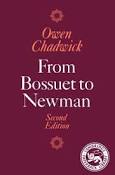
The Reverend Owen Chadwick (OM, KBE, FBA, FRSE), RIP

The historian and Anglican minister Owen Chadwick died on July 17, 2015. I have read at least six of his books:


And have dipped into one a few times:


According to the obituary article in The Telegraph:

The Reverend Professor Owen Chadwick, OM, who has died aged 99, was a clergyman-academic of a kind once common in universities but now very rare; the holder successively of Cambridge University’s chairs of both Ecclesiastical and Modern History, he was a leading authority on the history of religion and the churches.

The greater part of his career was devoted to the study of post-Reformation history, particularly the English Church, state and society since the industrial and French revolutions.

His single biggest publication, The Victorian Church – published in two parts in 1966 and 1971 – was a gigantic survey of religious life in Britain in the 19th century, exploring the social and intellectual developments which lay behind the waning power of religion in the Victorian period.

Although it was based on a quite astonishing range of research, The Victorian Church was – typically for Chadwick – essentially a personal interpretation. It showed less interest in dissent than in the establishment, less liking for evangelicals than for the Oxford Movement, and less love for town than for country. If some critics accused him of lack of balance, they were unable to fault his analysis of the politics of established churchmanship.

Nor could they fault his prose style. For Chadwick was no dry-as-dust historian; he always preferred to tell a story to explore a situation or illustrate a point. The Victorian Church was enlivened by a wealth of vivid detail: Queen Victoria trying to slip a favourite preacher into a bishopric; a Dorset parishioner complaining that his astronomy-minded rector kept “a horoscope top o’ his house to look at the stares and sich”.

Although he wrote extensively on the relationship between the Christian denominations, Chadwick’s strength lay in his sympathetic understanding of the spiritual and social foundations of the Church of England.

He always wrote most warmly about the country clergy and, as he put it, their “reasonable, quiet, unpretentious, sober faith in God and way of worship”. The history of the English Church, he believed, was made not only by the decisions of the great at Lambeth or Westminster or in debates at Oxford, but by the convictions of obscure country parsons in Lincolnshire.

May he rest in peace. David Warren wrote an appreciation of Chadwick for The Catholic Thing.

Friday, December 19, 2014

Margaret Aston, RIP


Martin Sheppard writes for The Independent about historian Margaret Aston, who died in November:

Margaret Aston was an historian whose work illuminated the study of English religious life between the late Middle Ages and the Civil War. Although she was from the most establishment of backgrounds her chosen field was that of popular belief, and her main subjects were heretics and iconoclasts.

An independent historian of the highest calibre, Aston combined exact scholarship with wide-ranging ideas and interpretation, bringing out the crucial part played by images and printing in changes to religious belief. Her beautifully written work has had a profound impact on all subsequent interpretations of the English Reformation.


He comments on her book about the famous allegorical painting of the English Reformation pictured above:

A remarkable by-product of Aston’s unrivalled knowledge of English iconoclasm appeared in 1995. The King’s Bedpost was a reinterpretation of Edward VI and the Pope, an enigmatic painting in the National Portrait Gallery. In a compelling detective story she demonstrated that the picture was painted much later than had been previously thought and reflected the crisis that led up to the excommunication of Elizabeth I in 1570.

The book is unfortunately out of print at Cambridge. The Pontifical Institute of Medieval Studies (PIMS) published a festscrift dedicated to Margaret Aston in 2009:


As that title notes, her work often centered on images and iconoclasm, including a two volume work that will be completed in 2015 with the publication of Broken Idols of the English Reformation, also from Cambridge.

Why were so many religious images and objects broken and damaged in the course of the Reformation? Margaret Aston's magisterial new book charts the conflicting imperatives of destruction and rebuilding throughout the English Reformation from the desecration of images, rails and screens to bells, organs and stained glass windows. She explores the motivations of those who smashed images of the crucifixion in stained glass windows and who pulled down crosses and defaced symbols of the Trinity. She shows that destruction was part of a methodology of religious revolution designed to change people as well as places and to forge in the long term new generations of new believers. Beyond blanked walls and whited windows were beliefs and minds impregnated by new modes of religious learning. Idol-breaking with its emphasis on the treacheries of images fundamentally transformed not only Anglican ways of worship but also of seeing, hearing and remembering.

~A major new contribution to our understanding of the English Reformation
~Analyses the causes and effects of iconoclasm and illuminates why certain types of images were particularly targeted
~Sets iconoclasm within a wider process of religious revolution designed to create new generations of believers and new ways of belief

Monday, January 28, 2013

More on M.D.R Leys

A reader of this blog kindly found the obituary for Mary Dorothea Rose Leys from The Times of London, published on September 8, 1967:

Miss Mary Leys, fellow and lecturer in history, and a former vice- principal of St. Anne's College, Oxford, died on Wednesday at Exmouth. She was educated at home because "the family was too poor to afford school fees"'. She was awarded a scholarship to Somerville in 1911, where she read history and took her degree in modern history in 1915. After that she gained valuable experience in a variety of jobs, as county secretary for the Women's Land Army and in the Women's Royal Air Force. In 1919 she began what was to be her life work, teaching history for the Society of Oxford Home-Students, as St Anne’s College then was. In 1938 in addition to her work as history tutor she was appointed vice-principal.
She was twice acting principal, once while Miss Hadow was abroad, and again, after Miss Hadow's death, in 1940. She resigned her history tutorship in 1952 but continued her connexion with the college as Fellow and lecturer in history until 1955. She was deeply interested in all Catholic religious and educational work and much of her spare time was spent in voluntary service for the causes in which she believed. She published a book, Men, Money and Markets in 1936, and with her sister- in-law Rosamond Mitchell, A History of the English People in 1950. After her retirement she first published Between Two Empires, a Study of France: 1814-48. In 1957 she was awarded a Leverhulme Research Fellowship, to assist work on a book on Catholics inEngland, 1559-1829, which was published in 1961. In 1958 appeared A History of London Life written by R. J. Mitchell and M. D. R. Leys.

One alumna of St. Anne's College is Sister Wendy Beckett, the hermit, consecrated virgin, and art critic for the BBC. Somerville College boasts many other great alumni: Vera Brittain, Dorothy L. Sayers, Indira Gandhi, and Margaret Thatcher among them!