Showing posts with label Lenten Sermons. Show all posts

Friday, April 8, 2022

Preview: Newman on the Sufferings of Christ in His Passion

On Monday, April 11 (the Monday of Holy Week), I'll continue the Son Rise Morning Show series of reflections on Lenten sermons by Saint John Henry Newman edited and excerpted in The Tears of Christ. We'll be on the air at my usual time, about 6:50 a.m. Central/7:50 a.m. Eastern time. Please listen live on EWTN Radio or on your local EWTN affiliate.

The sermon I've chosen this week is "The Incarnate Son: a Sufferer and Sacrifice" which is divided into two meditations for Palm Sunday and the Monday of Holy Week in The Tears of Christ. According to the Chronology of his sermons, he delivered it on Good Friday,  April 1, 1836 and it is in the sixth volume of his Parochial and Plain Sermons, sermon number 6.

As I've often noted--based on many authorities--one of Newman's great efforts in his Parochial and Plain Sermons was to wake the Christian people of England up to the reality of their faith in God. They were living in a nominally Christian country with an Established Church as part of their governance, yet he saw signs that they did not really know what they believed. Their faith was notional, not real: it did not always affect their lives as English men and women. At the beginning of this sermon, he tells them:

Let us try, what is so very difficult, to put off other thoughts, to clear our minds of things transitory, temporal, and earthly, and to occupy them with the contemplation of the Eternal Priest and His one ever-enduring Sacrifice;—that Sacrifice which, though completed once for all on Calvary, yet ever abideth, and, in its power and its grace, is ever present among us, and is at all times gratefully and awfully to be commemorated, but now especially, when the time of year is come at which it was made. Let us look upon Him who was lifted up that He might draw us to Him; and, by being drawn one and all to Him, let us be drawn to each other, so that we may understand and feel that He has redeemed us one and all, and that, unless we love one another, we cannot really have love to Him who laid down His life for us.

So he's telling them not to think about the Passion of Our Lord like it's something they've heard about dozens of times, with their minds divided between it and what they're going to do after the service, what someone said to them yesterday, what they need to do to get ready for Easter Sunday, etc. Instead: Think about what Jesus has done for us and the effect it should have in our lives, so that we love Him and one another.

Newman hopes to awaken that love by reminding them of the Doctrine of the Incarnation, as they profess in the Nicene Creed!

It would be well if we opened our minds to what is meant by the doctrine of the Son of God dying on the Cross for us. I do not say we shall ever be able to solve the mystery of it, but we may understand in what the Mystery consists; and that is what many men are deficient in. They have no clear views what the truth of the matter is; if they had, it would make them more serious than they are. Let it be understood, then, that the Almighty Son of God, who had been in the bosom of the Father from everlasting, became man; became man as truly as He was always God. He was God from God, as the Creed says; that is, as being the Son of the Father, He had all those infinite perfections from the Father which the Father had. He was of one substance with the Father, and was God, because the Father was God. He was truly God, but He became as truly man. He became man, yet so as not to cease in any respect being what He was before. He added a new nature to Himself, yet so intimately, that it was as if He had actually left His former self, which He did not. "The Word became flesh:" even this would seem mystery and marvel enough, but even this was not all; not only was He "made man," but, as the Creed goes on to state, He "was crucified also for us under Pontius Pilate, He suffered and was buried." . . .

Think of this, all ye light-hearted, and consider whether with this thought you can read the last chapters of the four Gospels without fear and trembling.

And then to bring images of what was done to Jesus on Good Friday to his congregation's mind's eye, Newman cites verses from the Gospels of John, Matthew, and Luke (John 18:22, Matthew 26:67, Luke 22:63-65, Luke 23:11, John 19:1-5, Luke 23:33), recounting how Jesus was struck, mocked, brutalized, scourged, nailed to a cross, exposed, and pierced.

Then he exhorted them to think about that suffering and Who suffered it:

Now I bid you consider that that Face, so ruthlessly smitten, was the Face of God Himself; the Brows bloody with the thorns, the sacred Body exposed to view and lacerated with the scourge, the Hands nailed to the Cross, and, afterwards, the Side pierced with the spear; it was the Blood, and the sacred Flesh, and the Hands, and the Temples, and the Side, and the Feet of God Himself, which the frenzied multitude then gazed upon. This is so fearful a thought, that when the mind first masters it, surely it will be difficult to think of any thing else; so that, while we think of it, we must pray God to temper it to us, and to give us strength to think of it rightly, lest it be too much for us.

But Newman must also remind us that Christ's sufferings, for which we should feel great compassion, also were the means of our salvation, because He endured these agonies in our human nature through His Incarnation and thus redeemed it and us:

We believe, then, that when Christ suffered on the cross, our nature suffered in Him. . . . The Son of God then took our nature on Him, that in Him it might do and suffer what in itself was impossible to it. What it could not effect of itself, it could effect in Him. He carried it about Him through a life of penance. He carried it forward to agony and death. In Him our sinful nature died and rose again. When it died in Him on the cross, that death was its new creation. In Him it satisfied its old and heavy debt; for the presence of His Divinity gave it transcendent merit. . . And thus, when it had been offered up upon the Cross, and was made perfect by suffering, it became the first-fruits of a new man. It became a Divine leaven of holiness for the new birth and spiritual life of as many as should receive it. And thus, as the Apostle says, "If one died for all, then did all die" (2 Cor. 5:14); "our old man is crucified in Him, that the body of sin might be destroyed" (Romans 6:6); and "he made us alive together with Christ . . . and raised us up with Him in the heavenly places with Christ Jesus." (Ephesians 2:5-6)

This is great meditation for Holy Week as we remember the Passion of Our Lord through the Holy Triduum. 

Blood of Christ, shed profusely in the Scourging, save us.
Blood of Christ, flowing forth in the Crowning with Thorns, save us.
Blood of Christ, poured out on the Cross, save us.

Best wishes for a holy and blessed Holy Week!

Friday, April 1, 2022

Preview: Newman on Jesus and the Raising of Lazarus

On Monday, April 4, I'll continue the Son Rise Morning Show series of reflections on Lenten sermons by Saint John Henry Newman edited and excerpted in The Tears of ChristWe'll be on the air at my usual time, about 6:50 a.m. Central/7:50 a.m. Eastern time. Please listen live on EWTN Radio or on your local EWTN affiliate

Last month, our Lovers of Newman group met at the Formation House of the Sisters of the Immaculate of Mary in Colwich, Kansas to read out loud, meditate on, and discuss one of St. John Henry Newman's Parochial and Plain Sermons, "Tears of Christ at the Grave of Lazarus". 

You could say that this sermon is Newman's homiletic dissertation on the shortest verse identified in the Gospels, John 11:35: "Jesus Wept", as he explores why Jesus wept and what those tears mean in the Incarnate Son of God, as a Divine Person and in His human nature. Newman also applies the poignant statements of Martha and Mary, "if you had been here, my brother would not have died" (remember that Jesus had delayed returning to Bethany, so close to Jerusalem and danger, after hearing that Lazarus was ill) to his listeners and readers as we face trouble and grief. 

If you attend a Mass this Sunday, April 3 with the final Scrutiny for the Elect who will receive the Sacraments of Initiation at the Easter Vigil, you will hear this Gospel, John 11: 1-45. Otherwise, you'll hear the Gospel for the Fifth Sunday of Lent, also from John, 8:1-11.

In The Tears of Christ, which we are using for our weekly discussions on the Son Rise Morning Show, this sermon is excerpted in two parts for the Sunday and the Monday of the Fifth Week of Lent, and I chose to focus on the second part, because of these two remarkable passages from the third and fourth points Newman makes about why "Jesus wept":

3. . . . Was He not in Joseph's case, who not in grief, but from the very fulness of his soul, and his desolateness in a heathen land, when his brethren stood before him, "sought where to weep," as if his own tears were his best companions, and had in them a sympathy to soothe that pain which none could share? . . . Christ's was a different contemplation; yet attended with its own peculiar emotion. I mean the feeling that He had power to raise up Lazarus. Joseph wept, as having a secret, not only of the past, but of the future;—of good in store as well as of evil done—of good which it was in his own power to confer. And our Lord and Saviour knew that, while all seemed so dreary and hopeless, in spite of the tears and laments of his friends, in spite of the corpse four days old, of the grave and the stone which was upon it, He had the power which could overcome death, and He was about to use it. Is there any time more affecting than when you are about to break good news to a friend who has been stricken down by tidings of ill?

4. Alas! there were other thoughts still to call forth His tears. This marvellous benefit to the forlorn sisters, how was it to be attained? at His own cost. Joseph knew he could bring joy to his brethren, but at no sacrifice of his own. Christ was bringing life to the dead by his own death. 

Joseph, whose brothers had sold him into a slavery, had become the Pharaoh's trusted counselor: he would be able to help his father and brothers with the grain that Egypt had stored based on his advice ot Pharoah.  He was able to give from a huge supply of grain; it cost him nothing personally.

In this next passage, Newman offers us a preview of everything we are going to hear at Mass in the next two weeks, mostly from the Gospel of John:

His disciples would have dissuaded him from going into Judea, lest the Jews should kill Him. Their apprehension was fulfilled. He went to raise Lazarus, and the fame of that miracle was the immediate cause of His seizure and crucifixion. This He knew beforehand, He saw the prospect before Him; He saw Lazarus raised [John 11:43-44]; the supper in Martha's house; Lazarus sitting at table; joy on all sides of Him [John 12:2]; Mary honouring her Lord on this festive occasion by the outpouring of the very costly ointment upon His feet [John 12:3]; the Jews crowding not only to see Him, but Lazarus also [John 12:9]; His triumphant entry into Jerusalem; the multitude shouting Hosanna [John 12:13]; the people testifying to the raising of Lazarus [John 12:17]; the Greeks, who had come up to worship at the feast, earnest to see Him [John 12:20-26]; the children joining in the general joy [Matthew 21:15-16]; and then the Pharisees plotting against Him [John 11:45-53, 57; 12:1], Judas betraying Him [John 13:21-30], His friends deserting Him [Matthew 26:56; Mark 14:50], and the cross receiving Him [John 19:17]

Newman then boldly enters into the human feelings of Jesus:

These things doubtless, among a multitude of thoughts unspeakable, passed over His mind. He felt that Lazarus was wakening to life at His own sacrifice; that He was descending into the grave which Lazarus left. He felt that Lazarus was to live and He to die; the appearance of things was to be reversed; the feast was to be kept in Martha's house, but the last passover of sorrow remained for Him. And He knew that this reverse was altogether voluntary with Him. He had come down from His Father's bosom to be an Atonement of blood for all sin, and thereby to raise all believers from the grave, as He was then about to raise Lazarus; and to raise them, not for a time, but for eternity; and now the sharp trial lay before Him, through which He was to "open the kingdom of heaven to all believers." Contemplating then the fulness of His purpose while now going about a single act of mercy, He said to Martha, "I am the Resurrection and the Life: he that believeth in Me, though he were dead, yet shall he live, and whosoever liveth and believeth in Me, shall never die."

Finally, Newman applies these meditations to our own dealings with the illness and death of loved ones, the faith we need to bear them, and the confidence we should have in Jesus:

Wherever faith in Christ is, there is Christ Himself. He said to Martha, "Do you believe this?" Wherever there is a heart to answer, "Lord, I believe," there Christ is present. Blessed be his name! Nothing can rob us of this consolation: we will be as certain, through His grace, that He is standing over us in love, as though we saw Him. We will not, after our experience of Lazarus's history, doubt an instant that He is thoughtful about us. He knows the beginnings of our illness, though He keeps at a distance. He knows when to remain away and when to draw near. He notes down the advances of it, and the stages. He tells truly when His friend Lazarus is sick and when he sleeps. We all have experience of this in the narrative before us, and henceforth, so be it! will never complain at the course of His providence. Only, we will beg of Him an increase of faith;—a more lively perception of the curse under which the world lies, and of our own personal demerits, a more understanding view of the mystery of His Cross, a more devout and implicit reliance on the virtue of it, and a more confident persuasion that He will never put upon us more than we can bear, never afflict His brethren with any woe except for their own highest benefit.

I heartily recommend that even if you don't hear this Gospel passage on Sunday, April 3, you read it and then read the two substantial excerpts from Newman's sermon in The Tears of Christ, or at the Newman Reader website. It is certainly a good meditation for the week before Holy Week as we enter the Passiontide of Our Lord.

Saint John Henry Newman, pray for us!
Saints Martha, Mary, and Lazarus of Bethany, pray for us!

Image Credit (Public Domain): Rembrandt's Raising of Lazarus, 1630–1631
Image Credit (Public Domain): The Raising of Lazarus, 1857, Léon Joseph Florentin Bonnat

Friday, March 25, 2022

Preview: Mary's "Good Part" and Martha's Due

On Monday, March 28, I'll continue the Son Rise Morning Show series of reflections on Lenten sermons by Saint John Henry Newman edited and excerpted in The Tears of Christ. This week's sermon is "The Good Part of Mary" in which Newman explicates the meaning of the story of Jesus at the home of Martha, Mary, and Lazarus when Martha asks Jesus to get Mary to help her serve the dinner rather than listen to Him. We'll be on the air at my usual time, about 6:50 a.m. Central/7:50 a.m. Eastern time. Please listen live on EWTN Radio or on your local EWTN affiliate

Newman juxtaposes this story from the Gospel of St. Luke with what we read about Martha, Mary, and Lazarus (whose shared feast is now celebrated on July 29) in the Gospel of St. John, when Jesus raised Lazarus from the dead after four days in the tomb:

Martha and Mary were the sisters of Lazarus, who was afterwards raised from the dead. All three lived together, but Martha was mistress of the house. St. Luke mentions, in a verse preceding the text, that Christ came to a certain village, "and a certain woman, named Martha, received Him into her house." Being then at the head of a family, she had duties which necessarily engaged her time and thoughts. And on the present occasion she was especially busy, from a wish to do honour to her Lord. "Martha was cumbered about much serving." On the other hand, her sister was free from the necessity of worldly business, by being the younger. "She had a sister called Mary, which also sat at Jesus' feet, and heard His word." The same distinction, at once of duty and character, appears in the narrative of Lazarus' death and restoration, as contained in St. John's Gospel. "Then Martha, as soon as she heard that Jesus was coming, went and met Him; but Mary sat still in the house." [John xi. 20.] Afterwards Martha "went her way and called Mary her sister secretly, saying, The Master is come, and calleth for thee." Again, in the beginning of the following chapter, "There they made Him a supper; and Martha served ... Then took Mary a pound of ointment of spikenard, very costly, and anointed the feet of Jesus, and wiped His feet with her hair." [John xii. 2, 3.] In these passages the same general difference between the sisters presents itself, though in a different respect;—Martha still directs and acts, while Mary is the retired and modest servant of Christ, who, at liberty from worldly duties, loves to sit at His feet and hear His voice, and silently honours Him with her best, without obtruding herself upon His sacred presence.

To return:—"Martha was cumbered about much serving, and came to Him, and said, Lord, dost Thou not care that my sister hath left me to serve alone? bid her therefore that she help me. And Jesus answered and said unto her," in the words of the text, "Martha, Martha, thou art careful and troubled about many things; but one thing is needful: and Mary hath chosen that good part which shall not be taken from her."

I appreciated how Newman emphasized Martha's essential role in her household with her brother and sister: she is the head of the family in his view, not Lazarus. She is in charge of many details and she even leads her sister to Jesus before he raises Lazarus from the dead. Nevertheless, Newman focuses in this sermon on Mary's not just good, but better part. Thus, he follows the age-old tradition of highlighting the superiority of the contemplative life over the active life.


(Please remember that England, until some of her Catholic exiles had returned from their monasteries and convents during and after the French Revolution, had not benefited from the presence of contemplative religious praying for her people's intentions for a few hundred years. Since the Dissolution of the Monasteries, Friaries, and Convents during the reign of Henry VIII, that way of life had been absent from England, Wales, and parts of Ireland too (and Scotland under John Knox's "reformation"). The only official religious vocation in England until the 19th century had been the active ministerial life in the Church of England: deacons, priests, and bishops. Vocations to the contemplative community life--and God surely called some to such a life--were thwarted in England in those intervening years.*)

And I think Newman is a little careful about this point--the fact that Anglican Christians in England have not known this contemplative form of life, haven't seen it modeled in their religious life--when he both acknowledges the superiority of Mary's part, the need for his congregations to follow her example, and yet remembers that they have active duties and responsibilities:

Mary's portion is the better of the two. Our Lord does not expressly say so, but He clearly implies it. If His words be taken literally, they might, indeed, even mean that Martha's heart was not right with Him, which, it is plain from other parts of the history, they do not mean. Therefore, what He intimated surely was, that Martha's portion was full of snares, as being one of worldly labor, but that Mary could not easily go wrong in hers; that we may be busy in a wrong way, we cannot well adore Him except in a right one; that to serve God by prayer and praise continually, when we can do so consistently with other duties, is the pursuit of the one thing needful, and the good part which shall not be taken away.

Newman cites several verses from the letters of St. Paul and St. Peter, and even St. James, in support of the need to pray constantly, including

"Continue steadfastly in prayer, being watchful in it with thanksgiving." (Col 4:2)

"Let the word of Christ dwell in you richly, as you teach and admonish one another in all wisdom; and as you sing psalms, and hymns, and spiritual songs with thankfulness in your hearts to God." (Col 3:16) . . .

"[C]ast all your anxieties on him, for he cares about you." (1 Peter 5:7) . . .

"Is any one among you suffering? let him pray. Is any cheerful? let him sing praise." (James 5:13)

In passages not included in The Tears of Christ, Newman acknowledges that although he can readily cite the prayers of the Apostles and the Mother of God in the Upper Room between the Ascension and Pentecost as an example of this kind of contemplative prayer life, the early Church, the Apostolic Age, was an era of active ministry, preaching, forming the Christian community, bringing the Jews and the Gentiles to the Way of Jesus. ("Thus Mary's portion was withheld from the Church for many years, while it laboured and suffered.") Once the Church was established, Mary's lot returned:

From that time onwards to the present day, Mary's lot has been offered to vast multitudes of Christians, if they could receive it*. Blessed indeed are they whom Christ calls near to Him to be His own peculiar attendants and familiar friends. Blessed even if they are allowed to seize intervals of such service towards Him; but favoured and honored beyond thought, if they can, without breach of duty, put aside worldly things with full purpose of heart and present themselves as a holy offering, without spot or blemish, to Him who died for them. These are they who "follow the Lamb wherever He goes" (Rev 14:4) and to them He more especially addresses those lessons of faith and resignation which are recorded in His Gospel. [Here Newman cites Luke 12:15-40]

Since most of us listening to EWTN's Son Rise Morning Show on Sacred Heart Radio are living the active Christian life, we are only able to "seize intervals" of time for contemplation and prayer, before the Blessed Sacrament during our hours in Perpetual Adoration chapels, on retreats, during set times of mental prayer and devotion in our homes, at work, at school, etc. Therefore, Saint John Henry Newman's admonition that we seek Mary of Bethany's good part whenever we can, "without breach of duty" applies readily to us.

Saint John Henry Newman, pray for us!
Saints Martha, Mary, and Lazarus of Bethany, pray for us!

Image Credit (public domain); Jesus at the home of Martha and Mary by Johannes Vermeer (c. 1654-56)

Friday, March 18, 2022

Preview: Newman on "Times of Private Prayer"

We know from his works that Saint John Henry Newman, as an Anglican and as a Catholic, was a man of prayer, both liturgical (public) and private. As the French Oratorian, Father Louis Bouyer points out in his introduction to Ignatius Press's volume of Newman's Prayers, Verses, and Devotions, Newman's prayer life may be exemplified by his admiration and translation of Lancelot Andrewes' Preces Privatae from the Greek, which was published as one of the Tracts for the Times

Bouyer calls them "spiritual exercises of penance, confession of faith, praise, thanksgiving, and intercession, leading to a fully conscious participation in the eucharistic mysteries and, ultimately, to a whole life in God's presence in Christ." (p. xvii). Newman continued to use these Devotions of the seventeenth century Anglican Bishop throughout his life as a Catholic priest "for his daily preparation and thanksgiving before and after Mass for his most personal meditations." (same page) As Bouyer comments, Newman's prayer was the practice of lectio divina, meditation on Divine Revelation in Scripture and Tradition.

So it's no surprise that he would preach on the need for prayer and devotion in the Christian life, and indeed urge his congregations not only to pray always but to set aside specific times to prayer, as he does in "Times of Private Prayer", which is the meditation for the Saturday of the third week of Lent selected in The Tears of Christ: Meditations for Lent. According to the Newman Reader's chronology of sermons, however, this was an Advent sermon, delivered early in Newman's tenure as a minister in the Church of England in 1829, and preceded by a sermon on "Mental Prayer" and followed by a sermon on "Forms of Mental Prayer".

Nevertheless, on Monday, March 21, we'll continue our discussion of Newman's Lenten sermons/meditations on the Son Rise Morning Show with this sermonWe'll be on the air at my usual time, about 6:50 a.m. Central/7:50 a.m. Eastern time. Please listen live on EWTN Radio or on your local EWTN affiliate

What makes it appropriate for a Lenten meditation is the verse Newman uses to introduce the sermon: 

"Thou, when thou prayest, enter into thy closet, and when thou hast shut thy door, pray to thy Father which is in secret; and thy Father which seeth in secret shall reward thee openly." Matt 6:6

which is included in the Gospel for Ash Wednesday when Jesus instructed His disciples on the proper ways to practice fasting, prayer, and almsgiving.

As Newman describes the context of this verse:

The Pharisees were in the practice, when they prayed by themselves, of praying in public, in the corners of the streets. Public private prayer, this was their self-contradictory practice. Warning, then, His disciples against the particular form of hypocrisy in which the self-conceit of human nature at that day showed itself, our Lord promises in the text His Father's blessing on such humble supplications as were really addressed to Him, and not made to gain the praise of men: "when you pray, go into your room and shut the door and pray to your Father who is in secret; and your Father who sees in secret will reward you" (Matt. 6:6). Those who seek the unseen God (He seems to say), seek Him in their hearts and hidden thoughts, not in loud words, as if He were far off from them. Such men would retire from the world into places where no human eye saw them, there to meet Him humbly and in faith, who is "about their path, and about their bed, and spieth out all their ways." And He, the Searcher of hearts, would reward them openly. Prayers uttered in secret, according to God's will, are treasured up in God's Book of Life. They seem, perhaps, to have sought an answer here, and to have failed. Their memory perishes even in the mind of the petitioner, and the world never knew of them. But God is ever mindful, and in the last day, when the books are opened, they shall be disclosed and rewarded before the whole world.

Newman acknowledges that a Christian should always be praying, raising our minds to think of God; but he asks, should we really set times for ourselves, privately, to pray? Doesn't the public worship of God at set times and places suffice for such structured, on-purpose prayer? 

Then he cites passages of scripture that prove that Jesus prayed at certain times, going off by Himself and that other Biblical heroes did the same:

The practice of good men in Scripture gives us an example in confirmation of it. Even our Saviour had His peculiar seasons of communing with God. His thoughts indeed were one continued sacred service offered up to His Father; nevertheless, we read of His going up "into a mountain apart to pray," and again, of His "continuing all night in prayer to God." (Matt. 14:23; Luke 6:12) St. Peter too, as in the narrative of the conversion of Cornelius, the Roman centurion, in the tenth chapter of the Acts, went up upon the house-top to pray about the sixth hour; then God visited him. . . . . The Psalmist says, "Seven times a day do I praise Thee, because of Thy righteous judgments." (Ps. 119:164) [The inspiration for the Liturgy of the Hours] And Daniel's practice is told us on a memorable occasion: "Now when Daniel knew that the writing was signed (the impious decree, forbidding prayer to any but king Darius for thirty days), he went into his house, and his windows being open in his chamber toward Jerusalem, he got down upon his knees three times a day, and prayed, and gave thanks before his God, as he had done previously." (Dan. 6:10)

So having established "proof texts" from the Holy Bible to convince those who might think such structured prayer unnecessary, he points out, in passages not included in The Tears of Christ, that neglect of structured private prayer may lead to neglect of Sunday worship and indeed, of the constant raising of our minds and hearts to God throughout the day: Newman always shows that great insight into human habits and psychology. When we say, oh, I can pray anywhere, anytime, he suggests, we'll soon pray nowhere, and at no time. We need to establish habits so we may practice virtue and make it part of our lives. Newman particularly urges his congregation to establish habits of morning and evening prayer:

Be sure, whoever of you is persuaded to disuse his morning and evening prayers, is giving up the armor which is to secure him against the wiles of the Devil.

And he warns them of the distractions that could interfere with this habit:

Beware then of the subtlety of your Enemy, who would willingly rob you of your defence. Do not yield to his bad reasonings. Be on your guard especially, when you get into novel situations or circumstances which interest and delight you, lest they throw you out of your regularity in prayer. Anything new or unexpected is dangerous to you. Going much into mixed society, and seeing many strange persons, taking share in any pleasant amusements, reading interesting books, entering into a new line of life, forming some new acquaintance, the sudden prospect of any worldly advantage, travelling: all these things and such like, innocent as they are in themselves, and capable of a religious use, become means of temptation if we are not on our guard. See that you are not unsettled by them; this is the danger.

We all know the temptation to skip Sunday Mass when on vacation; the scheduling of tours and events may interfere with the times and devotions we've prayed at home.

And he concludes with assurances that these secret prayers, regularly practiced, will have a public effect; although the worldly world won't see, our family and friends will see something different. Our regular prayers and devotions will have an influence:

Do not indulge visions of earthly good, fix your hearts on higher things, let your morning and evening thoughts be points of rest for your mind's eye, and let those thoughts be upon the narrow way, and the blessedness of heaven, and the glory and power of Christ your Saviour. Thus will you be kept from unseemly risings and fallings, and steadied in an equable way. Men in general will know nothing of this. They witness not your private prayers, and they will confuse you with the multitude they fall in with. But your friends and acquaintance will gain a light and a comfort from your example. They will see your good works and be led to trace them to their true secret source, the influences of the Holy Spirit sought and obtained by prayer. Thus they will glorify your heavenly Father, and in imitation of you will seek Him, and He who sees in secret shall at length reward you openly.

That conclusion reminds me of one of Newman's Meditations, composed for the boys of the Oratory School (when Newman was a Catholic priest of the Oratory of St. Philip Neri) which demonstrates the continuity of prayer and devotion in his life:

Stay with me, and then I shall begin to shine as Thou shinest: so to shine as to be a light to others. The light, O Jesus, will be all from Thee. None of it will be mine. No merit to me. It will be Thou who shinest through me upon others. O let me thus praise Thee, in the way which Thou dost love best, by shining on all those around me. Give light to them as well as to me; light them with me, through me. Teach me to show forth Thy praise, Thy truth, Thy will. Make me preach Thee without preaching—not by words, but by my example and by the catching force, the sympathetic influence, of what I do—by my visible resemblance to Thy saints, and the evident fulness of the love which my heart bears to Thee.

Saint John Henry Newman, pray for us!

Friday, March 11, 2022

Preview: Newman on Self-Denial on the Son Rise Morning Show

On Monday, March 14, we'll continue our discussion of Newman's Lenten sermons/meditations on the Son Rise Morning ShowWe'll be on the air at my usual time, about 6:50 a.m. Central/7:50 a.m. Eastern time. Please listen live on EWTN Radio or on your local EWTN affiliate. This time, however, we'll be looking that a sermon Newman preached during Advent, on December 22, 1833, "Self-Denial the Test of Religious Earnestness." It is the meditation offered in The Tears of Christ for the Friday of Second Week of Lent.

Newman took as his text "Now it is high time to awake out of sleep." Romans 13:11

The excerpt from this sermon in The Tears of Christ does not include this section, which presents what Newman wants his congregation to think about regarding their own religious state:

Now I do not for an instant suspect, my brethren, that you are in the sound slumber of sin. This is a miserable state, which I should hope was, on the whole, the condition of few men, at least in a place like this. But, allowing this, yet there is great reason for fearing that very many of you are not wide awake: that though your dreams are disturbed, yet dreams they are; and that the view of religion which you think to be a true one, is not that vision of the Truth which you would see were your eyes open, but such a vague, defective, extravagant picture of it as a man sees when he is asleep. At all events, however this may be, it will be useful (please God) if you ask yourselves, one by one, the question, "How do I know I am in the right way? How do I know that I have real faith, and am not in a dream?"

Thus Newman reiterates one of the main themes of his Parochial and Plain Sermons, that many Christians in his day professed to believe without really understanding what they believed: their faith in Jesus and their commitment to His teachings were not real, but merely notional. He was trying to wake them up to reality of the Christian life so that it made a difference in the way they lived.

So in this sermon Newman proposes that one way to know that one has "real faith" not notional faith, merely dreaming about being a disciple of Jesus, is to examine one's conscience, identify one's major faults, and practice self-denial as a means of repentance. He warns, however, that no one can be absolutely certain of their state (Newman had by 1833 moved away from Calvinism and dual predestination): "How then shall we try ourselves? Can any tests be named which will bring certainty to our minds on the subject? No indisputable tests can be given. We cannot know for certain. We must beware of an impatience about knowing what our real state is."

Nevertheless, we need to examine our consciences:

Reflect upon our Saviour's plain declarations, "Whosoever will come after Me, let him deny himself, and take up his cross and follow Me." [Mark viii. 34.] "If any man come to Me, and hate not his father and mother, and wife, and children, and brethren, and sisters, yea, and his own life also, he cannot be My disciple. And whosoever doth not bear his cross and come after Me, he cannot be My disciple." [Luke xiv. 26, 27.] "If thy hand offend thee, cut it off ... if thy foot offend thee, cut it off ... if thine eye offend thee, pluck it out: ... it is better for thee to enter into life maimed ... halt ... with one eye than to be cast into hell." [Mark ix. 43-47.]

From such passages we learn that a rigorous self-denial is a chief duty, nay, that it may be considered the test whether we are Christ's disciples, whether we are living in a mere dream, which we mistake for Christian faith and obedience, or are really and truly awake, alive, living in the day, on our road heavenwards. The early Christians went through self-denials in their very profession of the Gospel; what are our self-denials, now that the profession of the Gospel is not a self-denial? In what sense do we fulfill the words of Christ? have we any distinct notion what is meant by the words "taking up our cross?" in what way are we acting, in which we should not act, supposing the Bible and the Church were unknown to this country, and religion, as existing among us, was merely a fashion of this world? What are we doing, which we have reason to trust is done for Christ's sake who bought us?

Newman emphasizes that this self-denial is a daily duty in obedience to Christ, and then he offers some practical advice to practice the virtue of self-denial everyday. It starts with knowing yourself enough to admit your "besetting infirmities", your worst faults:

Every one who is at all in the habit of examining himself, must be conscious of such within him. Many men have more than one, all of us have some one or other; and in resisting and overcoming such, self-denial has its first employment. One man is indolent and fond of amusement, another man is passionate or ill-tempered, another is vain, another has little control over his tongue; others are weak, and cannot resist the ridicule of thoughtless companions; others are tormented with bad passions, of which they are ashamed, yet are overcome. Now let every one consider what his weak point is; in that is his trial. His trial is not in those things which are easy to him, but in that one thing, in those several things, whatever they are, in which to do his duty is against his nature. Never think yourself safe because you do your duty in ninety-nine points; it is the hundredth which is to be the ground of your self-denial, which must evidence, or rather instance and realize your faith.

Newman proposes a daily sacrifice of our normal desires to help us know that we are not dreaming, but awake:

Make some sacrifice, do some distasteful thing, which you are not actually obliged to do, (so that it be lawful,) to bring home to your mind that in fact you do love your Saviour, that you do hate sin, that you do hate your sinful nature, that you have put aside the present world. Thus you will have an evidence (to a certain point) that you are not using mere words. It is easy to make professions, easy to say fine things in speech or in writing, easy to astonish men with truths which they do not know, and sentiments which rise above human nature. "But thou, O servant of God, flee these things, and follow after righteousness, godliness, faith, love, patience, meekness." (1 Timothy 6:11) Let not your words run on. Try yourself daily in little deeds, to prove that your faith is more than a deceit.

In the conclusion to this sermon, not included in The Tears of Christ, Newman acknowledges that this is hard to do, and indeed, may be a lifetime's work that requires God's grace:

I am aware all this is a hard doctrine; hard to those even who assent to it, and can describe it most accurately. There are such imperfections, such inconsistencies in the heart and life of even the better sort of men, that continual repentance must ever go hand in hand with our endeavors to obey. Much we need the grace of Christ's blood to wash us from the guilt we daily incur; much need we the aid of His promised Spirit! And surely He will grant all the riches of His mercy to His true servants; but as surely He will vouchsafe to none of us the power to believe in Him, and the blessedness of being one with Him, who are not as earnest in obeying Him as if salvation depended on themselves.

Whether in Advent or in Lent, or in any other liturgical season, Newman's counsel is well taken!

Saint John Henry Newman, pray for us!

Image Credit (public domain): Andrea di Bartolo, Way to Calvary, c. 1400. The cluster of halos at the left are the Virgin Mary in front, with the Three Marys.

Friday, March 4, 2022

Preview: "Surrender to God" on the Son Rise Morning Show

I suppose it has struck many persons as very remarkable, that in the latter times the strictness and severity in religion of former ages has been so much relaxed. There has been a gradual abandonment of painful duties which were formerly enforced upon all. Time was when all persons, to speak generally, abstained from flesh through the whole of Lent. There have been dispensations on this point again and again, [and this very year there is a fresh one]. What is the meaning of this? What are we to gather from it? This is a question worth considering. Various answers may be given, but I shall confine myself to one of them.

I answer that fasting is only one branch of a large and momentous duty, the subduing of ourselves to Christ. We must surrender to Him all we have, all we are. We must keep nothing back. We must present to Him as captive prisoners with whom He may do what He will, our soul and body, our reason, our judgement, our affections, our imagination, our tastes, our appetite. The great thing is to subdue ourselves; but as to the particular form in which the great precept of self-conquest and self-surrender is to be expressed, that depends on the person himself, and on the time or place. What is good for one age or person, is not good for another.

Reading these first paragraphs of this sermon, "Surrender to God", convinced me to select it for our Monday, March 7 discussion of Newman's Lenten sermons/meditations on the Son Rise Morning ShowWe'll be on the air at my usual time, about 6:50 a.m. Central/7:50 a.m. Eastern time. Please listen live on EWTN Radio or on your local EWTN affiliate.

This was one of the first sermons the newly-ordained Father John Henry Newman, Oratorian preached upon his return in England on the First Sunday of Lent, March 12, 1848. 

It is true that the Roman (Western) Catholic Church had much stricter laws for fasting and abstinence in the pre-1983 versions of the Canon Law. It is also true that the traditional Lenten fast was already less strict in Newman's time, although I was not able to find out what dispensation had been issued for the Lent of 1848 (bracketed text above in the original, deleted from The Tears of Christ version). This website offers details of the traditional fast:
  • Fasting applies for those age 18 or older (but not obligatory for those 60 years of age or older)
  • Ash Wednesday and Good Friday: If possible, no solid food. Only black coffee, tea, or water.
  • Mondays through Saturdays: Only one meal preferably after sunset or at least until not before 3 PM. A morning frustulum and evening collation (i.e. the two "snacks") are permitted but not required. No meat or animal products are allowed for anyone, regardless of age - that included even fish in the Early Church.
  • Sundays: No meat or animal products allowed. Abstinence remained on Sundays even when fasting did not.
  • Holy Week (except Good Friday which is covered above): Only Bread, Salt, and Herbs are permitted for the main meal. Frustulum and collation permitted (of bread, herbs, and salt) but omitted if possible.
  • Holy Saturday: No food until Noon. Abstinence including from all animal products continues until Easter begins.
Frustulum is "The small portion of food, a few ounces, formerly permitted at breakfast on fast days. This was provided by canon law (Canon 1251), which permitted taking some food, morning and evening, in addition to the one full meal per day." I don't think that frustulum and evening collation combined were equal to the one meal allowed on fasting days in the current law.

It's also certain that Eastern Rite Catholics have a much stricter fast during Great Lent. No meat, no meat products, no dairy, less olive oil, and no wine.

Newman acknowledges the lessening of the rules for fasting, but then provides an explanation. Fasting and abstinence are not the goals of Lent: surrender to God is the goal of Lent, and indeed, for Newman throughout the Parochial and Plain Sermons he preached as an Anglican and the Catholic sermons thereafter, of the Christian life. We must follow Jesus as His disciples in reality, not as a concept. If we discern that our love of God is notional, we have to cooperate with the grace God gives us through the Church and the Sacraments to make it real. As one his Anglican sermons says, "Love [is] the One Thing Needful" in our spiritual lives.

So Newman reminded his congregation that Sunday at Saint Chad's in Birmingham:

It follows that you must not suppose that nothing is incumbent on us in the way of mortification, though you have not to fast so strictly as formerly. It is reasonable to think that some other duty of the same general kind, may take its place; and therefore the permission granted us in eating may be a suggestion to us to be more severe with ourselves on the other hand in certain other respects. . . .

Certainly we never want to offend God in a Mortal Sin, but Newman suggests that there are many other ways that we fail to love Our Lord:

But there are a great many things wrong which are not so obviously wrong. They are wrong as leading to what is wrong or the consequence of what is wrong, or they are wrong because they are the very same thing as what is forbidden, but dressed up and looking differently. The human mind is very deceitful; when a thing is forbidden, a man does not like directly to do it, but he goes to work if he can to get at the forbidden end in some way. It is like a man who has to make for some place. First he attempts to go straight to it, but finds the way blocked up; then he goes round about it. At first you would not think he is going in the right direction; he sets off perhaps at a right angle, but he just makes one little bend, then another, till at length he gets to his point. Or still more it is like a sailing vessel at sea with the wind contrary, but tacking first this way, and then that, the mariners contrive at length to get to their destination. This then is a subtle sin, when it at first seems not to be a sin, but comes round to the same point as an open direct sin.

Then he suggests that in the nineteenth century this kind of fooling ourselves into thinking that we are good people is even easier, that we're not really committing any sins: 

For this simple reason, because it is more fertile in excuses and evasions. It can defend error, and hence can blind the eyes of those who have not very careful consciences. It can make error plausible, it can make vice look like virtue. It dignifies sin by fine names; it calls avarice proper care of one's family, or industry, it calls pride independence, it calls ambition greatness of mind; resentment it calls proper spirit and sense of honour, and so on.

In another Anglican sermon, Newman called this the "Religion of the Day".

Just think how much easier it is in our age when many things that society previously acknowledged to be sinful are now considered part of our right to pursue our own versions of happiness.

Newman advises his congregation to adopt two particular methods of discipline to subdue our minds to love God more and surrender ourselves to Him: 1. curb our idle (idol?) curiosity and 2. consult the will of others before our own.

Speaking of curbing our curiosity (not our search for the knowledge of God and His Creation, which of course Newman treasured and sought as student and educator), he notes:

The desire of knowledge is in itself praiseworthy, but it may be excessive, it may take us from higher things, it may take up too much of our time—it is a vanity. "Of making many books there is no end, and much study is affliction of the flesh. The end of the matter; all has been heard. Fear God and keep His commandments, for this is the whole duty of man." (Eccles 12:12-13) Knowledge is very well in its place, but it is like flowers without fruit. We cannot feed on knowledge, we cannot thrive on knowledge. Just as the leaves of the grove are very beautiful but would make a bad meal, so we shall ever be hungry and never be satisfied if we think to take knowledge for our food. Knowledge is no food. Religion is our only food. Here then is another mortification. Mortify your desire of knowledge. Do not go into excess in seeking after truths which are not religious. . . .

Bring your proud intellect into subjection.
Believe what you cannot see, what you cannot understand, what you cannot explain, what you cannot prove, when God says it.

I have the perfect example of failing to curb my idle/idol curiosity to share during this interview and it involves searching on the internet one day after Matt and Anna discussed the Chinese satellite hitting the far side of the moon.

Regarding our desire to follow our own way, Newman advises:

We all like our own will—let us consult the will of others. Numbers of persons are obliged to do this. Servants are obliged to do the will of their masters, workmen of their employers, children of their parents, husbands of their wives. Well, in these cases let your will go with that of those who have a right to command you. Don't rebel against it. Sanctify what is after all a necessary act. Make it in a certain sense your own, sanctify it, and get merit from it. And again when you are your own master, be on your guard against going too much by your own opinion. Take some wise counselor or director, and obey him.

Now, there's a Lenten challenge!

Saint John Henry Newman, pray for us!

Friday, February 25, 2022

Preview: "Fasting a Source of Trial" on the Son Rise Morning Show

On Monday, February 28, we'll continue our discussions of seasonal sermons of Saint John Henry Newman, now moving into the Season of Lent, which starts on Ash Wednesday, March 2, on the Son Rise Morning ShowWe'll be on the air at my usual time, about 6:50 a.m. Central/7:50 a.m. Eastern time. Please listen live on EWTN Radio or on your local EWTN affiliate.

Since Pope Francis has urged us to fast and pray for peace in Ukraine (for Russia to cease waging war against the people and government of Ukraine), it seems appropriate to focus on fasting with one of Newman's Parochial and Plain Sermons, "Fasting a Source of Trial", which Newman preached on the First Sunday of Lent, March 4, 1838.

The gist of the sermon is: 
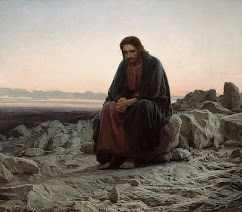
  • Jesus fasted for 40 days in the desert after His Baptism by John in the Jordan; 
  • we imitate Him when we observe Lent for 40 days; 
  • fasting is hard; 
  • we may face some temptations when we fast but that doesn't mean we shouldn't fast;
  • we can only fast through God's grace; we cannot rely solely on our will and human effort
  • the example of Jesus and God's promises to protect us from sin and death should comfort us.

"And when He had fasted forty days and forty nights, He was afterward an hungered." Matt. 4:2.

Distinguishing between Our Lord's Fast in the Desert and our Lenten penitence, which includes fasting, Newman begins the sermon, emphasizing that Love must inspire our fasting and penitence:

THE season of humiliation which precedes Easter lasts for forty days in memory of our Lord's long fast in the wilderness. . . . We fast by way of penitence, and in order to subdue the flesh. Our Saviour had no need of fasting for either purpose. His fasting was unlike ours, as in its intensity, so in its object. And yet when we begin to fast, His pattern is set before us; and we continue the time of fasting till in number of days we have equaled His.

There is a reason for this: we must do nothing except with Him in our eye. As He it is, through whom alone we have the power to do any good thing, so unless we do it for Him it is not good. From Him our obedience comes, towards Him it must look. He says, "Without Me ye can do nothing." [John 15:5.] No work is good without grace and without love. . . .

Even in our penitential exercises, Christ has gone before us to sanctify them to us. He has blessed fasting as a means of grace, in that He has fasted; and fasting is only acceptable when it is done for His sake. Penitence is mere formality, or mere remorse, unless done in love. If we fast without uniting ourselves in heart to Christ, imitating Him, and praying that He would make our fasting His own, would associate it with His own, and communicate to it the virtue of His own . . . [then] we beat the air and humble ourselves in vain.

Newman acknowledges that fasting is harder for some than it is for others and does not always or immediately produce the effect we want it to in our spiritual lives:

And this is singularly the case with Christians now, who endeavour to imitate Him; and it is well they should know it, for else they will be discouraged when they practice abstinences. It is commonly said, that fasting is intended to make us better Christians, to sober us, and to bring us more entirely at Christ's feet in faith and humility. This is true, viewing matters on the whole. On the whole, and at last, this effect will be produced, but it is not at all certain that it will follow at once. On the contrary, such mortifications have at the time very various effects on different persons, and are to be observed, not from their visible benefits, but from faith in the Word of God. Some men, indeed, are subdued by fasting and brought at once nearer to God; but others find it, however slight, scarcely more than an occasion of temptation. For instance, it is sometimes even made an objection to fasting, as if it were a reason for not practising it, that it makes a man irritable and ill-tempered. I confess it often may do this.

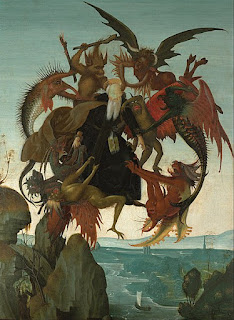
Fasting and abstinence can make it hard to pray and can even be a source of temptation to sin. Newman explores the mystery of this trial/temptation, citing the desert fathers and perhaps alluding to Saint Anthony the Great:

It is undeniably a means of temptation, and I say so, lest persons should be surprised, and despond when they find it so. And the merciful Lord knows that so it is from experience; and that He has experienced and thus knows it, as Scripture records, is to us a thought full of comfort. I do not mean to say, God forbid, that aught of sinful infirmity sullied His immaculate soul; but it is plain from the sacred history, that in His case, as in ours, fasting opened the way to temptation. And, perhaps, this is the truest view of such exercises, that in some wonderful unknown way they open the next world for good and evil upon us, and are an introduction to somewhat of an extraordinary conflict with the powers of evil. Stories are afloat of hermits in deserts being assaulted by Satan in strange ways, yet resisting the evil one, and chasing him away, after our Lord's pattern, and in His strength; and, I suppose, if we knew the secret history of men's minds in any age, we should find a remarkable union in the case of those who by God's grace have made advances in holy things, a union on the one hand of temptations offered to the mind, and on the other, of the mind's not being affected by them, not consenting to them, even in momentary acts of the will, but simply hating them, and receiving no harm from them. So far persons are evidently brought into fellowship and conformity with Christ's temptation, who was tempted, yet without sin.

[Saint Anthony, as described by Saint Athanasius of Alexandria (Newman's great hero) once endured a tremendously violent temptation by a host of demons. After he had fought them off, God came to his aid. Anthony asked Him where He'd been during the temptation and God told him He was with Anthony all the time, sustaining him!]

So Newman concludes from those examples that when we fast, we must rely on Jesus and take comfort in thoughts of His fast and temptation in the desert:

Let it not then distress Christians, even if they find themselves exposed to thoughts from which they turn with abhorrence and terror. Rather let such a trial bring before their thoughts, with something of vividness and distinctness, the condescension of the Son of God. For if it be a trial to us creatures and sinners to have thoughts alien from our hearts presented to us, what must have been the suffering to the Eternal Word, God of God, and Light of Light, Holy and True, to have been so subjected to Satan, that he could inflict every misery on Him short of sinning? . . . 

[One has gone] before us more awful in His trial, more glorious in His victory. He was tempted in all points "like as we are, yet without sin." (Hebrews 4:15) Surely here too, Christ's temptation speaks comfort and encouragement to us.

Newman cites Psalm 91: "He shall give His Angels charge over Thee, to keep Thee in all Thy ways" and "A thousand shall fall beside Thee, and ten thousand at Thy right hand, but it shall not come nigh Thee" as reminders that "we have nothing to fear while we remain within the shadow of the throne of the Almighty."

Then he offers this final encouragement:

Therefore let us be, my brethren, "not ignorant of their devices (2 Cor 2:11);" and as knowing them, let us watch, fast, and pray, let us keep close under the wings of the Almighty, that He may be our shield and buckler. Let us pray Him to make known to us His will,—to teach us our faults,—to take from us whatever may offend Him,—and to lead us in the way everlasting. And during this sacred season, let us look upon ourselves as on the Mount with Him—within the veil—hid with Him—not out of Him, or apart from Him, in whose presence alone is life, but with and in Him—learning of His Law with Moses, of His attributes with Elijah, of His counsels with Daniel—learning to repent, learning to confess and to amend—learning His love and His fear—unlearning ourselves, and growing up unto Him who is our Head.

Saint John Henry Newman, pray for us!
Saint Anthony of the Desert, pray for us!
Saint Athanasius of Alexandria, pray for us!

Image Credit (public domain): Christ in the Wilderness by Ivan Kramskoy, 1872.
Image Credit (public domain): The Temptation of Saint Anthony, 1487–88, by the young Michelangelo, copying Martin Schongauer's engraving