EWTN Radio broadcasts the old Family Theatre Classic Radio shows produced under the guidance of Father Patrick Peyton and last night as I drifted off to sleep I heard the "Hound of Heaven" featuring
Mel Ferrer:
Family Theater was one of the most successful
shows on radio, running for 22 years over the Mutual Broadcasting System and
featuring half hour dramatizations with religious themes sandwiched between
Christian messages about God and prayer. Their shows seem dated today with
blatantly zealous religious content and overblown music, but they were immensely
popular during the 1940s and 50s and not only their radio plays but the
accompanying messages featured major actors of the day.
Mel Ferrer starred in a very special play that
was used several times during the show's two decades. The hero was a real person
- Francis Thompson - one of England's most revered 19th century authors, whose
greatest work was a poem entitled "The Hound of Heaven". In this dramatization
based on his life, Francis Thompson is a lost soul, living on the streets of
London, hopelessly addicted to opium and unable to secure a job. Two diverse
people offer him assistance - a cobbler named Nick McMasters and a prostitute
named Ann. Nick gives him a job along with food, a place to live and an
undemanding friendship, but Francis wanders away from the cobbler when it
becomes clear he'll never be able to learn the trade. Running from the footsteps
that constantly haunt him, he collapses in front of Ann, whose gentle nursing
brings Francis back to reality inspiring him to write again. But when he
proposes to her she disappears from his life, knowing he has greatness in him
that's beyond what she can offer. Instead of following up on his manuscript,
Francis vainly searches for Ann and finally - alone and completely defeated - he
realizes that the footsteps he's hearing are the hound of heaven representing
his loss of faith and that only God can help him.
Francis Thompson is a marvelous role, and Mel
Ferrer's reading is beautifully nuanced. He's greatly assisted by Ronald
O'Connor's narrator, who represents the voice of God in a surprisingly prominent
role. Jane Withers not only enacts Ann, but offered up the religious messages
before and after the play, all of which were done in front of a live audience.
The radio play was written by Frederick Lipp and the entire show was directed by
Joseph F. Mansfield.
I fled Him, down the nights and down the days;
I fled Him, down the arches
of the years;
I fled Him, down the labyrinthine ways
Of my own mind;
and in the midst of tears
I hid from Him, and under running
laughter.
Up vistaed hopes I sped;
And shot,
precipitated,
Adown Titanic glooms of chasmed fears,
From those strong
Feet that followed, followed after.
But with unhurrying
chase,
And unperturbèd pace,
Deliberate speed, majestic
instancy,
They beat—and a Voice beat
More
instant than the Feet—
'All things betray thee, who betrayest Me'.
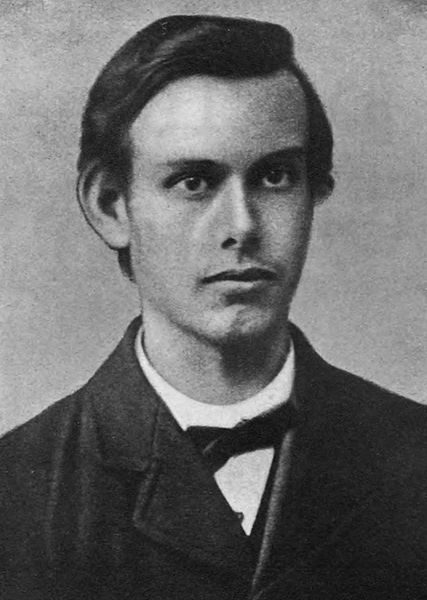
Francis Thompson (16 December 1859 – 13 November 1907) was also aided by the Catholic convert and publisher Wilfred Meynell, according to the
Catholic Encyclopedia:
Having seen some numbers of a new Catholic magazine, "Merry England", he sent these poems to the editor, Mr. Wilfrid Meynell, in 1888, giving his address at a post-office. The manuscripts were pigeonholed for a short time, but when Mr. Meynell read them he lost no time in writing to the sender a welcoming letter which was returned from the post-office. The only way then to reach him was to publish the essay and the poem, so that the author might see them and disclose himself. He did see them, and wrote to the editor giving his address at a chemist's shop. Thither Mr. Meynell went, and was told that the poet owed a certain sum for opium, and was to be found hard by, selling matches. Having settled matters between the druggist and his client, Mr. Meynell wrote a pressing invitation to Thompson to call upon him. That day was the last of the poet's destitution. He was never again friendless or without food, clothing, shelter, or fire. The first step was to restore him to better health and to overcome the opium habit. A doctor's care, and some months at Storrington, Sussex, where he lived as a boarder at the Premonstratensian monastery, gave him a new hold upon life. It was there, entirely free temporarily from opium, that he began in earnest to write poetry. "Daisy" and the magnificent "Ode to the Setting Sun" were the first fruits. Mr. Meynell, finding him in better health but suffering from the loneliness of his life, brought him to London and established him near himself. Thenceforward with some changes to country air, he was either an inmate or a constant visitor until his death nineteen years later.
 In the years from 1889 to 1896 Thompson wrote the poems contained in the three volumes, "Poems", "Sister Songs", and "New Poems". In "Sister Songs" he celebrated his affection for the two elder of the little daughters of his host and more than brother; "Love in Dian's Lap" was written in honour of Mrs. Meynell, and expressed the great attachment of his life; and in the same book "The Making of Viola" was composed for a younger child. At Mr. Meynell's house Thompson met Mr. Garvin and Coventry Patmore, who soon became his friends, and whose great poetic and spiritual influence was thenceforth pre-eminent in all his writings, and Mrs. Meynell introduced him at Box Hill to George Meredith. Besides these his friendships were few. In the last weeks of his life he received great kindness from Mr. Wilfrid Blunt, in Sussex. During all these years Mr. Meynell encouraged him to practise journalism and to write essays, chiefly as a remedy for occasional melancholy. The essay on Shelley, published twenty years later and immediately famous, was amongst the earliest of these writings; "The Life of St. Ignatius" and "Health and Holiness" were produced subsequently.
I have a copy of the above edition of Thompson's St. Ignatius Loyola--it might be timely reading with the election of the first Jesuit as Pope!